Oestrogen and Weight Gain: The Connection Explained

RHC · Pre/Postnatal Fitness Specialist
Oestrogen is central to female body weight in ways that go beyond reproduction. It shapes where fat is stored, how efficiently carbohydrates are metabolised, and how readily fat is mobilised. Both too much and too little create distinct weight management problems.
Understanding where you are on the oestrogen spectrum, and what's driving the pattern you're experiencing, makes targeted, effective action possible.
What Oestrogen Does to Body Composition
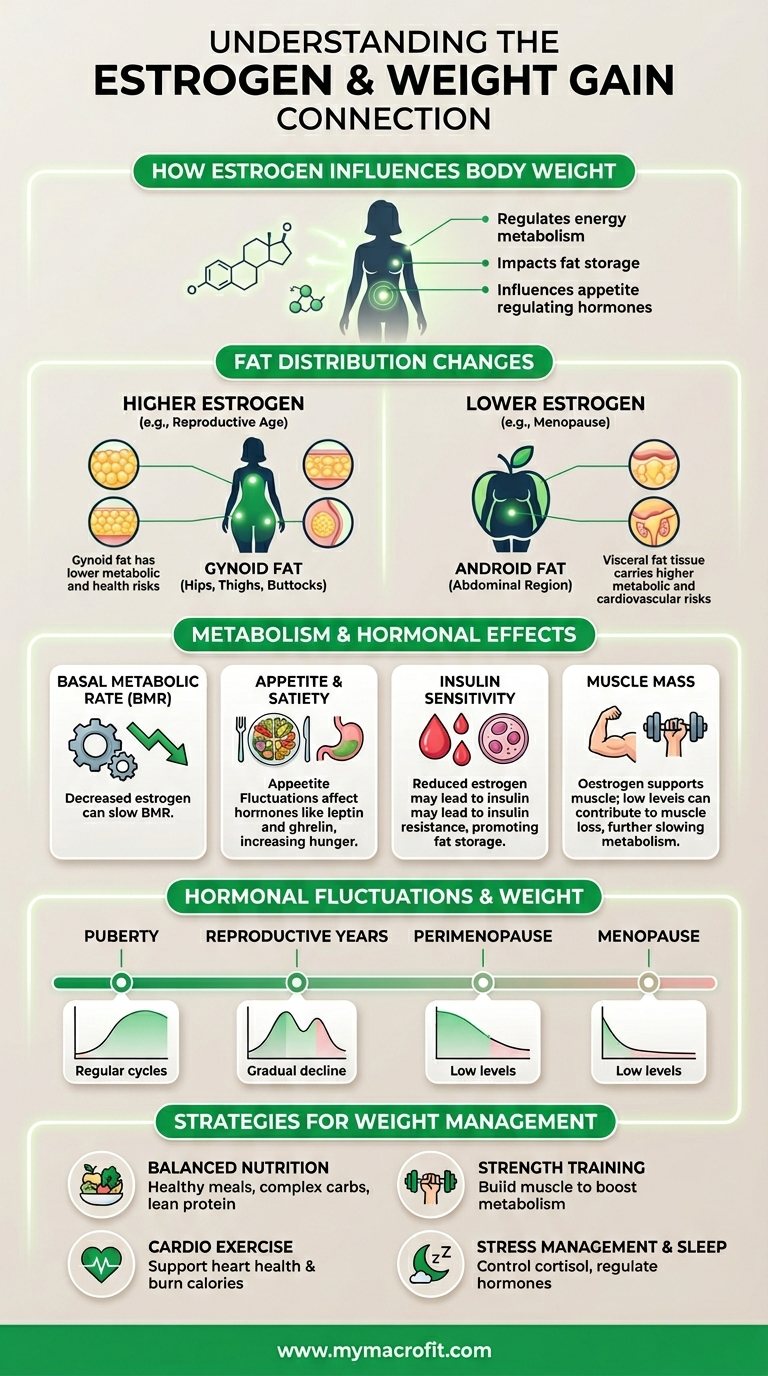
Oestrogen exerts significant influence on female body weight through several mechanisms:
Fat distribution: In reproductive years, oestrogen promotes subcutaneous fat storage at the hips, thighs, and buttocks, the typical female pear-shaped pattern. This fat distribution is not metabolically problematic (subcutaneous fat is relatively inert). As oestrogen declines, fat redistribution shifts centrally, increasing visceral fat risk.
Insulin sensitivity: Oestrogen enhances insulin sensitivity, meaning the body processes carbohydrates efficiently and blood glucose is well-regulated. This explains why premenopausal women typically handle higher carbohydrate intakes with fewer metabolic problems than postmenopausal women.
Muscle maintenance: Oestrogen supports muscle protein synthesis. Women with adequate oestrogen maintain muscle mass more easily, preserving the metabolic rate that resists fat gain.
Appetite regulation: Oestrogen has anorexigenic effects, it suppresses appetite, particularly in the follicular phase. This is why hunger naturally increases in the luteal phase when oestrogen drops after ovulation.
Leptin sensitivity: Oestrogen improves brain sensitivity to leptin (the satiety hormone). Low oestrogen contributes to leptin resistance, making it harder to feel full.
High Oestrogen: Oestrogen Dominance
Oestrogen dominance occurs when oestrogen levels are high relative to progesterone, either from excess oestrogen, insufficient progesterone, or both. Signs include:
- Weight gain around hips, thighs, and lower abdomen
- Bloating and water retention
- Heavy or irregular periods
- PMS symptoms: breast tenderness, mood changes
- Fatigue
Causes of oestrogen dominance:
Relative progesterone insufficiency: In perimenopause, progesterone declines earlier and faster than oestrogen, creating a relative dominance phase even as absolute oestrogen is declining. This explains why early perimenopause can feature both declining oestrogen symptoms and oestrogen dominance symptoms.
Xenoestrogens: Synthetic oestrogen-like compounds from plastic packaging (BPA), pesticide residues, and certain cosmetic ingredients can bind oestrogen receptors, contributing to a higher effective oestrogen load.
High body fat: Adipose tissue contains aromatase, the enzyme that converts androgens to oestrogen. Higher body fat = more oestrogen production from peripheral conversion, creating a feedback loop.
Liver function: The liver metabolises and clears oestrogen. Impaired liver function (including fatty liver from excess alcohol) reduces oestrogen clearance.
Addressing oestrogen dominance:
- Increase cruciferous vegetables (broccoli, cauliflower, kale), contain diindolylmethane (DIM) which supports oestrogen metabolism via the liver
- Increase dietary fibre, helps bind and excrete excess oestrogen via the gut
- Reduce alcohol, supports liver oestrogen clearance
- Reduce plastic exposure where practical
- Work with a GP to rule out other causes
Low Oestrogen and Weight Gain
Low oestrogen creates a fundamentally different weight problem:
Causes of low oestrogen:
- Perimenopause/menopause (natural decline)
- Post-pill (if stopping combined oral contraceptive)
- Hypothalamic amenorrhea (loss of periods from under-eating or over-exercising)
- Premature ovarian insufficiency (POI)
- Breastfeeding
Weight effects:
- Fat redistribution from hips/thighs to the abdomen (visceral fat pattern)
- Reduced insulin sensitivity
- Accelerated muscle loss (lower metabolic rate)
- Disrupted sleep (via hot flushes or hormonal changes) driving cortisol and hunger hormones
The visceral fat accumulation with low oestrogen is particularly significant because visceral fat is metabolically active and associated with cardiovascular and metabolic disease risk, not just a cosmetic concern.
Oestrogen Across the Menstrual Cycle
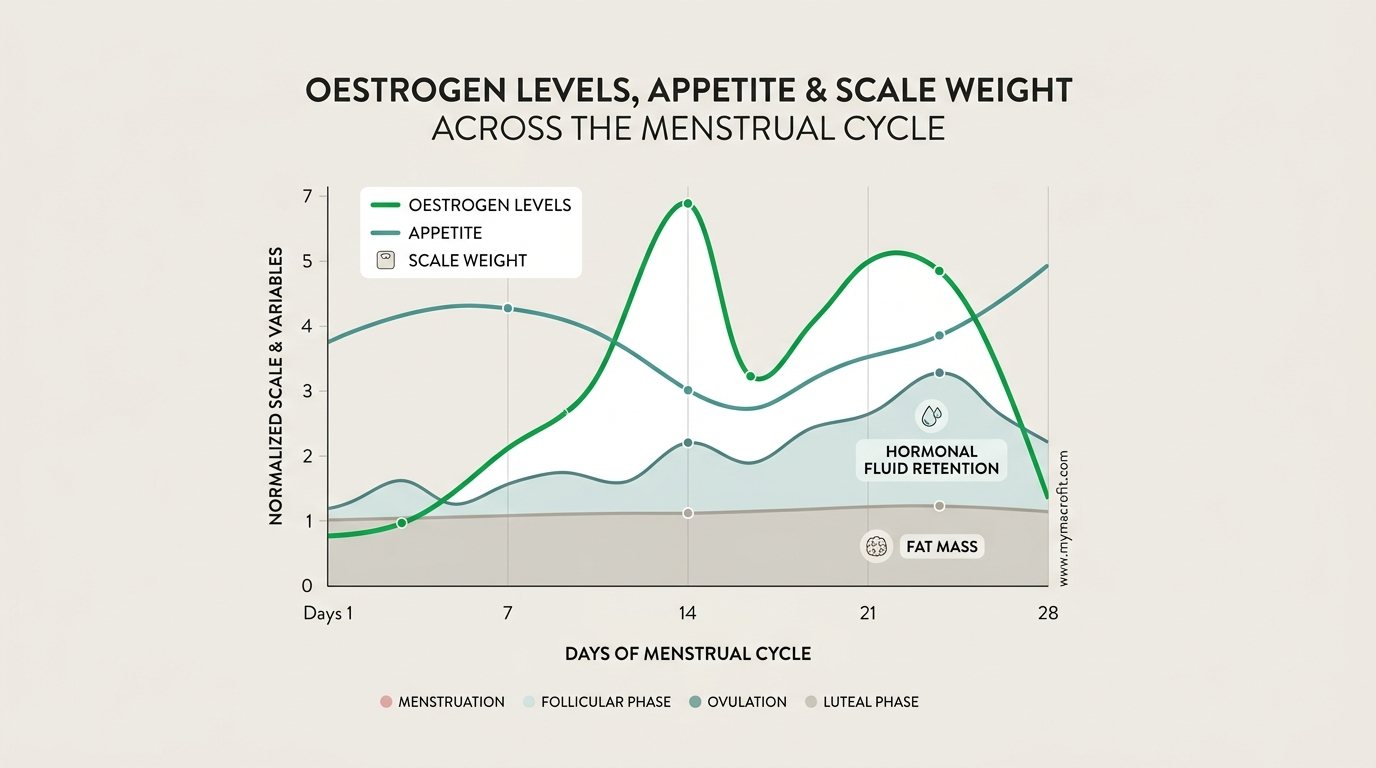
For women in reproductive years, oestrogen fluctuation within the normal cycle creates predictable weight and energy patterns:
Days 1-5 (menstruation): Low oestrogen and progesterone. Energy typically lower, some cramping. Scale weight often drops as luteal-phase fluid releases.
Days 6-13 (follicular phase): Oestrogen rising. Energy improves progressively, insulin sensitivity is best, appetite is suppressed. Scale weight at monthly low. Best period for fat loss-focused effort.
Day 14 (ovulation): Oestrogen peaks, then drops slightly. Brief fluid gain possible (0.3-0.5kg). Libido and confidence typically peak.
Days 15-28 (luteal phase): Progesterone dominant; oestrogen drops then rises briefly. Appetite increases (particularly for carbohydrates and sweet foods). Bloating and water retention build. Scale weight 1-3kg above follicular phase is normal.
Understanding this pattern prevents misinterpreting luteal-phase weight gain as fat gain.
Supporting Healthy Oestrogen Balance Through Diet
Phytoestrogens
Plant compounds that weakly bind oestrogen receptors. They can modestly support oestrogen balance in both low (mild oestrogenic effect) and high (competitive binding may reduce receptor activation) oestrogen states.
Best sources: Soy products (tofu, tempeh, edamame), flaxseed (ground, 2 tbsp/day), sesame seeds, legumes.
DIM (Diindolylmethane)
Found in cruciferous vegetables, DIM supports oestrogen metabolism through liver pathways, promoting healthier oestrogen metabolite ratios. Available as a supplement for higher doses.
Liver Support
The liver metabolises oestrogen. Supporting liver health, reducing alcohol, adequate dietary fibre, adequate B vitamins (particularly B6, folate), improves oestrogen clearance.
Adequate Dietary Fat
Oestrogen is synthesised from cholesterol. Very low-fat diets (under 20% of calories from fat) can impair oestrogen production in reproductive-age women. Healthy fat sources, olive oil, avocado, nuts, fatty fish, support hormonal production.
The Bottom Line
Oestrogen affects female body weight through fat distribution, insulin sensitivity, muscle maintenance, and appetite regulation. Both high oestrogen (dominance) and low oestrogen (perimenopause, amenorrhea) create distinct weight management challenges.
Understanding which pattern applies to your current life stage allows targeted nutritional and lifestyle interventions. For significant hormonal imbalance, working with a healthcare provider to accurately assess hormone levels is the appropriate foundation.
Save & share on Pinterest
Click any card to pin it — or share with someone who needs it.
Oestrogen and Weight Gain: The Connection Explained
How oestrogen levels affect female body weight and fat distribution, what happens when oestrogen is …
How oestrogen levels affect female body weight and fat distribution, what happen…
Read the full guide: Oestrogen and Weight Gain: The Connection Explained
Free fitness tools
Oestrogen and Weight Gain: The Connection Explained — use our free calculators for instant personali…
Pinterest opens in a new tab. You can edit the description before saving.
Frequently Asked Questions
Does high oestrogen cause weight gain?+
Does low oestrogen cause weight gain?+
Can I raise oestrogen naturally?+
How do I know if my weight gain is hormonal or just diet-related?+
Does HRT cause weight gain in menopause?+
What's the best way to manage hormonal weight changes around menopause?+
About the Author

I'm a registered health coach and pre/postnatal specialist. I look at the whole person, your sleep, your stress, your hormones, because the number on the scale is only ever part of the story.
View full profile →