Pregnancy Nutrition Calculator
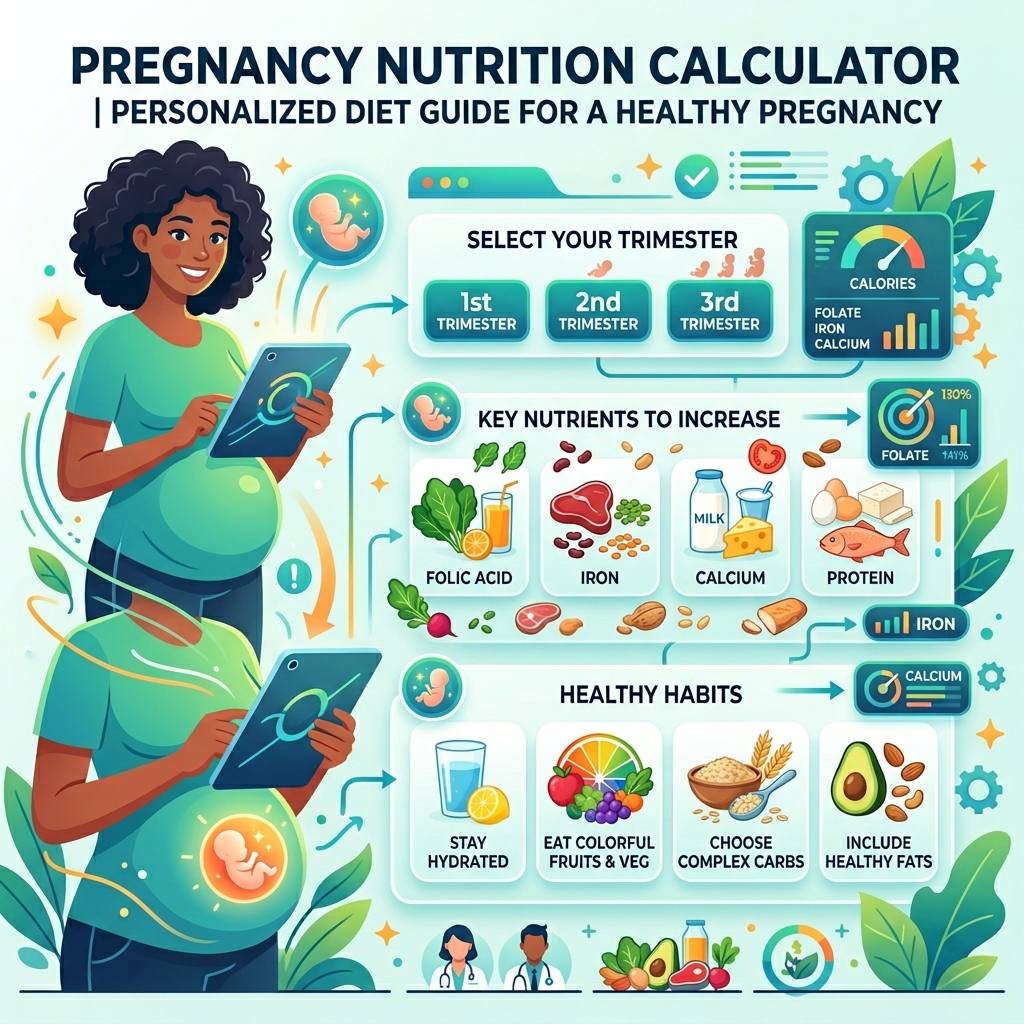
Get your personalised calorie, protein, iron, folate, and calcium targets for each trimester of pregnancy. Includes gestational weight gain guidance based on pre-pregnancy BMI.
Pregnancy Nutrition: The Evidence-Based Overview
Pregnancy nutrition is one of the most consequential nutritional periods in a woman's life. Adequate intake of key nutrients, particularly in the first trimester, when most organ systems are forming, has lifelong health implications for the child.
Despite this, most pregnancy nutrition advice is vague ("eat well, avoid these foods") without providing the specific targets that would allow women to actually monitor adequacy. This calculator provides evidence-based targets by trimester.
The Trimester Nutrition Differences
Each trimester has distinct nutritional priorities:
- First trimester: Folate/folic acid is critical, the neural tube closes at approximately week 4, often before pregnancy is confirmed. This is why folate supplementation is recommended for all women of reproductive age. Calorie needs are essentially unchanged. Nausea management is often the primary concern, small, frequent protein-rich meals work best.
- Second trimester: Most rapid period of foetal growth. Iron needs increase significantly as maternal blood volume expands by ~45% and the placenta develops. Energy needs increase by approximately 340 kcal/day. This is often the most comfortable trimester for eating.
- Third trimester: The baby gains approximately 50% of its birth weight in this period. Energy needs peak (~450 kcal/day above pre-pregnancy). Calcium and vitamin D are critical for foetal bone mineralisation. Smaller, more frequent meals are typically more comfortable as the growing uterus compresses the stomach.
Foods to Avoid During Pregnancy
Certain foods carry significant risk during pregnancy and should be avoided:
- Raw/undercooked meat, fish, and eggs, risk of Listeria, Salmonella, Toxoplasma
- High-mercury fish, shark, swordfish, marlin, tilefish, king mackerel (limit tuna to 2 portions/week)
- Unpasteurised dairy and soft mould-ripened cheeses, Listeria risk
- Deli meats and pâté, Listeria risk unless heated until steaming
- Raw sprouts, bacterial contamination risk
- Alcohol, no safe level established in pregnancy
- High-dose vitamin A supplements, teratogenic at high doses (liver is also very high in vitamin A)
Frequently Asked Questions
How many extra calories do you need during pregnancy?
How much protein do you need when pregnant?
What nutrients are most critical during pregnancy?
Is it safe to exercise during pregnancy?
How it's calculated: this tool uses established, published equations. See the full calculator methodology for the formulas and assumptions behind it.
Results are estimates for general guidance, not medical advice. See our disclaimer, and speak to a qualified healthcare professional before making medical or dietary changes.
Related Tools
Save & share on Pinterest
Click any card to pin it — or share with someone who needs it.
Pregnancy Nutrition Calculator
Get your personalised calorie, protein, iron, folate, and calcium targets for each trimester of preg…
Get your personalised calorie, protein, iron, folate, and calcium targets for ea…
Read the full guide: Pregnancy Nutrition Calculator
Try the free Pregnancy Nutrition Calculator
Pregnancy Nutrition Calculator — use our free calculators for instant personalised results. No signu…
Pinterest opens in a new tab. You can edit the description before saving.
Get Your Free Macro Cheat Sheet
One-page PDF with all the key formulas. Free, no spam ever.
Get the Free Macro Guide