1800 Calorie Meal Plan: High Protein, Full Day of Eating

BSc Kinesiology · CPT
1800 calories sounds like a lot, or a little, depending on who you are. For the right person, it's a satisfying amount of food that provides genuine nutrition and meets fat loss or maintenance goals. Here's a full day of eating at 1800 kcal with 150g protein.
First: confirm 1800 kcal is right for you using our Macro Calculator. Individual calorie needs vary significantly by height, weight, age, and activity level.
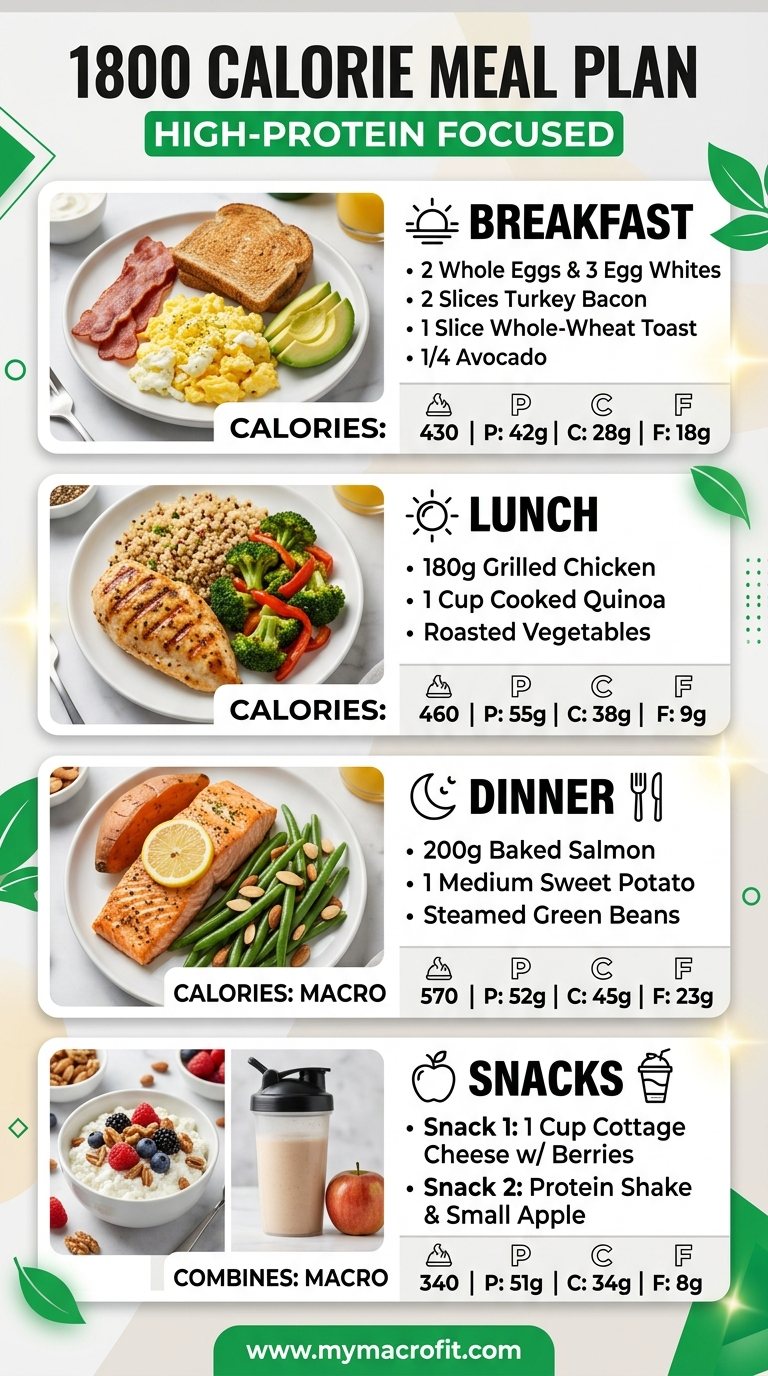
The 1800 Calorie Day
Daily targets: 1,800 kcal | 150g protein | 170g carbs | 60g fat
Breakfast (490 kcal | 42g protein | 45g carbs | 14g fat)
Power bowl:
- 60g rolled oats (dry, cooked with milk), 230 kcal, 8g protein
- 150ml whole milk (added to oats), 95 kcal, 5g protein
- 1 scoop vanilla whey protein (stirred in after cooking), 115 kcal, 23g protein
- 1 small banana (sliced on top), 90 kcal, 1g protein
- 1 tsp almond butter, 30 kcal, 1g protein
- ½ tsp cinnamon
Why this works: The protein powder in oats is invisible in texture but adds 23g protein, taking a standard porridge from 13g protein to 36g. The fat from the almond butter and milk slows digestion, extending fullness to lunchtime.
Mid-Morning Snack (190 kcal | 22g protein | 12g carbs | 3g fat)
Skyr and berries:
- 200g plain skyr, 130 kcal, 22g protein
- 80g frozen mixed berries (defrosted), 40 kcal
- 1 tsp honey, 20 kcal
Lunch (520 kcal | 45g protein | 50g carbs | 12g fat)
Salmon rice bowl:
- 140g salmon fillet (baked with lemon and herbs), 270 kcal, 28g protein
- 180g cooked white rice, 233 kcal, 4g protein
- 150g edamame (frozen, microwaved), 170 kcal, 17g protein
- (Note: above totals individual items, bowl total is calculated together)
- Total for bowl at correct portions: ~520 kcal, 45g protein
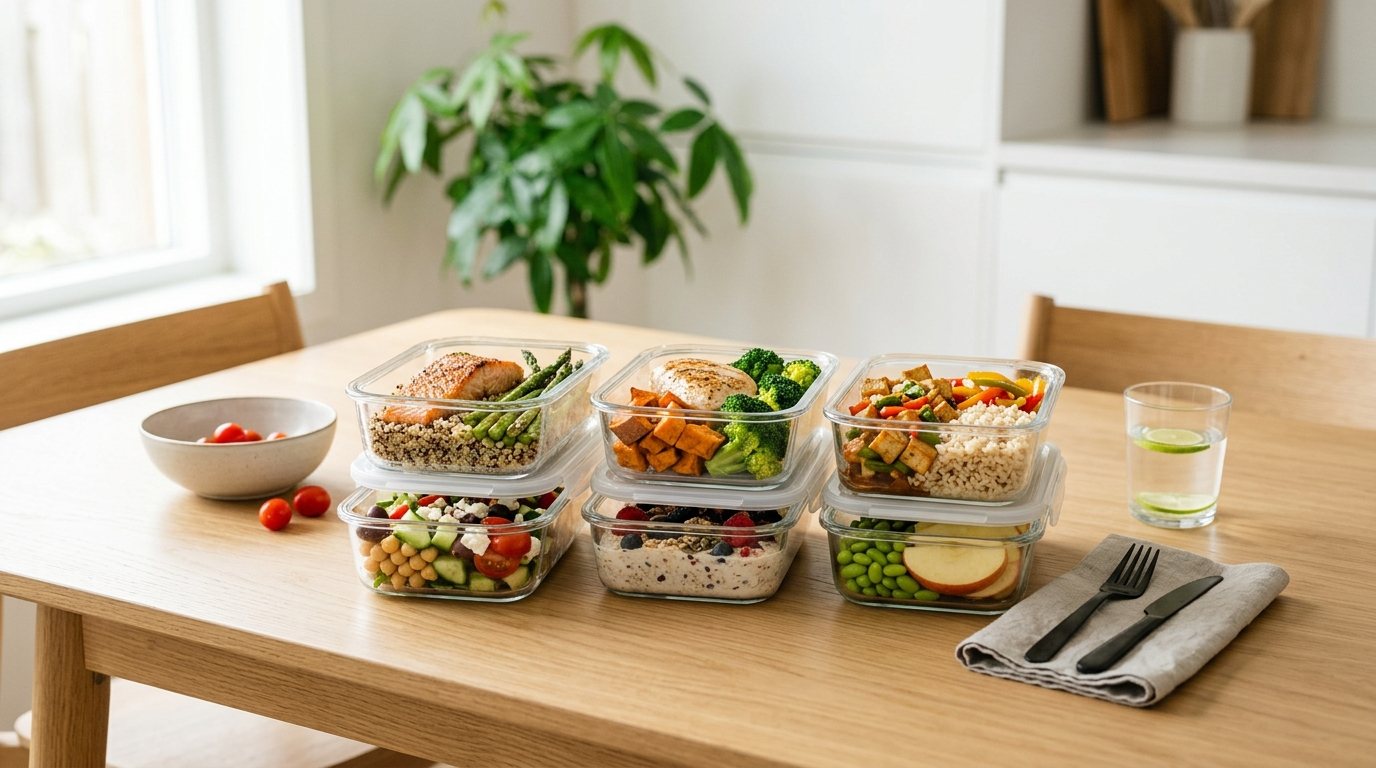
Preparation: Bake salmon the night before or batch-cook Sunday. Rice pre-cooked. Edamame from frozen: 3 min microwave.
Afternoon Snack (190 kcal | 17g protein | 14g carbs | 5g fat)
Cottage cheese and apple:
- 150g cottage cheese, 150 kcal, 17g protein
- 1 medium apple, 80 kcal, 0g protein
Dinner (490 kcal | 42g protein | 48g carbs | 12g fat)
Chicken tikka bowl:
- 150g chicken breast (cubed, baked with tikka spices), 160 kcal, 30g protein
- 200g cooked basmati rice, 260 kcal, 5g protein
- Tikka yogurt sauce: 80g plain yogurt + tikka spice + lemon, 50 kcal, 5g protein
- Large green salad (spinach, cucumber, tomato), 20 kcal
- (Sauce is made with yogurt, not cream, keeps calories low)
Evening Snack (Optional) (250 kcal | 25g protein | 15g carbs | 7g fat)
Pre-bed casein:
- 200g plain 0% Greek yogurt, 110 kcal, 20g protein
- 1 tbsp chia seeds, 70 kcal, 3g protein
- Small drizzle honey, 30 kcal
- 30g blueberries, 20 kcal
Without evening snack total: ~1,540 kcal, 128g protein With evening snack total: ~1,790 kcal, 153g protein ✓
Macro Breakdown
| Meal | Calories | Protein | Carbs | Fat |
|---|---|---|---|---|
| Breakfast | 490 | 42g | 45g | 14g |
| Snack 1 | 190 | 22g | 12g | 3g |
| Lunch | 520 | 45g | 50g | 12g |
| Snack 2 | 190 | 17g | 14g | 5g |
| Dinner | 490 | 42g | 48g | 12g |
| Evening snack | 250 | 25g | 15g | 7g |
| Total | ~1,800 | ~153g | ~170g | ~53g |
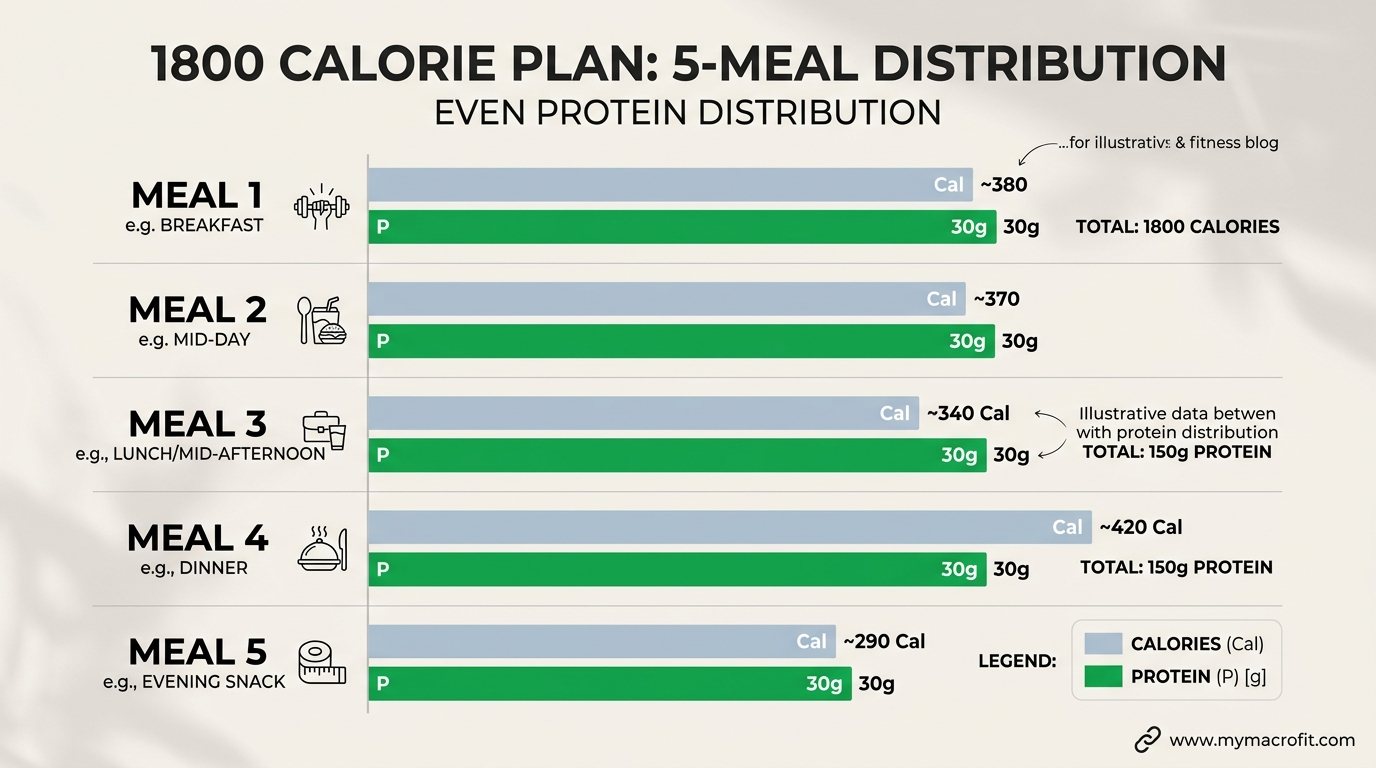
Variations and Swaps
Higher carbohydrate version (for training days): Replace the afternoon snack with: banana + protein shake (40g carbs, 25g protein, ~280 kcal) Add 30g dry pasta to dinner portion Total: ~2,100 kcal (training day version)
Lower carbohydrate version (for rest days): Replace rice at lunch with large cauliflower rice (50g vs. 50g carb saving, −200 kcal) Replace rice at dinner with roasted sweet potato (slightly lower GI) Total: ~1,600 kcal (rest day version)
Budget version: Replace salmon with tinned mackerel (same protein, ~£0.85), replace skyr with cottage cheese (cheaper), replace whey with egg white protein (cheaper bulk option). Total cost: −40% without nutritional impact.
Is This the Right Calorie Level for You?
1800 kcal is one data point on a spectrum. Without calculating your personal TDEE, you can't know whether 1800 kcal represents weight loss, maintenance, or inadequate intake.
Use our Macro Calculator to:
- Calculate your TDEE based on your stats
- Determine your target calories based on your goal
- Adjust this meal plan proportionally up or down
Save & share on Pinterest
Click any card to pin it — or share with someone who needs it.
1800 Calorie Meal Plan: High Protein, Full Day of Eating
A complete 1800 calorie meal plan with 150g protein, full day of eating with macros for each meal, s…
A complete 1800 calorie meal plan with 150g protein, full day of eating with mac…
Read the full guide: 1800 Calorie Meal Plan: High Protein, Full Day of Eating
Try the free Macro Calculator
1800 Calorie Meal Plan: High Protein, Full Day of Eating — use our free calculators for instant pers…
Pinterest opens in a new tab. You can edit the description before saving.
Ready to get your numbers?
Free calculator, instant results, no signup required.
Frequently Asked Questions
Who should eat 1800 calories a day?+
Is 1800 calories too low for men?+
What does 1800 calories of food look like?+
Can I lose weight on 1800 calories a day?+
How do I adjust this 1800 calorie plan up or down?+
About the Author

I'm a kinesiologist and personal trainer. I've spent eight years helping women lose fat and get stronger without handing their whole life over to a diet.
View full profile →