2500 Calorie Meal Plan for Muscle Building

BSc Kinesiology · CPT
This 2500 calorie plan is built for a lean bulk, a slight calorie surplus above maintenance to support muscle growth while minimising fat gain. At 180g protein and 250g carbohydrates, it's designed to fuel hard training sessions while keeping the surplus modest enough to maintain lean body composition.
Verify this is right for you: Use our Lean Bulk Calculator to confirm 2500 kcal represents the right surplus for your specific stats.
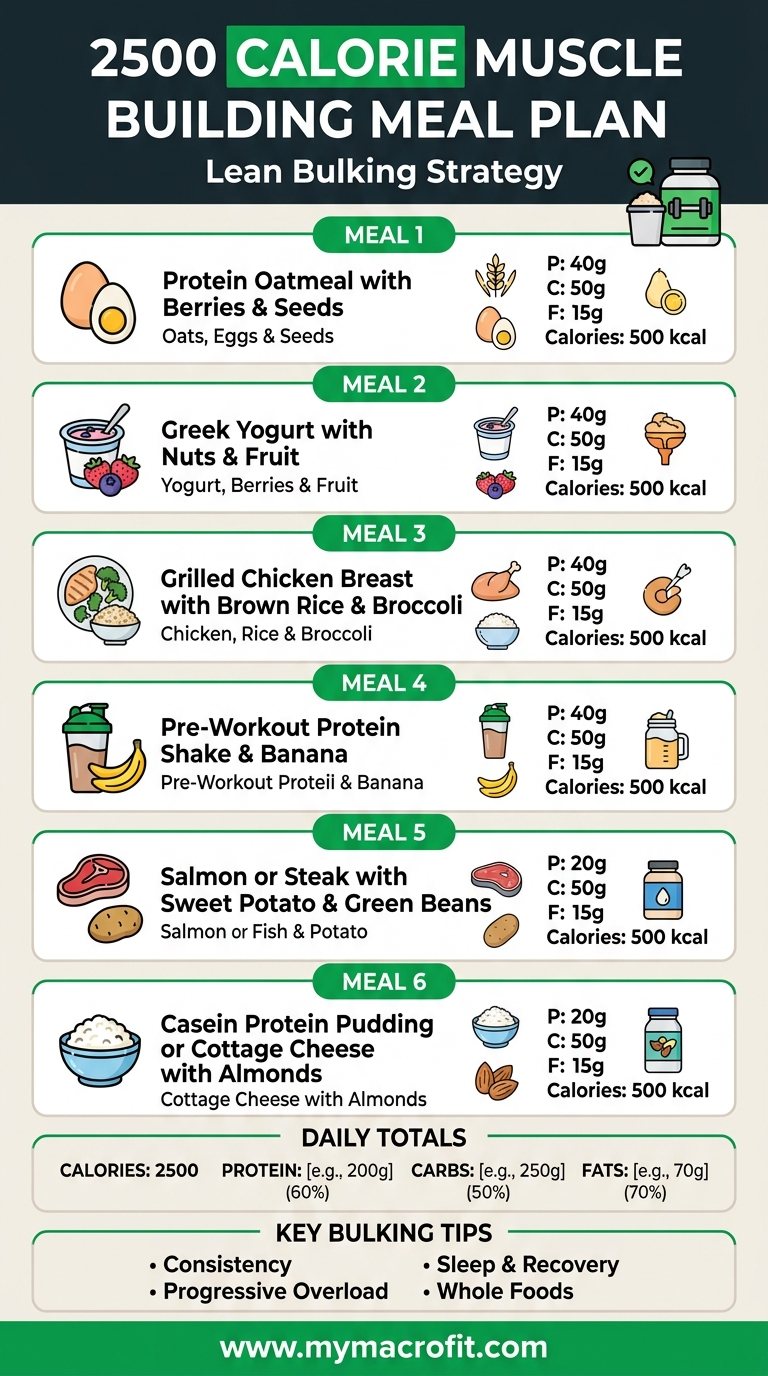
The 2500 Calorie Day
Daily targets: 2,500 kcal | 180g protein | 250g carbs | 80g fat
Breakfast (620 kcal | 50g protein | 65g carbs | 16g fat)
Protein oat stack:
- 80g oats (dry) cooked with 300ml whole milk, 420 kcal, 17g protein
- 1.5 scoops vanilla whey protein (stirred in after cooking), 165 kcal, 35g protein
- 1 large banana, 110 kcal, 1g protein
- 1 tbsp peanut butter, 95 kcal, 4g protein
- Cinnamon
Total at correct portions: ~620 kcal, 50g protein
Why this breakfast works for muscle building: 620 kcal and 50g protein front-loads the day. The whey in oats provides fast-absorbing amino acids; the casein in milk provides slower release. Combined with complex carbohydrates for sustained energy through the morning.
Mid-Morning Snack (280 kcal | 25g protein | 28g carbs | 8g fat)
Whole milk protein shake:
- 1 scoop whey in 250ml whole milk, 245 kcal, 24g protein
- 1 small apple alongside, 60 kcal
Or: 200g full-fat Greek yogurt + 40g granola (same approximate macros)
Lunch (680 kcal | 52g protein | 70g carbs | 16g fat)
Chicken and rice build bowl:
- 180g chicken breast (grilled or baked), 200 kcal, 35g protein
- 280g cooked white rice (95g dry), 360 kcal, 6g protein
- 150g edamame, 170 kcal, 17g protein
- (Bowl total at correct portions: ~680 kcal)
- Cucumber and spring onion
- Soy sauce + sesame dressing
Pre-Workout Snack (310 kcal | 20g protein | 45g carbs | 7g fat)
Fuel-up banana and bar (1 hour before training):
- 1 large banana, 120 kcal
- 1 good protein bar, 190 kcal, 20g protein
- Or: 40g oats + 150ml milk + 1/2 scoop protein = similar profile
Post-Workout Snack (290 kcal | 28g protein | 30g carbs | 5g fat)
Recovery shake:
- 1.5 scoops whey in 300ml semi-skimmed milk, 285 kcal, 38g protein
- Or: 200g Greek yogurt + 1 banana (similar total, more food-based)
Dinner (640 kcal | 50g protein | 65g carbs | 16g fat)
Beef stir-fry with noodles:
- 160g lean beef strips, 230 kcal, 32g protein
- 180g cooked egg noodles (65g dry), 235 kcal, 7g protein
- Mixed vegetables: broccoli, peppers, snap peas (250g), 80 kcal, 6g protein
- Stir-fry sauce (oyster, garlic, 1 tsp sesame oil), 55 kcal, 1g protein
- Sesame seeds (1 tsp)
Evening Snack (280 kcal | 28g protein | 22g carbs | 7g fat)
Pre-sleep casein combo:
- 200g cottage cheese, 180 kcal, 22g protein
- 250g plain full-fat Greek yogurt, 190 kcal, 18g protein (Split into a reasonable evening snack portion)
Or simpler: 200g 0% Greek yogurt + 1 scoop casein protein powder = 300 kcal, 35g protein
Complete Macro Breakdown
| Meal | Calories | Protein | Carbs | Fat |
|---|---|---|---|---|
| Breakfast | 620 | 50g | 65g | 16g |
| Mid-morning snack | 280 | 25g | 28g | 8g |
| Lunch | 680 | 52g | 70g | 16g |
| Pre-workout | 310 | 20g | 45g | 7g |
| Post-workout | 290 | 28g | 30g | 5g |
| Dinner | 640 | 50g | 65g | 16g |
| Evening snack | 280 | 28g | 22g | 7g |
| Total | ~2,500 | ~180g | ~250g | ~80g |
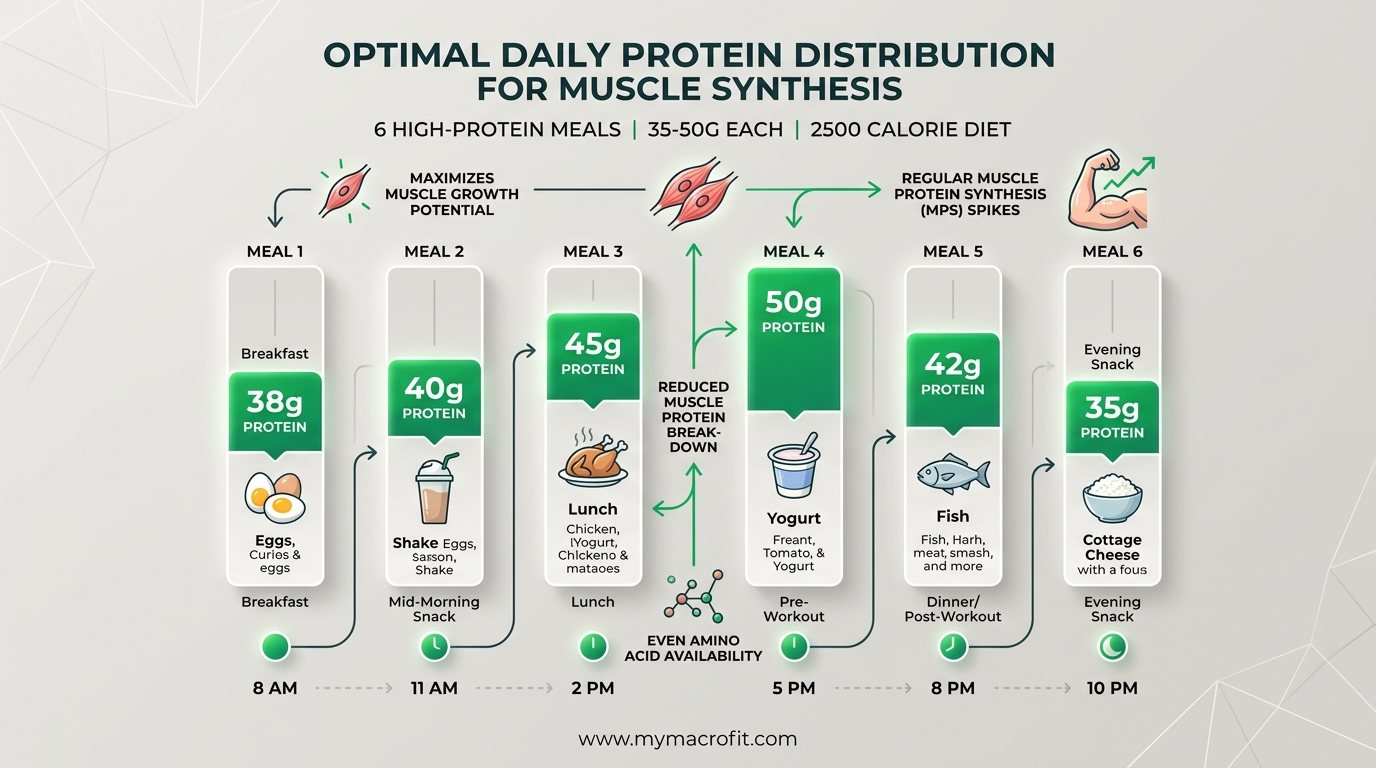
Training Day vs Rest Day Adjustments
On training days (this plan as written): Pre-workout and post-workout snacks fuel and recover the session. Total: 2,500 kcal.
On rest days (reduce by 200-300 kcal): Remove pre-workout snack or reduce dinner carbohydrate by 60g (−240 kcal). Rest days need slightly less carbohydrate as glycogen demand is lower.
Weigh in weekly: Average weekly weight should increase by 0.2-0.4kg/week for an effective lean bulk. If gaining faster, reduce by 100-150 kcal. If not gaining, add 100-150 kcal.
Common Problems at 2500 Calories
"I can't eat this much": Use the mass gainer shake approach, blend 300ml whole milk + 1.5 scoops protein + 1 banana + 2 tbsp peanut butter + 50g oats = ~700 kcal, 50g protein in one drink. Removes the volume challenge.
"I'm gaining too fast": The plan might be too much for your TDEE. Reduce by removing the pre-workout snack (−310 kcal) and reassess at 4 weeks.
"I'm always hungry": More volume needed, increase vegetables and low-calorie-density foods rather than calorie-dense foods. Ensure protein target is met, protein is the most satiating macro.
Save & share on Pinterest
Click any card to pin it — or share with someone who needs it.
2500 Calorie Meal Plan for Muscle Building
A complete 2500 calorie meal plan for lean bulking, 180g protein, full day of eating with macro brea…
A complete 2500 calorie meal plan for lean bulking, 180g protein, full day of ea…
Read the full guide: 2500 Calorie Meal Plan for Muscle Building
Try the free Lean Bulk Calculator
2500 Calorie Meal Plan for Muscle Building — use our free calculators for instant personalised resul…
Pinterest opens in a new tab. You can edit the description before saving.
Ready to get your numbers?
Free calculator, instant results, no signup required.
Frequently Asked Questions
Who should eat 2500 calories per day?+
How do I eat 2500 calories without feeling too full?+
Should I eat more on training days at 2500 calories?+
How fast should I gain weight on a 2500 calorie bulk?+
What if I'm not gaining weight even eating 2500 calories?+
About the Author

I'm a kinesiologist and personal trainer. I've spent eight years helping women lose fat and get stronger without handing their whole life over to a diet.
View full profile →