Meal Prep for One: How to Cook Just Enough, Nothing Wasted

BSc Kinesiology · CPT
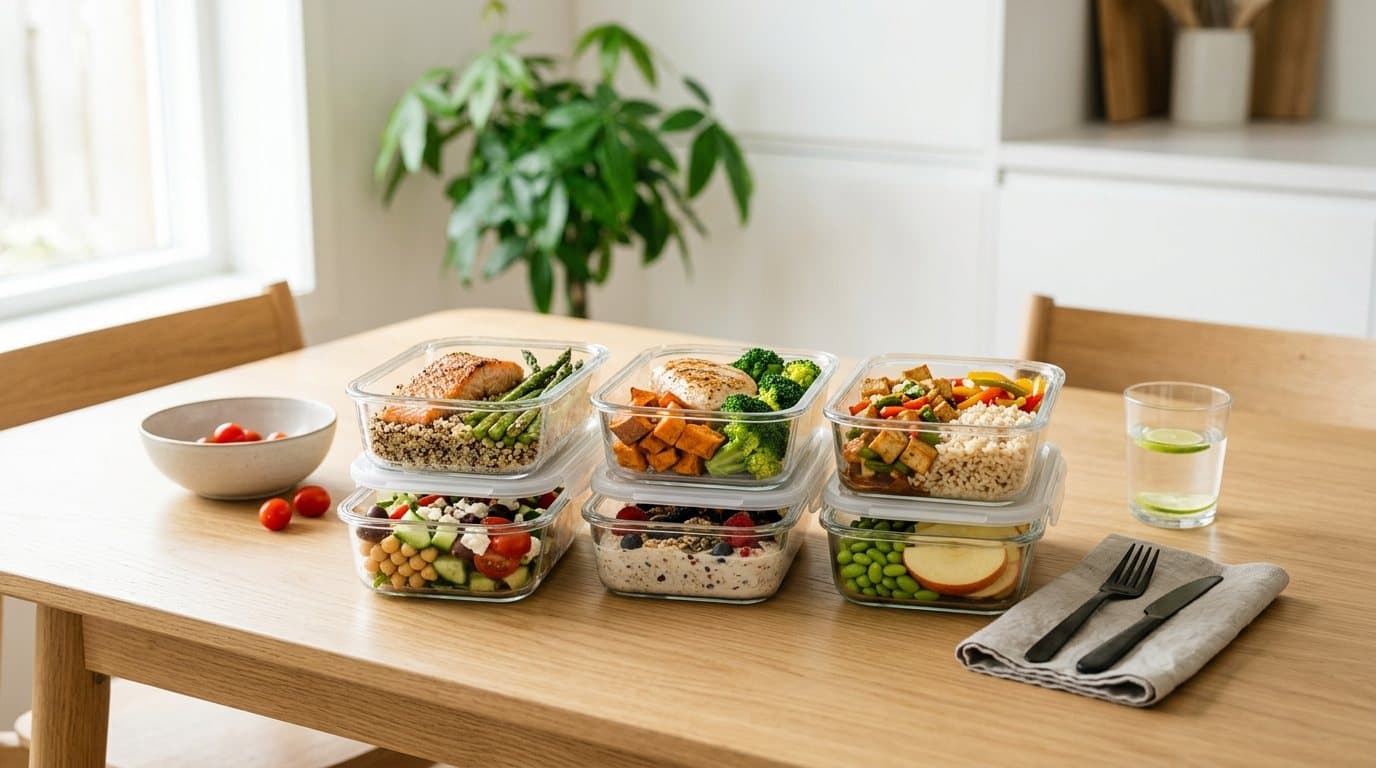
Meal prep for one person has a specific challenge that family meal prep doesn't: how do you batch cook without eating the same thing 7 days in a row or wasting food? The answer is components, not complete meals.
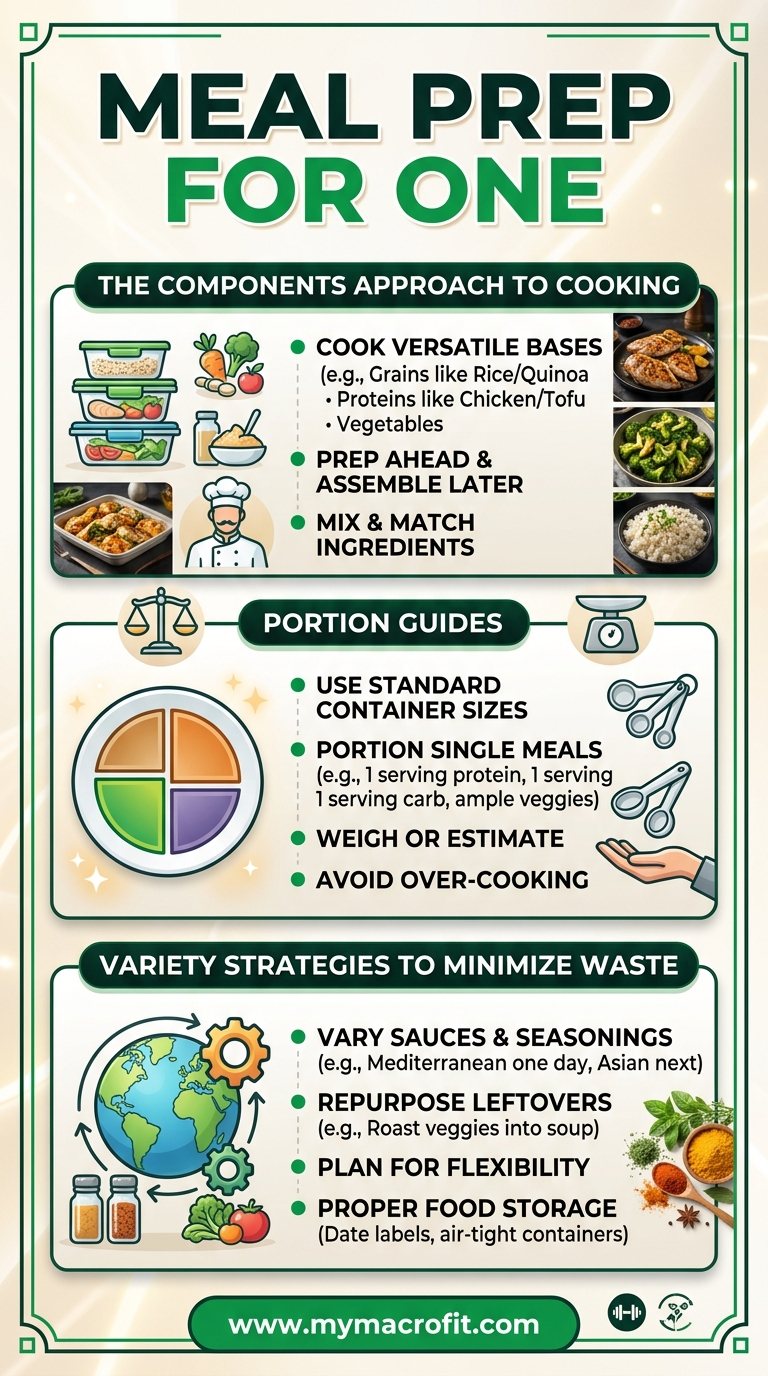
The Components Approach: The Solution to Solo Prep
Instead of making 5 portions of the same complete meal (chicken and rice with broccoli × 5 = monotonous), cook separate components and combine them differently each day.
Weekly component prep for one:
Protein batch: 500g chicken breast (makes ~380g cooked = 2.5 servings of 150g)
- 300g turkey mince (makes 2 dinners)
Grain batch: 200g dry brown rice → ~550g cooked (3.5 servings of 160g)
- 80g dry quinoa → ~250g cooked (1.5 servings)
Roasted vegetables: 600g chopped (3 servings), use across 3 different meal styles
Result: 5 lunches and 5 dinners assembled from these components in 2-5 minutes per meal, with different seasonings and sauces each time making it feel varied.
Scaling Recipes for One
Most recipes serve 4. Scaling down by ¾ is easier than halving ingredients awkwardly:
Simple division:
- Soup, curry, stew (typically 4 portions): Make 2 portions (halve the recipe), eat one night, refrigerate for 2 days later
- Stir-fry and salads: Can be made fresh in 10-15 min, don't need batching
- Baked dishes (frittata, baked chicken): Make full recipe, refrigerate up to 4 days
When not to scale down: Baking and cooking time-intensive dishes, make the full batch and freeze individual portions. Many soups, curries, and bolognese freeze perfectly in individual containers.
The Freezer: The Solo Meal Prepper's Best Tool
Single-person households benefit most from a well-used freezer:
What to freeze in single portions:
- Curry, dhal, bolognese (make 4-portion batch, eat one, freeze three)
- Soups (200-300ml portions in zip bags or containers)
- Cooked mince, cooked lentils (100-150g portions)
- Cooked rice (200g portions in zip bags, defrost in microwave 2 min)
- Bread (freeze slices, defrost individually)
Rotation system: Label with date. Work through oldest first. Most cooked meals keep in freezer 2-3 months.
Managing Vegetable Waste
Vegetables are the biggest solo food waste issue, buying a cabbage or leek for one recipe and letting the rest go off.
Solutions:
Buy frozen: Frozen peas, broccoli, spinach, edamame, take exactly what you need, return the rest to freezer. Nutritionally equivalent to fresh.
Roast in bulk: Buy a bag of mixed peppers and courgettes, roast all of it, use across 3 days in different dishes. One bag, multiple uses.
The weekly vegetable rotation strategy:
- Sunday: roast mixed vegetables (peppers, courgette, onion)
- Monday: use in bowl
- Tuesday: use in wrap
- Wednesday: fresh salad
- Thursday: buy second fresh item (e.g., broccoli, roast half, steam half)
- Friday: use in stir-fry
Spinach and frozen veg: Keep permanently as they never go off.
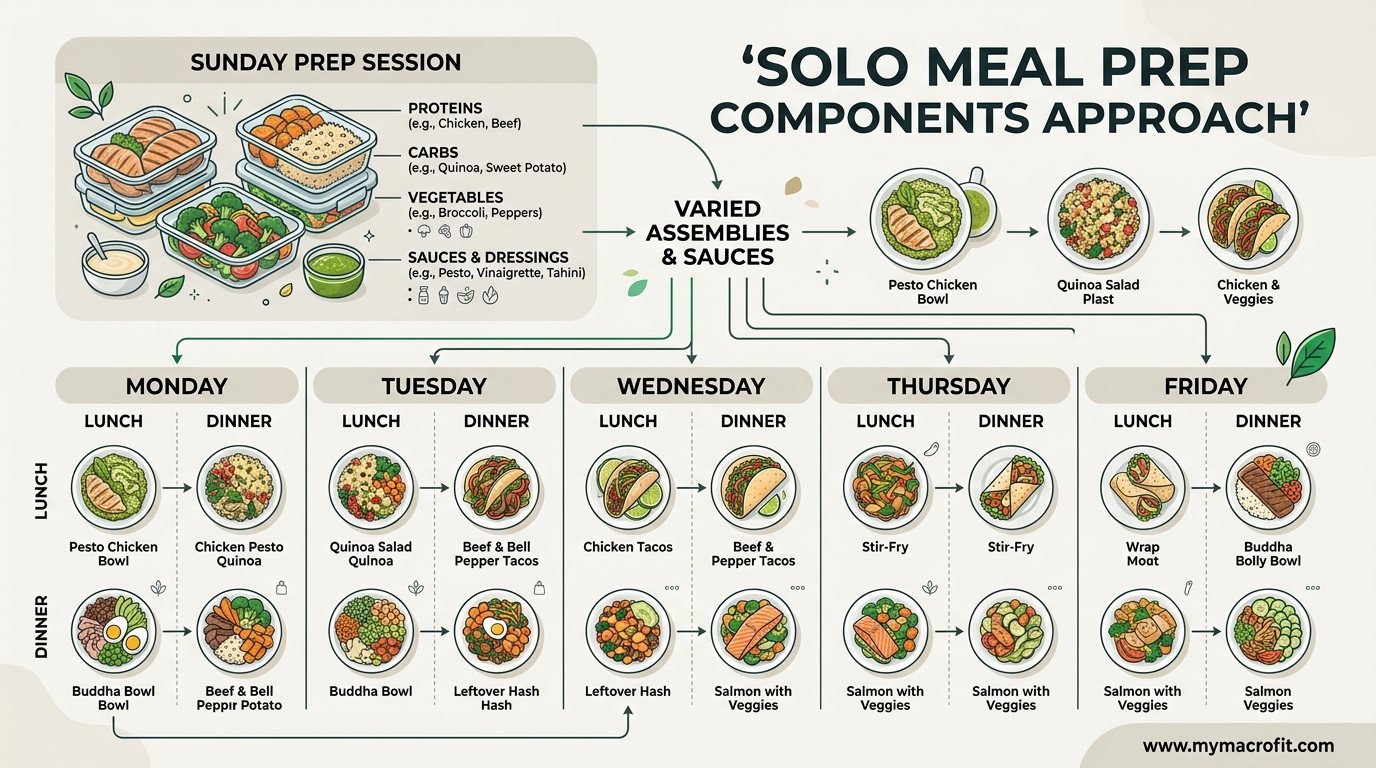
The Solo Meal Prep Session (1 Hour)
What to cook:
- 400g chicken breast (bake 25 min, 200°C)
- 200g dry brown rice (30 min)
- 300g turkey mince (15 min on hob with onion + garlic)
- 400g roasted vegetables (25 min in oven alongside chicken)
- 3 overnight oats jars
- 3 hard-boiled eggs
Parallel cooking (everything fits in 1 hour):
- 0:00, Oven on, rice in pot, chicken + veg in oven
- 0:05, Brown turkey mince on hob
- 0:20, Turkey done, make overnight oats (5 min)
- 0:25, Hard-boil eggs (9 min)
- 0:35, Check oven, rice should be done
- 0:45, Chicken + veg out, rest and cool
- 0:55, Portion into 5 lunch containers and 2 dinner components
Building the 5 Lunches from One Prep
With the same chicken + rice + roasted veg:
Monday: Teriyaki bowl, chicken + rice + veg + 1 tbsp teriyaki sauce + edamame
Tuesday: Greek wrap, chicken + wrap + tzatziki (yogurt + cucumber) + salad + feta
Wednesday: Stir-fry style, chicken + rice + veg + soy/ginger sauce + sesame seeds
Thursday: Pesto bowl, chicken + quinoa + roasted veg + pesto 1 tsp + parmesan
Friday: Salad, chicken + mixed leaves + avocado + tahini + roasted veg scattered through
One prep, five different tasting lunches. The flavour comes from the sauce and additions, not just the base protein.
Sauces and Dressings: The Variety Toolkit
Having 4-5 different sauces in the fridge transforms the perceived variety of the same components:
- Teriyaki sauce (1 tbsp), Japanese-style
- Tahini + lemon, Middle Eastern
- Pesto (1 tsp), Italian
- Soy + sesame + ginger, Asian stir-fry style
- Greek yogurt + garlic + cucumber, Mediterranean
- Hot sauce + lime, Mexican-inspired
Each of these costs pennies per serving and completely changes how the same chicken and rice combination tastes.
Storage: Keeping Solo Prep Safe
Fridge storage rules:
- Cooked chicken: up to 4 days
- Cooked rice: up to 4 days (must cool quickly and refrigerate promptly, reheated rice food safety: must be piping hot)
- Roasted vegetables: 4-5 days
- Turkey mince: 3-4 days
- Hard-boiled eggs: up to 7 days (unpeeled)
- Overnight oats: 3-4 days
For 5-day prep: Day 1-2 lunches use fresh prep; day 3-5 lunches are still safe within these guidelines. Mid-week (day 3), add any fresh components needed.
The Bottom Line
Solo meal prep works best with the components approach, batch-cook protein, grain, and vegetables separately and assemble with different sauces each day. A 1-hour Sunday session covers 4-5 days of lunches, prevents daily cooking, and eliminates decision fatigue without requiring eating the same thing daily.
The freezer is your partner for variety, anything that can be frozen should be, in individual portions, ready to rotate in when fresh prep runs out.
Save & share on Pinterest
Click any card to pin it — or share with someone who needs it.
Meal Prep for One: How to Cook Just Enough, Nothing Wasted
The complete guide to solo meal prep, scaling recipes correctly, managing portions, preventing food …
The complete guide to solo meal prep, scaling recipes correctly, managing portio…
Read the full guide: Meal Prep for One: How to Cook Just Enough, Nothing Wasted
Free fitness tools
Meal Prep for One: How to Cook Just Enough, Nothing Wasted — use our free calculators for instant pe…
Pinterest opens in a new tab. You can edit the description before saving.
Frequently Asked Questions
How do you meal prep for just one person?+
How much food should I prep for the week?+
How do I avoid eating the same meal every day when meal prepping solo?+
How do I stop food going to waste when cooking for one?+
Is meal prepping for one actually worth the effort?+
About the Author

I'm a kinesiologist and personal trainer. I've spent eight years helping women lose fat and get stronger without handing their whole life over to a diet.
View full profile →