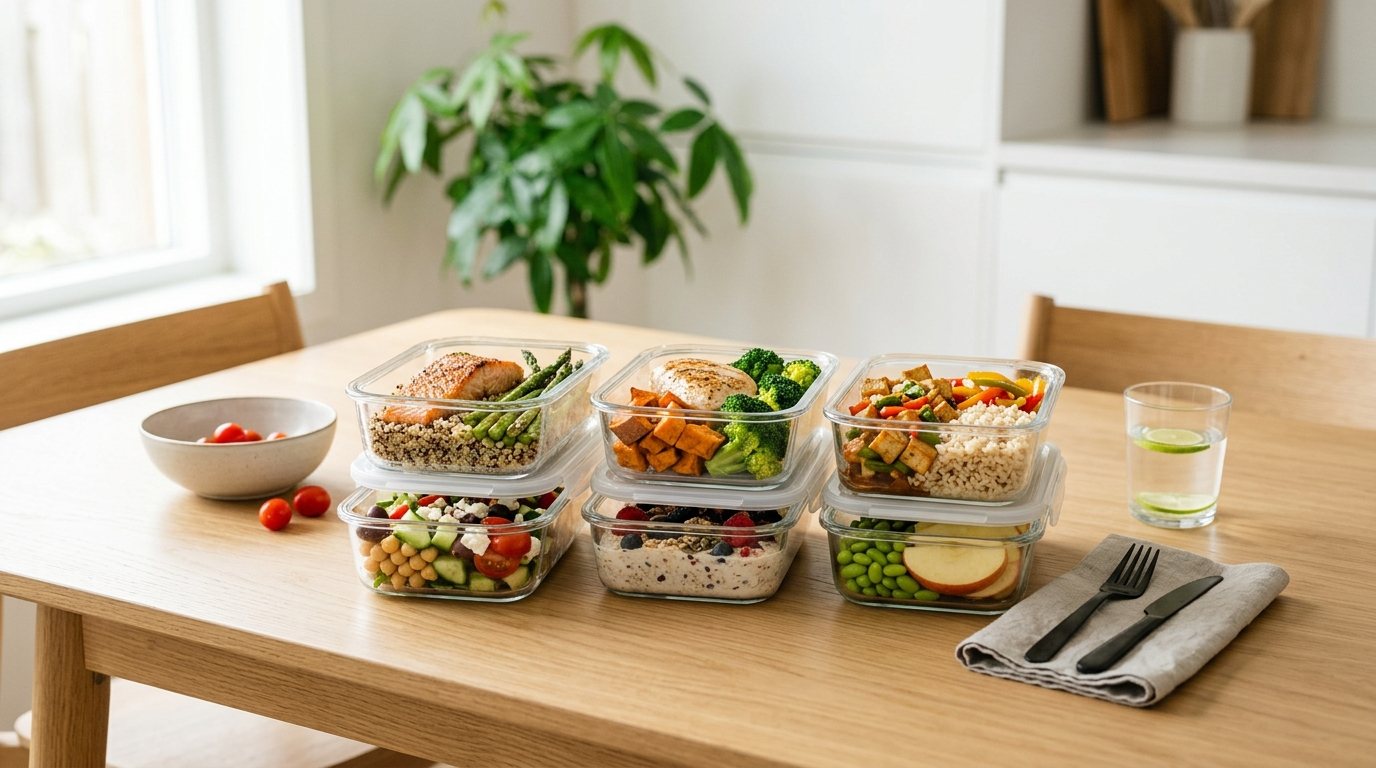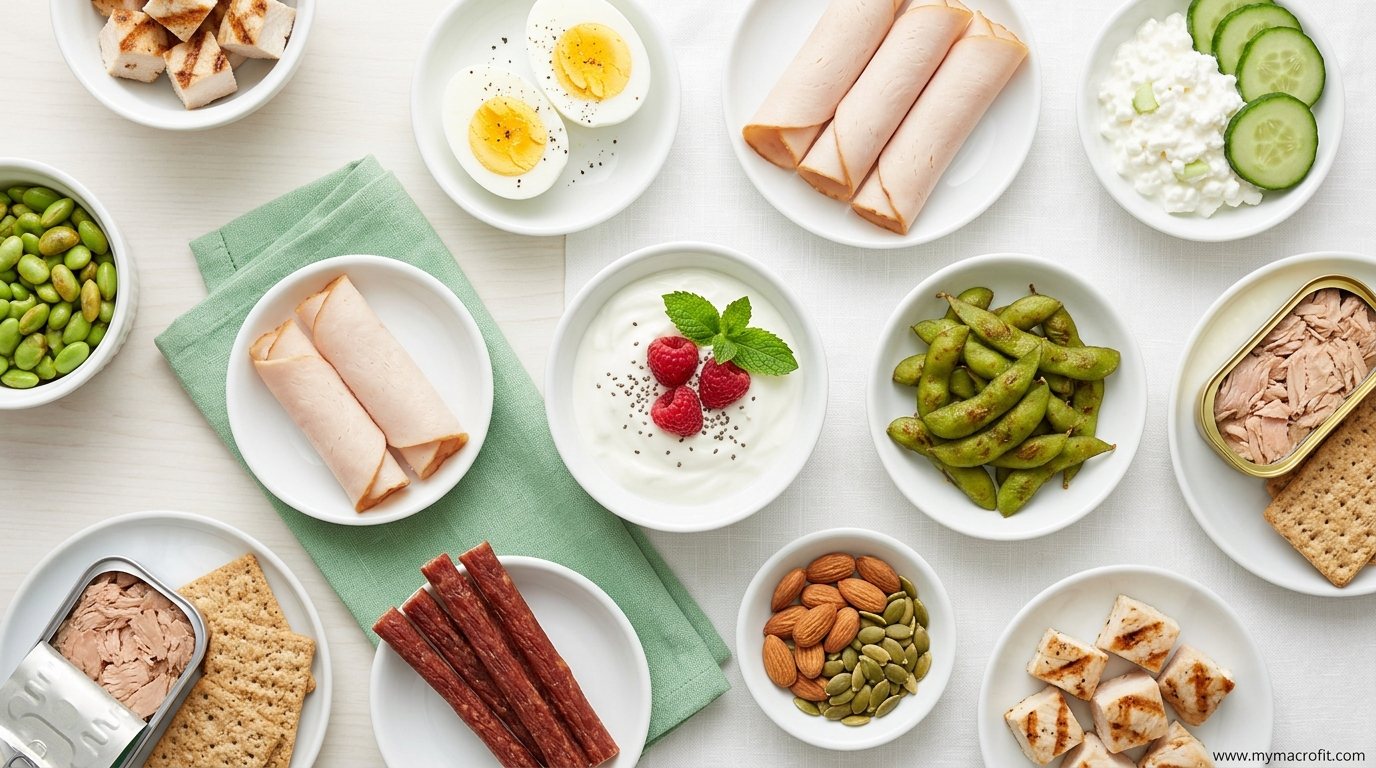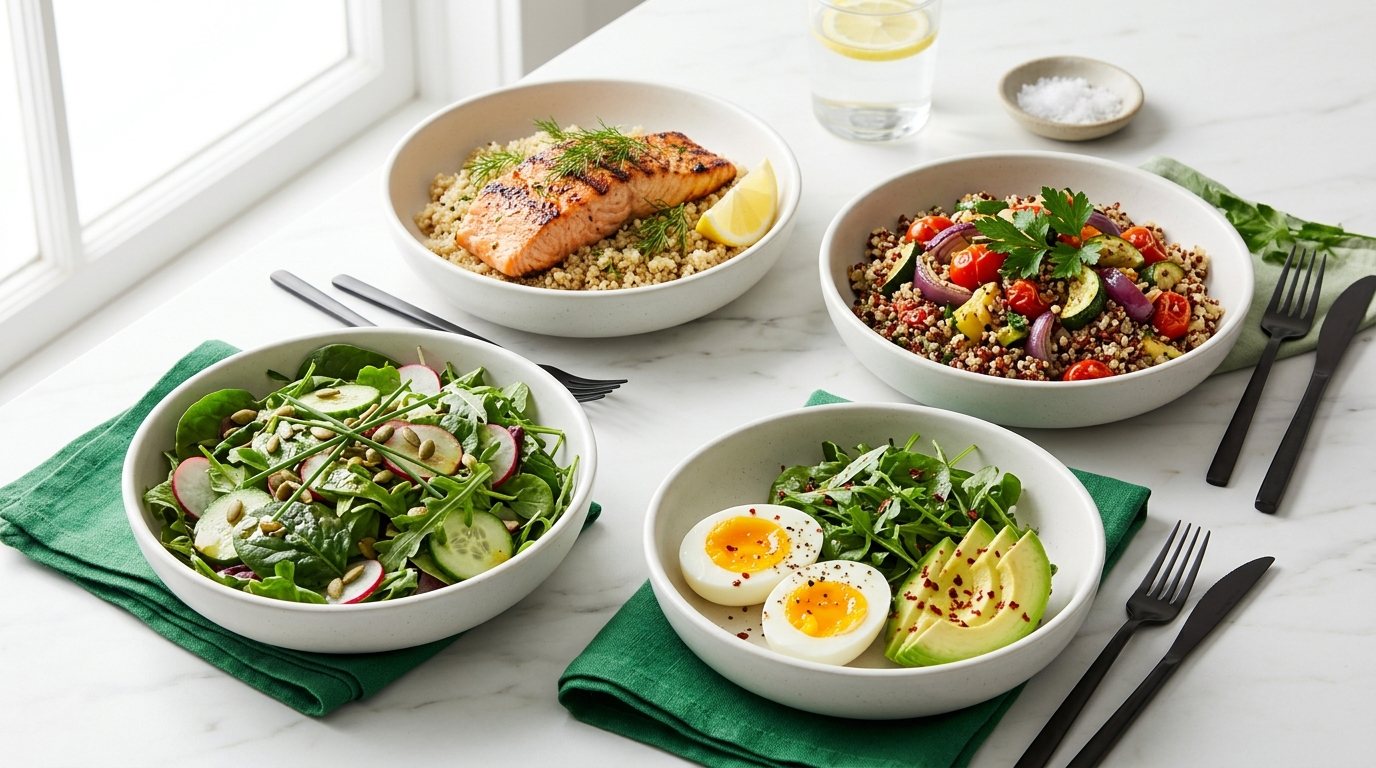
7-Day Meal Plan for Weight Loss (Beginner-Friendly)

BSc Kinesiology · CPT
A structured meal plan removes the daily decision fatigue of "what should I eat?", one of the biggest barriers to consistent healthy eating. This 7-day plan is built around 1,500 kcal/day and 130g protein, suitable as a template for most women aiming for 0.4-0.5kg/week fat loss. Men should scale portions up to hit their personal calorie and protein targets.
Before starting: Use our Macro Calculator to establish your personal daily calorie and protein targets. Adjust portions on this plan accordingly.
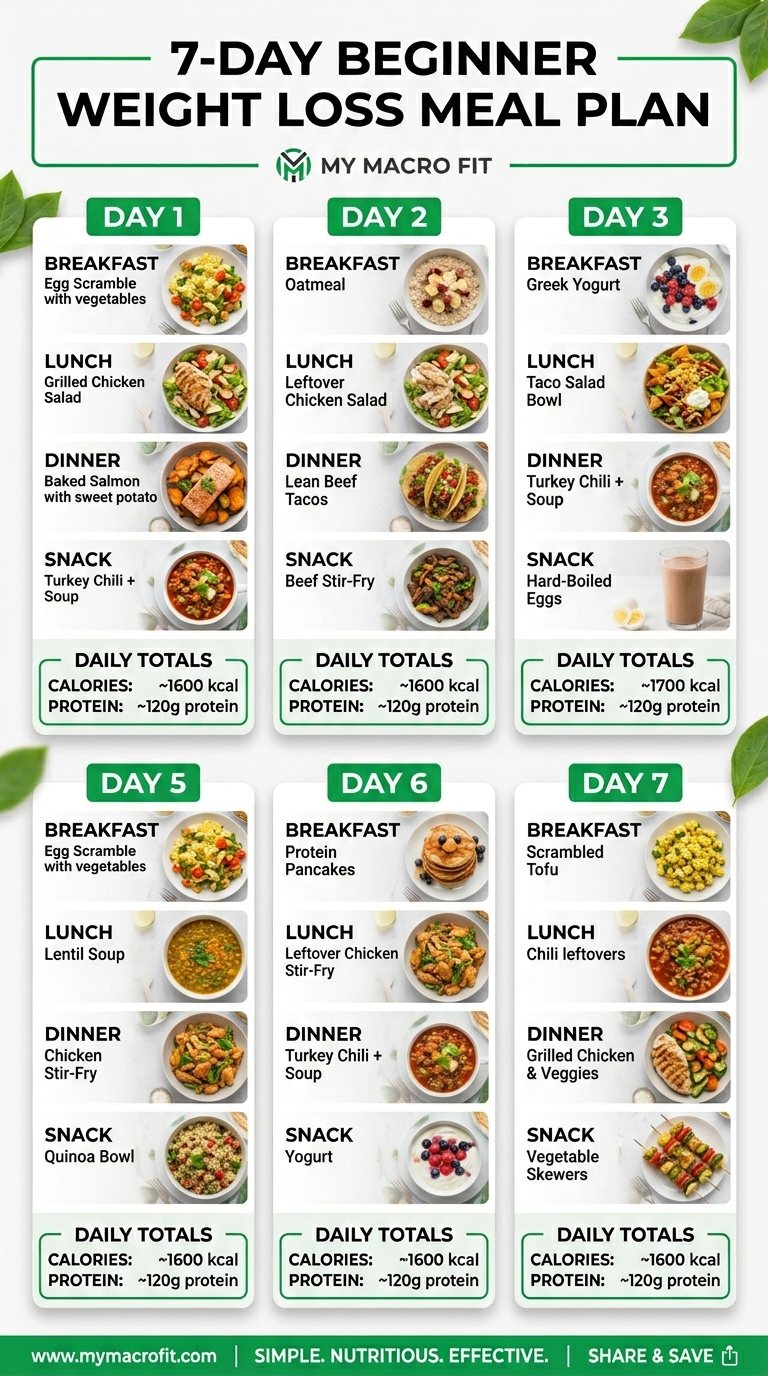
The Plan at a Glance
Daily targets: ~1,500 kcal, 130g protein, 150g carbs, 45g fat Suitable for: Women targeting 0.4-0.5kg/week fat loss (65kg, moderately active) Men: Scale portions up by approximately 30-40% to reach your calorie target
Day 1, Monday
Breakfast: Greek yogurt bowl (370 kcal, 35g protein)
- 200g 0% Greek yogurt
- 40g rolled oats (dry, soaked in yogurt overnight)
- 100g mixed berries
- 1 tbsp ground flaxseed
Lunch: Tuna salad wrap (380 kcal, 38g protein)
- 1 can tuna in water (150g, drained)
- 2 wholemeal wraps
- Mixed salad leaves, cucumber, tomato
- 1 tsp light mayo, 1 tsp mustard
Dinner: Chicken and roasted vegetables (430 kcal, 40g protein)
- 150g chicken breast (grilled or baked)
- 200g roasted courgette, peppers, onion (1 tsp olive oil)
- 180g cooked new potatoes
Snack: Cottage cheese + apple (200 kcal, 20g protein)
- 150g cottage cheese
- 1 medium apple
Day 1 Total: ~1,380 kcal, 133g protein
Day 2, Tuesday
Breakfast: Scrambled eggs on toast (380 kcal, 30g protein)
- 3 whole eggs scrambled
- 2 slices wholemeal toast
- Large handful spinach (wilted in pan)
Lunch: Lentil and vegetable soup + rye bread (380 kcal, 22g protein)
- 400ml homemade or shop-bought lentil soup (check label: ~250-300 kcal for a standard tin)
- 2 slices rye crispbread
- Small apple
Dinner: Salmon with broccoli and rice (490 kcal, 38g protein)
- 130g salmon fillet (baked)
- 200g broccoli (steamed)
- 150g cooked brown rice
- Soy sauce/lemon/ginger dressing
Snack: Protein shake + banana (250 kcal, 25g protein)
- 1 scoop whey protein in water
- 1 banana
Day 2 Total: ~1,500 kcal, 115g protein
Day 3, Wednesday
Breakfast: Overnight oats (360 kcal, 25g protein)
- 50g oats
- 200ml semi-skimmed milk
- 1 tbsp peanut butter
- 100g strawberries
Lunch: Chicken Caesar salad (420 kcal, 42g protein)
- 130g cooked chicken breast (sliced)
- Large romaine lettuce
- 25g parmesan
- 4 croutons (homemade from half a slice bread)
- Light Caesar dressing (1 tbsp)
Dinner: Turkey mince bolognese (450 kcal, 45g protein)
- 120g dry wholemeal pasta (cooked)
- 130g turkey mince
- Tomato passata, garlic, herbs
- Parmesan shaving (10g)
Snack: Edamame + cherry tomatoes (200 kcal, 14g protein)
- 150g frozen edamame (boiled, salted)
- Cherry tomatoes
Day 3 Total: ~1,430 kcal, 126g protein
Day 4, Thursday (Higher Protein Day)
Breakfast: Protein pancakes (400 kcal, 35g protein)
- 2 eggs
- 1 scoop vanilla whey protein
- 50g oats (blended)
- Splash of milk, vanilla extract
- 100g strawberries to serve
Lunch: Mackerel and rice salad (430 kcal, 35g protein)
- 1 tin smoked mackerel (125g drained)
- 150g cooked brown rice
- Cucumber, cherry tomatoes
- Lemon + olive oil dressing (1 tsp oil)
Dinner: Turkey meatballs with courgette noodles (440 kcal, 42g protein)
- 150g turkey mince (made into 3-4 balls)
- Tomato sauce (passata + garlic + herbs)
- 2 medium courgettes (spiralised or peeled)
- 30g parmesan
Snack: Greek yogurt + walnuts (220 kcal, 15g protein)
- 150g 0% Greek yogurt
- 20g walnuts (handful)
Day 4 Total: ~1,490 kcal, 127g protein
Day 5, Friday
Breakfast: Egg white omelette (330 kcal, 35g protein)
- 4 egg whites + 1 whole egg
- 50g feta cheese
- Spinach, cherry tomatoes, onion
- 2 slices wholemeal toast
Lunch: Chicken and avocado wrap (430 kcal, 35g protein)
- 120g grilled chicken
- 1 large wholemeal wrap
- ¼ avocado
- Spinach, tomato
- Squeeze of lemon
Dinner: Prawn stir-fry with noodles (440 kcal, 35g protein)
- 150g king prawns
- 150g cooked egg noodles
- Mixed stir-fry vegetables (pak choi, peppers, mangetout)
- Soy sauce, garlic, ginger, sesame oil (1 tsp)
Snack: Cottage cheese + pineapple (210 kcal, 20g protein)
- 150g cottage cheese
- 100g fresh pineapple
Day 5 Total: ~1,410 kcal, 125g protein
Day 6, Saturday (Slightly Higher Calories)
Breakfast: Full protein breakfast (450 kcal, 38g protein)
- 2 poached eggs
- 3 turkey rashers
- 200g baked beans (half tin)
- 1 slice wholemeal toast
- Grilled tomatoes
Lunch: Quinoa and halloumi salad (430 kcal, 22g protein)
- 80g dry quinoa (cooked)
- 75g grilled halloumi
- Roasted vegetables (peppers, courgette)
- Fresh spinach, lemon dressing
Dinner: Cod with sweet potato and greens (460 kcal, 40g protein)
- 150g cod fillet (baked)
- 200g sweet potato (baked)
- Large portion of green beans/broccoli
Snack: Protein bar or shake (200 kcal, 20g protein)
Day 6 Total: ~1,540 kcal, 120g protein
Day 7, Sunday
Breakfast: Smoked salmon bagel (400 kcal, 30g protein)
- 1 wholemeal bagel
- 80g smoked salmon
- 50g low-fat cream cheese
- Cucumber, lemon, capers
Lunch: Homemade soup day, chicken and vegetable (350 kcal, 35g protein)
- 130g chicken breast
- Mixed vegetables (carrot, celery, onion, leek, courgette)
- 500ml chicken stock
- Herbs (thyme, bay)
- 1 slice wholemeal bread
Dinner: Beef and vegetable stir-fry with rice (480 kcal, 38g protein)
- 120g lean beef strips
- 180g cooked brown rice
- Broccoli, peppers, onion
- Oyster sauce, garlic, ginger
Snack: Apple + 2 tbsp almond butter (230 kcal, 6g protein)
Day 7 Total: ~1,460 kcal, 109g protein
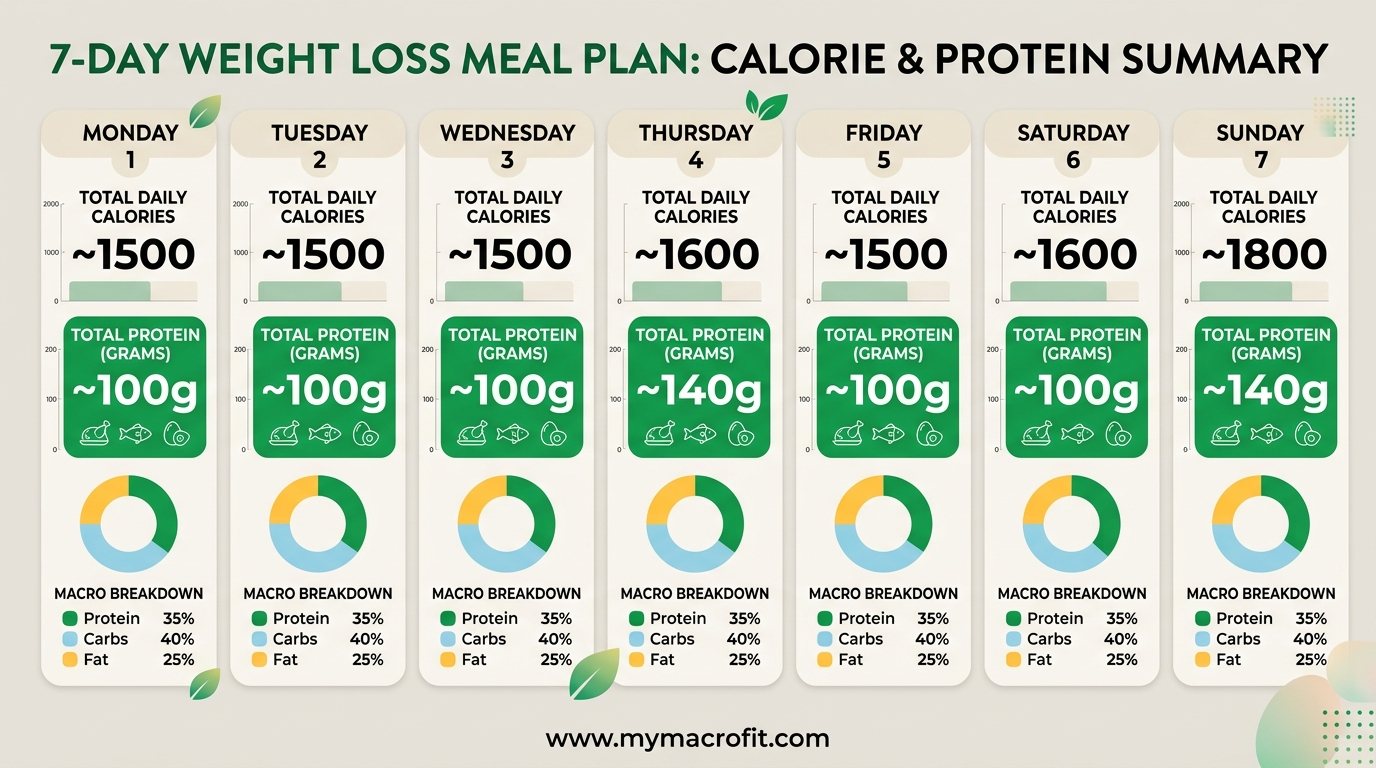
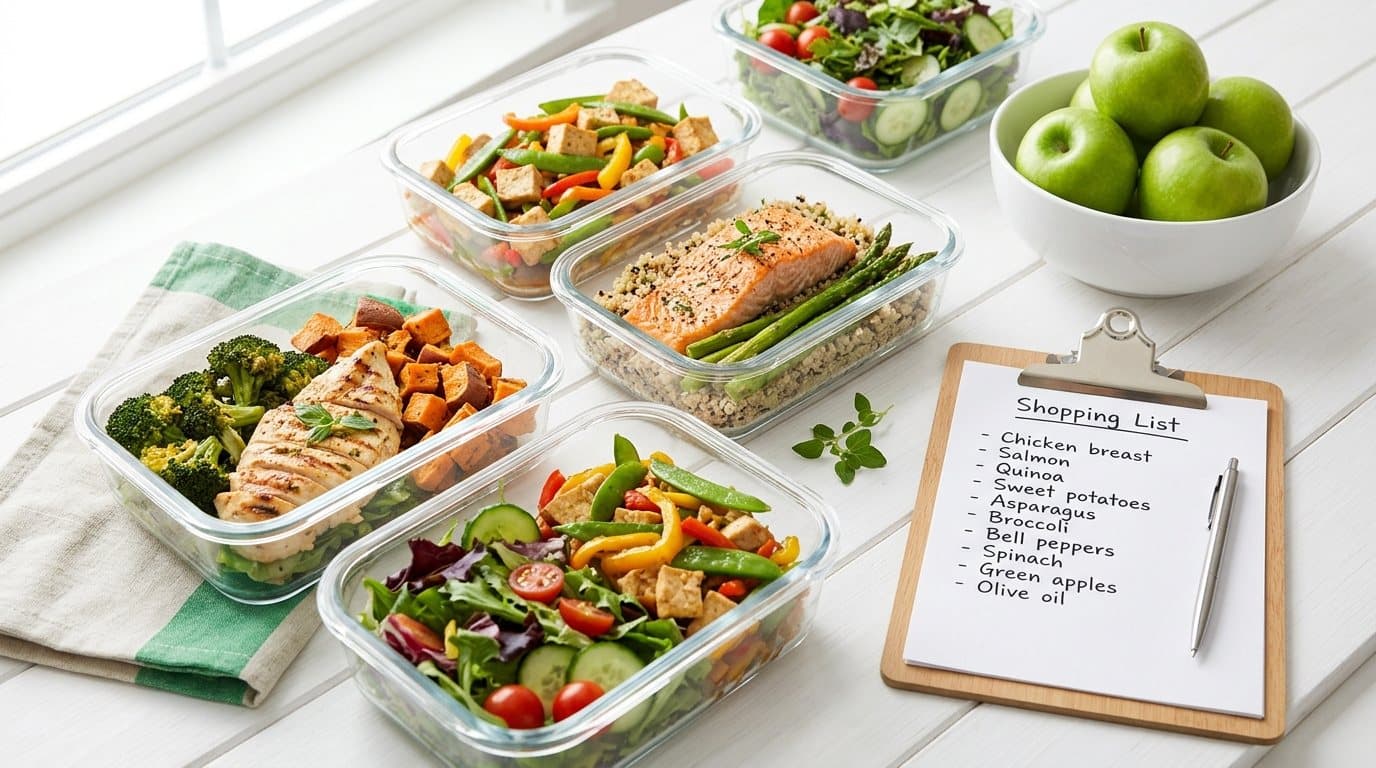
The Basic Shopping List
Proteins: Chicken breast, salmon fillet, cod fillet, turkey mince, tuna (canned), mackerel (canned), king prawns, smoked salmon, eggs, Greek yogurt (0%), cottage cheese, lean beef strips
Complex carbohydrates: Wholemeal bread and wraps, oats, brown rice, sweet potatoes, new potatoes, wholemeal pasta, quinoa, brown rice noodles, rye crispbread
Vegetables: Broccoli, courgette, peppers, spinach, cherry tomatoes, cucumber, salad leaves, onion, garlic, green beans
Fruit: Mixed berries, strawberries, banana, apple, pineapple
Pantry staples: Olive oil, soy sauce, tomato passata, Greek herbs, garlic, ginger, lemon, light mayo, mustard, ground flaxseed
The Bottom Line
This 7-day plan provides the structure and variety to start a fat loss phase without daily meal decision-making. It's a template, adjust portions up or down to match your personal calorie target, swap proteins freely, and adapt to your preferences.
Protein at every meal is the non-negotiable. Everything else is flexible.
Save & share on Pinterest
Click any card to pin it — or share with someone who needs it.
7-Day Meal Plan for Weight Loss (Beginner-Friendly)
A complete 7-day weight loss meal plan with calorie and protein targets, simple recipes, and a shopp…
A complete 7-day weight loss meal plan with calorie and protein targets, simple …
Read the full guide: 7-Day Meal Plan for Weight Loss (Beginner-Friendly)
Try the free Macro Calculator
7-Day Meal Plan for Weight Loss (Beginner-Friendly) — use our free calculators for instant personali…
Pinterest opens in a new tab. You can edit the description before saving.
Ready to get your numbers?
Free calculator, instant results, no signup required.
Frequently Asked Questions
How many calories should I eat on a weight loss meal plan?+
How much protein should I eat for weight loss?+
Can I swap meals on the plan?+
What if this meal plan's calorie level isn't right for me?+
How do I avoid getting hungry on a weight-loss meal plan?+
About the Author

I'm a kinesiologist and personal trainer. I've spent eight years helping women lose fat and get stronger without handing their whole life over to a diet.
View full profile →