Calculator or Meal Plan: Which Do You Actually Need?
Founder, MyMacroFit
I started my own weight-loss journey buried in calculators. I knew my calories, my macros, my protein target, and I still ate badly, because knowing the numbers and deciding what to cook at 7pm when I was tired turned out to be two completely different problems. That's the heart of this question. A calculator solves the knowing. A meal plan solves the doing. Figuring out which one you need starts with being honest about where you actually get stuck.
Two different problems, two different tools
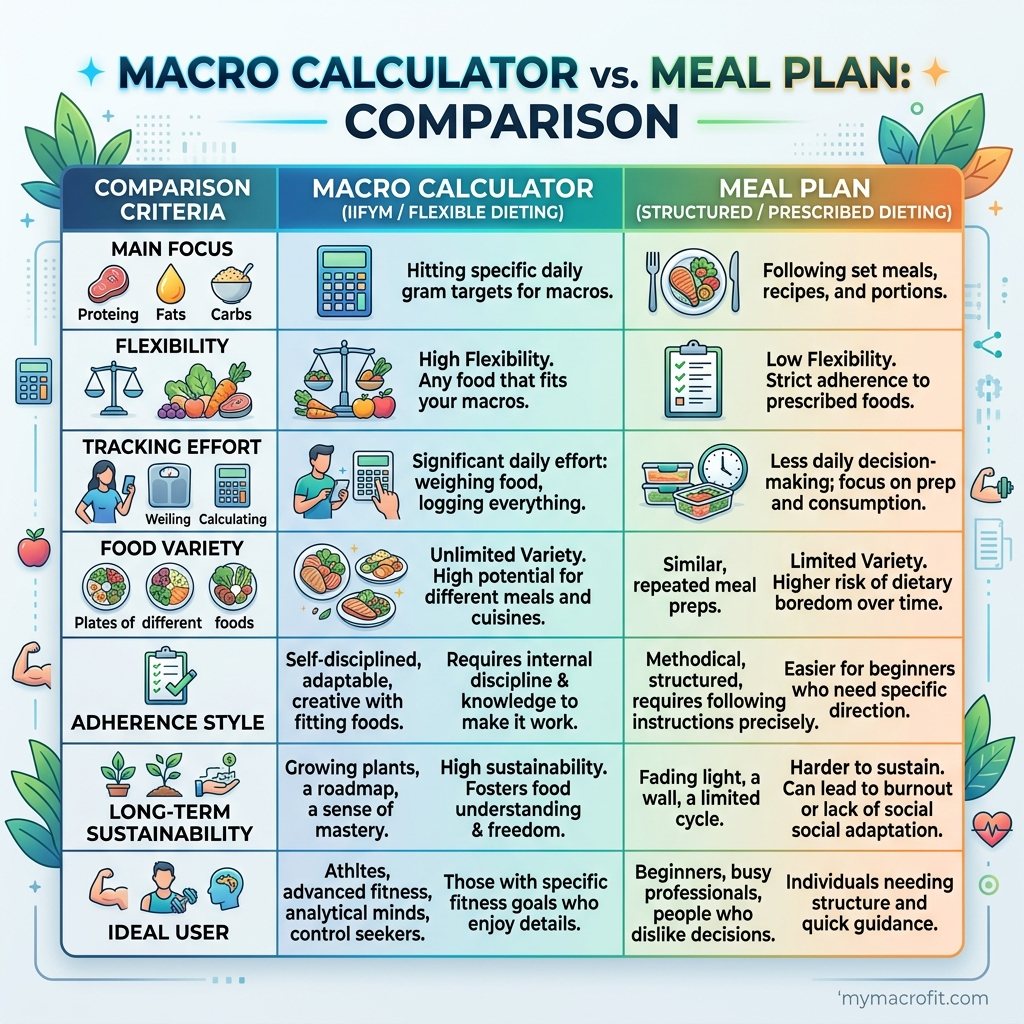
| Free Calculator | Done-For-You Meal Plan | |
|---|---|---|
| Solves | Knowing your numbers | Knowing what to eat |
| Gives you | Calorie + macro targets | Specific meals, portions, shopping list |
| Freedom | Total, eat anything that fits | Structured, follow the plan |
| Best if you struggle with | Not knowing where to start | Decision fatigue, planning, consistency |
| Cost | Free | Small one-time price |
| Effort from you | Plan your own meals | Just cook and eat |
Neither is "better." They fix different failure points. The question isn't which tool is superior, it's which problem is yours.
Choose the calculator if...
- You like cooking your own food and want freedom over what's on the plate.
- You're just starting and need to know your numbers before anything else.
- You're motivated by learning, understanding why the numbers work keeps you going.
- Your budget is zero and you want to prove the basics work first.
If that's you, start with the Calorie Deficit Calculator below to set your target, then split it with the Macro Calculator. That's a complete, free starting point, and honestly, it's where everyone should begin.
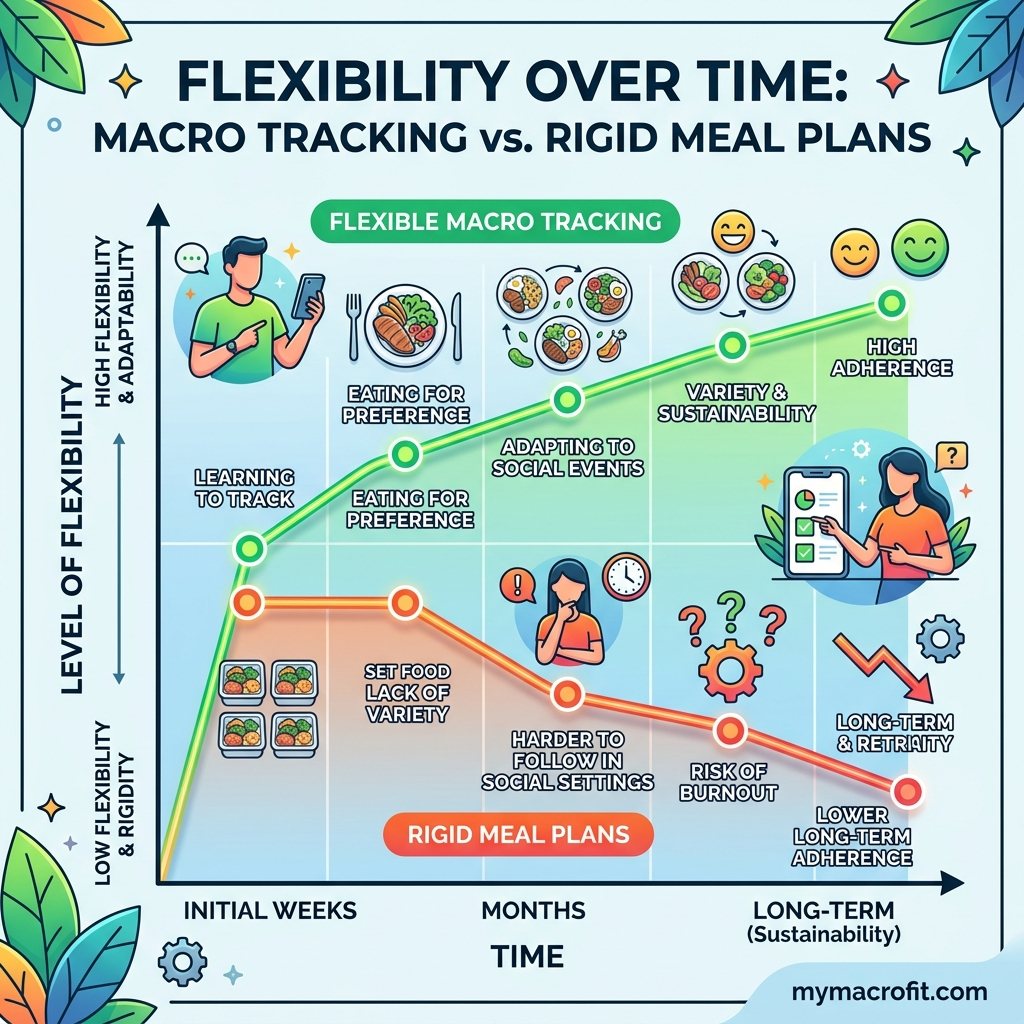
Choose a meal plan if...
- You know your numbers but can't stay consistent day to day.
- Decision fatigue is your real enemy, "what do I eat" is the thought that derails you.
- You start and stop constantly and need the planning taken off your plate.
- You'd happily pay a small amount to never plan a week of meals again.
If that's you, a structured plan like the 7-Day Weight Loss Meal Plan hands you the meals, portions, and shopping list already worked out to hit a sensible target, so the only job left is to cook and eat.
A quick way to find your sticking point
If you're not sure which camp you're in, here's the test I'd give you. Think back to your last failed attempt and ask what actually broke it. Be honest, this is the whole answer.
- "I didn't really know how much I should be eating." → That's a knowledge gap. A calculator fixes it.
- "I knew the numbers, I just couldn't be bothered to plan and cook every day." → That's an execution gap. A meal plan fixes it.
- "I'd do great for two weeks then fall apart deciding what to eat." → Also execution. Structure is your missing piece.
- "I lost track of what I was eating and drifted." → Knowledge again, you need to see your numbers.
Most people can name their breaking point in one sentence once they stop blaming "willpower" for everything. I sure could, mine was always execution, and chasing more numbers never fixed it.
What I tell people who are still stuck
When someone messages me unsure, my honest default is: start with the free calculator, always. It costs nothing and it tells you whether you even have a knowledge problem. Give it two or three weeks of genuinely trying to eat to your numbers.
If it works, brilliant, you never needed to spend a penny. If you find yourself knowing exactly what to do and still not doing it, that's not a willpower failure, it's a sign you'd benefit from having the decisions made for you. There's no shame in buying back the planning. I'm not a coach, I just learned that paying to remove a decision I kept fumbling was money well spent.
The honest answer: most people end up using both
Here's what actually happened for me, and for most people I've talked to since: you start with the calculator because it's free and it works. Then you realise the daily planning is the part that breaks you, and you add a meal plan for the structure. The calculator keeps you honest about whether a plan fits your body; the plan removes the nightly decision. Together they cover both halves, the knowing and the doing.
Start free: run the Calorie Deficit Calculator below and get your target. If, a few weeks in, you find yourself winning on knowledge but losing on execution, that's your signal that structure, not more numbers, is the missing piece. Browse the full set of guides and plans when you're ready for it.
Save & share on Pinterest
Click any card to pin it — or share with someone who needs it.
Calculator or Meal Plan: Which Do You Actually Need?
A free calculator gives you the numbers; a meal plan gives you the meals. Here's an honest look at w…
A free calculator gives you the numbers; a meal plan gives you the meals. Here's…
Read the full guide: Calculator or Meal Plan: Which Do You Actually Need?
Try the free Calorie Deficit Calculator
Calculator or Meal Plan: Which Do You Actually Need? — use our free calculators for instant personal…
Pinterest opens in a new tab. You can edit the description before saving.
Ready to get your numbers?
Free calculator, instant results, no signup required.
Frequently Asked Questions
Should I get a meal plan or just use a calculator?+
Is a free calculator enough to lose weight?+
What does a meal plan give me that a calculator doesn't?+
Can I use a calculator and a meal plan together?+
I keep starting and stopping, would a meal plan help?+
Will a meal plan still work if I don't know my calorie target?+
Can I make my own meal plan instead of buying one?+
About the Author
I'm the founder of MyMacroFit. I'm not a coach or a dietitian. I'm someone who wanted to lose weight, worked it out the hard way, and built the tools I wish I'd had.
View full profile →