Which Calculator Should You Use? A Quick Guide by Goal

BSc Kinesiology · CPT
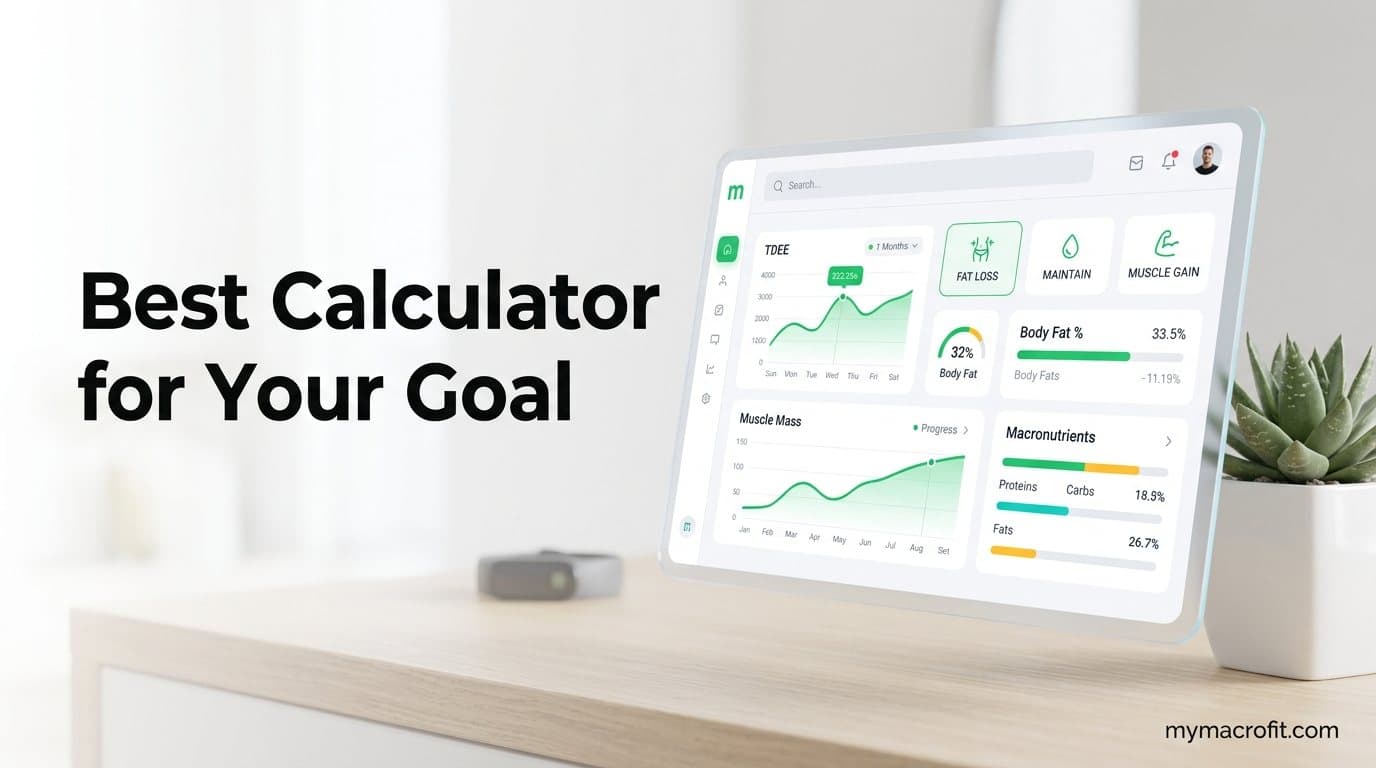
There are thirty-plus calculators on this site, and a common reaction is "great... which one do I actually use?" The answer depends entirely on one thing: your goal. Fat loss, muscle gain, and maintenance each need a different first calculator and a slightly different chain after it. Here's the decision guide that points you straight to the right tool, no guesswork, no wasted clicks.
Start here: pick your goal
| Your goal | Start with | Then | Then |
|---|---|---|---|
| Lose fat | TDEE Calculator | Calorie Deficit Calculator | Macro Calculator |
| Build muscle | TDEE Calculator | Lean Bulk Calculator | Protein Calculator |
| Maintain / recomp | TDEE Calculator | Macro Calculator | Protein Calculator |
| Just get healthier | BMI Calculator | Protein Calculator | Water Intake Calculator |
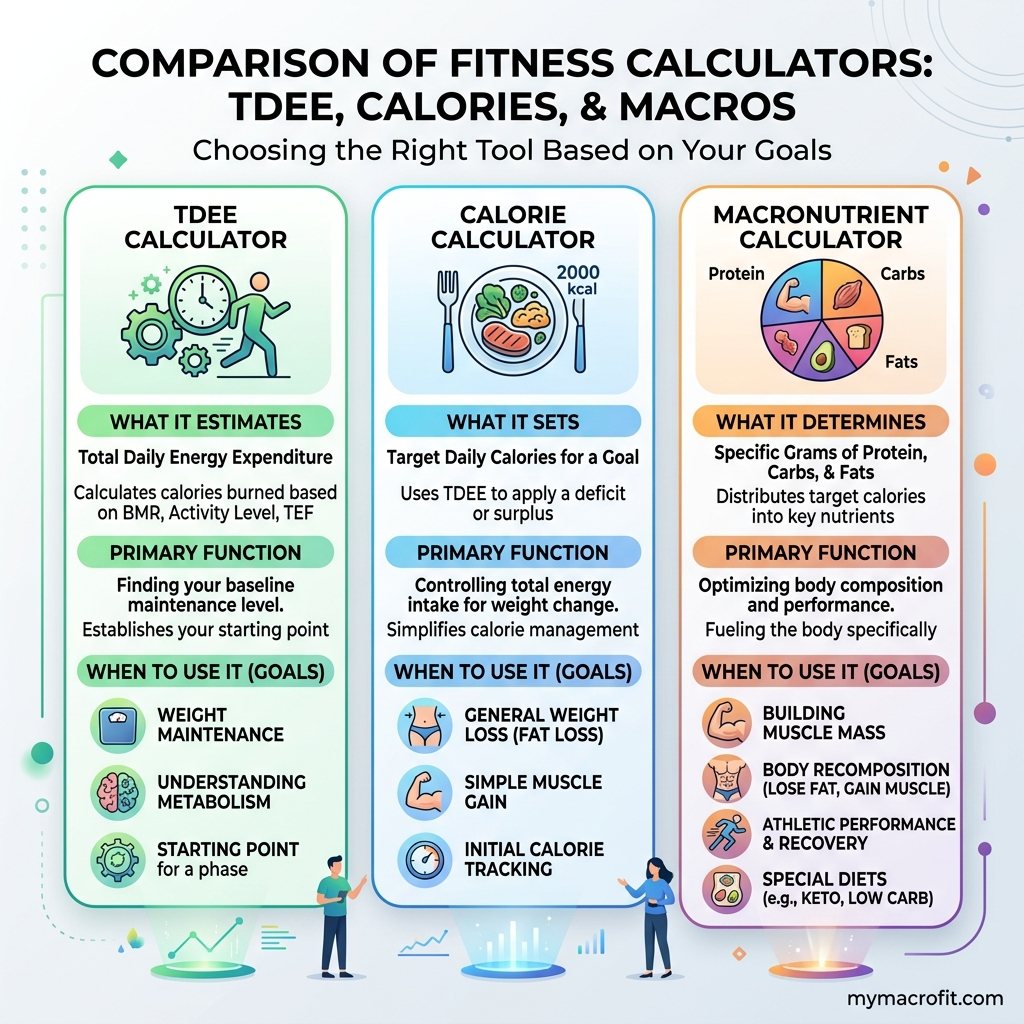
Notice what every path has in common: TDEE first. Your maintenance calories are the hinge that everything else swings on. Get that, and the right next step is obvious.
If your goal is fat loss
You want to eat below maintenance, but not so far below that you lose muscle and your willpower. The chain:
- TDEE Calculator, your maintenance line.
- Calorie Deficit Calculator, subtracts a sustainable amount for steady fat loss.
- Macro Calculator, splits the target with protein high to protect muscle.
Add the Protein Calculator if you want to nail your protein floor exactly. For the strategy behind it, see how to lose fat without constant hunger.

If your goal is muscle gain
Now you want to eat above maintenance, but only slightly, so you add muscle without piling on fat. The chain:
- TDEE Calculator, maintenance.
- Lean Bulk Calculator, a controlled surplus tuned for muscle, not fat.
- Protein Calculator, enough protein to actually build.
Muscle gain is the mirror image of fat loss: opposite calorie direction, same obsession with protein and progressive training.
If your goal is maintenance or recomposition
This is the simplest setup. Your TDEE is your target, the calories that hold your weight steady. Use the TDEE Calculator, then the Macro Calculator to keep your protein, carbs, and fat balanced. If you're chasing a recomp (losing fat and gaining muscle at once), sit at or just below maintenance, push protein high, and train hard, the Macro Calculator sets it up. More on that in body recomposition.
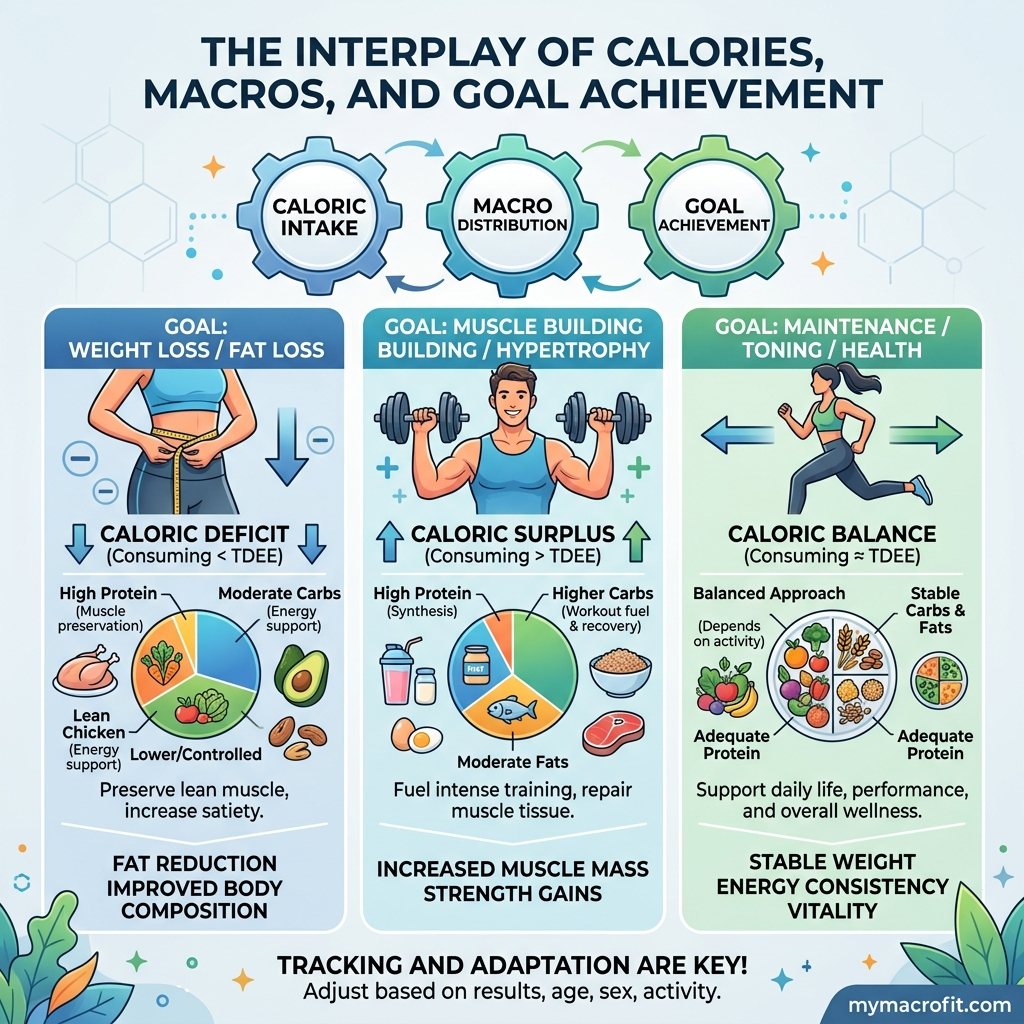
A full walkthrough: from goal to plan in five minutes
Let's run the fat-loss path end to end so you can see how the tools hand off to each other.
- TDEE Calculator. You enter your stats and it returns, say, 2,200 maintenance calories. That's the line your weight holds at.
- Calorie Deficit Calculator. You apply a moderate 20% deficit and it sets your target at roughly 1,760 calories for steady fat loss.
- Macro Calculator. It takes that 1,760 and splits it: protein high to protect muscle (around 130g), then carbs and fat filling the rest.
Three numbers, three tools, one coherent plan. You didn't guess your calories, didn't crash too low, and your protein is locked in. The same logic runs in reverse for muscle gain: TDEE, then a surplus, then protein. The tools are deliberately built to chain like this.
Common mistakes when picking a tool
A few patterns send people in circles before they've eaten a single planned meal:
- Starting with macros. Jumping to the Macro Calculator while guessing your calories is the classic error. Macros split a calorie target you haven't set yet. TDEE comes first, always.
- Confusing BMI with a calorie tool. BMI is a screening number for health, not a way to set how much you eat. It won't give you a calorie target.
- Picking the wrong direction for the goal. A deficit tool for muscle gain, or a bulk tool for fat loss, quietly works against you. Match the second step to the goal in the table above.
- Never re-running them. Your TDEE drifts as your weight changes. Re-check every 4-5kg so the whole chain stays accurate.
The one rule that ties it together
Whatever your goal: TDEE first, then the goal-specific step, then macros. Start with the TDEE Calculator below, read off your maintenance number, and follow the row in the table that matches what you want. Three calculators, five minutes, and you've got a complete, personalised target instead of a guess.
Save & share on Pinterest
Click any card to pin it — or share with someone who needs it.
Which Calculator Should You Use? A Quick Guide by Goal
Fat loss, muscle gain, or maintenance, each goal needs a different calculator first. Use this simple…
Fat loss, muscle gain, or maintenance, each goal needs a different calculator fi…
Read the full guide: Which Calculator Should You Use? A Quick Guide by Goal
Try the free TDEE Calculator
Which Calculator Should You Use? A Quick Guide by Goal — use our free calculators for instant person…
Pinterest opens in a new tab. You can edit the description before saving.
Ready to get your numbers?
Free calculator, instant results, no signup required.
Frequently Asked Questions
What calculator should I use to lose fat?+
What calculator should I use to build muscle?+
Do I use a different calculator for maintenance?+
Is TDEE or macro calculator more important?+
How accurate are these calculators for my specific body?+
Do I need to use all of these calculators or just one?+
About the Author

I'm a kinesiologist and personal trainer. I've spent eight years helping women lose fat and get stronger without handing their whole life over to a diet.
View full profile →