How to Eat at Christmas Without Undoing Your Progress
Founder, MyMacroFit
Christmas is one of the most anticipated times of the year, and one of the most anxiety-inducing for people trying to maintain their nutrition goals. This guide puts the actual risk in perspective and gives you a practical strategy for enjoying Christmas without derailing your progress.
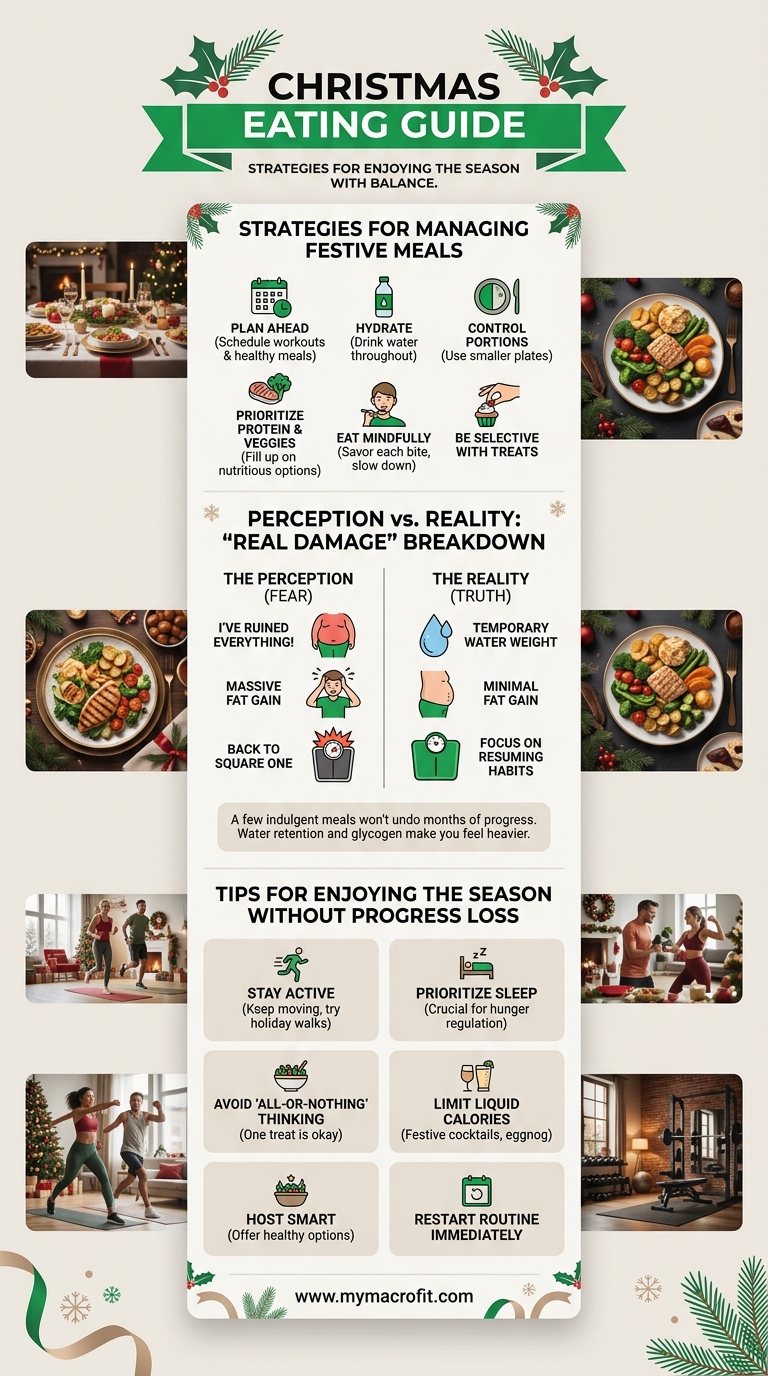
The Christmas Damage: What's Actually at Stake
Before developing a strategy, understand the real numbers:
Average Christmas weight gain (research-based): 0.5-2kg over the full festive period Most of this is: Glycogen and water from increased carbohydrate and alcohol intake, not all fat Actual fat gain: 0.5-1kg is realistic for most people who eat freely over 2 weeks of festive eating
What is 1kg of fat gain? Approximately 7,000 kcal surplus above maintenance. Over a full week of festive eating, averaging 1,000 kcal/day surplus would produce 1kg. That's significant daily overeating, a full Christmas dinner every night, plus drinks. Most people aren't this excessive even during the festive period.
The real risk isn't Christmas. The real risk is the psychological disruption that turns a modest holiday weight gain into a 3-month break from your habits.
The Goal: Maintenance, Not Loss
Actively dieting over Christmas is ambitious to the point of counterproductive for most people. The festive period involves:
- Social meals you don't control
- Tradition foods that are meaningful and worth enjoying
- Alcohol
- Reduced routine (gym may be closed, schedules disrupted)
- Psychological holiday relaxation that conflicts with rigid restriction
Realistic Christmas goal: Return to January within 1kg of your pre-December weight.
Set your TDEE as your target, use our TDEE Calculator to find maintenance, and aim to eat at maintenance rather than a deficit. This gives you more flexibility for festive eating while avoiding large surpluses.
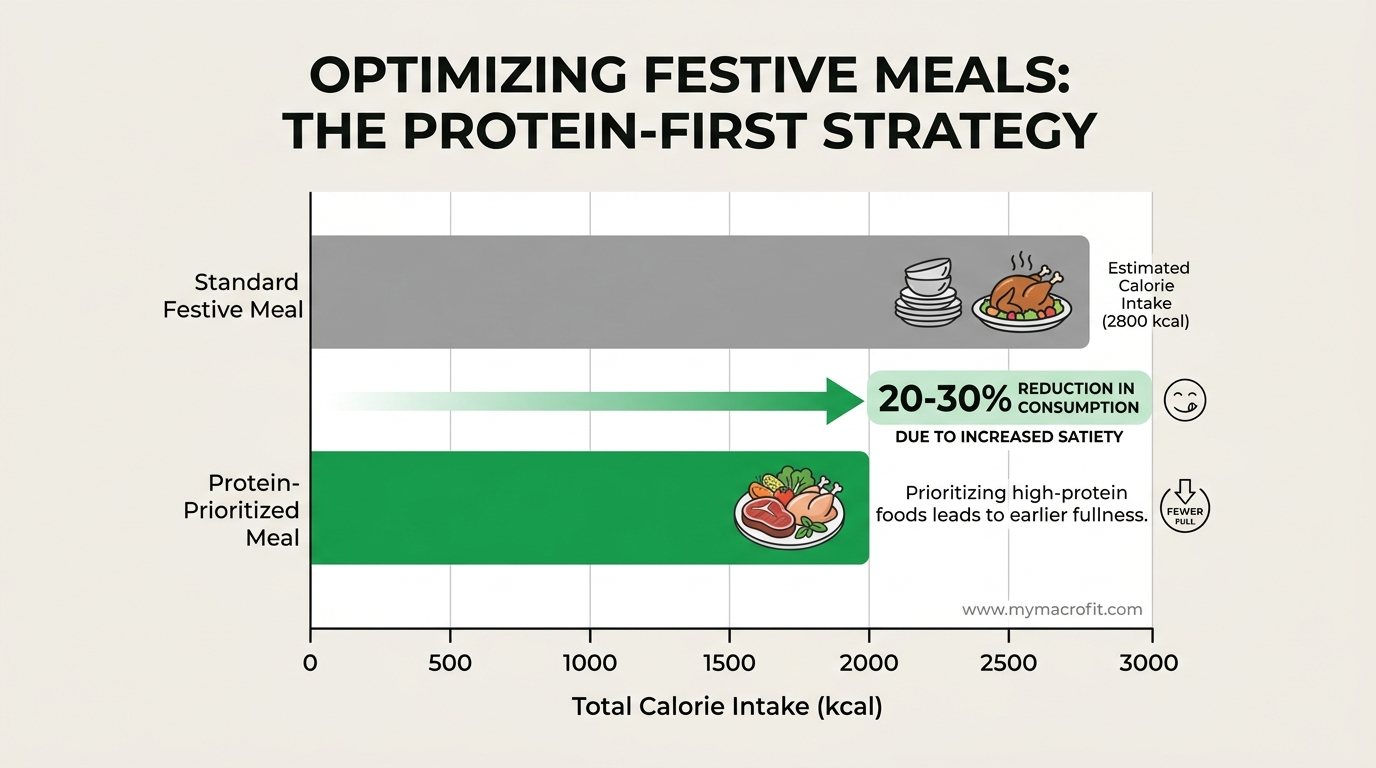
Protein First: The Most Effective Christmas Strategy
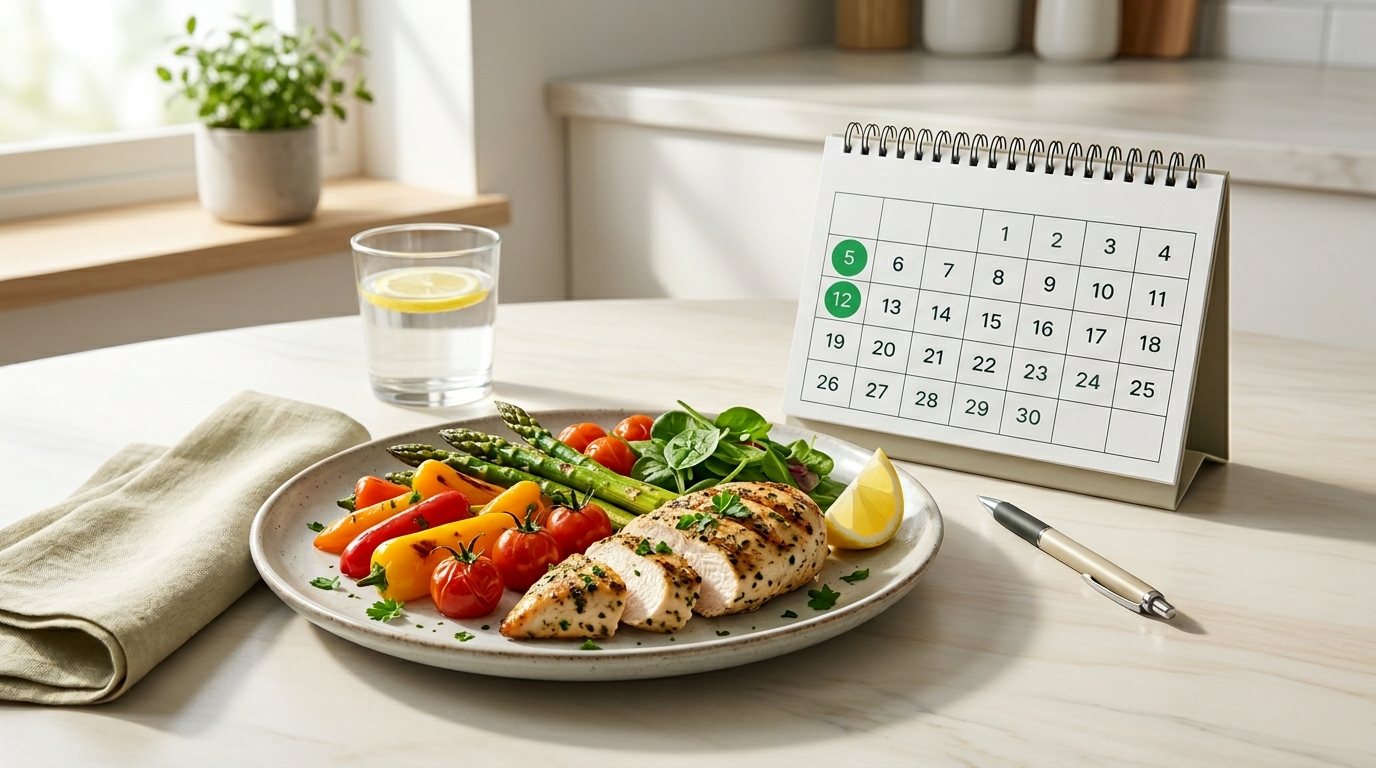
The single most effective Christmas eating strategy is protein first.
Why it works:
- High protein meals increase satiety significantly, you naturally eat less of everything else
- Protein has the highest thermic effect, more calories burned in digestion
- Protein protects muscle if you're eating at surplus
- Protein is present in most Christmas meals (turkey, ham, smoked salmon, cheese)
At every meal, eat protein first and in generous amounts:
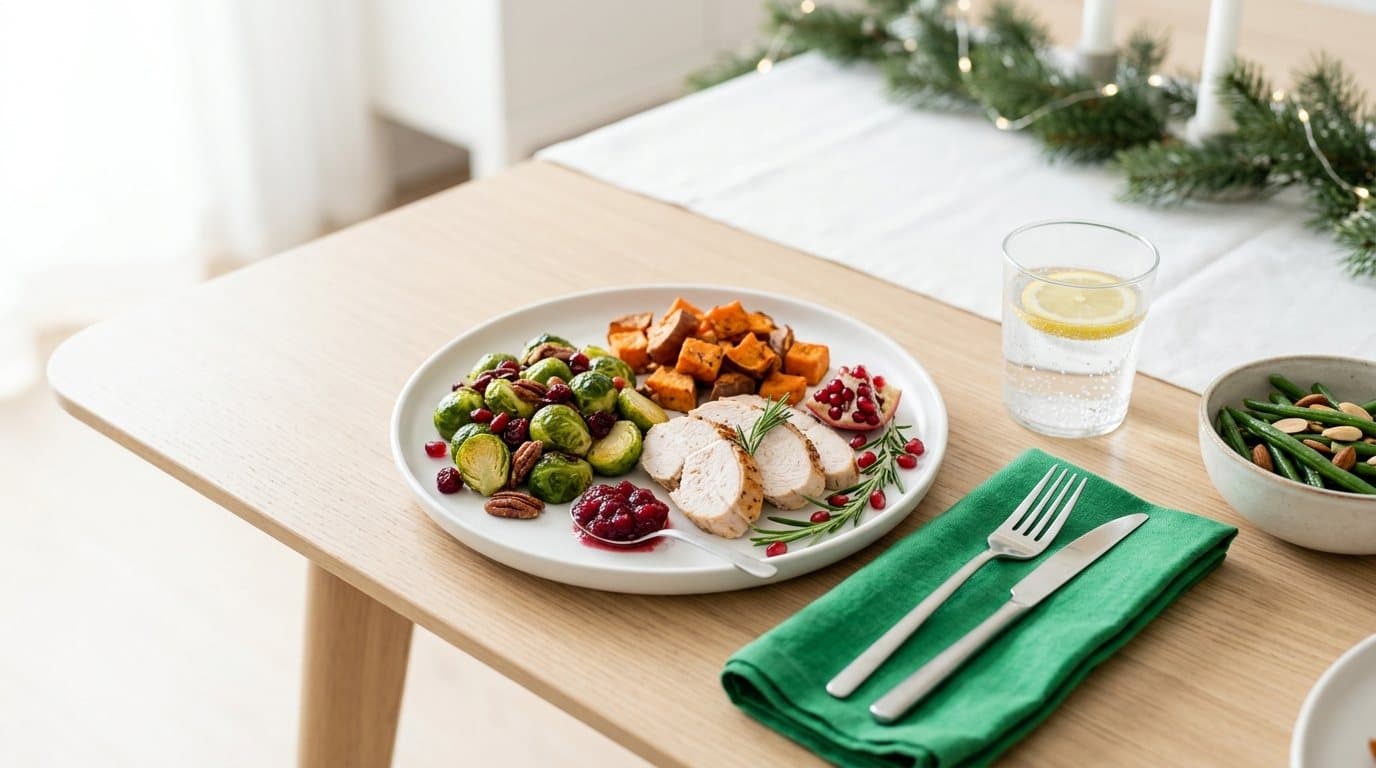
- Christmas dinner: load your plate with turkey/ham before everything else
- Buffet: hit the protein (prawns, smoked salmon, cheese, meat) before the bread rolls and canapés
- Breakfast: eggs or Greek yogurt before pastries
Managing the Three Christmas Danger Zones
1. The Grazing Problem
The real Christmas calorie bomb is not Christmas dinner. It's the constant availability of:
- Chocolate selection boxes
- Cheese boards
- Bread and butter
- Leftover pastries and mince pies
- Crisps and nibbles during TV watching
Each grazing episode seems small, but 5-8 such episodes per day adds 500-1,000+ kcal above meals. Strategies:
- Remove food from sight, graze from designated bowls rather than open boxes throughout the day
- Drink water or herbal tea between meals, often mistaken for hunger
- Eat proper meals at regular times, grazing is amplified by meal skipping
2. Alcohol
Christmas involves more alcohol than usual for most adults. A glass of wine (150ml) is 120 kcal. A pint of beer is 170-220 kcal. A mince pie + baileys before bed: 400+ kcal. Manage alcohol strategically: alternate alcoholic drinks with water, choose spirits + soda over wine or beer if reducing calories, set a maximum (2-3 drinks for a social occasion rather than open-ended).
3. The December 26th, January 1st Void
Christmas Day is typically the most structured festive day. The danger zone is the week between Christmas and New Year when there's no routine, food is everywhere, exercise hasn't resumed, and "may as well write off the week" thinking takes hold.
Strategy for this period: One structured meal per day (even if the rest is relaxed), particularly breakfast. A high-protein breakfast creates a day with an anchor. 7,000-8,000 steps as a minimum, easy to achieve with post-Christmas walks. Return to exercise as quickly as possible (December 27th or 28th if the gym reopens).
Christmas Day Itself: Enjoy It
Christmas Day is the one day to eat what you want without guilt or tracking. A typical Christmas dinner (turkey, roasties, vegetables, stuffing, gravy) is approximately 800-1,200 kcal, a large meal, but one meal. Combined with drinks and dessert, Christmas Day might be 1,000-1,500 kcal surplus. That's the context. It's one day.
What you can do on Christmas Day without ruining anything:
- Have breakfast with protein (eggs, smoked salmon) before the main event, prevents arriving at Christmas dinner ravenous
- Eat slowly and savour the meal, satiety signals take 15-20 minutes to register
- Choose quality over quantity: one excellent mince pie is more satisfying than four mediocre ones
January Reset Strategy
The key to Christmas success is the January reframe. Return on January 2nd ready to:
- Recalculate your TDEE (your weight may be slightly higher, adjusting calorie needs modestly)
- Resume training, the first session back will feel harder, but it's not a loss of progress
- Shift from "undoing Christmas damage" mindset to "continuing from where I was" mindset
The 1kg you may have gained is largely water and glycogen. It disappears within 1-2 weeks of returning to normal eating. It is not 1kg of permanent fat gain.
The Bottom Line
Christmas weight gain is typically 0.5-2kg, mostly glycogen and water, not fat. The goal over Christmas is maintenance (TDEE calories), not loss. Protein-first at every meal is the most effective strategy. Managing the grazing (chocolate boxes, cheese boards, constant nibbles) matters more than Christmas dinner itself. And January success starts with the right mindset: you're continuing, not starting over.
Save & share on Pinterest
Click any card to pin it — or share with someone who needs it.
How to Eat at Christmas Without Undoing Your Progress
A practical guide to managing Christmas eating, how to enjoy the festive period without derailing yo…
A practical guide to managing Christmas eating, how to enjoy the festive period …
Read the full guide: How to Eat at Christmas Without Undoing Your Progress
Try the free TDEE Calculator
How to Eat at Christmas Without Undoing Your Progress — use our free calculators for instant persona…
Pinterest opens in a new tab. You can edit the description before saving.
Ready to get your numbers?
Free calculator, instant results, no signup required.
Frequently Asked Questions
How much weight do people actually gain over Christmas?+
Should I diet over Christmas?+
What should I eat on Christmas Day itself?+
How do I get back on track after Christmas?+
Should I exercise more over the festive period?+
Is it better to skip meals to save calories for a Christmas feast?+
About the Author
I'm the founder of MyMacroFit. I'm not a coach or a dietitian. I'm someone who wanted to lose weight, worked it out the hard way, and built the tools I wish I'd had.
View full profile →