
Cycle Syncing: How to Eat and Train Around Your Menstrual Cycle

RHC · Pre/Postnatal Fitness Specialist
The menstrual cycle creates predictable hormonal changes across approximately 28 days that affect energy, strength, recovery, metabolism, and appetite. Cycle syncing is the practice of adjusting nutrition and training to work with these patterns rather than against them.
This isn't about restriction or complexity, it's about understanding your physiology well enough to support it.
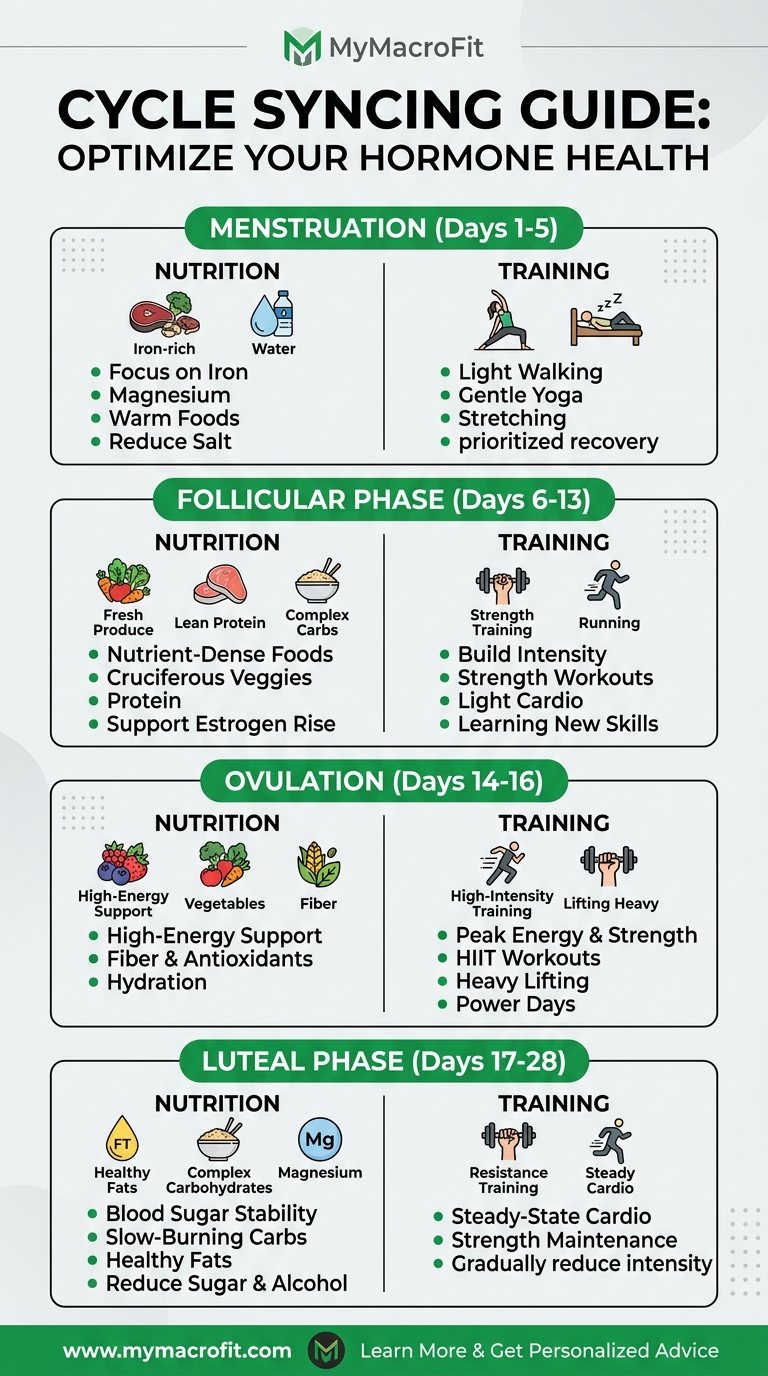
The Four Phases of the Menstrual Cycle
Phase 1: Menstruation (Days 1-5)
Hormonal state: Both oestrogen and progesterone are at their lowest. The uterine lining sheds.
How you feel: Energy often lower. Iron loss from blood loss. Prostaglandins (inflammatory compounds) cause cramping. Some women experience significant pain, fatigue, and mood disruption.
Nutrition support:
- Iron: Replace losses from blood loss. Red meat (highest bioavailable iron), lentils, dark leafy greens + vitamin C to enhance absorption
- Omega-3: Reduce prostaglandin production (anti-inflammatory), fatty fish, walnuts, flaxseed
- Magnesium: Some evidence for reducing cramping, dark chocolate, leafy greens, supplement if needed
- Hydration: Maintain fluid intake even when appetite is reduced
Training: Respect genuinely lower capacity. Light cardio, yoga, or walking. Vigorous training on day 1-2 is appropriate if you feel up to it, there's no physiological reason not to, but forcing it when fatigued serves no benefit.
Phase 2: Follicular Phase (Days 6-14)
Hormonal state: Oestrogen rises steadily. FSH (follicle-stimulating hormone) stimulates follicle development. Progesterone is low.
How you feel: Energy returns and builds progressively. Mood improves, serotonin and dopamine are more available under oestrogen's influence. Mental clarity and motivation typically peak. Insulin sensitivity is at its best.
This is the most metabolically favourable phase for fat loss.
Nutrition support:
- Lighter carbohydrate loads are well-handled: High insulin sensitivity means carbohydrates are processed efficiently
- Cruciferous vegetables: Support oestrogen metabolism as it rises
- Moderate to standard calories: Appetite naturally lower in this phase
- Fresh, variety-focused meals tend to feel appealing
Training: Push harder here. This is when strength gains, high-intensity training, and PR attempts are best timed. Recovery is faster. VO2max capacity may be at its peak. Make the most of this phase for high-demand training.
Phase 3: Ovulation (~Day 14)
Hormonal state: Oestrogen peaks, triggering an LH surge that causes ovulation. A brief, sharp shift.
How you feel: Energy and confidence typically at their highest for the cycle. Libido peaks.
Training note: Research shows a modest increase in ligament laxity around ovulation (related to oestrogen's effects on collagen). Not a reason to avoid training, but worth a thorough warm-up and attention to form in high-impact activities.
Phase 4: Luteal Phase (Days 15-28)
Hormonal state: Progesterone rises substantially; oestrogen rises briefly then both decline toward menstruation if pregnancy doesn't occur.
How you feel: Energy often decreases progressively. Appetite increases, progesterone raises resting metabolic rate slightly (~100-150 kcal/day), and genuine increased hunger is common. Carbohydrate cravings (for brain serotonin precursors) are normal. Water retention builds 0.5-3kg. PMS symptoms (breast tenderness, mood changes, bloating) typically appear in days 22-28.
Nutrition support:
- Slightly higher calorie intake is physiologically appropriate: The body genuinely burns slightly more, fighting hunger in this phase often backfires
- Prioritise complex carbohydrates: Sweet potato, oats, brown rice, they support serotonin production and are better choices than the refined carbs cravings may call for
- Magnesium: Highest need here, reduces PMS symptom severity
- B6: Associated with reduced PMS symptoms in clinical studies
- Reduce alcohol and caffeine: Both worsen PMS and disrupt sleep in this phase
- Don't panic about scale weight: Water retention is normal, 1-3kg above follicular phase is physiology, not fat
Training: Maintain training but reduce expectations for PRs. Strength is largely maintained in the luteal phase, but recovery is slower. Moderate volume, adequate rest. Prioritise sleep, it's harder and more important in this phase simultaneously.
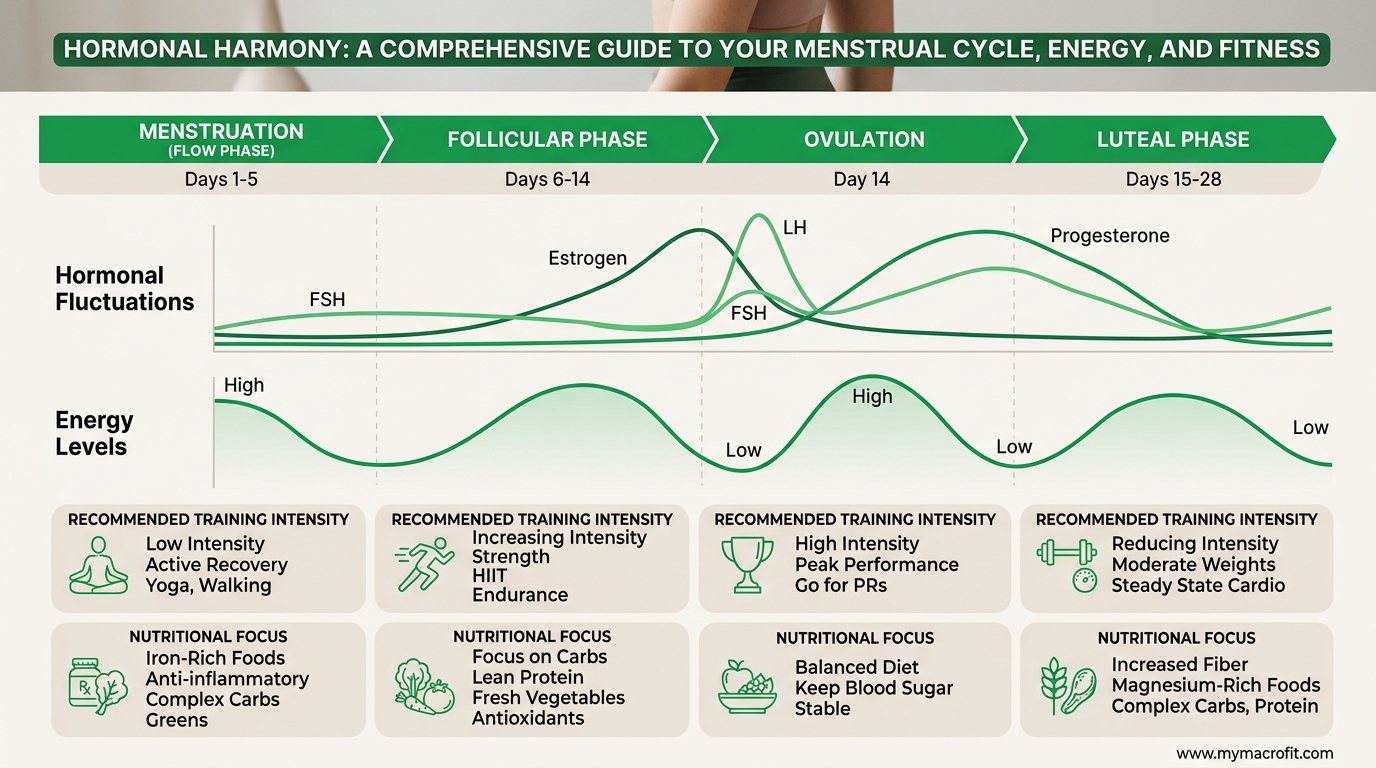
The Practical Cycle Syncing Framework
You don't need to overhaul your entire diet every week. The practical version:
Same throughout:
- Calorie target (small weekly average adjustment acceptable in luteal phase)
- Protein target (2g/kg consistently throughout)
- Resistance training programme (adjust intensity to phase)
- Sleep priority
Adjust by phase:
- Training intensity: high in follicular/ovulation; moderate in luteal; gentle in menstruation
- Carbohydrate emphasis: higher-quality focus in luteal phase (cravings are real)
- Specific nutrients: iron in menstruation; magnesium highest priority in luteal; crucifers throughout follicular
The scale: Weigh consistently but track monthly averages, luteal-phase water weight fluctuation is normal physiology.
For Women Without Regular Cycles
Cycle syncing applies to women with regular ovulatory cycles. For women who:
- Are on hormonal contraception (pill, IUD hormonal, implant), hormone levels are suppressed and synthetic, cycle phases are different or absent
- Are postmenopausal, see our menopause nutrition guide
- Have PCOS or irregular cycles, see our PCOS weight loss guide
- Are experiencing hypothalamic amenorrhea, focus on restoring cycle before optimising within it
The Bottom Line
Cycle syncing is a low-cost, practical framework for working with your physiology rather than against it. It won't override calorie balance for fat loss, but it removes the confusion of why effort and results seem inconsistent throughout the month.
Push hard in the follicular phase. Be patient and nourished in the luteal phase. Rest adequately during menstruation. Track monthly averages rather than daily fluctuations.
Save & share on Pinterest
Click any card to pin it — or share with someone who needs it.
Cycle Syncing: How to Eat and Train Around Your Menstrual Cycle
How to adjust your diet and training across the four phases of the menstrual cycle to work with your…
How to adjust your diet and training across the four phases of the menstrual cyc…
Read the full guide: Cycle Syncing: How to Eat and Train Around Your Menstrual Cycle
Free fitness tools
Cycle Syncing: How to Eat and Train Around Your Menstrual Cycle — use our free calculators for insta…
Pinterest opens in a new tab. You can edit the description before saving.
Frequently Asked Questions
Does cycle syncing actually work for weight loss?+
What should I eat during my period?+
What is the best exercise to do during each phase of the cycle?+
Does cycle syncing work if my cycle is irregular or I'm on hormonal birth control?+
Is it normal for my weight to go up before my period?+
About the Author

I'm a registered health coach and pre/postnatal specialist. I look at the whole person, your sleep, your stress, your hormones, because the number on the scale is only ever part of the story.
View full profile →