
Menopause Nutrition: Macros, Calories, and What Changes After 50

RHC · Pre/Postnatal Fitness Specialist
Menopause, the point 12 months after the final menstrual period, marks a new hormonal and nutritional reality. The nutritional needs that served you well in your 30s and 40s need recalibration.
This isn't about restriction, it's about understanding what your body needs differently and building an eating pattern that supports both body composition and long-term health during this significant life stage.
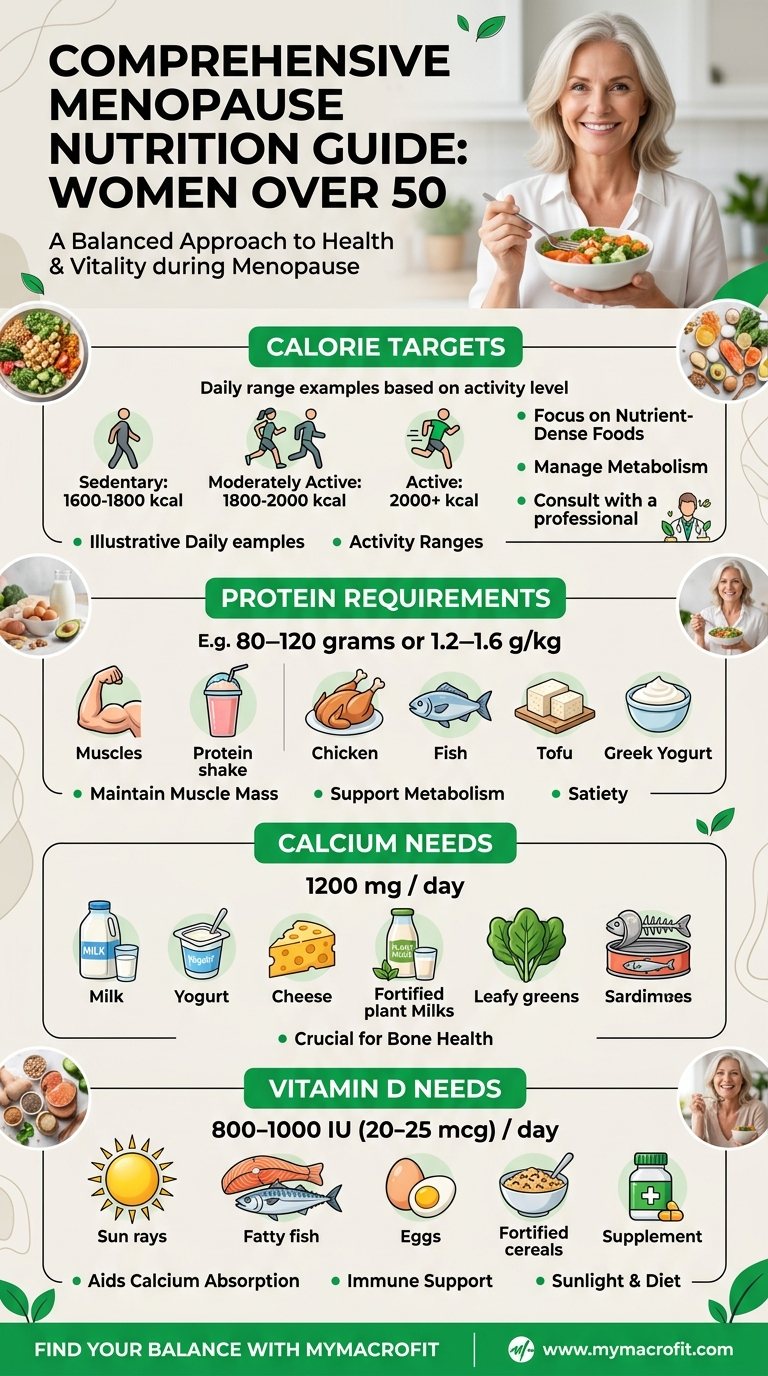
How Calorie Needs Change at Menopause
Post-menopause TDEE is typically 200-400 kcal lower than earlier adult life for the same woman, due to:
- Muscle loss: Less lean mass = lower resting metabolic rate
- Reduced oestrogen: Oestrogen has a mild metabolic-boosting effect; its loss reduces baseline calorie needs slightly
- Often reduced activity: Many women are less active than in earlier decades
Practical implication: The calorie intake that maintained your weight at 40 will likely cause weight gain at 55 if not adjusted.
Use our Menopause Calorie Calculator to estimate your current calorie needs, and validate against your weekly weight trend (if stable at current intake, that's your maintenance).
Protein: The Most Important Macronutrient at This Stage
Protein requirements actually increase with age, the muscle protein synthesis response to dietary protein becomes blunted, requiring higher intake to achieve the same effect.
Target: 1.8-2.2g/kg bodyweight
For a 65kg woman: 117-143g/day. For a 75kg woman: 135-165g/day.
Why it's particularly important after menopause:
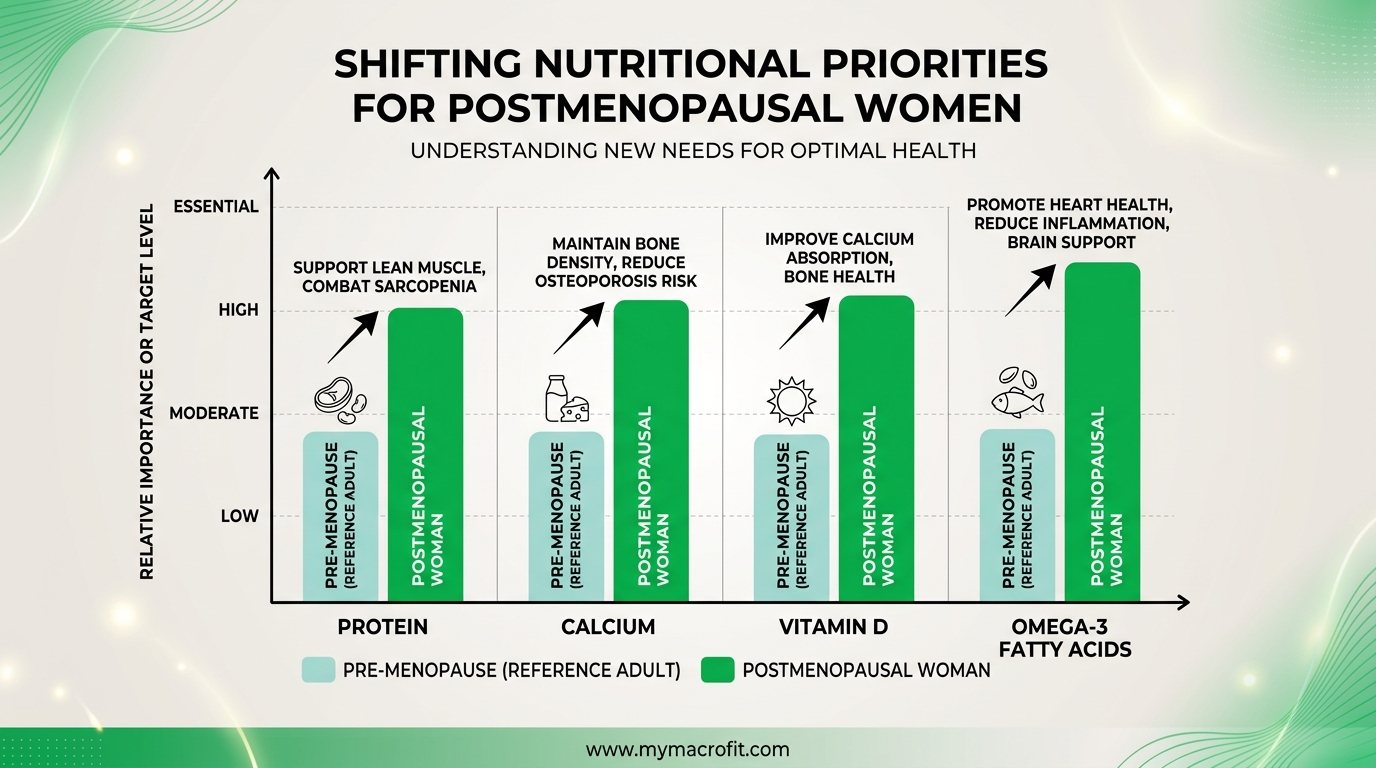
Muscle preservation: With accelerated sarcopenia and no oestrogen to assist, adequate protein is the primary dietary tool for maintaining muscle mass and metabolic rate.
Bone health: Dietary protein supports bone collagen synthesis, often overlooked alongside calcium in bone health. Low protein intake is associated with lower bone density in postmenopausal women.
Satiety on fewer calories: Higher protein is more filling per calorie, which matters when total calorie allowance has decreased.
Best protein sources: Lean poultry, fish (especially fatty fish for omega-3), eggs, Greek yogurt, cottage cheese, legumes.
Carbohydrates: Quality Matters More Than Before
The reduced insulin sensitivity of menopause means carbohydrate quality has greater impact on blood glucose, weight, and metabolic health.
Prioritise:
- Legumes (lentils, chickpeas, black beans), high fibre, moderate protein, slow glucose release
- Oats, beta-glucan fibre improves insulin sensitivity
- Sweet potato, quinoa, brown rice, whole food, fibre-containing starches
- Plenty of non-starchy vegetables (unlimited)
Reduce:
- Refined carbohydrates: white bread, pastries, biscuits
- Sugary drinks and fruit juice
- High-glycaemic snack foods
This doesn't mean eliminating these foods, it means they're no longer the staples. Moving to a Mediterranean or lower-glycaemic dietary pattern produces clear improvements in blood glucose regulation and weight management post-menopause.
Fats: Embrace Healthy Sources
Fat intake post-menopause should emphasise:
Omega-3 fatty acids (EPA + DHA): Strong evidence for cardiovascular protection (cardiovascular risk increases significantly post-menopause), reduced inflammation, and some evidence for improved mood during hormonal transitions. Aim for 2-3 portions of fatty fish weekly (salmon, mackerel, sardines) or supplement with 1-2g EPA+DHA/day.
Olive oil: Mediterranean diet staple, anti-inflammatory, improves insulin sensitivity, supports cardiovascular health.
Nuts and seeds: Moderate amounts, calorie-dense but nutrient-rich, containing magnesium, zinc, and vitamin E relevant to hormonal health.
Reduce: Processed foods containing trans fats and excessive refined vegetable oils.
Bone Health Nutrients: Non-Negotiable After Menopause
Oestrogen's bone-protective effect is lost at menopause, and bone loss accelerates for 5-10 years following the transition. Nutritional priorities:
Calcium: 1,200mg/day
Best dietary sources:
- Dairy: milk (300mg/250ml), yogurt (200-300mg/150g), cheese (200mg/30g)
- Fortified plant milks: comparable to dairy if fortified (typically 120mg/100ml)
- Sardines with bones: 350mg/100g
- Kale: 150mg/100g
- Almonds: 75mg/30g
Track dietary calcium for a week to understand your baseline. If consistently under 1,000mg from food, supplementation (calcium citrate is better absorbed than carbonate, particularly for those on acid-reducing medications) fills the gap.
Vitamin D: 10-25 mcg/day (400-1,000 IU)
Vitamin D is essential for calcium absorption. Deficiency is extremely common in postmenopausal women in northern latitudes, most UK adults are deficient October-March. Daily supplementation of 10-25 mcg is the standard recommendation for this group.
Magnesium: 320-400mg/day
Often overlooked bone health nutrient, magnesium works alongside calcium and vitamin D for bone mineralisation. Also supports sleep quality and reduces cortisol, both relevant for weight management post-menopause.
Dietary sources: Dark chocolate, nuts (almonds, cashews), legumes, leafy greens, whole grains. Supplement with magnesium glycinate if dietary intake is insufficient.
Vitamin K2
K2 (menaquinone, found in fermented foods, cheese, and grass-fed animal products) directs calcium to bones rather than arteries, important for both bone density and cardiovascular health. Often overlooked in bone health discussions that focus only on calcium and vitamin D.
Phytoestrogens: Modest but Real Support
Phytoestrogens are plant compounds that weakly bind to oestrogen receptors. They don't replace oestrogen, but some evidence suggests they reduce hot flush frequency and support cardiovascular health in postmenopausal women.
Best sources:
- Soy products (tofu, edamame, soy milk), isoflavones
- Flaxseed (ground), lignans
- Legumes in general
The Japanese diet, naturally high in soy, is often cited in research on lower rates of menopausal symptoms. While the evidence is mixed, including these foods as part of a varied diet has no downsides and potential benefit.
Supplements Worth Considering After Menopause
| Supplement | Evidence | Dose |
|---|---|---|
| Vitamin D | Strong | 10-25 mcg/day |
| Omega-3 (EPA+DHA) | Strong | 1-2g/day |
| Calcium | Strong (if dietary intake low) | 500-600mg/day to supplement diet |
| Magnesium glycinate | Good | 200-400mg/day |
| Collagen peptides | Emerging | 10-15g/day (with vitamin C) |
| Creatine | Good for muscle/bone | 3-5g/day |
The Sample Day: Menopause-Supportive Eating
Breakfast: 3-egg omelette with spinach + 200ml fortified soy milk latte = 350 kcal, 32g protein, 300mg calcium
Lunch: Lentil and vegetable soup (large bowl) + small wholegrain roll = 420 kcal, 22g protein, high fibre
Snack: 150g Greek yogurt + 1 tbsp ground flaxseed + berries = 180 kcal, 14g protein, omega-3s
Dinner: Grilled salmon + large portion roasted vegetables + quinoa = 550 kcal, 40g protein, omega-3s
Total: ~1,500 kcal, 108g protein, ~1,000mg calcium from food
The Bottom Line
Menopause nutrition isn't about eating less, it's about eating differently. Higher protein (1.8-2.2g/kg), quality carbohydrates, omega-3-rich fats, and attention to calcium, vitamin D, and magnesium create the nutritional foundation for managing weight, preserving bone density, and supporting cardiovascular health in this life stage.
Save & share on Pinterest
Click any card to pin it — or share with someone who needs it.
Menopause Nutrition: Macros, Calories, and What Changes After 50
How nutritional needs change at menopause, calorie requirements, optimal macronutrient targets, bone…
How nutritional needs change at menopause, calorie requirements, optimal macronu…
Read the full guide: Menopause Nutrition: Macros, Calories, and What Changes After 50
Try the free Menopause Calorie Calculator
Menopause Nutrition: Macros, Calories, and What Changes After 50 — use our free calculators for inst…
Pinterest opens in a new tab. You can edit the description before saving.
Ready to get your numbers?
Free calculator, instant results, no signup required.
Frequently Asked Questions
How many calories should a woman eat in menopause?+
What foods are best for menopause weight management?+
Does calcium intake need to increase in menopause?+
How much protein should women eat after menopause?+
What foods help with menopause symptoms like hot flushes?+
About the Author

I'm a registered health coach and pre/postnatal specialist. I look at the whole person, your sleep, your stress, your hormones, because the number on the scale is only ever part of the story.
View full profile →