Does Sugar Make You Fat? The Evidence

CN · Metabolic Health Coach
Few nutrition topics generate as much heat as sugar. Anti-sugar advocates describe it as uniquely toxic and the primary driver of obesity. Sugar industry-funded research historically tried to minimise its role entirely. The truth sits in neither extreme.
Here's what the evidence actually shows about sugar, fat gain, and how to think about it rationally.
The Basic Answer
Sugar (sucrose) doesn't directly convert to fat in the body in most dietary conditions.
The direct conversion of sugar to fat (de novo lipogenesis) requires sustained, significant overconsumption, conditions that rarely occur in real-world eating. Under normal mixed dietary conditions, most carbohydrate, including sugar, is used for energy, converted to glycogen, or oxidised.
What sugar does do:
Contribute to fat gain indirectly through:
- High calorie content with very low satiety, easy to consume in large quantities
- Palatability engineering in processed foods, designed to override normal fullness signals
- Insulin stimulation, elevated insulin during and after high-sugar eating promotes fat storage
- Fructose-specific liver effects, fructose metabolism can contribute to visceral fat and triglyceride elevation at high doses
Glucose vs. Fructose: The Important Distinction
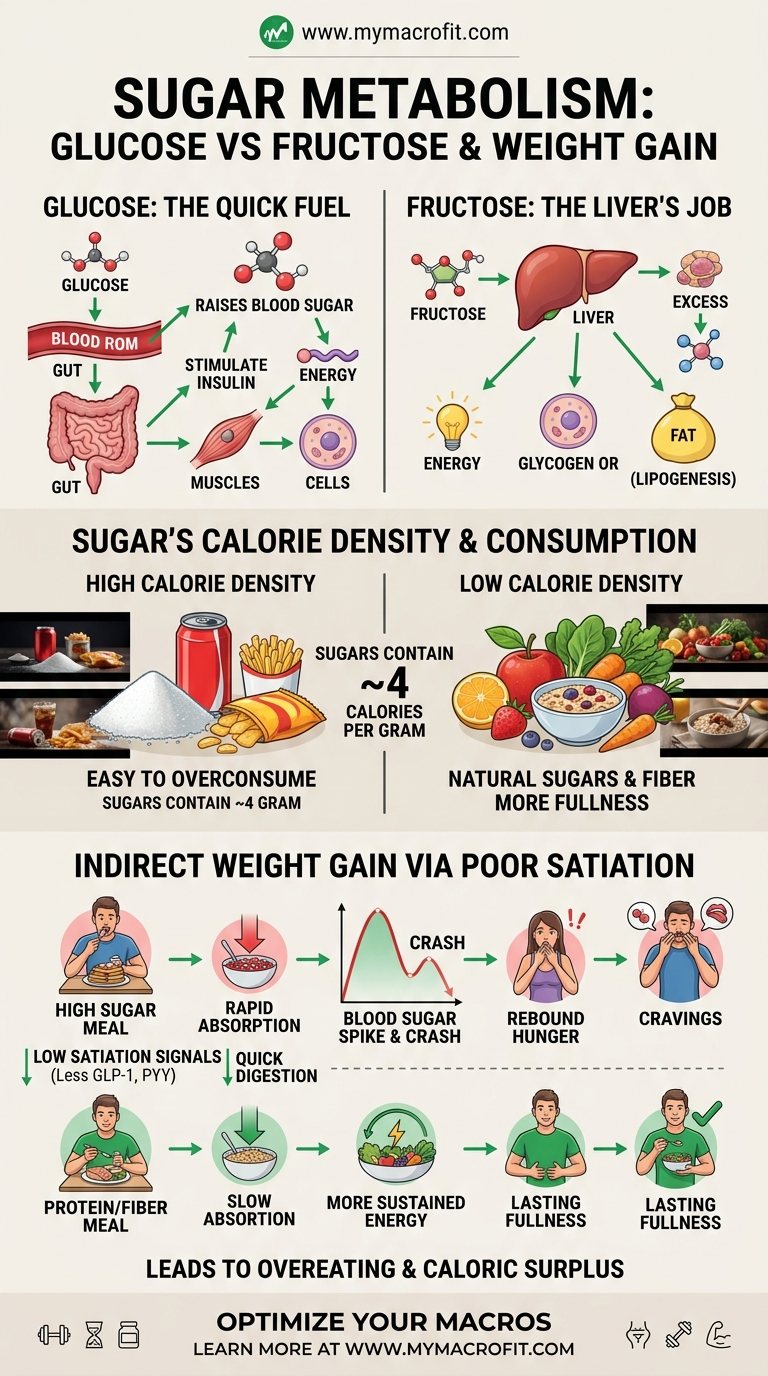
Table sugar (sucrose) is 50% glucose + 50% fructose. These two sugars have very different metabolic fates:
Glucose:
- Used by virtually all cells for energy
- Stimulates insulin secretion
- Stored as glycogen in liver and muscle
- Converted to fat only in significant excess
Fructose:
- Metabolised almost exclusively by the liver
- Does NOT stimulate insulin directly
- Does NOT trigger leptin (satiety hormone)
- At high doses, promotes triglyceride synthesis in the liver (contributing to fatty liver and visceral fat)
The fructose concern is real, but it's specifically relevant to high-dose fructose from processed foods and sugary drinks, not to moderate fructose from whole fruit (where fibre dramatically slows absorption and the doses are much lower).
The most problematic sugar source: High-fructose corn syrup in soft drinks, fizzy drinks, and processed foods, consumed in quantities that would never occur from whole fruit.
How Sugar Causes Weight Gain (Indirectly)
The mechanisms are behavioural and hormonal rather than direct conversion:
Low satiety: Sugar calories don't fill you up. 200 kcal of sugar water produces minimal satiety compared to 200 kcal of chicken. The hunger cycle returns faster after high-sugar intake.
Palatability designed for overconsumption: Ultra-processed foods are specifically engineered with sugar-fat-salt combinations that override normal satiety signals. The same calories from whole foods produce much stronger stopping signals.
Blood glucose volatility: High sugar intake creates blood glucose spikes followed by drops (reactive hypoglycaemia). These drops drive strong carbohydrate cravings 2-3 hours after eating, making total daily calorie control harder.
Displacement of satiating foods: Sugar calories in drinks and snacks often displace protein and fibre-rich foods, the very foods that would have provided fullness. This leads to higher total calorie intake without greater fullness.
What the Research Shows
When calories are controlled: Studies adding sugar vs. other carbohydrates at equivalent calories show no difference in fat gain. The extra calories from sugar cause fat gain, not something specific about sugar's chemistry.
When calories are not controlled (free-living): High sugar intake consistently predicts higher total calorie intake and higher body weight, because it undermines calorie control through the mechanisms above.
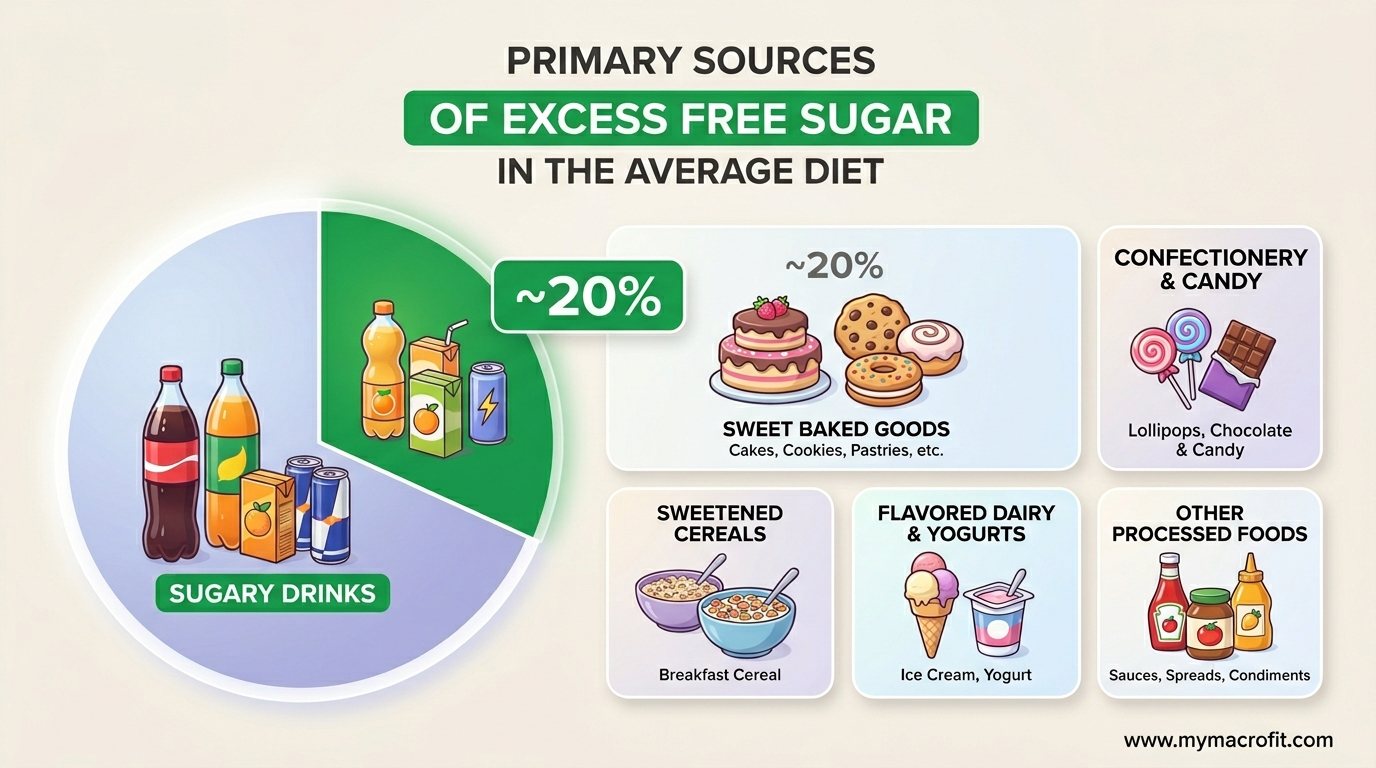
Specific to sugary drinks: Liquid calories from drinks (juice, fizzy drinks, energy drinks) are particularly problematic. They add calories without the satiety response of equivalent solid food, and are the leading source of excess sugar for most people.
Where Sugar Actually Comes From
UK adults average 57g free sugars per day, nearly double the 30g recommendation.
Main sources:
- Soft drinks, fizzy drinks: 30% of free sugar intake for UK adults
- Fruit juice and smoothies: often perceived as healthy but high in free sugars
- Confectionery (sweets, chocolate): ~15%
- Biscuits, cakes, pastries: ~15%
- Breakfast cereals: ~10% (many contain more sugar than people realise)
- Alcohol: fructose in mixer drinks and wine sugars
What to reduce first: Sugary drinks, replacing regular soft drinks and juice with water or unsweetened alternatives is the single highest-impact change for most people.
A Practical Approach to Sugar
Don't eliminate: Eliminating all sugar from a healthy diet is unnecessary and unsustainable. Fruit, dairy, and occasional treats fit in a healthy dietary pattern.
Reduce free sugars specifically: The 30g/day guideline targets added sugars in processed foods and drinks, not naturally occurring sugars in whole food.
Cut liquid sugar first: Fizzy drinks, juice, energy drinks, these provide the highest sugar-to-satiety ratio and are the easiest to replace without quality of life impact.
Read ingredients for hidden sugar: Sugar appears on ingredient lists under many names: sucrose, glucose, fructose, maltose, dextrose, glucose-fructose syrup, corn syrup, invert sugar, agave nectar, treacle.
Don't fear fruit: Two to three pieces of whole fruit per day is unambiguously compatible with fat loss and metabolic health. The fibre matrix in whole fruit changes the metabolic story completely.
The Bottom Line
Sugar causes weight gain indirectly, through high calorie content, low satiety, blood glucose volatility, and palatability that drives overconsumption. It doesn't directly convert to fat in normal dietary contexts.
The most impactful changes: eliminate sugary drinks, reduce ultra-processed food, and replace sweet snacks with protein and fibre-rich alternatives. Whole fruit is not the problem.
Save & share on Pinterest
Click any card to pin it — or share with someone who needs it.
Does Sugar Make You Fat? The Evidence
The science behind sugar and weight gain, what the research actually shows, the difference between s…
The science behind sugar and weight gain, what the research actually shows, the …
Read the full guide: Does Sugar Make You Fat? The Evidence
Free fitness tools
Does Sugar Make You Fat? The Evidence — use our free calculators for instant personalised results. N…
Pinterest opens in a new tab. You can edit the description before saving.
Frequently Asked Questions
Does sugar directly cause fat gain?+
Is fruit sugar bad for you?+
How much sugar should I eat per day?+
Is sugar more fattening than other carbs or fat?+
Do I need to cut out sugar completely to lose weight?+
Why do I crave sugar so much, and how do I manage it?+
About the Author

I'm a certified nutritionist and metabolic health coach. I went deep on keto and metabolism after reversing my own insulin resistance, and I'd rather give you the actual numbers than a hand-wave.
View full profile →