Alcohol and Your Diet: Calories, Fat Storage, and How to Handle It
Founder, MyMacroFit
Alcohol is the most socially normalised dietary disruptor for people pursuing fat loss goals. Unlike most food, its effect on body composition extends beyond its calorie content, the metabolic and hormonal consequences are significant even when total calories are accounted for.
Understanding how alcohol affects fat loss allows you to make genuinely informed decisions rather than guessing whether a social drink "counts."
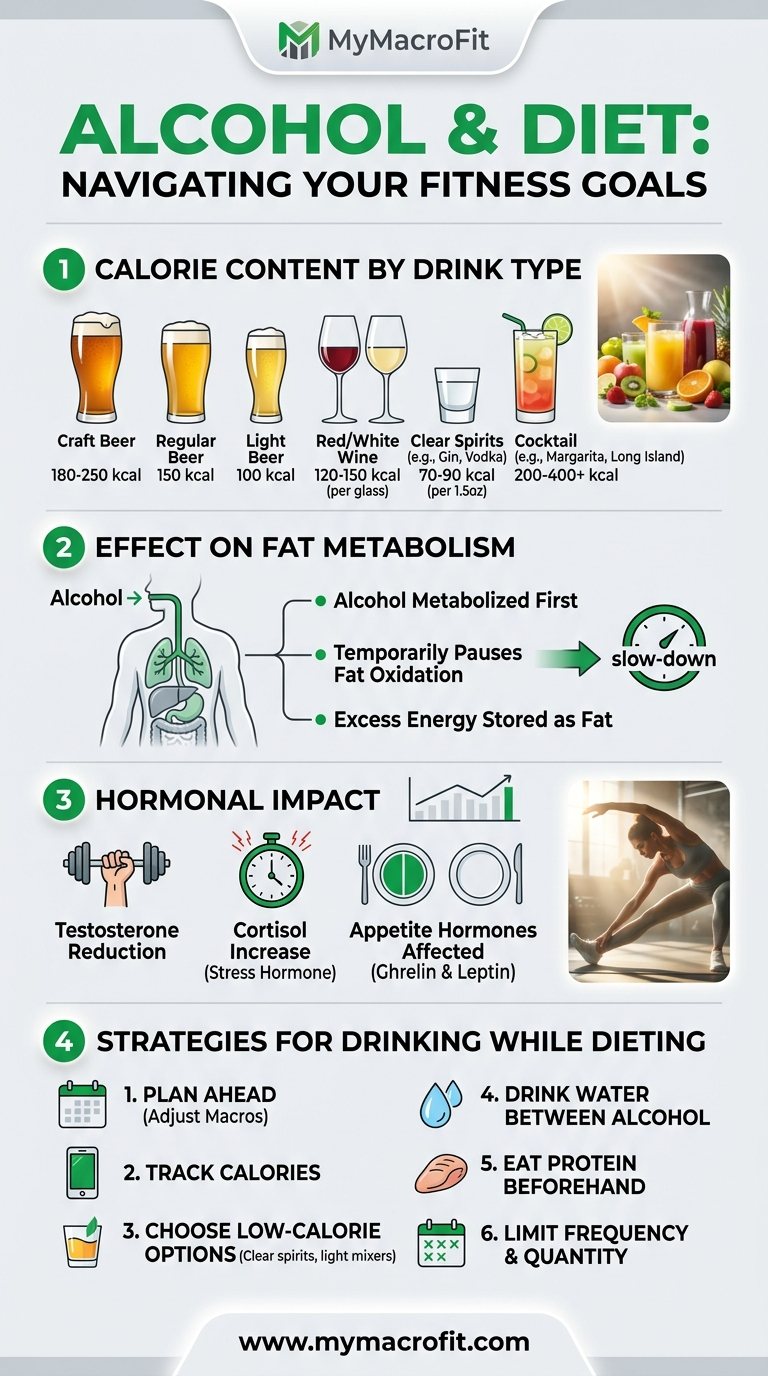
The Calorie Picture
Alcohol provides 7 kcal per gram, placing it between carbohydrates/protein (4 kcal/g) and fat (9 kcal/g). These calories are real and count toward daily intake.
Calorie content of common drinks:
| Drink | Volume | Alcohol % | Calories |
|---|---|---|---|
| Wine (red/white) | 175ml | 12-14% | 148-165 kcal |
| Wine (175ml large) | 250ml | 12-14% | 212-235 kcal |
| Lager | 568ml (pint) | 4-5% | 180-230 kcal |
| Craft IPA | 568ml | 5-7% | 220-300 kcal |
| Vodka/gin/whisky | 25ml | 40% | 55 kcal |
| Gin & tonic | 50ml + 150ml tonic | 40% | 120-160 kcal |
| Mojito | Standard | , | 200-250 kcal |
| Pina colada | Standard | , | 280-400 kcal |
Use our Alcohol Calorie Calculator to total your evening accurately.
The easy maths:
4 glasses of wine (175ml each) = 600-660 kcal, equivalent to a substantial meal, consumed in 2-3 hours, with essentially no nutritional value.
How Alcohol Disrupts Fat Metabolism
Beyond calories, alcohol has unique metabolic effects:
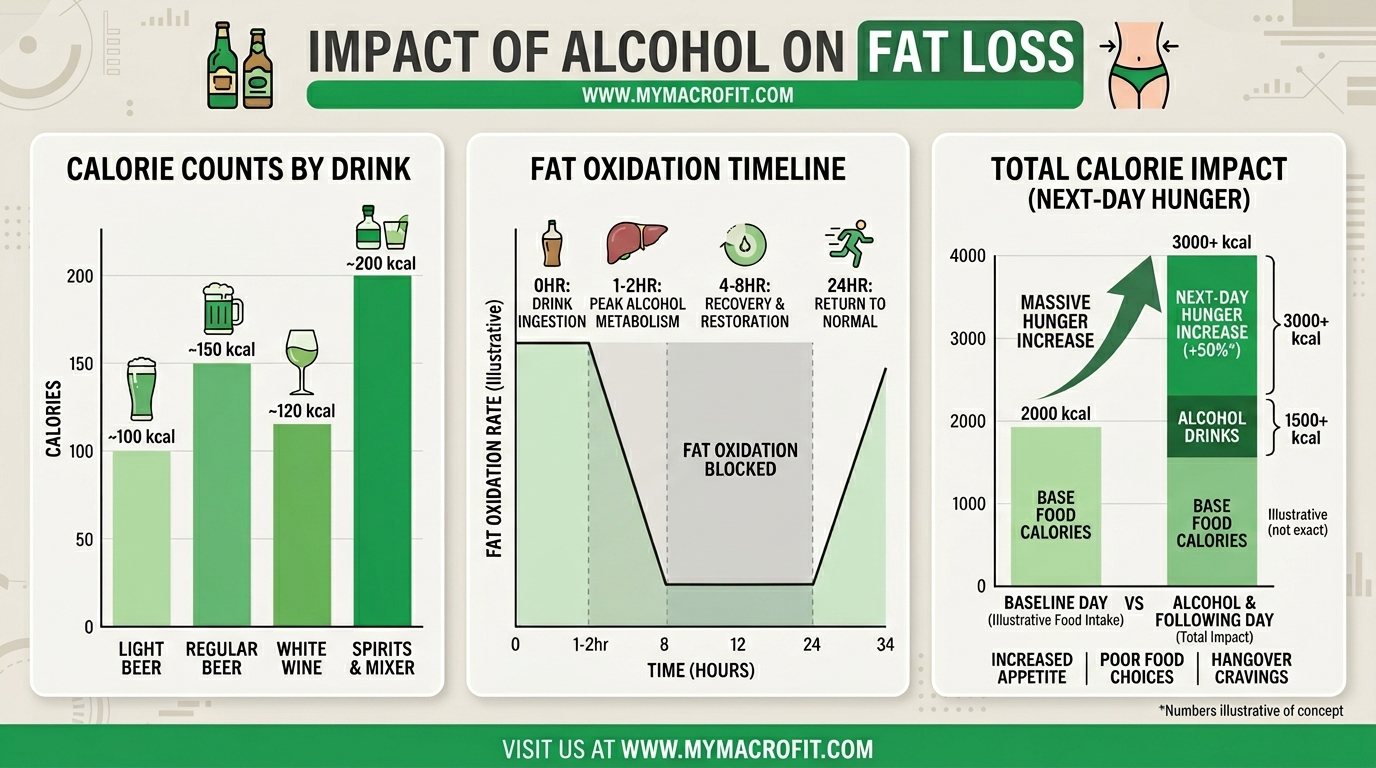
Pauses fat oxidation: The body treats alcohol as a priority toxin to clear. The liver metabolises alcohol (ethanol → acetaldehyde → acetate) before processing fat or carbohydrates. During alcohol metabolism, fat burning is effectively paused, typically for 2-4+ hours depending on quantity consumed.
Acetate as a fat-storing substrate: The primary alcohol metabolite, acetate, inhibits fat oxidation and can itself be converted to fat in the liver. Regular alcohol consumption contributes to fatty liver over time.
Cortisol elevation: Alcohol elevates cortisol, promoting visceral fat storage and suppressing growth hormone (which supports fat burning and muscle repair overnight).
Disrupts sleep architecture: Alcohol reduces REM sleep and causes sleep fragmentation, increasing ghrelin (hunger hormone) and reducing leptin the following day. People consistently eat 200-400 kcal more the day after a drinking occasion due to this hormonal disruption.
Inhibits muscle protein synthesis: Research shows alcohol at doses equivalent to a moderate drinking occasion (>0.5g/kg bodyweight, roughly 3-4 drinks for a 70kg person) significantly reduces muscle protein synthesis for 24+ hours post-consumption. This is particularly relevant for those doing resistance training.
The Practical Impact on Fat Loss
A "moderate" evening of 3-4 drinks:
- 500-700 kcal of alcohol calories
- 200-400 kcal increase in next-day eating from sleep/hormonal disruption
- Several hours of paused fat oxidation
- Total effective calorie impact: 700-1,100 kcal above baseline
For someone with a 500 kcal/day deficit, this one drinking occasion eliminates 1.5-2 days of deficit.
For people doing resistance training: Even moderate drinking around training significantly impairs muscle protein synthesis, specifically undermining the purpose of the training session.
Strategies for Drinking Without Derailing Progress
1. Budget for it: Count the drinks as part of your daily calorie allocation. If your target is 1,600 kcal and you're having 2 glasses of wine (320 kcal), eat 320 kcal less from food earlier in the day.
2. Reduce frequency, not necessarily quantity: The cumulative effect of drinking 2-3 nights per week is far greater than drinking the same total amount on one occasion per week. Consolidating to 1 occasion per week is more impactful than reducing per-occasion amount.
3. Choose lower-calorie options:
- Spirits with low-calorie mixers (slimline tonic, soda water, diet mixers) vs. cocktails
- Dry wine vs. sweet wine
- Lower-ABV options where available
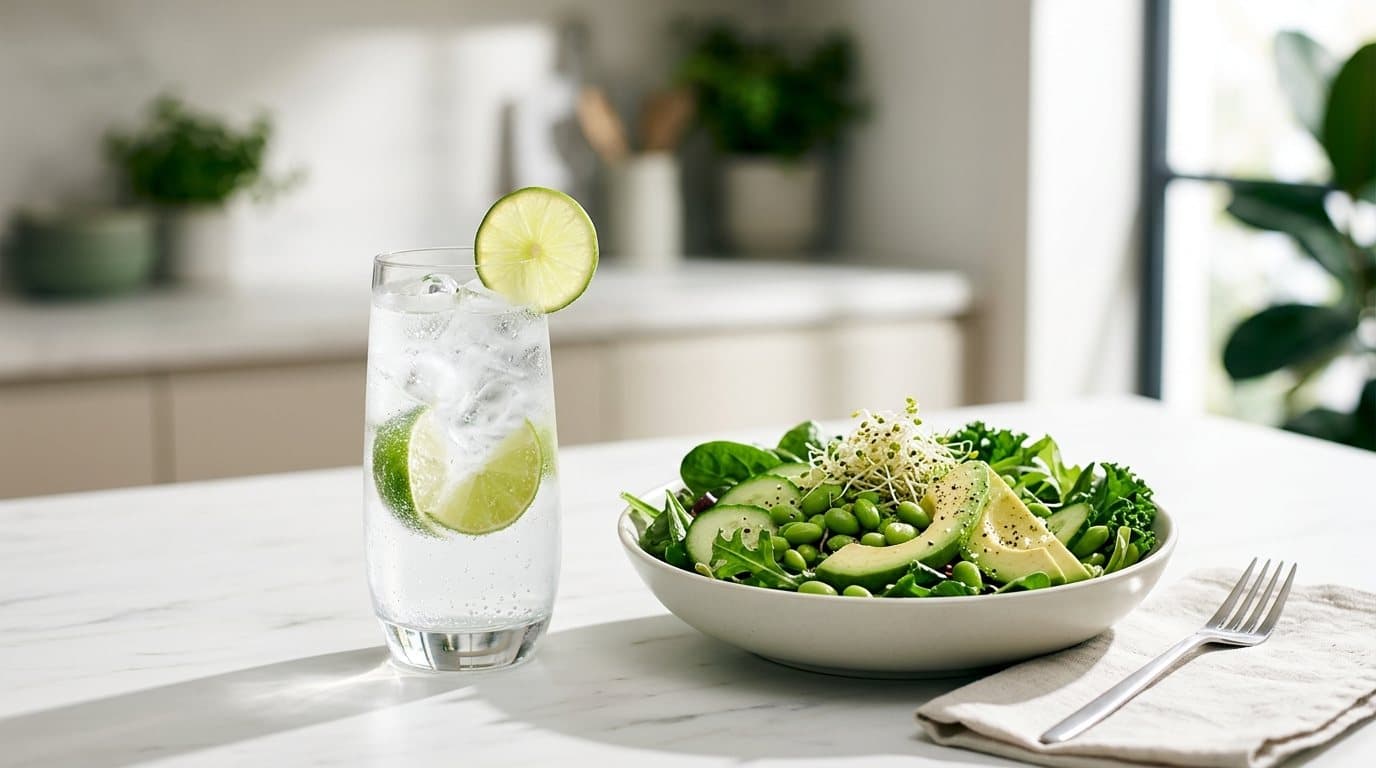
- Sparkling water between drinks (reduces total consumption naturally)
4. Don't train the morning after significant drinking: The muscle protein synthesis impairment and cortisol elevation mean heavy training sessions the morning after drinking are less effective and have higher injury risk.
5. Don't eat less before drinking: Arriving at a social occasion hungry significantly increases both alcohol intake and food choices. Eat a protein-rich meal before drinking occasions.
Complete Elimination: Is It Necessary?
For active fat loss phases (8-16 weeks), complete alcohol elimination is the most impactful approach for body composition, not just because of the calories, but because of the metabolic, hormonal, and sleep effects.
For long-term maintenance and sustainable health, moderate alcohol consumption (1-2 units/day for women; 2-3 for men) is compatible with healthy body weight and reasonable fat loss progress, as long as the calorie contribution is accounted for.
The evidence doesn't suggest complete lifelong abstinence is necessary, but it does strongly suggest that drinking several nights per week while trying to lose fat significantly impairs results.
The Bottom Line
Alcohol's impact on fat loss is larger than most people realise, not just from its calories, but from its unique metabolic effects on fat oxidation, cortisol, sleep, and muscle protein synthesis. Budget it accurately, reduce frequency, choose lower-calorie options, and accept that 2-3 drinking occasions per week will substantially slow fat loss progress.
Save & share on Pinterest
Click any card to pin it — or share with someone who needs it.
Alcohol and Your Diet: Calories, Fat Storage, and How to Handle It
How alcohol affects fat loss, its calorie content, effect on fat metabolism, hormonal impact, and pr…
How alcohol affects fat loss, its calorie content, effect on fat metabolism, hor…
Read the full guide: Alcohol and Your Diet: Calories, Fat Storage, and How to Handle It
Try the free Alcohol Calorie Calculator
Alcohol and Your Diet: Calories, Fat Storage, and How to Handle It — use our free calculators for in…
Pinterest opens in a new tab. You can edit the description before saving.
Ready to get your numbers?
Free calculator, instant results, no signup required.
Frequently Asked Questions
Does alcohol stop fat burning?+
Does alcohol cause belly fat specifically?+
How many calories are in a glass of wine or beer?+
Can I still drink occasionally and reach my goals?+
Does the type of alcohol matter, or is it all the same?+
Why do I feel heavier and bloated the day after drinking?+
About the Author
I'm the founder of MyMacroFit. I'm not a coach or a dietitian. I'm someone who wanted to lose weight, worked it out the hard way, and built the tools I wish I'd had.
View full profile →