Can You Eyeball Macros Instead of Tracking? The Hand Portion Method Explained

CN · Metabolic Health Coach
Weighing every meal and logging it in an app works, but let's be honest, almost nobody wants to do it forever. The good news is you don't have to. The hand portion method lets you estimate your macros with the measuring tools you carry everywhere: your own hands. Here's how it works, how accurate it is, and when you should still reach for the scale.
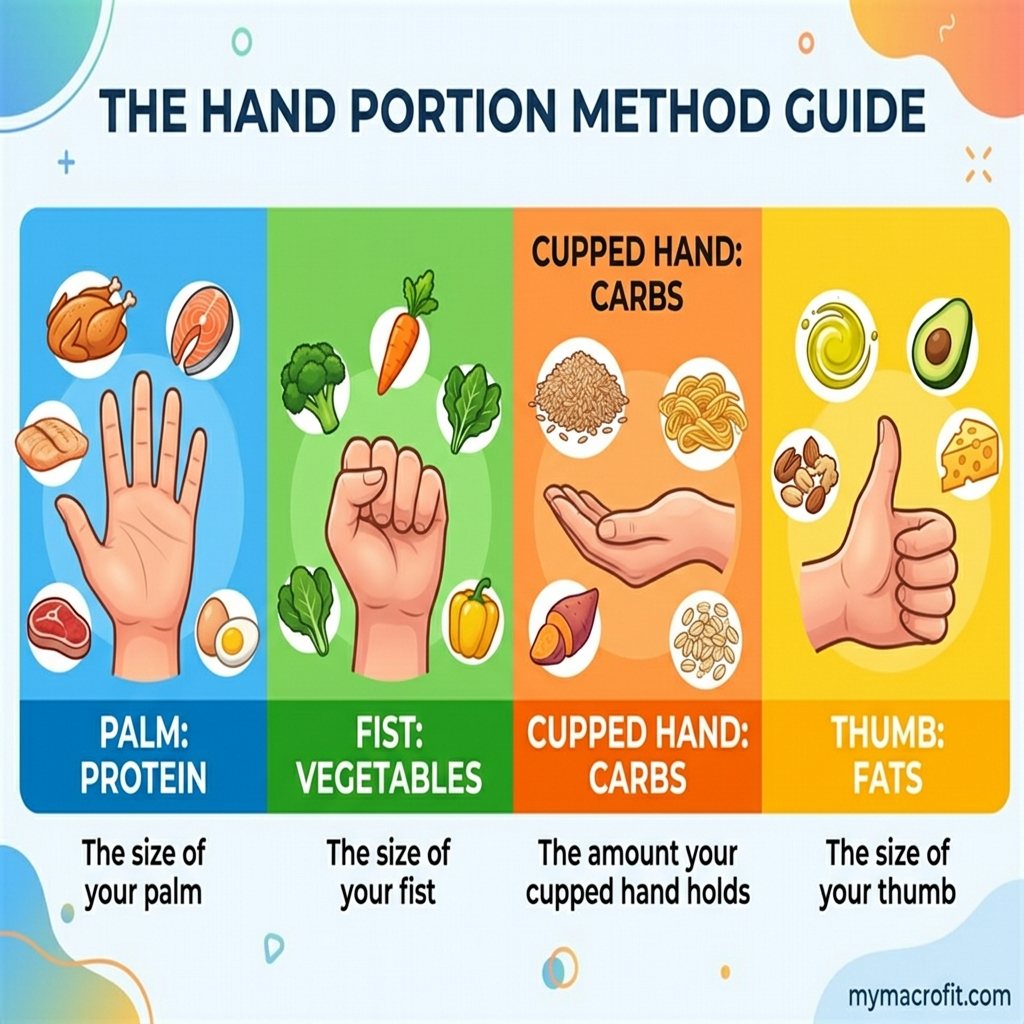
How the hand portion method works
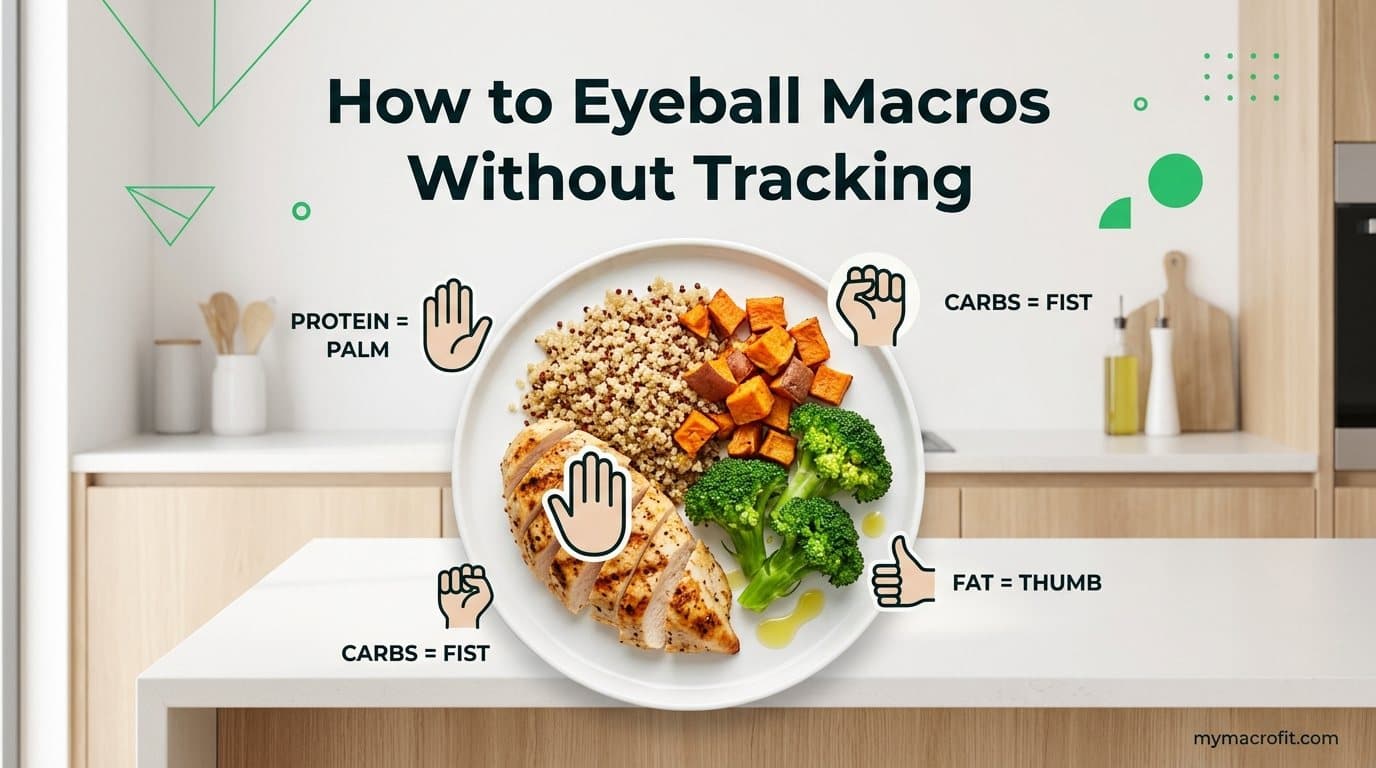
Your hand is a surprisingly good portioning guide because it scales with your body, bigger people have bigger hands and bigger needs. Four simple references cover the lot:
- Protein → your palm. One palm-sized portion of meat, fish, tofu or similar is roughly 20-30g of protein. A typical day is 3-5 palms.
- Carbs → your cupped hand. One cupped handful of rice, pasta, oats, or potato is about 20-30g of carbohydrate.
- Fat → your thumb. One thumb-sized portion of oil, butter, nut butter, or cheese is around 10-12g of fat.
- Vegetables → your fist. One fist of non-starchy veg is about a cup, aim for one or two at most meals for fibre and fullness at almost no calorie cost.
Build each meal from these units, a couple of palms of protein, a cupped hand or two of carbs, a thumb of fat, a fist of veg, and you've assembled a balanced, roughly-portioned plate without an app in sight.
How accurate is it, really?
Less accurate than a food scale, more accurate than you'd fear. For most people, hand portions land within 10-20% of weighed amounts. That sounds loose until you remember the point made in every honest tracking guide: your macro targets are estimates to begin with, with their own 5-10% margin. Layering a visual estimate on top of an estimated target is perfectly workable for fat loss and maintenance.
Where it works beautifully: lean proteins, whole-food carbs, vegetables, fruit. Where it struggles: calorie-dense fats, oils, nut butters, cheese, where a small visual misjudgement is a big calorie one. The fix is simple: eyeball everything else, but weigh or carefully measure your fats.
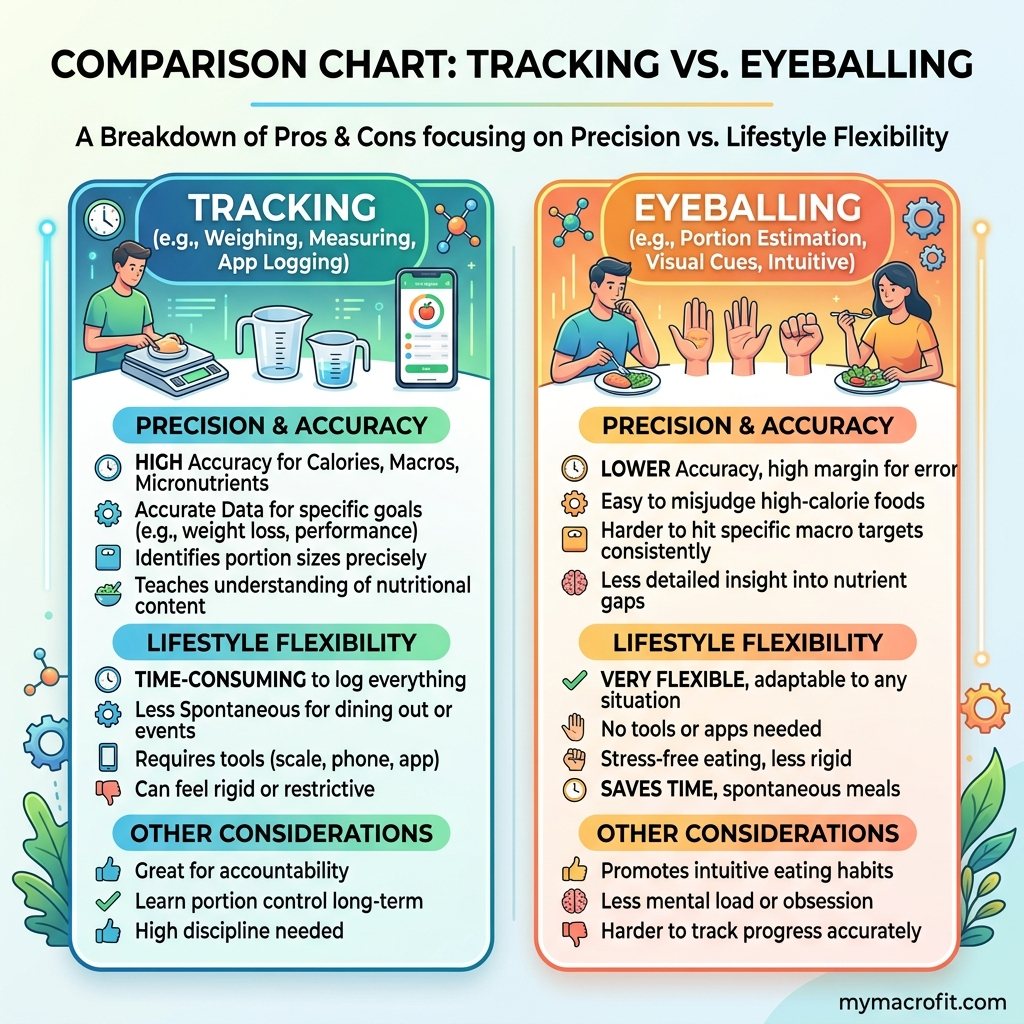
A full day in hand portions
To show how the units stack into a real day, here's roughly what a high-protein fat-loss day looks like for someone targeting around 140g of protein, built entirely from hand portions:
| Meal | Hand portions | Roughly |
|---|---|---|
| Breakfast | 1 palm eggs + 1 cupped hand oats + 1 thumb nut butter | 30g P |
| Lunch | 2 palms chicken + 1 cupped hand rice + 2 fists veg | 50g P |
| Snack | 1 palm Greek yogurt or a shake | 25g P |
| Dinner | 1.5 palms salmon + 1 cupped hand potato + 1 fist veg | 35g P |
That's around 140g of protein and a sensible calorie load without a scale or an app touching the food. Notice the fats stay modest (a thumb here and there), because that's the one macro where eyeballing drifts high fastest.
The catch: calibrate your eye first
Here's the one mistake that makes people declare eyeballing "doesn't work." If you've never weighed your food, your guesses will be wildly off, almost always too low, because you simply don't know what a portion looks like yet.
So the method has an order of operations:
- Weigh and log for two to four weeks. This isn't forever, it's training. You're teaching your eye what 30g of protein and a cupped hand of rice actually look like on your plate.
- Switch to hand portions for everyday life once those shapes are burned in.
- Re-check with the scale occasionally, a "calibration week" every month or two catches portion creep before it stalls your progress.
Skip step one and eyeballing fails. Do it, and your hands become genuinely reliable.
Why this is the better long-term tool
For the majority of people, hand portions aren't a downgrade from tracking, they're the goal of tracking. The whole point of logging food is to learn what balanced, appropriately-sized meals look like so you can eventually do it on autopilot. Hand portions are that autopilot: free, always with you, restaurant-proof, holiday-proof, and impossible to forget at home.
A food scale is still worth keeping for specific jobs, breaking a stubborn plateau, dialling in before an event, or recalibrating after a slip. But as a way to eat for the rest of your life, hands win on the one metric that decides everything: sustainability.
Know your targets before you estimate them.
Hand portions work best when you know the protein and calorie numbers you're aiming for. Get them from the free Macro Calculator first.
Get My Macro Targets →
The bottom line
You don't have to weigh food forever to eat well. Spend a few weeks with a scale to learn your portions, then let your hands take over. Keep the scale for your fats and the occasional check-in, aim for consistency rather than precision, and you'll get the results of tracking without the lifelong admin. That's not a compromise, for most people, it's the smarter long game.
Save & share on Pinterest
Click any card to pin it — or share with someone who needs it.
Can You Eyeball Macros Instead of Tracking? The Hand Portion Method Explained
Tired of weighing every meal? Here's how to estimate your macros without a food scale or app, using …
Tired of weighing every meal? Here's how to estimate your macros without a food …
Read the full guide: Can You Eyeball Macros Instead of Tracking? The Hand Portion Method Explained
Try the free Macro Calculator
Can You Eyeball Macros Instead of Tracking? The Hand Portion Method Explained — use our free calcula…
Pinterest opens in a new tab. You can edit the description before saving.
Ready to get your numbers?
Free calculator, instant results, no signup required.
Frequently Asked Questions
Can you really track macros without weighing food?+
How accurate is the hand portion method?+
How do hand portions translate to grams?+
Is eyeballing macros good for beginners?+
Should I weigh food or use hand portions long term?+
How do I use hand portions when eating out?+
About the Author

I'm a certified nutritionist and metabolic health coach. I went deep on keto and metabolism after reversing my own insulin resistance, and I'd rather give you the actual numbers than a hand-wave.
View full profile →