
Gut Health and Hormones: The Connection Every Woman Should Know

RHC · Pre/Postnatal Fitness Specialist
The gut-hormone connection is one of the most underappreciated aspects of female health. Most people understand that gut health affects digestion, but the relationship extends deeply into hormonal regulation, particularly for oestrogen, through a specific microbial network called the estrobolome.
Understanding this connection explains why gut health interventions often improve hormonal symptoms, and why digestive health is central to women's health beyond just the gut itself.
The Estrobolome: Your Gut's Hormonal Regulator
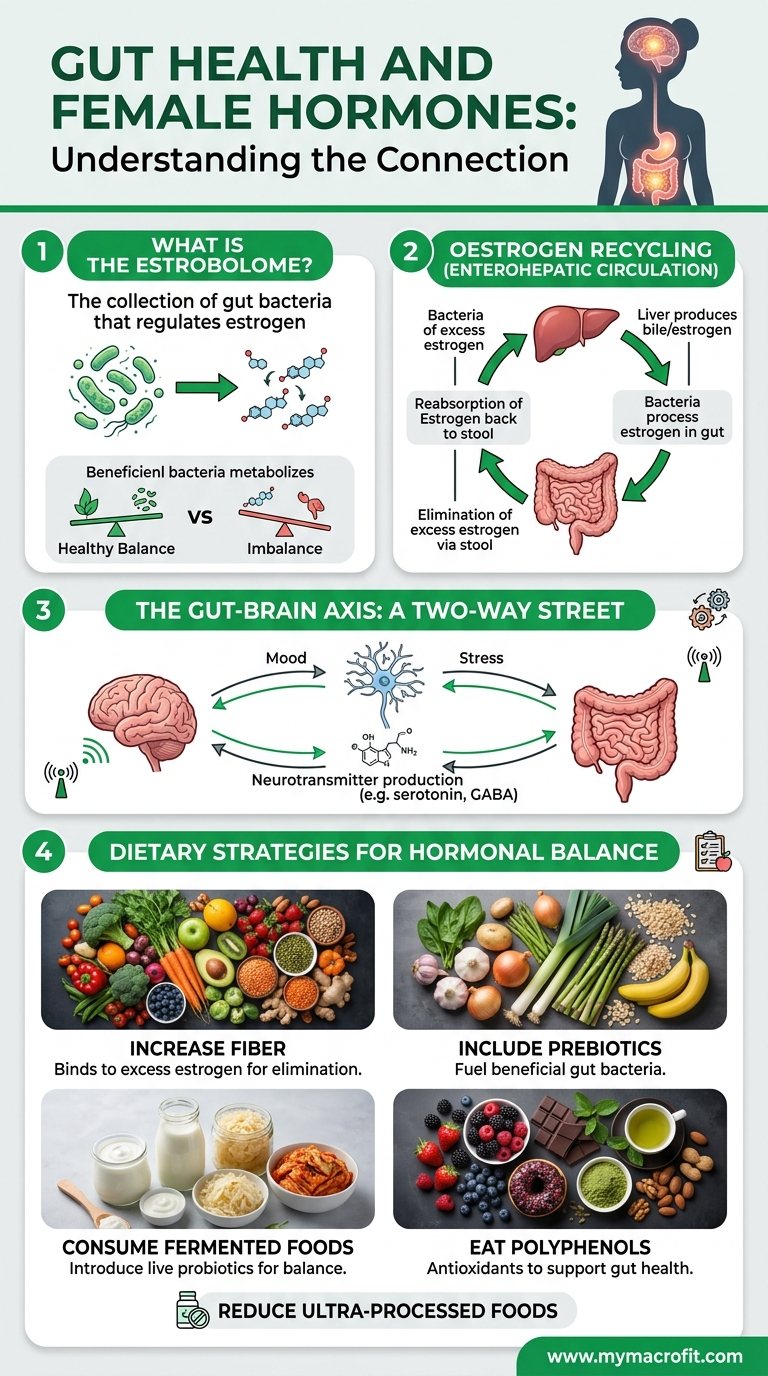
The estrobolome is the collection of gut bacteria with the genetic capacity to metabolise oestrogen. Here's how it works:
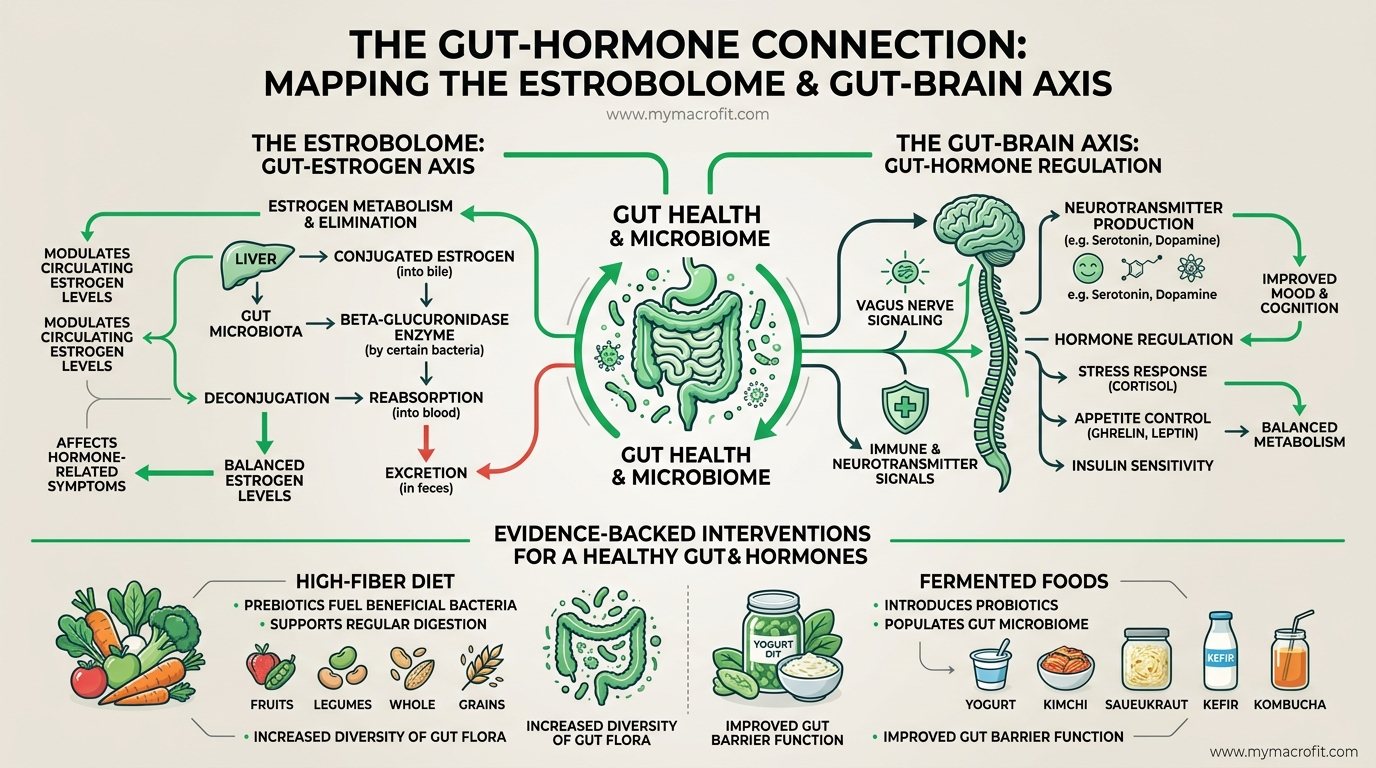
Step 1: The liver processes oestrogen for excretion. It conjugates (binds) oestrogen to glucuronic acid, creating a water-soluble compound that enters bile and is sent to the gut.
Step 2: In the gut, bacteria that produce beta-glucuronidase cleave this bond, deconjugating the oestrogen and releasing free oestrogen back into circulation via the enterohepatic system.
Step 3: The free oestrogen re-enters the bloodstream, either contributing to circulating oestrogen levels (if balanced) or creating oestrogen excess (if beta-glucuronidase activity is too high).
What this means:
- A diverse, balanced estrobolome maintains appropriate oestrogen cycling
- Dysbiosis with high beta-glucuronidase-producing bacteria increases oestrogen recirculation, contributing to oestrogen dominance
- Poor gut health (low microbial diversity, impaired gut barrier) disrupts this balance
Symptoms of oestrogen excess, heavy periods, PMS, fibroids, endometriosis, and increased oestrogen-sensitive cancer risk, have all been associated with estrobolome disruption.
The Gut-Brain-Hormone Axis
The gut communicates with the brain through the vagus nerve, enteric nervous system, and hormonal signalling. This gut-brain axis influences:
Cortisol regulation: Gut bacteria influence the HPA (stress) axis. Dysbiosis is associated with elevated cortisol reactivity, stress responses that are more intense and prolonged.
Serotonin production: Approximately 90% of the body's serotonin is produced in the gut. Adequate serotonin is required for mood stability, sleep quality, and indirectly for cycle regularity (serotonin influences GnRH pulsatility).
GLP-1 and appetite hormones: Gut bacteria that ferment fibre produce short-chain fatty acids that stimulate GLP-1 release, contributing to satiety signalling. A healthy microbiome supports better appetite regulation.
How Poor Gut Health Affects Hormones
Leaky gut (intestinal permeability): When the gut lining is compromised, bacterial endotoxins (LPS, lipopolysaccharide) enter systemic circulation, triggering inflammatory responses. This chronic inflammation impairs thyroid function, increases insulin resistance, and disrupts hormonal signalling throughout the endocrine system.
Reduced microbiome diversity: Lower bacterial diversity is consistently associated with worse metabolic health, higher BMI, poorer oestrogen regulation, and increased inflammation.
Dysbiosis and oestrogen dominance: Overgrowth of beta-glucuronidase-producing bacteria (Bacteroides, Clostridium, Escherichia) increases oestrogen recirculation, contributing to symptoms of oestrogen excess even when production is normal.
Dietary Strategies That Support Gut-Hormone Balance
1. High Fibre: The Most Important Change
Fibre is the primary fuel for gut bacteria. Diverse fibre intake supports diverse bacterial populations, including those that maintain healthy estrobolome function.
Specifically for oestrogen regulation: fibre binds oestrogen in the gut, facilitating its excretion rather than recirculation. Women eating high-fibre diets have lower circulating oestrogen levels than women on low-fibre diets, a consistent finding across studies.
Target: 30+ grams fibre/day (UK average is ~18g)
Best sources: Legumes (8-10g per serving), oats (4g per serving), vegetables (2-5g per serving), fruit, whole grains, ground flaxseed (2-4g per tbsp), psyllium husk.
Use our Fibre Intake Calculator to assess your current intake and plan improvements.
2. Fermented Foods: Direct Microbiome Support
Fermented foods contain live bacteria that support gut bacterial diversity. A 2021 Stanford University study (Wastyk et al.) showed that a high-fermented-food diet increased microbiome diversity and reduced markers of inflammation more effectively than a high-fibre diet over 10 weeks.
Include daily: Greek yogurt, kefir, kimchi, sauerkraut, tempeh, miso, kombucha (low-sugar varieties).
Start with one serving/day if unaccustomed, introduce gradually to allow gut adjustment.
3. Polyphenols: Prebiotic Function
Polyphenols (plant pigments in berries, dark chocolate, green tea, red wine, olives, spices) are not absorbed efficiently in the small intestine, they travel to the colon where gut bacteria metabolise them. This process feeds beneficial bacteria and produces metabolites with anti-inflammatory and hormonal-regulating properties.
Practical approach: "Eat the rainbow", diverse coloured plant foods maximise polyphenol variety. Green tea, blueberries, olive oil, and dark chocolate are particularly polyphenol-dense.
4. Prebiotic Foods
Prebiotics are non-digestible fibres that specifically feed beneficial bacteria:
- Inulin/FOS: chicory root, Jerusalem artichoke, garlic, onions, leeks
- Beta-glucan: oats, barley
- Resistant starch: cooked and cooled potatoes and rice, green bananas, legumes
5. Reducing the Microbiome Disruptors
Antibiotics: Unavoidable when medically necessary, but have significant microbiome impact. Always take alongside a multi-strain probiotic and restore microbiome through fermented foods and diverse fibre for 1-3 months post-course.
Ultra-processed food: A 2019 RCT showed ultra-processed food diets significantly reduced gut bacterial diversity and increased inflammatory markers compared to whole food diets, independent of macronutrient composition.
Excessive alcohol: Disrupts gut barrier integrity (increasing leaky gut) and reduces beneficial bacterial populations.
Supplements for Gut-Hormone Support
Probiotics: Look for multi-strain supplements containing Lactobacillus and Bifidobacterium species. The evidence for specific hormone outcomes is growing but not yet definitive, consistent use alongside dietary changes is the best approach.
Prebiotics (inulin/FOS): Supplements can supplement dietary prebiotic intake, useful if dietary sources are limited. Start low and build (can cause gas initially).
AG1 (greens supplement): Contains a blend of probiotics, prebiotics, and polyphenol-rich greens that supports gut microbiome diversity as a convenient daily foundation.
The Bottom Line
The gut-hormone connection is real and clinically significant, particularly for oestrogen regulation through the estrobolome, cortisol modulation through the gut-brain axis, and appetite hormone regulation through SCFA production.
The dietary interventions with the best evidence are also the simplest: increase fibre (30g+/day), include daily fermented foods, eat diverse colourful plants, and reduce ultra-processed food. These changes improve gut health, hormonal balance, and metabolic health simultaneously.
Save & share on Pinterest
Click any card to pin it — or share with someone who needs it.
Gut Health and Hormones: The Connection Every Woman Should Know
How the gut microbiome regulates female hormones, the estrobolome, oestrogen recycling, and the diet…
How the gut microbiome regulates female hormones, the estrobolome, oestrogen rec…
Read the full guide: Gut Health and Hormones: The Connection Every Woman Should Know
Try the free Fibre Intake Calculator
Gut Health and Hormones: The Connection Every Woman Should Know — use our free calculators for insta…
Pinterest opens in a new tab. You can edit the description before saving.
Ready to get your numbers?
Free calculator, instant results, no signup required.
Frequently Asked Questions
What is the estrobolome?+
Can improving gut health fix hormonal imbalances?+
Do probiotics help with hormonal balance?+
What are the best foods for gut health and hormonal balance?+
Can poor gut health be the cause of my hormonal symptoms?+
About the Author

I'm a registered health coach and pre/postnatal specialist. I look at the whole person, your sleep, your stress, your hormones, because the number on the scale is only ever part of the story.
View full profile →