How Accurate Do Your Macros Really Need to Be?

RHC · Pre/Postnatal Fitness Specialist
If you've ever stood in the kitchen agonising over whether to log 142g or 148g of chicken, this article is for you. The fitness world has convinced a lot of people that macro tracking is a precision science where being a few grams off ruins everything. It isn't. Understanding how accurate you actually need to be is the difference between tracking that works and tracking that takes over your life.
Your targets were always an estimate
Here's the uncomfortable truth that makes the whole "exact grams" obsession collapse: your macro targets are an educated guess in the first place.
Every calculator, including ours, estimates your calorie needs from formulas based on population averages. Your real metabolism might be 5-10% above or below that number. Your daily energy expenditure also swings based on sleep, stress, activity, and even the weather. So the "2,100 calories, 150g protein" target you're trying to hit to the gram is itself a range dressed up as a precise figure.
Chasing exactness against an estimate is like measuring a piece of wood with a micrometer before cutting it with an axe. The precision is wasted.
Your tracking has a margin of error too
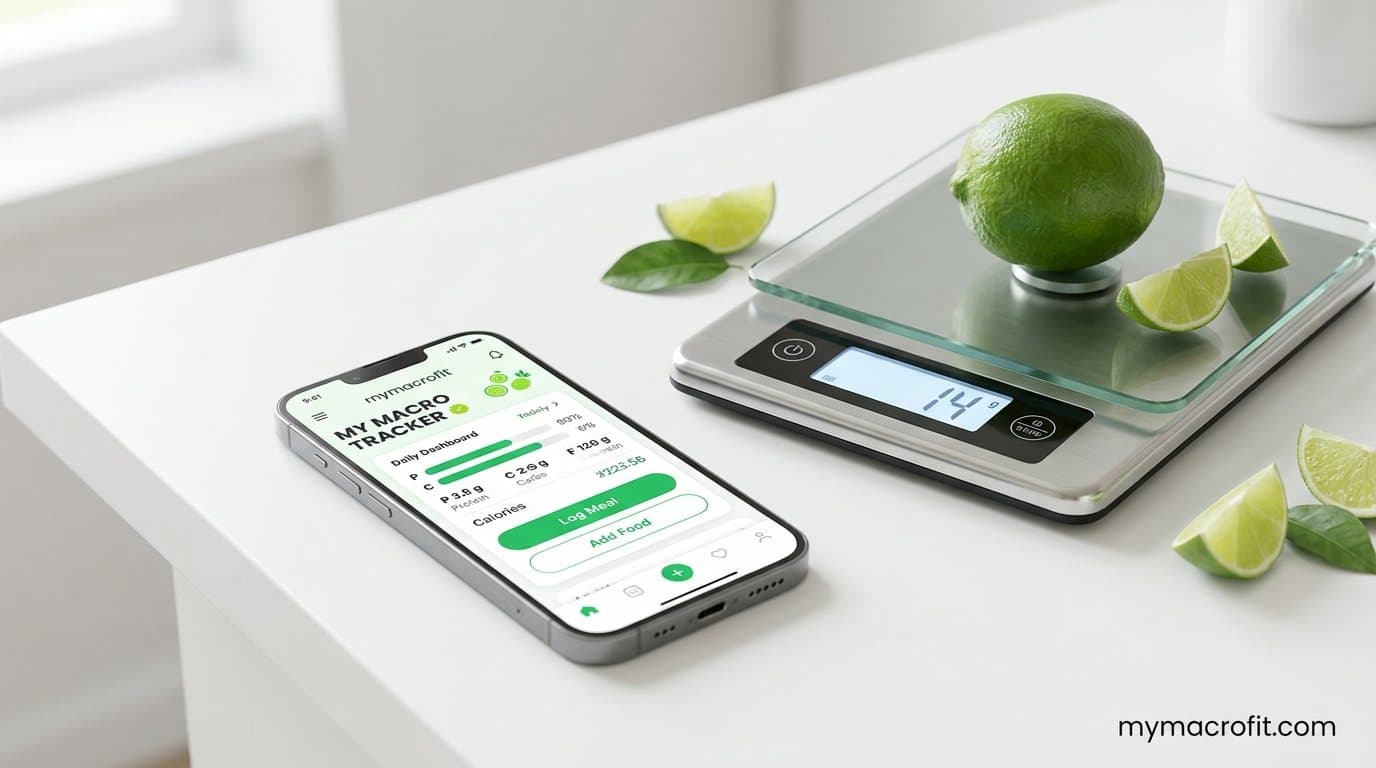
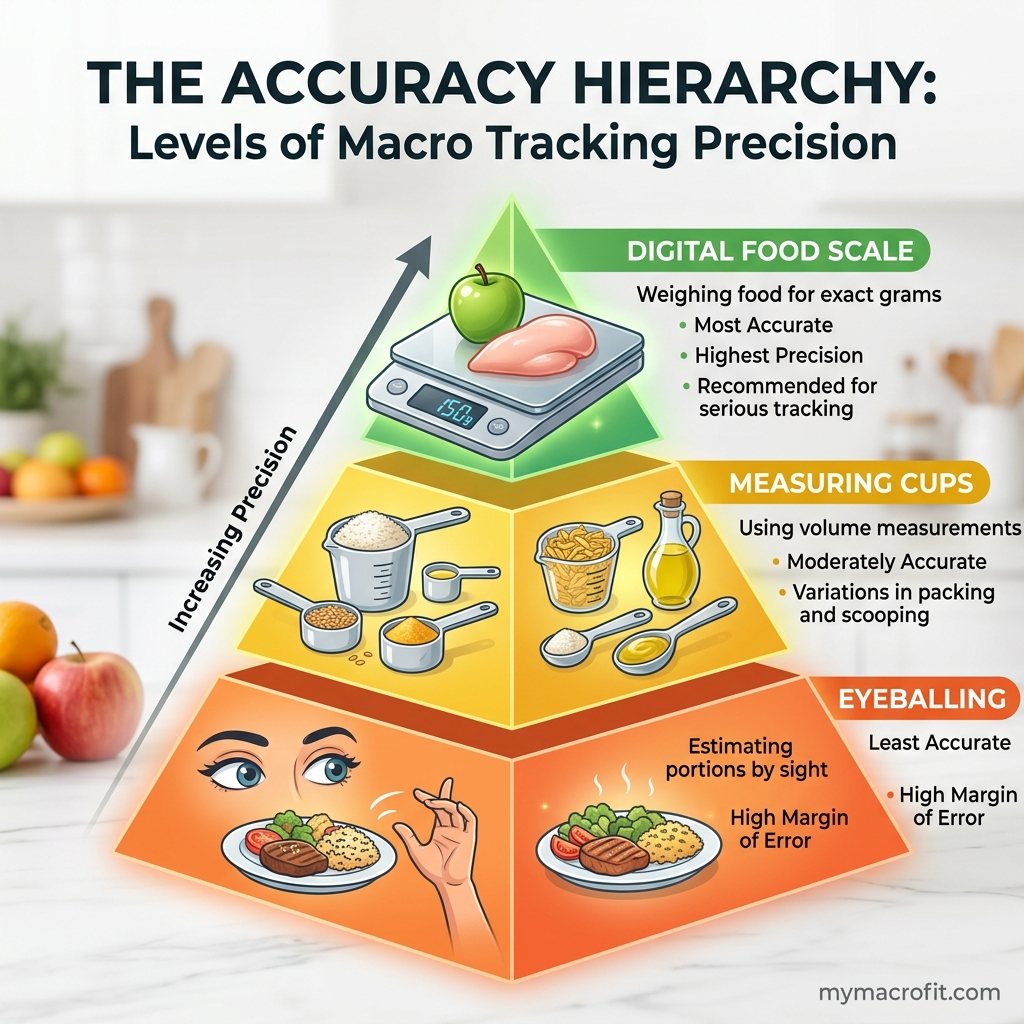
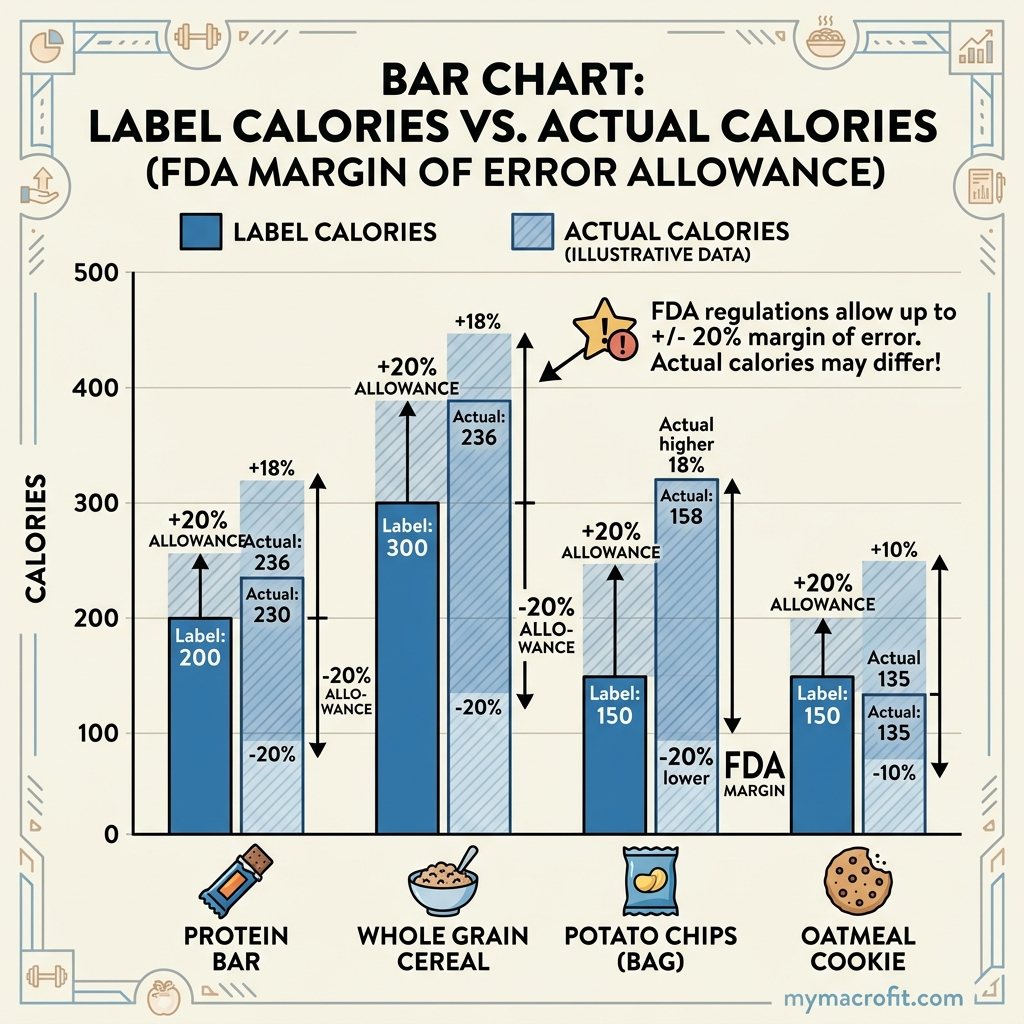
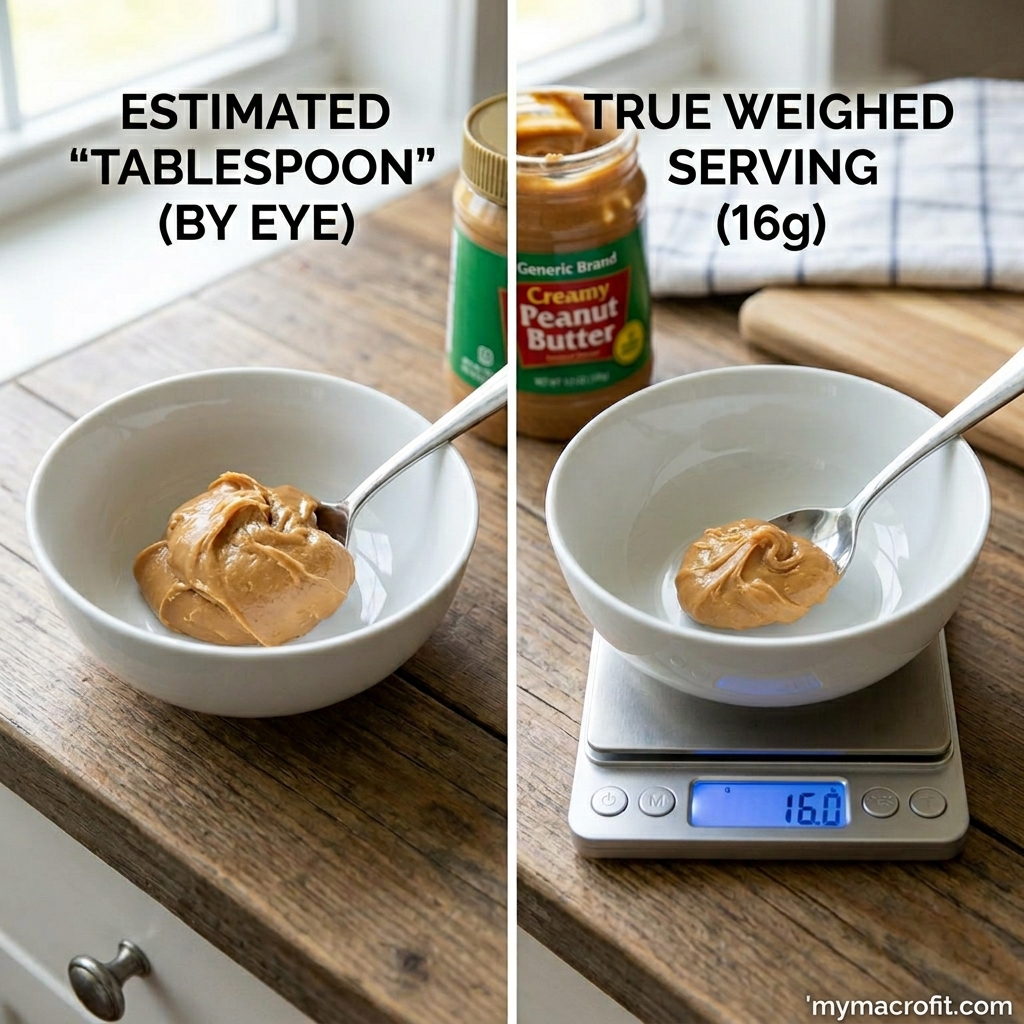
On top of the target being approximate, your logging is approximate. Database entries vary. The fat content of a chicken breast differs between birds. The actual size of "one medium banana" is anyone's guess. Even with a food scale, real-world tracking carries a margin of error of roughly 10% in either direction, and that's for people doing it carefully.
So you have an estimated target and an estimated intake. Trying to match the two to a single gram is mathematically meaningless. Landing within 5-10g of each macro is genuinely as good as it gets, and it's more than enough.
What your body actually responds to
The most freeing fact in nutrition: your body doesn't read your daily log. It responds to the average of your intake over days and weeks. A day that lands 200 calories over is completely erased by the natural day-to-day variation in a normal week. There's no switch that flips because Tuesday was slightly high.
This is why people who track loosely but consistently often outperform people who track precisely but stressfully. The precise tracker who nails every gram for 18 days and then quits in frustration loses to the soft tracker who stays within 10% for 18 months.
The hierarchy of what matters
Not all macros deserve equal attention. Spend your effort where it counts:
- Total calories, decides whether you lose, gain, or maintain. Worth getting roughly right every day.
- Protein, protects muscle in a deficit and keeps you full. The one macro worth hitting consistently and not under-shooting.
- Carbs and fat, once calories and protein are set, these are interchangeable to taste. Prefer carbs around training if performance matters; otherwise, eat them however you enjoy most.
Get the top two close, and the bottom one genuinely doesn't need precision.
Not sure what "close enough" looks like for you?
The free Macro Calculator gives you target ranges for calories, protein, carbs and fat, aim for the protein number and stay near the calorie one.
Get My Macro Ranges →What "close enough" actually looks like
To take the anxiety out of it, here's the margin I'd consider perfectly fine for each macro on a normal day:
| Macro | Aim for | "Close enough" |
|---|---|---|
| Calories | Your target | Within ~100 |
| Protein | Your target | Hit it or just over |
| Carbs | Whatever's left | Within ~15-20g |
| Fat | Whatever's left | Within ~8-10g |
Notice protein is the one I'd treat as a floor to reach rather than a number to land exactly on, hitting it or going slightly over is ideal. Everything else has comfortable wiggle room. If your day lands inside these margins, it's a good day. There is no extra prize for getting closer.
Soft tracking: the method most people should use
The approach I recommend to most women isn't precision tracking at all, it's what I call soft tracking, and it captures nearly all the benefit with a fraction of the stress:
- Weigh and log your protein sources properly, since protein is the number worth hitting.
- Keep a rough eye on calories, logging meals but not agonising over the last few grams.
- Estimate carbs and fat rather than measuring them to the decimal.
- Stay honest about the sneaky stuff, oils, drinks, and bites, because that's the only place loose tracking actually leaks.
Done this way, tracking becomes a gentle guide rather than a second job. It's sustainable, it protects your peace of mind, and it still gets results, because results come from consistency over months, not perfection over a fortnight.
When precision does matter more
To be fair, there are cases where tighter tracking earns its keep:
- Competitive physique athletes in the final weeks before a contest, where small margins show on stage.
- People who've stalled despite honest tracking and need to tighten accuracy to find a hidden leak.
- Anyone with very low calorie needs (smaller, older, or less active individuals), where the same gram error is a bigger percentage of the total.
For everyone else, the vast majority, "accurate and consistent" beats "perfect and fragile" every single time.
Permission to relax
If you take one thing from this: tracking macros is a tool to guide your eating, not an exam you can fail. Aim for honest, consistent logging within a sensible margin. Hit your protein, keep your calories roughly on target, and let the small stuff be small. The people who get lean and stay lean aren't the ones with the most precise spreadsheets, they're the ones who made tracking sustainable enough to still be doing it a year later.
Save & share on Pinterest
Click any card to pin it — or share with someone who needs it.
How Accurate Do Your Macros Really Need to Be?
Do you need to hit your macros to the gram, or is close enough good enough? The honest answer on tra…
Do you need to hit your macros to the gram, or is close enough good enough? The …
Read the full guide: How Accurate Do Your Macros Really Need to Be?
Try the free Macro Calculator
How Accurate Do Your Macros Really Need to Be? — use our free calculators for instant personalised r…
Pinterest opens in a new tab. You can edit the description before saving.
Ready to get your numbers?
Free calculator, instant results, no signup required.
Frequently Asked Questions
Do I have to hit my macros exactly every day?+
What if I go over my macros by a little?+
Which macro matters most to get right?+
How precise do I need to be when weighing food?+
Is it bad to track macros loosely?+
Can being too precise with tracking actually harm you?+
How do I move from precise tracking to intuitive eating?+
About the Author

I'm a registered health coach and pre/postnatal specialist. I look at the whole person, your sleep, your stress, your hormones, because the number on the scale is only ever part of the story.
View full profile →