How Long Does It Take to See Weight Loss Results?

BSc Kinesiology · CPT
Starting a new diet or training programme is exciting, and then week 2 arrives and you're wondering why you can't see any difference. Understanding the realistic timeline for visible weight loss results removes much of this frustration.
Here's an honest timeline of when you'll see different types of progress, and the factors that affect how quickly.
Week 1-2: What Happens First
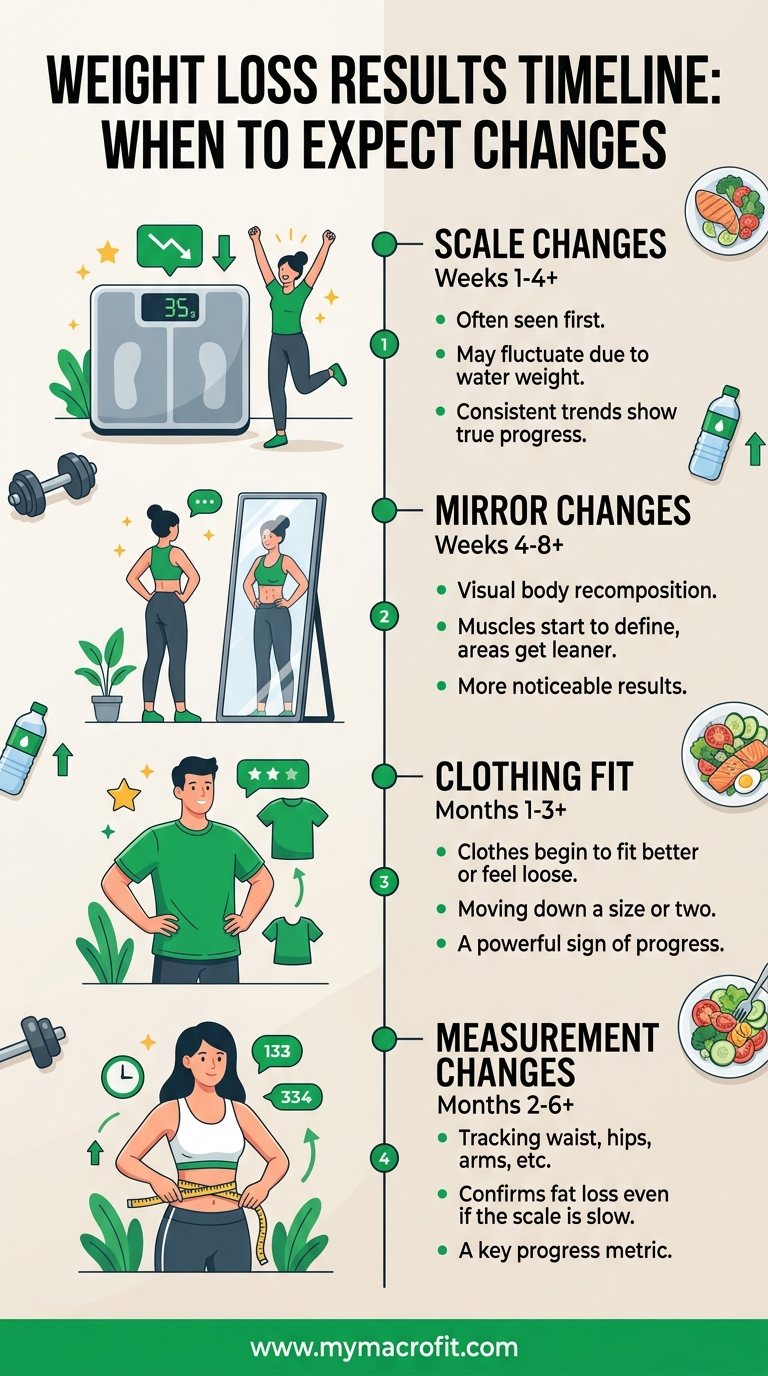
On the scale: Most people see a 1-3kg drop in the first 1-2 weeks. The majority of this is glycogen depletion and the water stored with it, not fat. This can feel dramatic and motivating, but it's important to understand it isn't all fat loss.
In the mirror: Almost nothing visible yet. Fat loss of 0.3-0.5kg over 2 weeks is real but not visually significant.
In energy and hunger: This is where early changes are typically felt. If you've cleaned up your diet, reduced sugar and processed food, and increased protein, you'll likely feel better energy, reduced afternoon slumps, and more stable hunger by week 2.
In measurements: Waist and hip measurements may not change yet, or may drop 0.5-1cm from reduced bloating and water retention, particularly if you've reduced sodium intake.
Week 3-6: The "Trust the Process" Phase
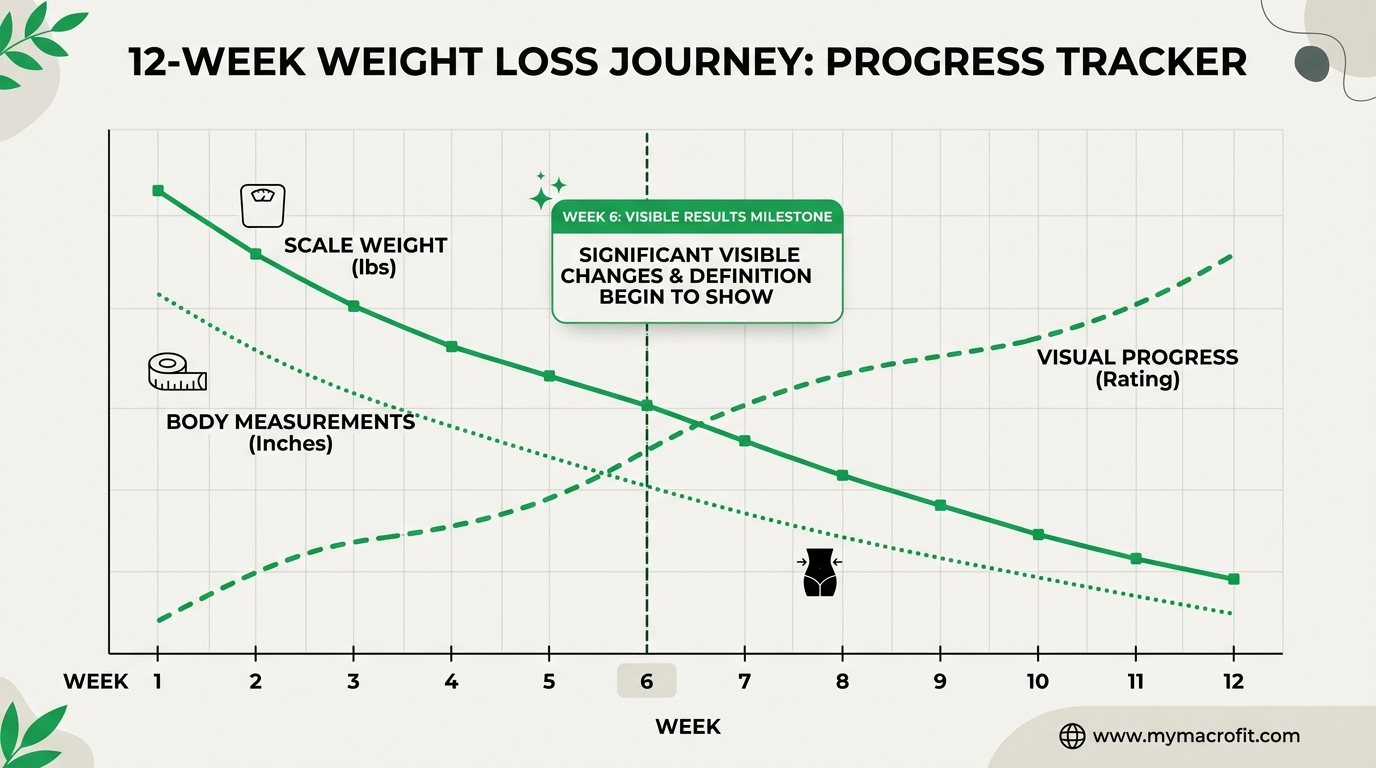
On the scale: Weekly average weight drops slow to 0.3-0.7kg per week. This is real fat loss at the correct sustainable rate, but it feels slower than the dramatic week 1 drop. This is the phase where most people feel discouraged.
In the mirror: Still subtle. You may notice your face looks slightly different or your jawline appears more defined. Partners and close friends may start to comment. Visible body changes in the mirror typically require 4-8 weeks.
In clothes: Many people notice their clothes fitting differently before they see changes in the mirror, particularly jeans around the waist, belts on smaller notches, or looser shirts. This is often one of the first meaningful progress signals.
In measurements: A 1-2cm waist reduction is realistic by week 4-6 for most people in a consistent deficit. This is meaningful fat loss even when it looks subtle.
Week 6-12: When It Becomes Clearly Visible
On the scale: 2.5-5kg of total fat loss is visible now. Progress photos from month 1 vs. month 3 show clear changes that felt invisible day-to-day.
In the mirror: Visible reduction in waist and hip definition. In the face, clear changes at this stage. If resistance training has been consistent, some increased definition in arms, shoulders.
In clothes: Items that felt tight now fit comfortably. You may have moved down a clothing size, or items from the back of the wardrobe now fit.
In measurements: 3-6cm waist reduction over 12 weeks of consistent progress is achievable and represents significant visceral fat loss.
In performance: Cardio feels easier. Strength numbers are maintained or improving. Energy levels at high points.
Factors That Affect How Quickly You See Results
Starting point: People who have more weight to lose typically see faster visible changes early on, there's more fat available to be mobilised, and early losses are more visually apparent.
Deficit size: A 700 kcal/day deficit produces results roughly 40% faster than a 500 kcal/day deficit, assuming muscle preservation is maintained. See our calorie deficit guide to calculate your optimal deficit.
Protein intake: Adequate protein (2-2.2g/kg) preserves muscle during the deficit. Higher muscle mass means a tighter, more defined appearance at the same scale weight, the results look better even with the same amount of fat lost.
Resistance training: Progressive resistance training dramatically improves how fat loss looks. Two people who lose the same amount of weight, one with resistance training, one without, look completely different. The resistance training person is tighter, more defined, and has preserved the muscle that creates shape.
Water retention: Individual water retention variation can delay visible progress by 2-4 weeks. Hormonal fluctuations, sodium intake, and training volume all affect water retention.
Genetics and fat distribution: Where you carry fat affects how quickly changes are visible. Fat around the midsection tends to mobilise earlier; fat around the hips and thighs (particularly in women) mobilises later.
Why Progress Photos Are Essential
The single most underused tool in fat loss: progress photos.
Changes that happen gradually over 8-12 weeks are genuinely invisible to your own eyes because you see yourself daily. The adaptation is happening too slowly to notice in the mirror. But a month 1 vs. month 3 side-by-side comparison frequently shows dramatic transformation that was invisible in the mirror.
Take photos every 4 weeks:
- Same time of day (morning, after bathroom)
- Same lighting and location
- Front, side, and back views
This is where you'll see what the scale and mirror can miss.
The Emotional Reality of "Not Seeing Progress"
Week 3-6 is statistically the highest dropout point for most diet and exercise programmes. Progress is happening but doesn't feel visible yet. Motivation from the initial "dramatic" week-1 drop has worn off.
This is the phase that determines long-term success. Knowing that visible changes typically require 6-8 weeks of consistent effort, and that the physical changes are already occurring even when invisible, is what gets you through this phase.
Track measurements. Take progress photos. Compare to week 1, not yesterday.
The Bottom Line
Timeline for realistic weight loss results:
- Week 1-2: Scale drop (mostly water), energy improvement, clothes slightly looser
- Week 3-6: Scale drop slows to genuine fat loss pace, waist measurement decreasing, face changes begin
- Week 6-12: Clearly visible changes in photos and mirror, clothes size change, friends and family notice
Use our Calorie Deficit Calculator to set up a deficit that produces results at the right pace, fast enough to be motivating, sustainable enough to last.
Save & share on Pinterest
Click any card to pin it — or share with someone who needs it.
How Long Does It Take to See Weight Loss Results?
A realistic timeline for when you'll see fat loss results, on the scale, in the mirror, in your clot…
A realistic timeline for when you'll see fat loss results, on the scale, in the …
Read the full guide: How Long Does It Take to See Weight Loss Results?
Try the free Calorie Deficit Calculator
How Long Does It Take to See Weight Loss Results? — use our free calculators for instant personalise…
Pinterest opens in a new tab. You can edit the description before saving.
Ready to get your numbers?
Free calculator, instant results, no signup required.
Frequently Asked Questions
How long before I notice weight loss in my face?+
How much weight do you need to lose to notice a difference?+
Does where you carry fat affect when you'll see results?+
Why is the scale not moving even though I look slimmer?+
How can I tell if I'm actually making progress when results feel slow?+
About the Author

I'm a kinesiologist and personal trainer. I've spent eight years helping women lose fat and get stronger without handing their whole life over to a diet.
View full profile →