How Much Fat Should I Eat Per Day?

CN · Metabolic Health Coach
Dietary fat was demonised for decades, the low-fat food era of the 1980s and 90s left many people with the impression that fat is something to minimise. The current evidence tells a very different story: fat is essential, and both the quantity and the type you eat profoundly affect your health, hormones, and body composition.
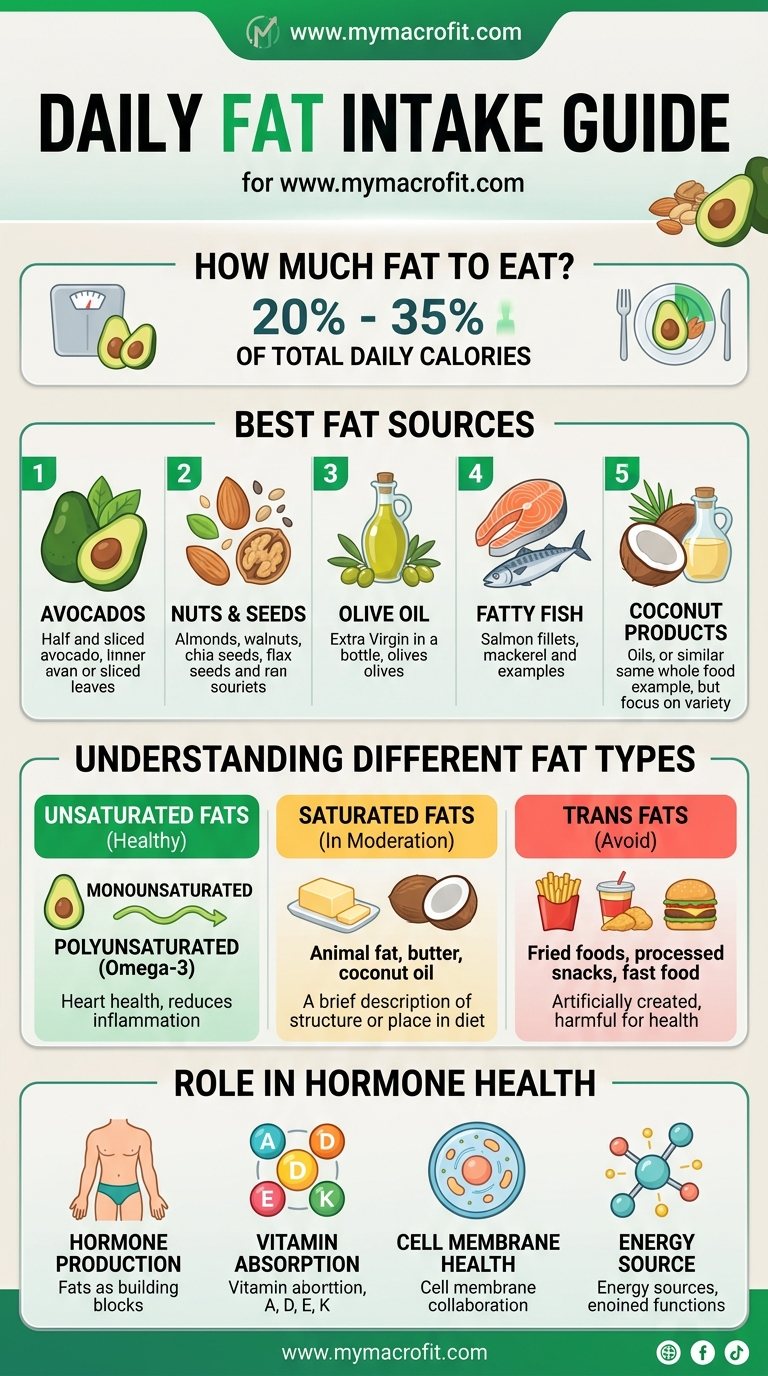
Why Your Body Needs Dietary Fat
Fat is not an optional macronutrient:
Hormone synthesis: All steroid hormones, oestrogen, testosterone, progesterone, cortisol, are synthesised from cholesterol. Dietary fat is the primary substrate. Very low fat intake impairs sex hormone production with measurable effects on menstrual regularity, libido, and mood.
Fat-soluble vitamins: Vitamins A, D, E, and K require fat for absorption. Without adequate dietary fat, these vitamins pass through unabsorbed, even if your diet is technically rich in them.
Cell membrane structure: Every cell in your body has a membrane made primarily of phospholipids, fat-based structures. Dietary fat quality directly affects cell membrane fluidity and function.
Brain function: The brain is approximately 60% fat. DHA (an omega-3 fatty acid) is a structural component of brain tissue and critical for cognitive function.
Satiety: Fat slows gastric emptying, contributing to prolonged fullness after meals.
The Types of Fat: What Actually Matters
The total amount of fat matters less than its composition:
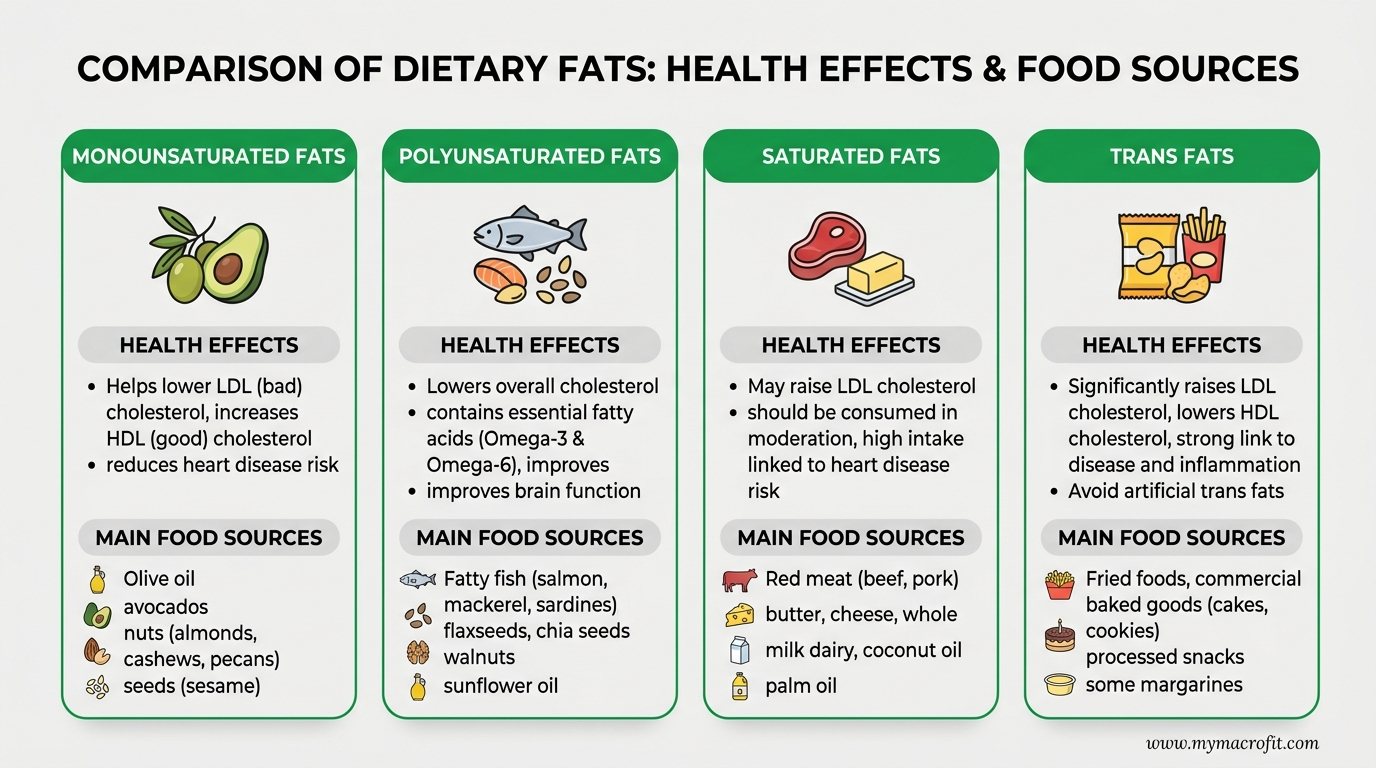
Monounsaturated Fats (MUFA), Prioritise
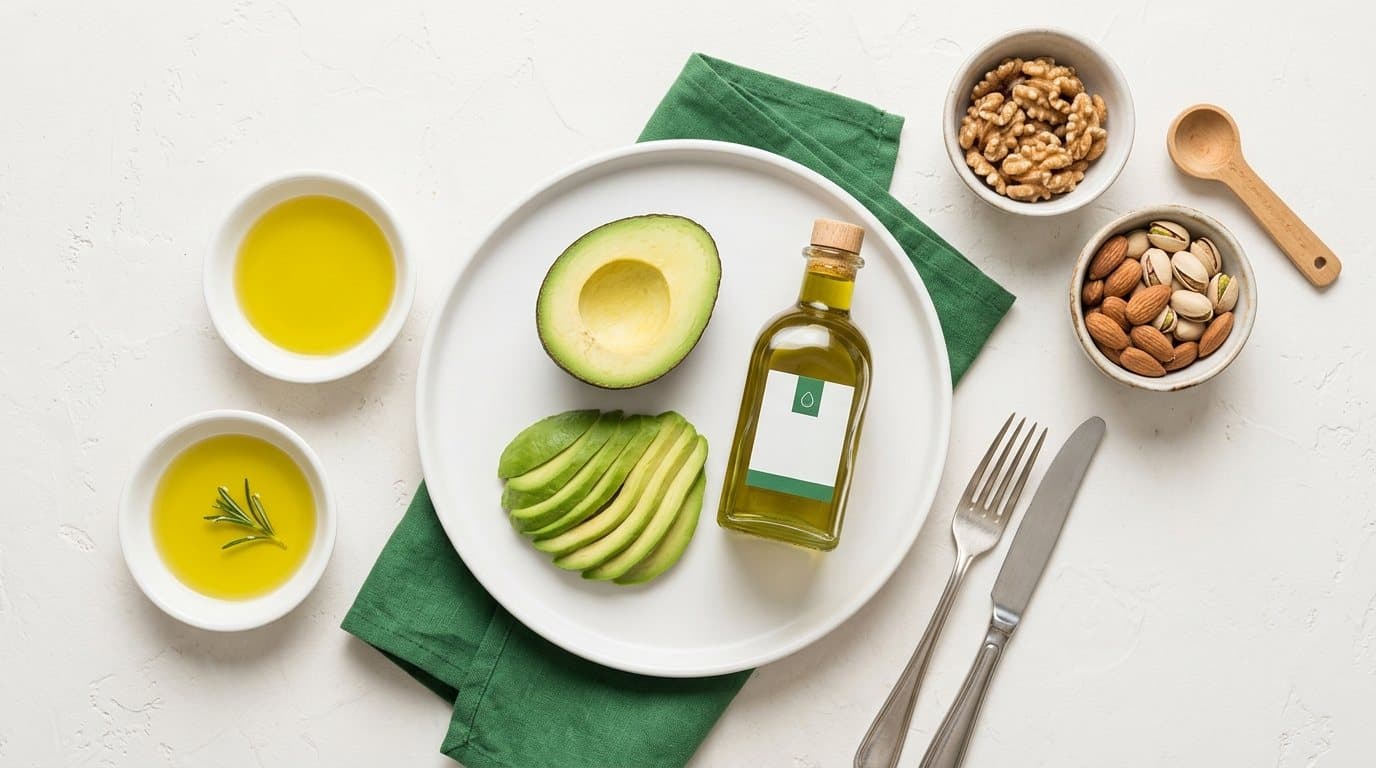
Found in: olive oil, avocados, most nuts (especially almonds, cashews), eggs
Effects: Neutral to beneficial for cardiovascular health. Olive oil's oleic acid is associated with reduced inflammation. The Mediterranean diet, the best-evidenced dietary pattern for longevity, derives a significant proportion of calories from olive oil MUFAs.
Polyunsaturated Fats (PUFA), Essential
Omega-3 (EPA, DHA, ALA): The most important dietary fats for most people in modern diets. EPA and DHA (from oily fish) are anti-inflammatory, support cardiovascular and brain health, and reduce triglycerides. ALA (from flaxseed, walnuts) is the plant precursor, conversion to EPA/DHA is inefficient.
Omega-6 (linoleic acid): Found in most vegetable and seed oils, nuts. Essential but already consumed in excess in most Western diets. Very high omega-6:omega-3 ratios promote inflammation.
Practical approach: Increase omega-3 sources (oily fish 2-3x/week or supplement); moderate omega-6 by reducing seed oil (sunflower, soybean) consumption in favour of olive oil.
Saturated Fat, Moderate
Found in: butter, coconut oil, red meat, dairy, processed foods
Evidence: Saturated fat raises LDL cholesterol, a cardiovascular risk factor. Replacing saturated fat with unsaturated fat (not refined carbohydrates) is associated with reduced cardiovascular risk. The effect is not dramatic for most healthy people with moderate intake.
Practical guidance: UK guidelines recommend saturated fat under 20g/day (women) and 30g/day (men). This doesn't require eliminating red meat, butter, or dairy, it means they shouldn't dominate fat intake.
Trans Fat, Minimise
Found in: partially hydrogenated oils in some processed foods
Industrially produced trans fats raise LDL and lower HDL, a clearly harmful effect. Most are now banned or restricted in the UK. Read ingredients for "partially hydrogenated oil."
How Much Fat Per Day: Practical Targets
General recommendation: 20-35% of total calories from fat
For a 1,600 kcal diet: 36-62g fat/day For a 2,000 kcal diet: 44-78g fat/day For a 2,500 kcal diet: 56-97g fat/day
Use our Macro Calculator to set your specific fat target alongside protein and carbohydrates.
Minimum for hormone health: 0.5g/kg bodyweight minimum, even in a calorie deficit.
For a 65kg woman dieting on 1,400 kcal: minimum 32g fat/day. Below this, hormonal consequences are likely.
Where Fat Calories Accumulate Quickly
Fat at 9 kcal/g means small portions have significant calorie impact:
| Food | Portion | Fat | Calories |
|---|---|---|---|
| Olive oil | 1 tbsp | 14g | 120 kcal |
| Avocado | 1 whole (170g) | 29g | 273 kcal |
| Almonds | 30g handful | 15g | 173 kcal |
| Peanut butter | 2 tbsp | 16g | 190 kcal |
| Cheese (cheddar) | 30g | 10g | 124 kcal |
| Salmon fillet | 150g | 18g | 280 kcal |
This isn't a reason to avoid these foods, they're nutritionally excellent. It's context for why fat intake needs awareness when managing total calories.
Fat Distribution Through the Day
Unlike protein (where spacing matters for muscle protein synthesis), fat distribution through the day isn't critical for most outcomes. However:
- Including fat at meals slows digestion and improves satiety
- Fat with vegetables improves fat-soluble vitamin absorption (oil on salad, avocado with greens)
- Pre-workout: lower fat meals are digested faster and may be better tolerated 30-60 minutes before training
The Low-Fat Diet Problem
For women especially: very low fat diets (under 15-20% of calories) produce measurable hormonal disruption:
- Reduced oestrogen and progesterone
- Menstrual irregularity or amenorrhea in extreme cases
- Reduced leptin (satiety hormone)
- Impaired vitamin D, E, and K absorption
Many women pursuing aggressive fat loss inadvertently go very low fat, and experience fatigue, cycle disruption, and mood changes as a result. Adequate fat intake (at least 0.5g/kg bodyweight) must be maintained even in a significant calorie deficit.
The Bottom Line
Eat 20-35% of your total calories from fat, prioritising monounsaturated fats (olive oil, avocados, nuts) and omega-3 fatty acids (oily fish), moderating saturated fat, and minimising processed trans fats.
Never go below 0.5g/kg bodyweight in fat, the hormonal consequences of very low fat intake undermine both health and fat loss outcomes.
Save & share on Pinterest
Click any card to pin it — or share with someone who needs it.
How Much Fat Should I Eat Per Day?
The evidence on daily fat intake, how much you need, which types matter, what too little does to you…
The evidence on daily fat intake, how much you need, which types matter, what to…
Read the full guide: How Much Fat Should I Eat Per Day?
Try the free Macro Calculator
How Much Fat Should I Eat Per Day? — use our free calculators for instant personalised results. No s…
Pinterest opens in a new tab. You can edit the description before saving.
Ready to get your numbers?
Free calculator, instant results, no signup required.
Frequently Asked Questions
What percentage of calories should come from fat?+
Does eating fat make you fat?+
What is the minimum fat intake for hormone health?+
Which types of fat should I prioritise?+
Should I eat low-fat or low-carb to lose weight?+
Is it bad to eat fat at night or before bed?+
About the Author

I'm a certified nutritionist and metabolic health coach. I went deep on keto and metabolism after reversing my own insulin resistance, and I'd rather give you the actual numbers than a hand-wave.
View full profile →