Ketosis: What It Is and How Long It Takes to Get There

CN · Metabolic Health Coach
Ketosis is one of the most misunderstood concepts in nutrition, simultaneously hyped as a cure for everything and dismissed as a dangerous fad. The reality is more nuanced: ketosis is a normal metabolic state that humans evolved to access, with genuine but specific benefits and real-world implementation challenges.
What Ketosis Actually Is
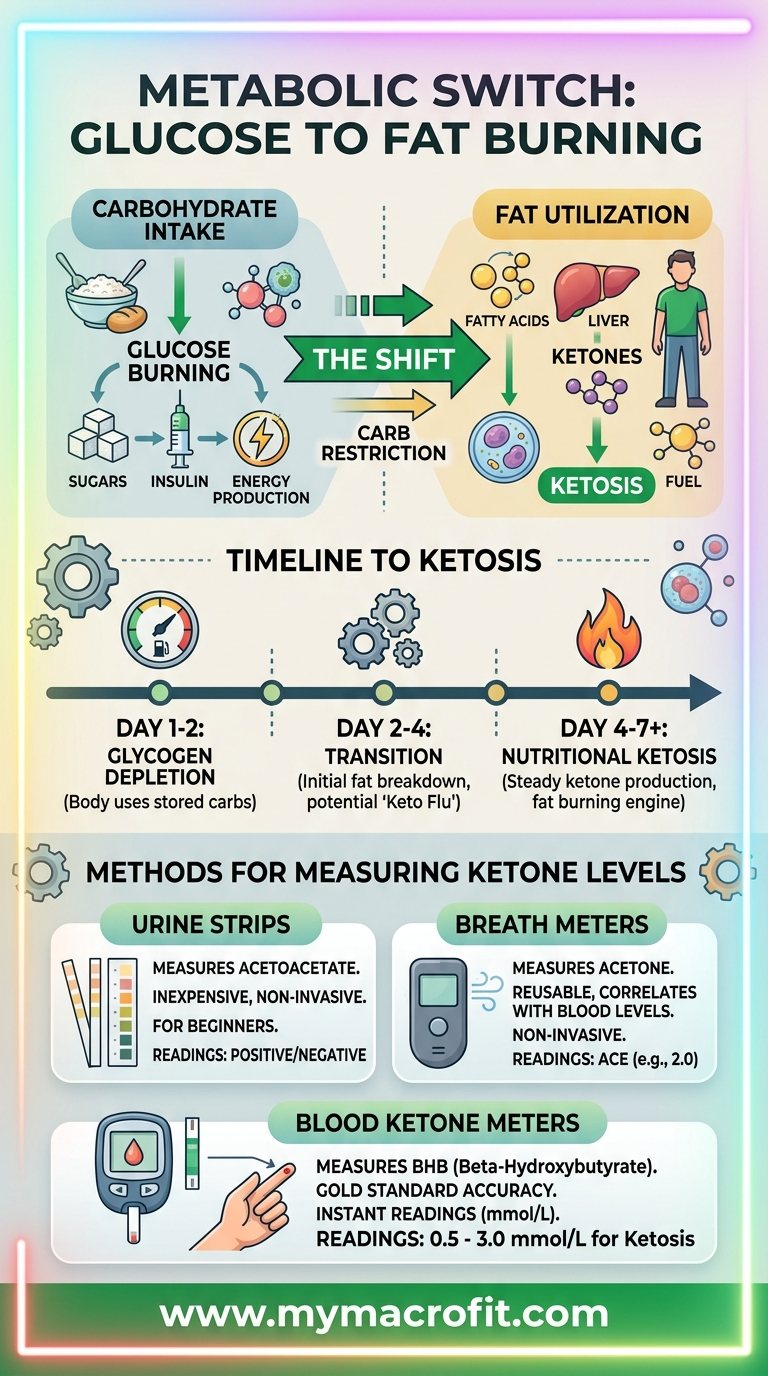
When carbohydrate intake drops sufficiently low (typically under 50g/day), glycogen stores are depleted within 1-3 days. The liver then begins producing ketone bodies, acetoacetate, beta-hydroxybutyrate, and acetone, from fatty acids.
These ketone bodies become the primary fuel source for most body tissues, including the brain (which cannot directly metabolise fat but can efficiently use ketones).
The metabolic shift:
- Glucose-burning (glycolysis) → Ketone-burning (ketolysis) as primary energy pathway
- Fat oxidation dramatically increases
- Insulin levels drop significantly (ketosis requires very low insulin)
- Glucagon rises, stimulating more fat mobilisation
This is a normal adaptation to fasting or extended low-carbohydrate intake, our ancestors regularly entered ketosis between meals and during periods of food scarcity.
The Timeline to Ketosis
Hours 0-12: Blood glucose drops as glycogen begins depleting. Insulin falls.
Hours 12-48: Liver glycogen essentially depleted. Ketone production begins. Ketones measurable in urine (strips turn positive).
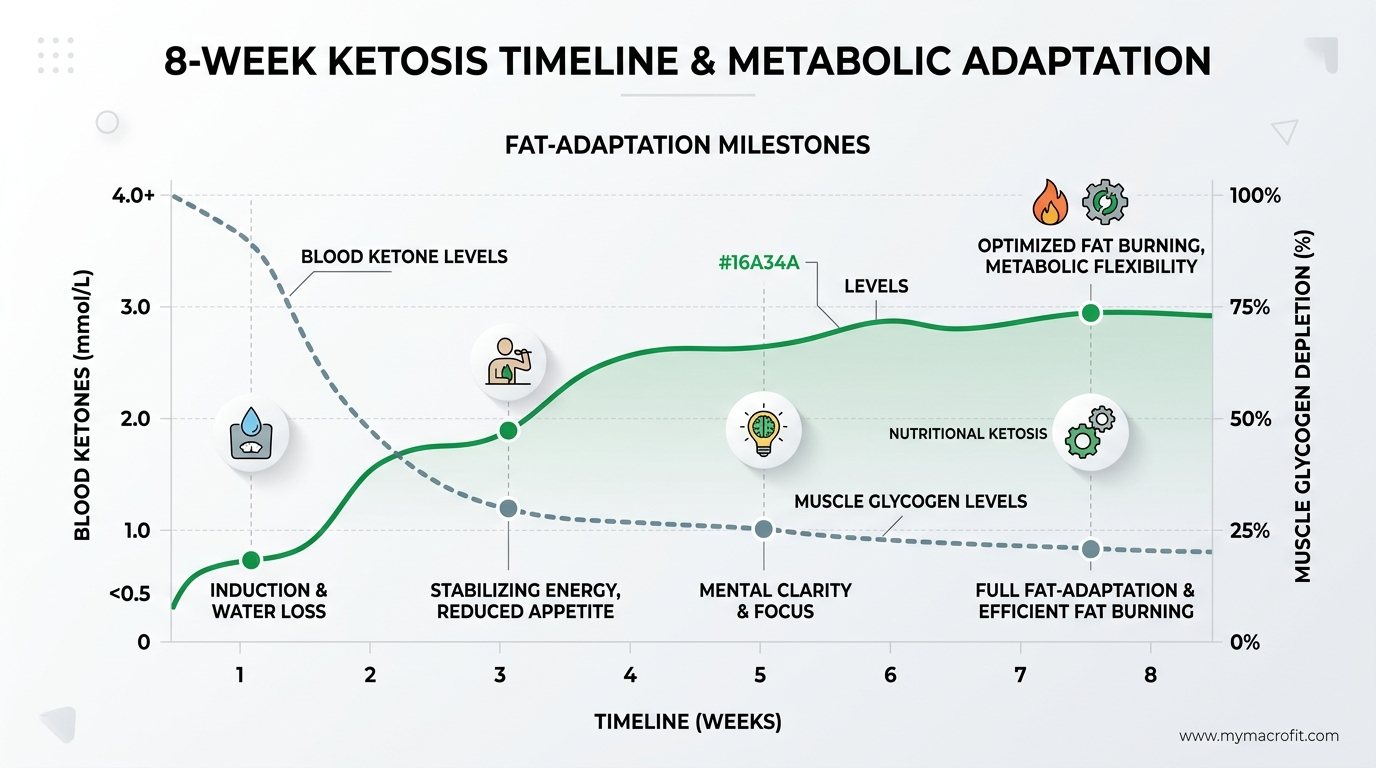
Days 2-5: Blood ketones rise to 0.5-1.5 mmol/L. Initial keto flu symptoms likely. Body is in ketosis but not yet well-adapted to using ketones efficiently.
Weeks 1-3: Keto flu resolves. Appetite markedly reduces. Energy begins stabilising. Blood ketones: 1.0-2.5 mmol/L.
Weeks 3-8 (keto adaptation): The body increasingly upregulates fat-oxidising enzymes and mitochondrial machinery. Exercise performance recovers. The "fat-adapted" state, where fat oxidation at moderate exercise intensities approaches that of a carbohydrate-fed state, is established.
Ketone Levels: What the Numbers Mean
Blood ketone measurement (beta-hydroxybutyrate, BHB):
| Level | State |
|---|---|
| Under 0.5 mmol/L | Not in ketosis |
| 0.5-1.5 mmol/L | Light nutritional ketosis |
| 1.5-3.0 mmol/L | Optimal nutritional ketosis |
| 3.0-5.0 mmol/L | High ketosis (extended fast or very strict keto) |
| Above 10 mmol/L | Diabetic ketoacidosis, medical emergency (only relevant in type 1 diabetes) |
Nutritional ketosis (1.5-3.0 mmol/L) is very different from diabetic ketoacidosis. In nutritional ketosis, insulin is functional, it naturally limits ketone production. In diabetic ketoacidosis, absolute insulin deficiency allows ketones to rise without limit.
How to Get Into Ketosis Faster
Carbohydrate restriction: The primary driver. Start with 20g net carbs/day (the strictest keto threshold) to deplete glycogen fastest.
Exercise: Physical activity depletes glycogen faster, accelerating the transition. A moderate exercise session on day 1 of a keto diet can reduce the time to initial ketosis significantly.
Extended fast: An 18-24 hour fast at the start of a ketogenic diet depletes glycogen and elevates ketones rapidly.
MCT oil (medium-chain triglycerides): MCTs are directly converted to ketones by the liver without requiring full fat oxidation. 1-2 tbsp MCT oil/day during the transition elevates ketones and provides mental energy during the adaptation period.
Electrolytes: Doesn't speed ketosis directly but dramatically reduces keto flu severity, making adherence easier during the critical first week.
Use our Keto Macro Calculator to set up your specific carbohydrate, protein, and fat targets.
Why Ketosis Reduces Appetite
One of the most practically significant effects of ketosis: dramatic appetite reduction.
Ketones directly suppress ghrelin (hunger hormone) at elevated blood concentrations. Additionally, stable blood glucose without the insulin-driven spikes and crashes of carbohydrate-dominated diets removes the 2-3 hour hunger cycles that drive snacking.
The practical result: many keto followers find maintaining a calorie deficit effortless once keto-adapted, simply because hunger disappears. This is the primary mechanism by which ketogenic diets produce weight loss in most people, not some unique metabolic advantage, but superior spontaneous calorie reduction.
What Breaks Ketosis
- Eating above approximately 50g net carbs in a day
- Certain protein-rich meals (excess protein can be converted to glucose through gluconeogenesis, though this is often overstated)
- Alcohol (alcoholic beverages contain carbohydrates and impair ketone production)
Recovery to ketosis after a "cheat day": typically 1-3 days of strict restriction, faster with exercise.
The Bottom Line
Ketosis is achieved within 2-5 days of reducing net carbohydrates to under 20-50g/day and depleting glycogen. Full keto-adaptation (efficient fat oxidation, reduced keto flu, stable energy) takes 3-6 weeks. Ketosis measurably reduces appetite, stabilises energy, and produces weight loss primarily through reduced spontaneous calorie intake.
Save & share on Pinterest
Click any card to pin it — or share with someone who needs it.
Ketosis: What It Is and How Long It Takes to Get There
The science of ketosis, what happens metabolically when you enter ketosis, how long it takes, how to…
The science of ketosis, what happens metabolically when you enter ketosis, how l…
Read the full guide: Ketosis: What It Is and How Long It Takes to Get There
Try the free Keto Macro Calculator
Ketosis: What It Is and How Long It Takes to Get There — use our free calculators for instant person…
Pinterest opens in a new tab. You can edit the description before saving.
Ready to get your numbers?
Free calculator, instant results, no signup required.
Frequently Asked Questions
What does ketosis feel like?+
How long does it take to get into ketosis?+
How do I know if I'm in ketosis?+
Does being in deeper ketosis mean faster fat loss?+
What knocks you out of ketosis, and how quickly can you get back?+
Can you build muscle while in ketosis?+
About the Author

I'm a certified nutritionist and metabolic health coach. I went deep on keto and metabolism after reversing my own insulin resistance, and I'd rather give you the actual numbers than a hand-wave.
View full profile →