9 Macro Tracking Mistakes That Stall Weight Loss (and How to Fix Each One)

CN · Metabolic Health Coach
You're weighing your food, logging every meal, and hitting your numbers, but the scale hasn't moved in three weeks. Before you blame a "broken metabolism," know this: in the overwhelming majority of cases, the problem isn't your body. It's a small tracking leak you haven't spotted yet.
Here are the nine most common ones, and how to plug each.
1. Forgetting the cooking oil
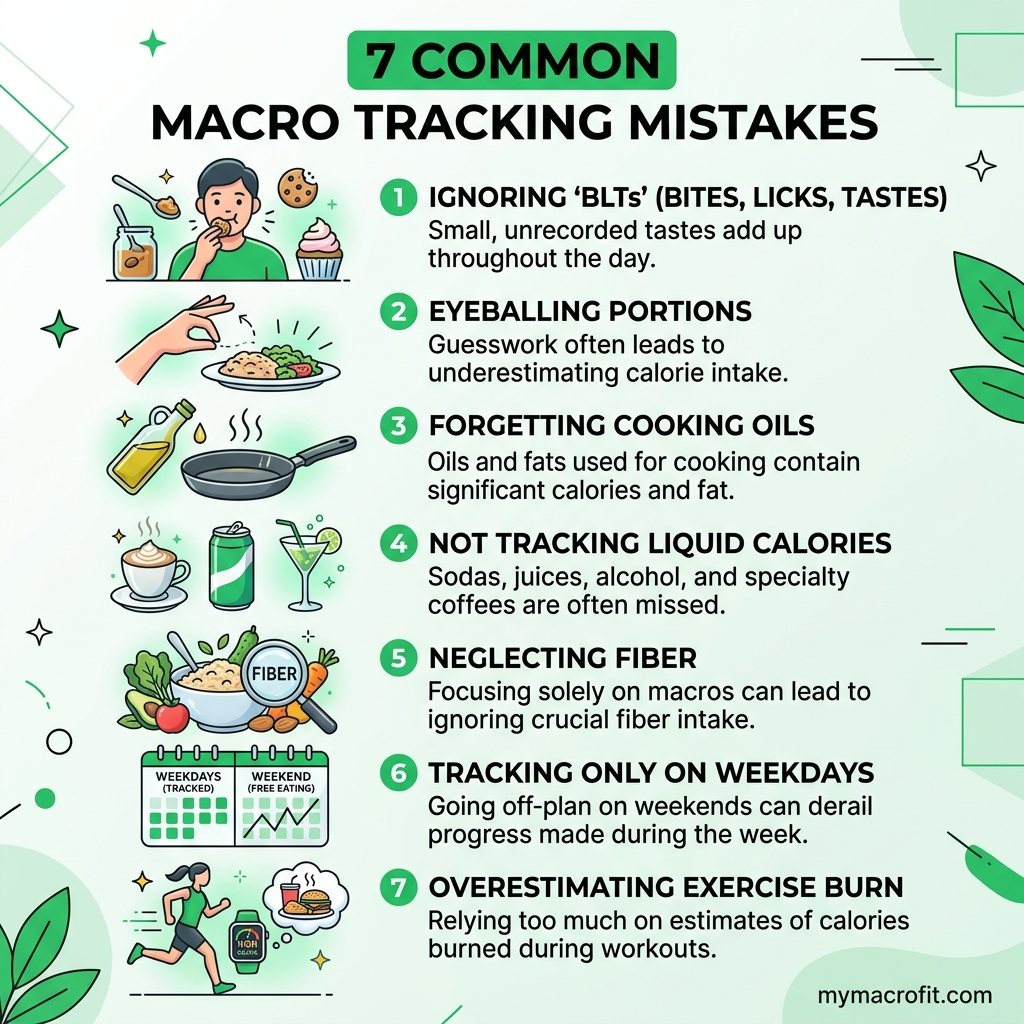
A single tablespoon of olive oil is around 120 calories of pure fat. Cook with two or three across the day and you've added 250-350 calories that almost never get logged. Oils, butter, and cooking sprays are the single biggest blind spot in macro tracking.
Fix: weigh or measure every fat you cook with. If you can't, log a conservative tablespoon for any pan-fried meal.
2. Weighing food cooked instead of raw
This one quietly wrecks more diets than any other. Food changes weight as it cooks, 100g of raw chicken shrinks to about 70g cooked, while 100g of dry rice swells to roughly 300g. If you weigh cooked food against a raw database entry, your numbers can be off by a third.
Fix: weigh raw and log raw, every time. Pick "raw" or "uncooked" database entries and stay consistent.
3. The "bites, licks, and tastes"
The spoonful of peanut butter from the jar, the kids' leftover chips, the cheese you nibbled while cooking. None feels worth logging. Together they can add 200-400 untracked calories a day.
Fix: the rule is simple, if it goes in your mouth, it goes in the app. Even a rough estimate beats zero.
4. Eyeballing instead of weighing
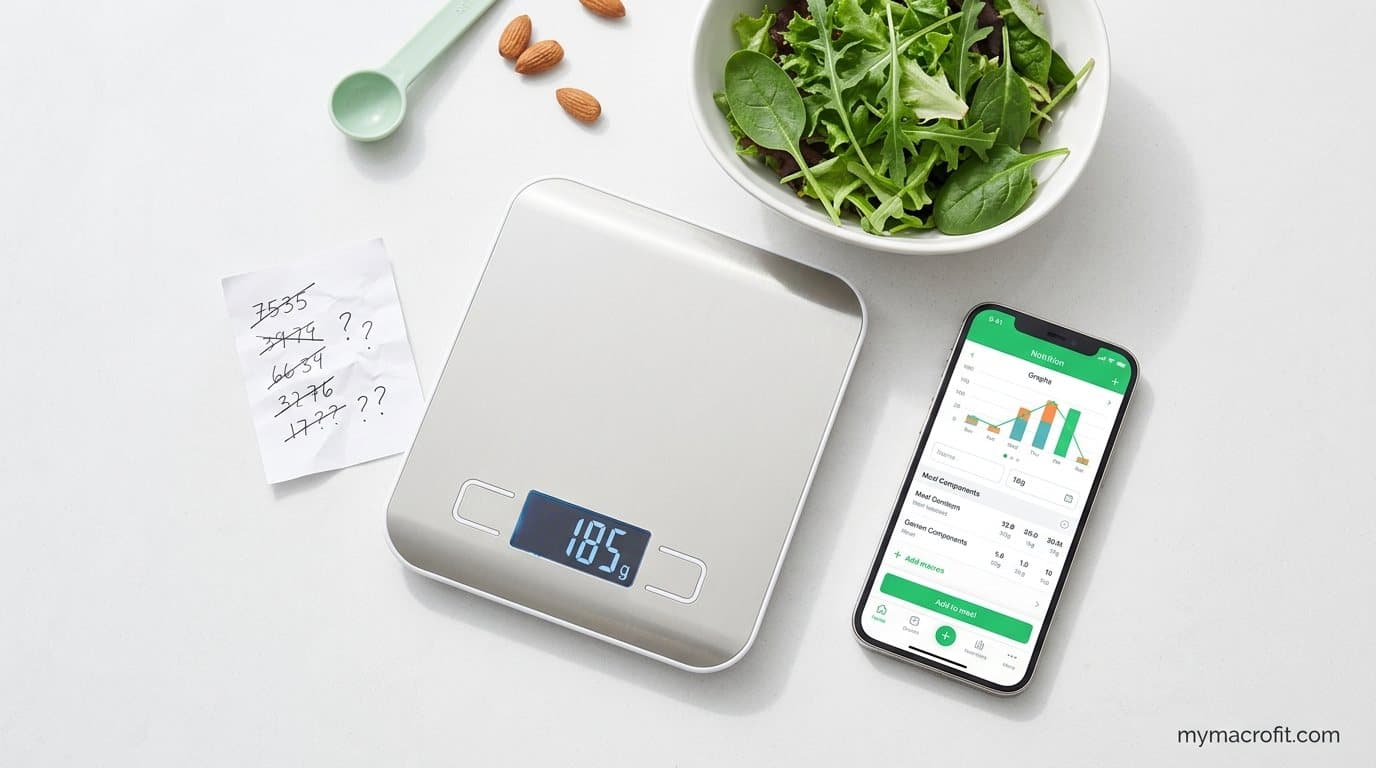
People are reliably terrible at estimating portions, and the error almost always runs in the wrong direction. Research shows we underestimate intake by 20-40%, which is often exactly the size of the deficit we're trying to hit.
Fix: use a digital food scale, at least for your first few weeks. It calibrates your eye so you can estimate accurately later.
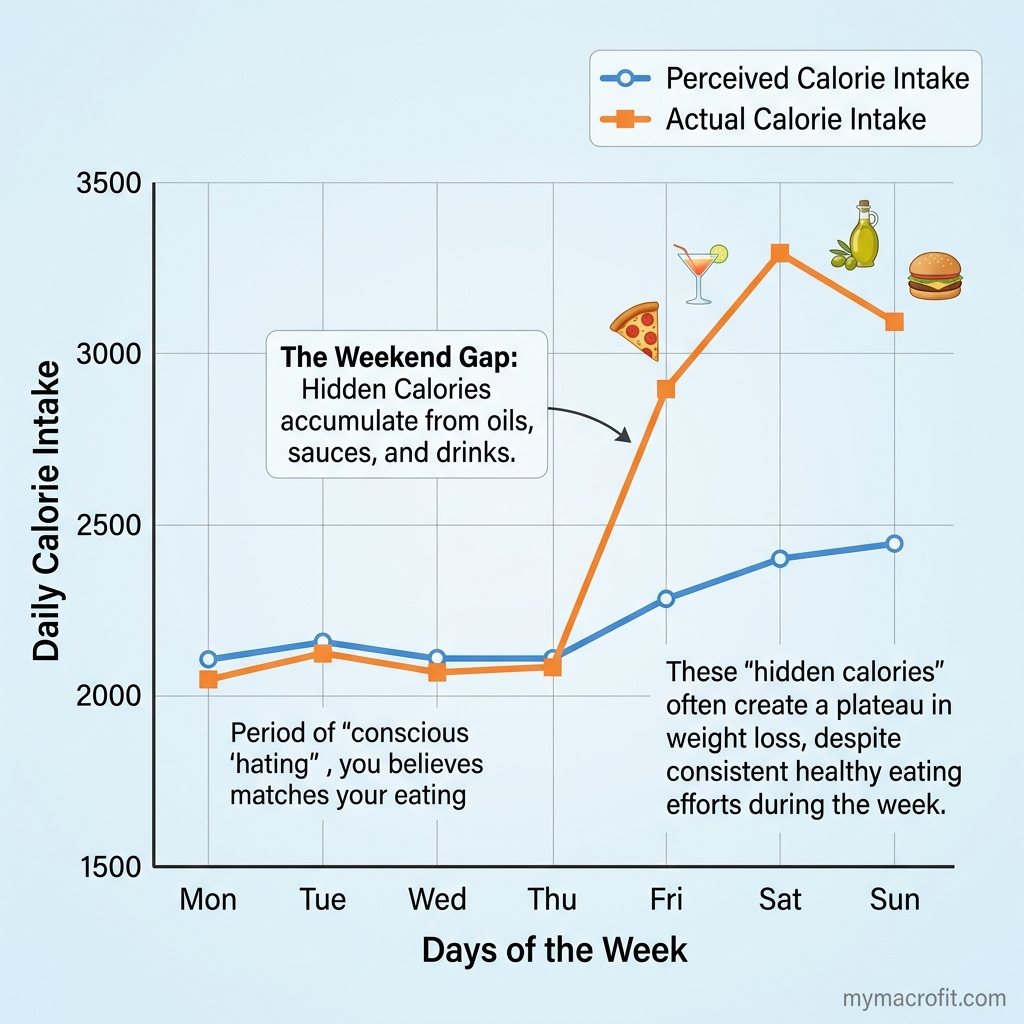
5. Weekend amnesia
You're disciplined Monday to Friday, then tracking goes loose Saturday and Sunday. The maths is brutal: a careful 500-calorie daily deficit across five weekdays (−2,500) can be entirely cancelled by two relaxed weekend days at +1,300 each.
Fix: track weekends with the same honesty as weekdays, even rough logging keeps you anchored. If you want flexibility, build it in deliberately, not accidentally.
6. Ignoring liquid calories
Lattes, juices, smoothies, sports drinks, and alcohol slip past because they don't feel like "food." A large flavoured coffee can be 300 calories; alcohol is 7 calories a gram and rarely gets a clean macro slot in any app.
Fix: log everything you drink that isn't water, black coffee, or plain tea.
7. Trusting inaccurate database entries
Crowd-sourced food databases are full of duplicate, wrong, and optimistic entries. The first result for "chicken breast" might be missing 40 calories per serving.
Fix: favour entries with a verified tick or a barcode scan, cross-check against the actual package label, and create your own entries for foods you eat often.
8. Setting calorie targets too high (or too low)
Sometimes the tracking is accurate and the target is the problem. A calorie goal pulled from a generic chart, or one you set months ago before you lost weight, may no longer create a real deficit, as you get lighter, your maintenance calories fall.
Fix: recalculate your targets from your current bodyweight. The Macro Calculator gives you an up-to-date calorie and protein target in seconds.
9. Chasing perfect numbers instead of consistent ones
The flip side of all this: some people track so obsessively that they burn out and quit within a month. Perfect tracking you abandon loses to good-enough tracking you sustain for a year.
Fix: aim for accurate and consistent, not flawless. Hitting your targets within 5-10% every day beats nailing them exactly for two weeks and giving up.
Targets out of date?
If you've already lost weight, your old numbers may no longer create a deficit. Recalculate from your current bodyweight.
Recalculate My Macros →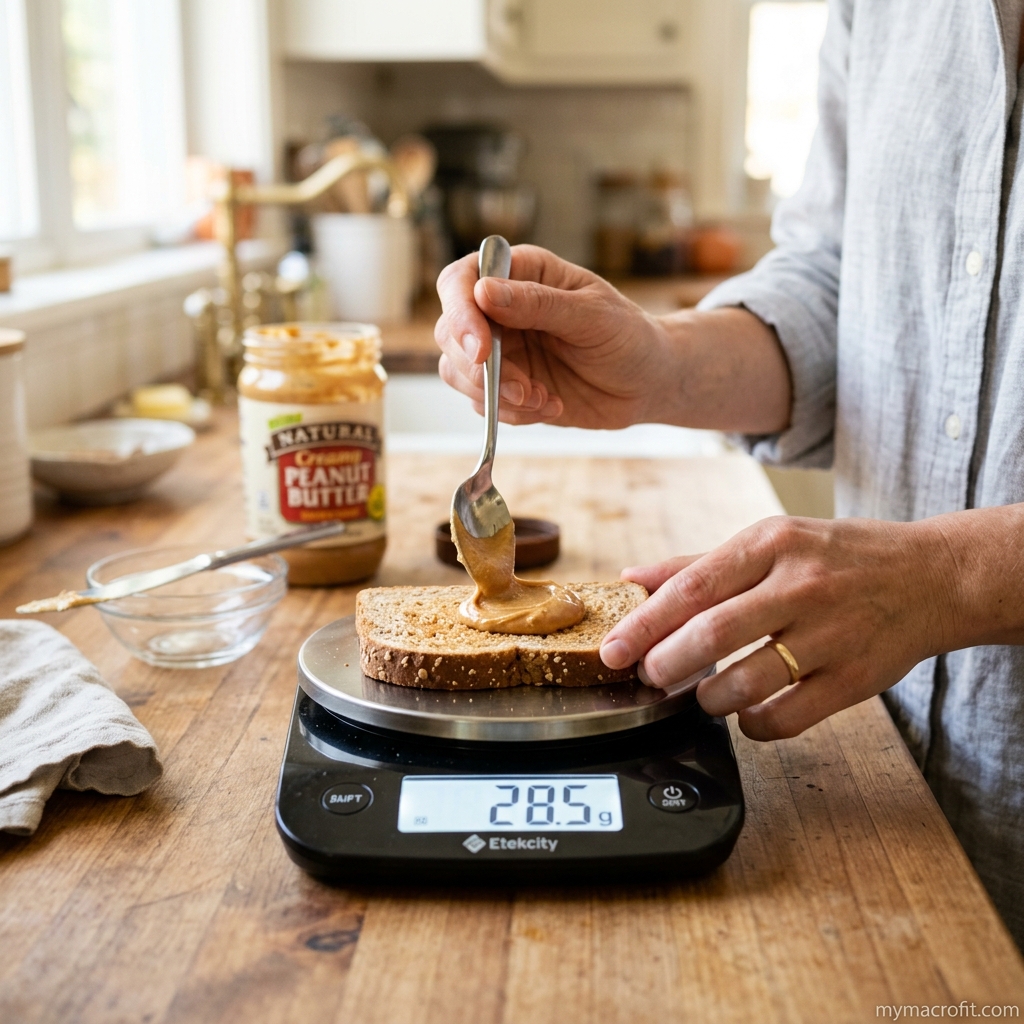
Which mistakes cost the most
Not all of these leak the same number of calories. If you're hunting for why your scale is stuck, start with the big-ticket items, they account for most stalls on their own:
| Mistake | Typical hidden calories/day |
|---|---|
| Weekend amnesia | 300-600 (averaged across the week) |
| Cooking oils and fats | 200-400 |
| Liquid calories and alcohol | 150-500 |
| Bites, licks, and tastes | 200-400 |
| Cooked-vs-raw weighing error | 100-300 |
Any two of these stacked together is enough to erase a 500-calorie deficit completely. That's the whole reason "I track everything and don't lose" is so common, the tracking feels complete, but two or three of these leaks are running in the background. Plug the top of this list first.
The two-week honesty test
If your weight has stalled, don't change your calories yet. First, spend two weeks logging with ruthless accuracy, weigh everything raw, log every bite and every drink, track the weekend like a weekday. Most of the time, the "stall" turns out to be 300 hidden calories that were never the metabolism's fault. Fix the leak, and the scale starts moving again.
Save & share on Pinterest
Click any card to pin it — or share with someone who needs it.
9 Macro Tracking Mistakes That Stall Weight Loss (and How to Fix Each One)
Tracking your macros but the scale won't budge? These are the nine most common macro tracking mistak…
Tracking your macros but the scale won't budge? These are the nine most common m…
Read the full guide: 9 Macro Tracking Mistakes That Stall Weight Loss (and How to Fix Each One)
Try the free Macro Calculator
9 Macro Tracking Mistakes That Stall Weight Loss (and How to Fix Each One) — use our free calculator…
Pinterest opens in a new tab. You can edit the description before saving.
Ready to get your numbers?
Free calculator, instant results, no signup required.
Frequently Asked Questions
Why am I tracking macros but not losing weight?+
Should I weigh food raw or cooked?+
Do I really need a food scale to track macros?+
How do I track macros when eating out?+
Does alcohol count toward my macros?+
How long should I wait before deciding my macros aren't working?+
About the Author

I'm a certified nutritionist and metabolic health coach. I went deep on keto and metabolism after reversing my own insulin resistance, and I'd rather give you the actual numbers than a hand-wave.
View full profile →