Macro Tracking vs Calorie Counting: Which Actually Works Better for Weight Loss?

CN · Metabolic Health Coach
It's one of the most common questions in any weight-loss community: should I count calories, or count macros? The two camps can get surprisingly heated, but the honest answer is less dramatic than the debate suggests. They're not rival philosophies, one is a more detailed version of the other.
Here's how to decide which is right for you, without the tribalism.
They're measuring the same thing
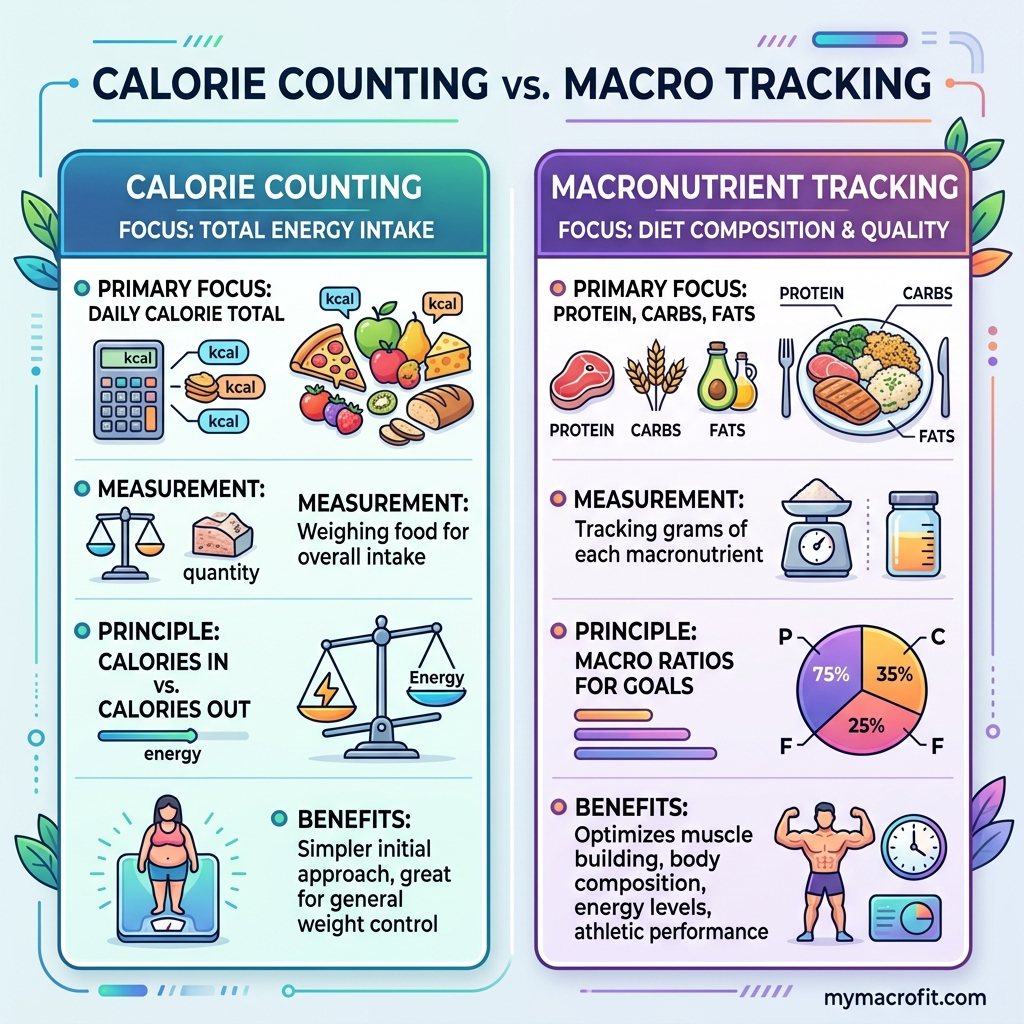
The first thing to understand is that macros are calories. Every gram of protein and carbohydrate is 4 calories; every gram of fat is 9. So when you track your macros, your calorie count comes along automatically, it's just broken out into its three components.
That means the real question isn't "calories or macros." It's "do I need the extra detail that macros give me?" Calorie counting tells you about energy balance, whether you'll gain, lose, or maintain. Macro tracking tells you about energy balance plus body composition, whether the weight you lose is fat or muscle.
When calorie counting is enough
If your only goal is to see a smaller number on the scale, calorie counting does the job. Weight change is governed by energy balance, full stop. Eat fewer calories than you burn and you'll lose weight, regardless of how those calories are split.
Calorie counting also wins on simplicity. One number to hit is easier to plan around than three, and for many people that simplicity is the difference between sticking with it and quitting. The best tracking method is always the one you'll actually keep doing.
You can find your daily calorie target with the Calorie Deficit Calculator, then just stay under it.
When macros pull ahead
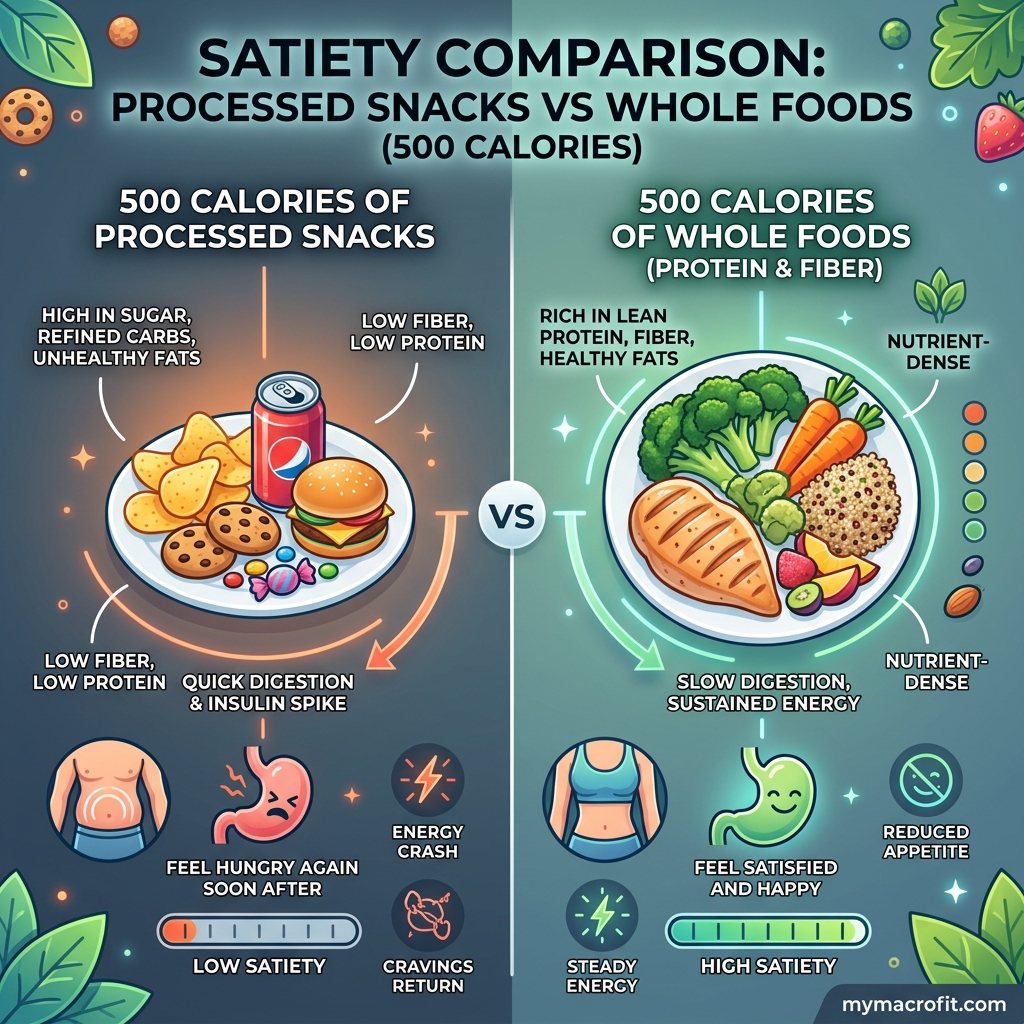
The case for macros comes down to one word: muscle. When you're in a calorie deficit, your body can pull energy from fat or from muscle. Which one it chooses depends largely on two things, whether you're strength training, and whether you're eating enough protein.
This is where calorie-only counting can quietly fail you. It's entirely possible to hit a perfect 1,600-calorie day made up of toast, pasta, and a chocolate bar, on target for weight loss, but so low in protein that you shed muscle alongside the fat. You end up lighter but softer, with a slower metabolism. People call this "skinny-fat," and it's the classic outcome of dieting on calories alone.
Tracking macros prevents it by making protein a number you have to hit. Get the protein right and the rest sorts itself out.
The beginner-friendly middle ground
Here's the approach most coaches quietly recommend, because it captures most of the benefit of macros with most of the simplicity of calorie counting:
Count calories and protein only. Ignore carbs and fat for now, as long as you hit your calorie ceiling and your protein floor, you can let carbs and fat fall wherever they like. You get the muscle protection of macro tracking without the mental load of juggling three numbers.
Once that feels effortless, you can layer in carb and fat targets if you want to fine-tune training performance or satiety. Most people never need to.
Get your numbers in 30 seconds.
The free Macro Calculator gives you a calorie target plus protein, carb and fat splits for your goal, use the protein number even if you only track that.
Open the Macro Calculator →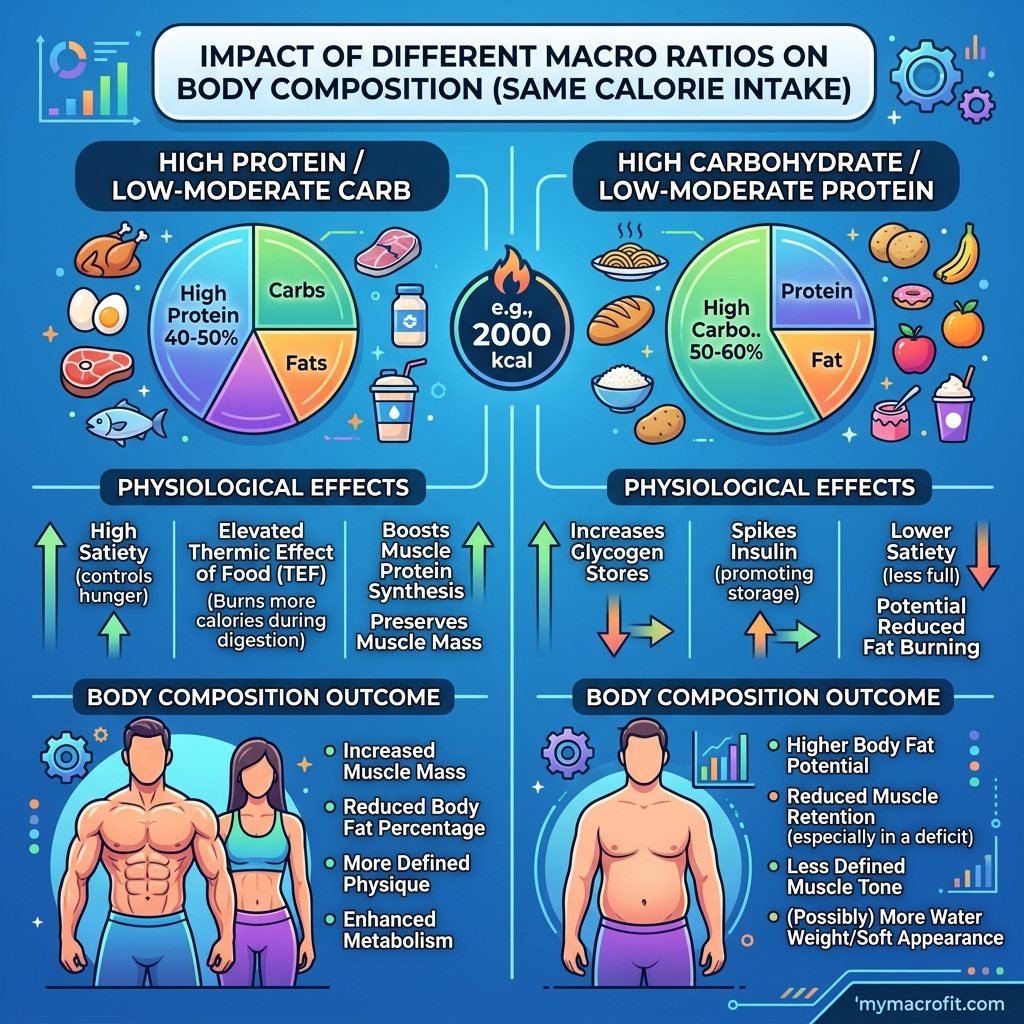
The three methods, side by side
To make the trade-off obvious, here's what each approach actually buys you:
| Calories only | Calories + protein | Full macros | |
|---|---|---|---|
| Tells you weight direction | Yes | Yes | Yes |
| Protects muscle | No | Yes | Yes |
| Mental load | Lowest | Low | Highest |
| Tunes training performance | No | Roughly | Yes |
| Best for | Pure scale weight | Most people | Recomp, athletes, keto |
Look at the middle column. "Calories + protein" gets a yes in nearly every row that matters for 90% of people, at almost the simplicity of calories alone. That's not a coincidence, it's why it's the method most coaches quietly default their clients to. Full macros is a real upgrade only once protein and calories are already automatic and you want to fine-tune.
A quick example of why protein matters
Two 1,600-calorie days, both "on target" for fat loss:
- Day A: cereal, a sandwich, pasta with sauce, a chocolate bar. Protein: ~45g.
- Day B: Greek yogurt and eggs, chicken salad, salmon with potatoes and veg. Protein: ~140g.
Identical calories, identical scale weight loss. But in a deficit, Day A leaks muscle because there aren't enough amino acids to defend it, while Day B holds onto it. Six weeks of each and the scale shows the same number, the mirror shows two different people. That single difference, the protein number, is the entire argument for upgrading from calories to macros.
So, which should you choose?
A simple decision guide:
- Choose calorie counting if you want maximum simplicity, you're new to tracking, or your only goal is weight on the scale. Add a protein target and you've covered 90% of what macros would give you.
- Choose macro tracking if you're strength training, chasing body recomposition (losing fat while building or keeping muscle), following a specific diet like keto, or you simply like the extra control.
- Choose neither, eventually. Both are tools to teach you what balanced, appropriately-sized meals look like. The end goal for most people is to internalise that and track loosely or not at all, but that's a topic for once you've put in the reps.
The "better" method isn't a fixed answer. It's whichever one you'll do consistently for long enough to get results. If that's calories, count calories. If you want to protect your hard-earned muscle while you do it, watch your protein. Everything else is fine-tuning.
Save & share on Pinterest
Click any card to pin it — or share with someone who needs it.
Macro Tracking vs Calorie Counting: Which Actually Works Better for Weight Loss?
Macros or just calories? An honest comparison of the two most popular tracking methods, what each on…
Macros or just calories? An honest comparison of the two most popular tracking m…
Read the full guide: Macro Tracking vs Calorie Counting: Which Actually Works Better for Weight Loss…
Try the free Macro Calculator
Macro Tracking vs Calorie Counting: Which Actually Works Better for Weight Loss? — use our free calc…
Pinterest opens in a new tab. You can edit the description before saving.
Ready to get your numbers?
Free calculator, instant results, no signup required.
Frequently Asked Questions
Is counting macros better than counting calories for weight loss?+
Can you track macros without tracking calories?+
Do I need to track macros or is CICO enough?+
Which is easier, macros or calories?+
Should beginners start with calories or macros?+
Will I have to track forever?+
About the Author

I'm a certified nutritionist and metabolic health coach. I went deep on keto and metabolism after reversing my own insulin resistance, and I'd rather give you the actual numbers than a hand-wave.
View full profile →