Macros for Weight Loss: The Exact Protein, Carb and Fat Split (+ Calculator)

BSc Kinesiology · CPT
"What macros should I eat to lose weight?" is one of the most-asked questions in nutrition, and most answers overcomplicate it. The truth is that fat loss comes down to a calorie deficit, and macros are simply how you spend those calories so you stay full, keep your muscle, and actually stick to the plan. Get the split right and a deficit stops feeling like deprivation. Here are the exact numbers.
The deficit comes first
No macro split causes weight loss on its own. You lose fat when you eat fewer calories than you burn, full stop. Macros decide the quality of that weight loss, whether you drop fat while keeping muscle, and whether you can hold the deficit without white-knuckling it.
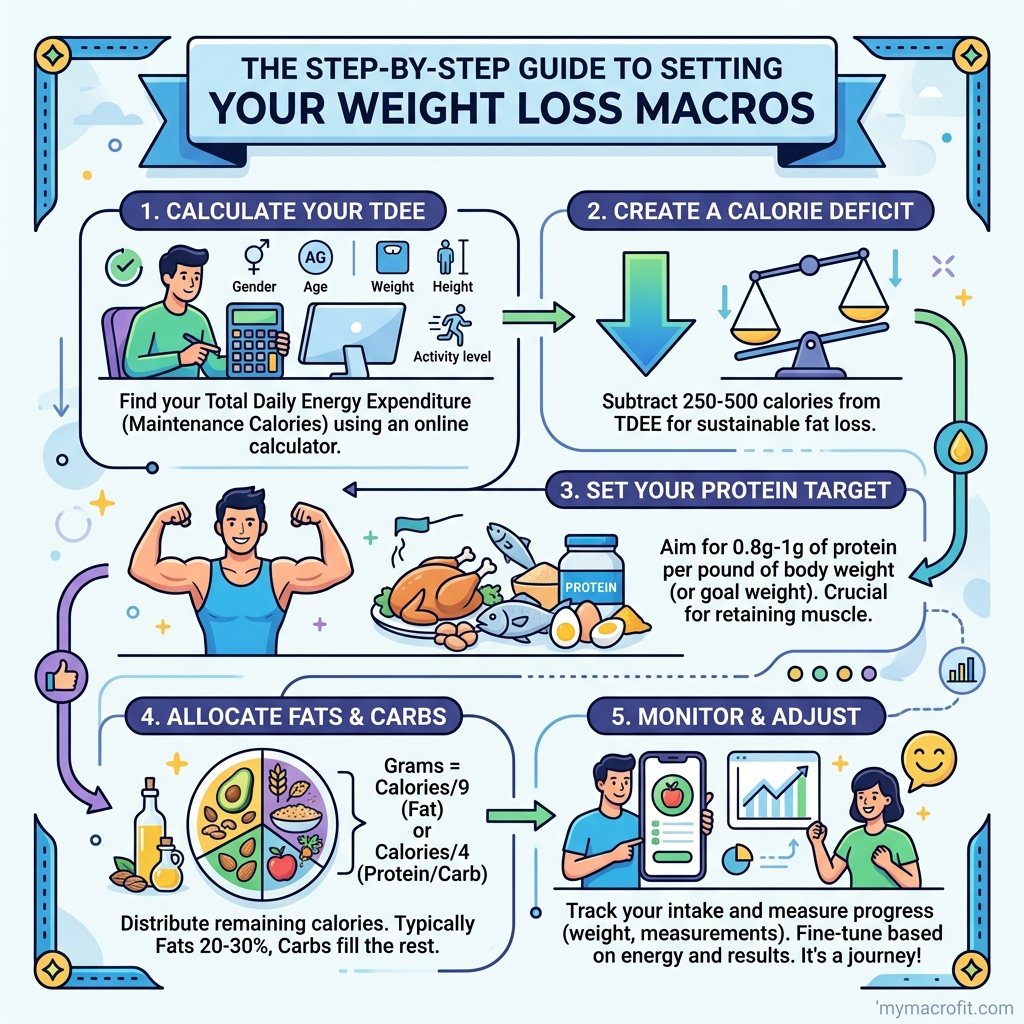
So step one is your calorie target: find your maintenance with the TDEE Calculator, then subtract a sustainable 15-25%. That number is your daily ceiling. Everything below is about dividing it well.
The split that works: protein first
Here's the order that matters, because it's the opposite of how most people think about it:
| Macro | Target | Why |
|---|---|---|
| Protein | 1.8-2.2g per kg bodyweight | Preserves muscle, maximises fullness, highest thermic effect |
| Fat | 0.8-1g per kg bodyweight | Hormone health, satiety, flavour, don't go too low |
| Carbs | All remaining calories | Fuels training and energy; flexible to preference |
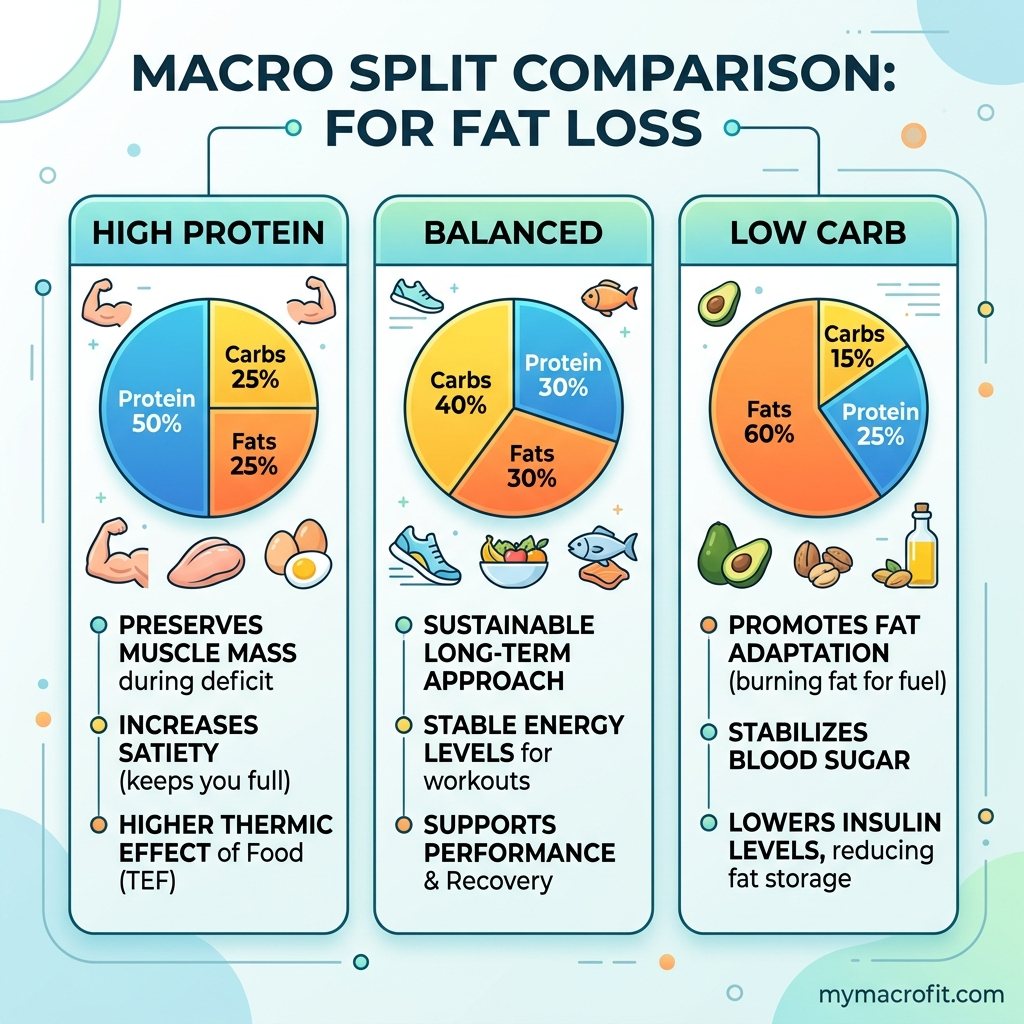
In percentage terms this usually lands near 35% protein / 35% carbs / 30% fat, but the percentages are an output, not the goal. Set protein and fat as gram floors, then carbs simply fill what's left of your calorie budget.
A worked example
An 80kg person at a 1,900-calorie target:
- Protein: 80 × 2.0 = 160g (640 cal)
- Fat: 80 × 0.9 = 72g (648 cal)
- Carbs: remaining 612 cal ÷ 4 = ~153g
That's a genuinely sustainable day: enough protein to stay full and hold muscle, enough fat to feel normal, and plenty of carbs to train hard. Plug your own numbers into the Macro Calculator to get your exact split.
Get your exact fat-loss macros.
The free Macro Calculator sets your deficit calories and a high-protein split in seconds.
Calculate My Macros →Why protein is the lever
In a deficit your body looks for energy anywhere it can, including your muscle. High protein is what tells it to burn fat instead and keep the muscle that gives you shape and keeps your metabolism up. Protein also wins on appetite: it's the most filling macro by a wide margin, so hitting your target quietly makes the deficit easier. Not sure of your number? The Protein Calculator settles it.
Carbs vs fat: your call
Once protein and fat floors are set, how you split the rest is mostly preference:
- Love food and training? Keep carbs higher, they fuel performance and most people find them more satisfying per calorie.
- Prefer richer meals or feel better low-carb? Push fat a little higher and carbs lower.
Both work if calories and protein are right. Don't let anyone tell you carbs are the enemy; the macro tracking vs calorie counting debate matters less than consistency. For the full method, see how to calculate your macros.
The same plate, two ways
To see why protein is the lever, compare two days at the exact same 1,900 calories, the only difference being how they're built:
| Low-protein day | Protein-first day | |
|---|---|---|
| Protein | ~70g | ~160g |
| Fullness | Hungry by mid-afternoon | Satisfied between meals |
| In a deficit, you lose | Fat and muscle | Mostly fat |
| Six weeks later | Lighter but soft | Leaner, firmer, stronger |
Identical calories, identical scale weight, completely different result in the mirror. The deficit decides how much you lose; protein decides what you lose. That's the whole reason this article puts it first.
A common mistake: dropping calories too low to start
When fat loss is the goal, it's tempting to start with the biggest deficit you can stomach. It backfires. Too steep a cut from day one leaves you ravenous, drains your training, and leaves no room to adjust later when your weight loss naturally slows. A moderate 15-25% deficit works better precisely because it's sustainable, and because it gives you somewhere to go. If you start at rock bottom, your only lever when the scale stalls is to cut further into territory that costs you muscle and sanity. Begin moderate, hold protein high, and keep a little room in reserve.
When the scale stalls
If weight loss stops for 2-3 weeks, your macros likely need a small adjustment, usually a slightly lower calorie target as you get lighter, since a smaller body burns less. Don't slash everything; trim 100-150 calories (mostly from carbs or fat, never protein) and reassess. There's a full guide in how to adjust macros when weight loss stalls.
The takeaway
Macros for weight loss aren't a secret ratio, they're a deficit, spent wisely. Lock protein at 1.8-2.2g/kg, keep fat reasonable, fill the rest with carbs you enjoy, and stay consistent. Do that and the split takes care of itself. Start with your numbers from the Macro Calculator.
Save & share on Pinterest
Click any card to pin it — or share with someone who needs it.
Macros for Weight Loss: The Exact Protein, Carb and Fat Split (+ Calculator)
The macro split that actually drives fat loss isn't magic, it's high protein, a calorie deficit, and…
The macro split that actually drives fat loss isn't magic, it's high protein, a …
Read the full guide: Macros for Weight Loss: The Exact Protein, Carb and Fat Split (+ Calculator)
Try the free Macro Calculator
Macros for Weight Loss: The Exact Protein, Carb and Fat Split (+ Calculator) — use our free calculat…
Pinterest opens in a new tab. You can edit the description before saving.
Ready to get your numbers?
Free calculator, instant results, no signup required.
Frequently Asked Questions
What is the best macro split for weight loss?+
How many grams of protein, carbs and fat should I eat to lose weight?+
Do carbs matter for weight loss?+
Is protein really the most important macro for fat loss?+
Should I eat the same macros every day?+
How low can my fat go on a weight-loss diet?+
Do I need to hit my carbs exactly, or just protein and calories?+
About the Author

I'm a kinesiologist and personal trainer. I've spent eight years helping women lose fat and get stronger without handing their whole life over to a diet.
View full profile →