The Complete Meal Prep Guide: How to Prep a Week of Healthy Food in 2 Hours

BSc Kinesiology · CPT
Once you've got the basics of meal prep down, the next step is turning it from an occasional Sunday effort into a system, something that runs almost on autopilot, week after week, even when life gets chaotic. That's what this guide is about. Because the real magic of meal prep isn't any single batch of cooked chicken; it's reaching the point where eating well stops requiring daily decisions. When there's protein cooked, rice portioned, and veg chopped and waiting, the healthy choice quietly becomes the easy choice, and willpower stops being something you have to spend.
Here's how to build a repeatable weekly system: what to prep, how to structure your prep day, and, crucially, how to keep it going long after the initial motivation fades.
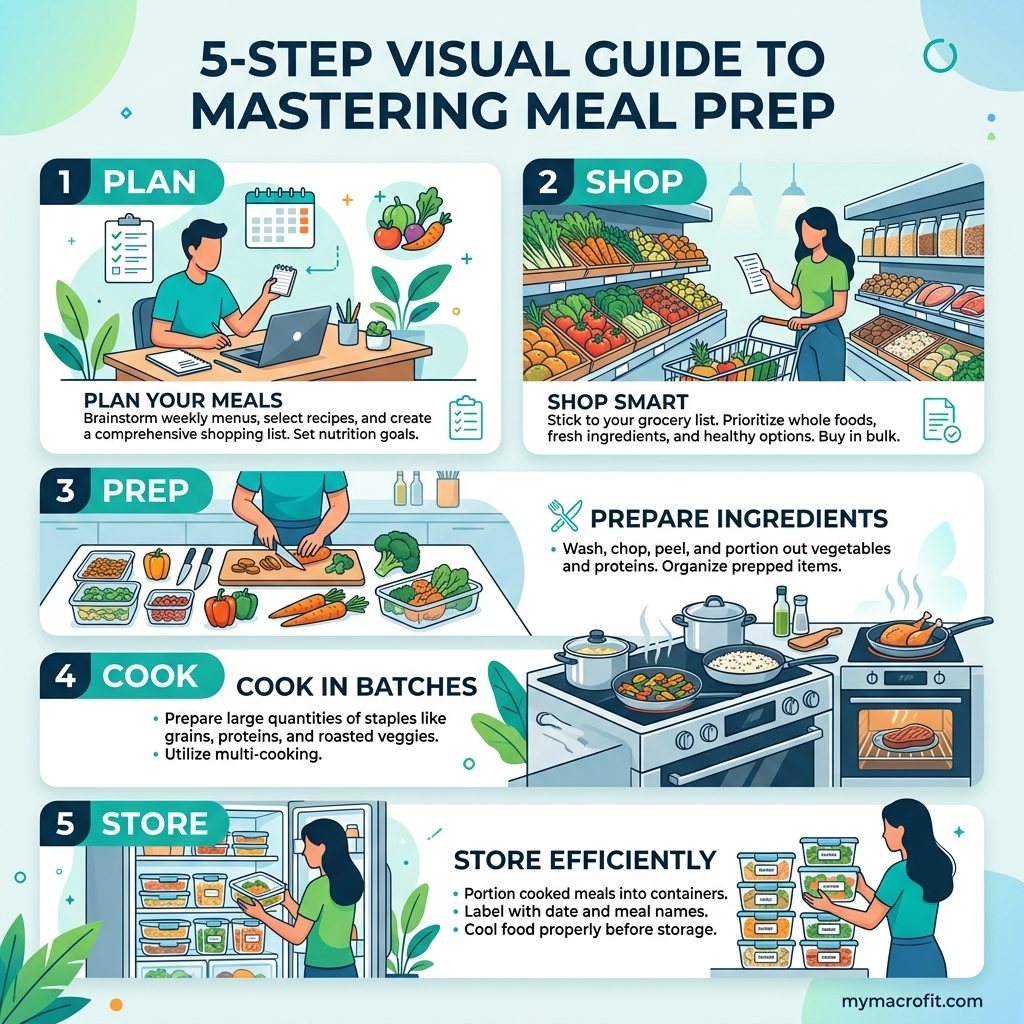
Why Meal Prep Works
The biggest obstacle to eating well is not knowledge, it's convenience. When you're tired, hungry, and busy, you eat what's available and easy. Meal prep shifts the effort from daily decisions to a single weekly session.
What meal prep solves:
- "I don't have time to cook", food is already prepared
- "I don't know what to eat", containers are labelled and ready
- "I ended up getting takeaway", the path of least resistance is now the healthy option
- "I went over my calories", portions are pre-measured
The Component Prep Approach
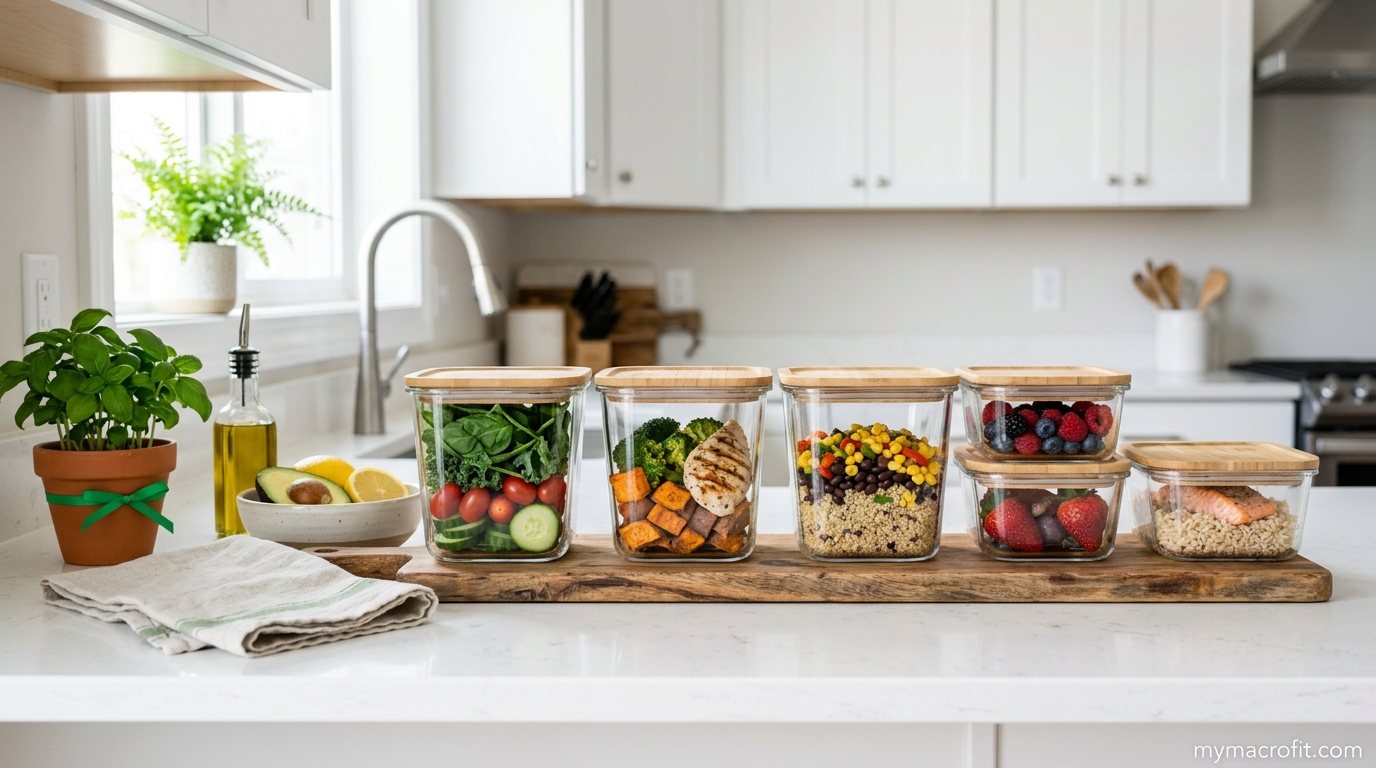
Don't prep complete meals, prep components. This gives you flexibility to combine them differently each day so you don't eat the same meal seven times.
Core components to prep:
| Component | Prep method | Lasts |
|---|---|---|
| Protein | Bake/grill 6-8 portions | 4-5 days |
| Grains | Cook large batch | 5 days |
| Roasted vegetables | Oven roast | 4 days |
| Raw veg/salad base | Wash and chop | 3 days |
| Sauces/dressings | Mix in jars | 7+ days |
| Boiled eggs | Boil 8-10 | 7 days (unpeeled) |
Mix and match these components into different meals: grain bowl one day, protein + salad the next, stir-fry the day after. Same prep, different meals.
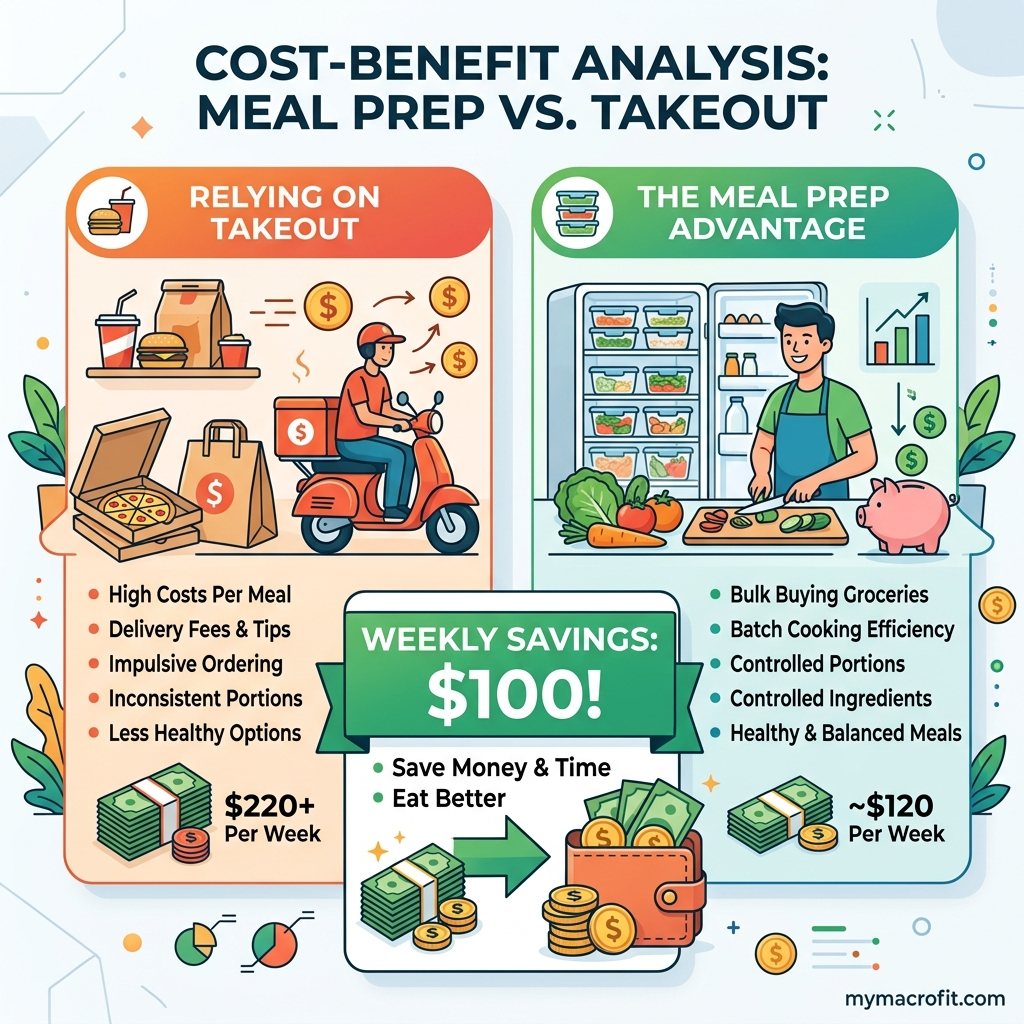
A 2-Hour Prep Session Structure
Before you start: Write a rough plan for the week. Know how many meals you're prepping for and how many portions of each component you need.
Timeline:
0:00, Start everything that takes longest:
- Turn on the oven (200°C/400°F)
- Put grains on to boil
- Marinate protein if using
0:10, Prep vegetables:
- Chop all vegetables for roasting
- Toss with olive oil, salt, seasoning
- Spread on oven trays
0:20, Protein in the oven:
- Season and put protein in oven (chicken, salmon, etc.)
- Put boiled eggs on
0:25, Raw veg prep:
- Wash and chop salad ingredients
- Portion into containers
0:45, Check and flip roasting veg:
- Rotate trays
0:50, Grains nearly done:
- Drain, cool slightly, portion into containers
1:00, Protein check:
- Chicken breast at 180g takes ~30 min in oven
1:15, Assembly:
- Cool protein, slice or leave whole
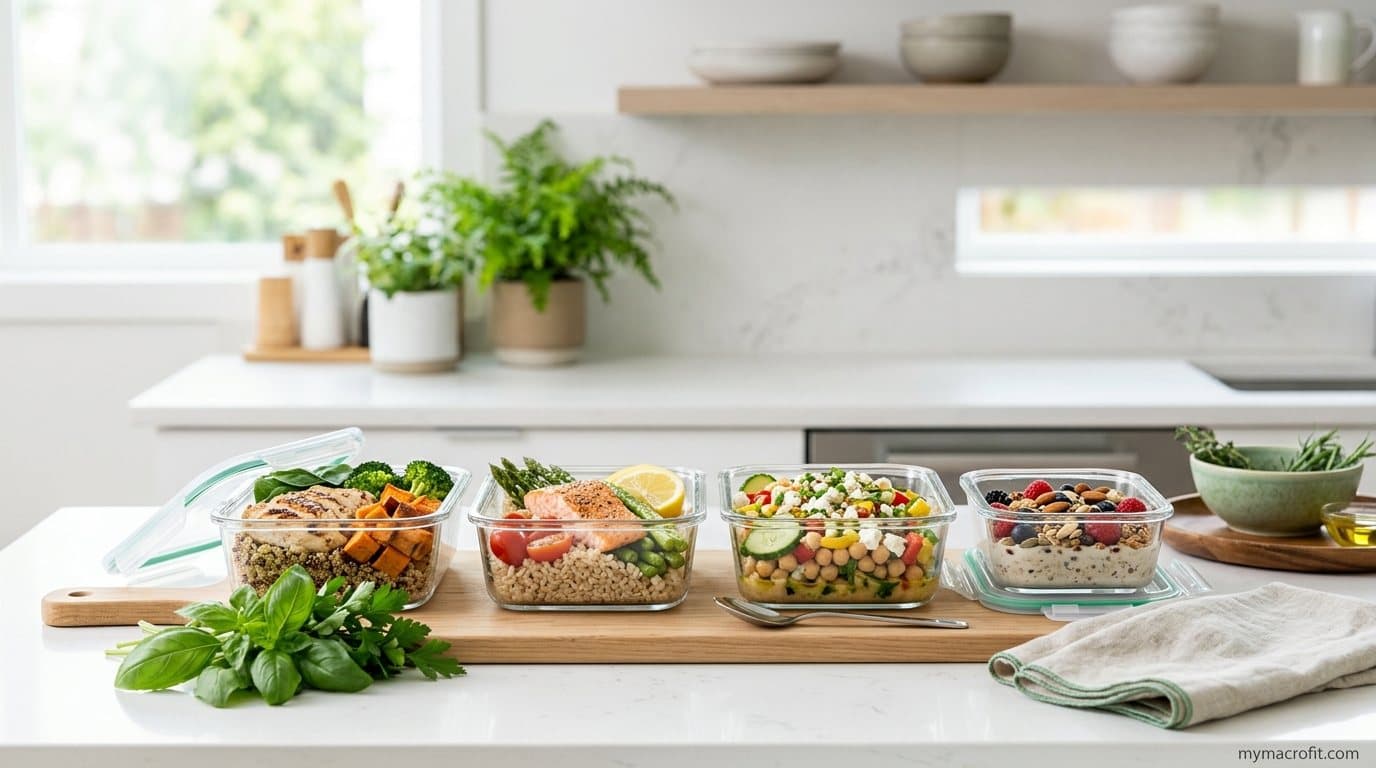
- Portion everything into individual containers
- Label with contents and day (Mon/Tue/etc.)
1:45-2:00, Sauces:
- Quick homemade sauces: Greek yogurt + lemon + garlic, tahini + lemon + water, hot sauce + olive oil
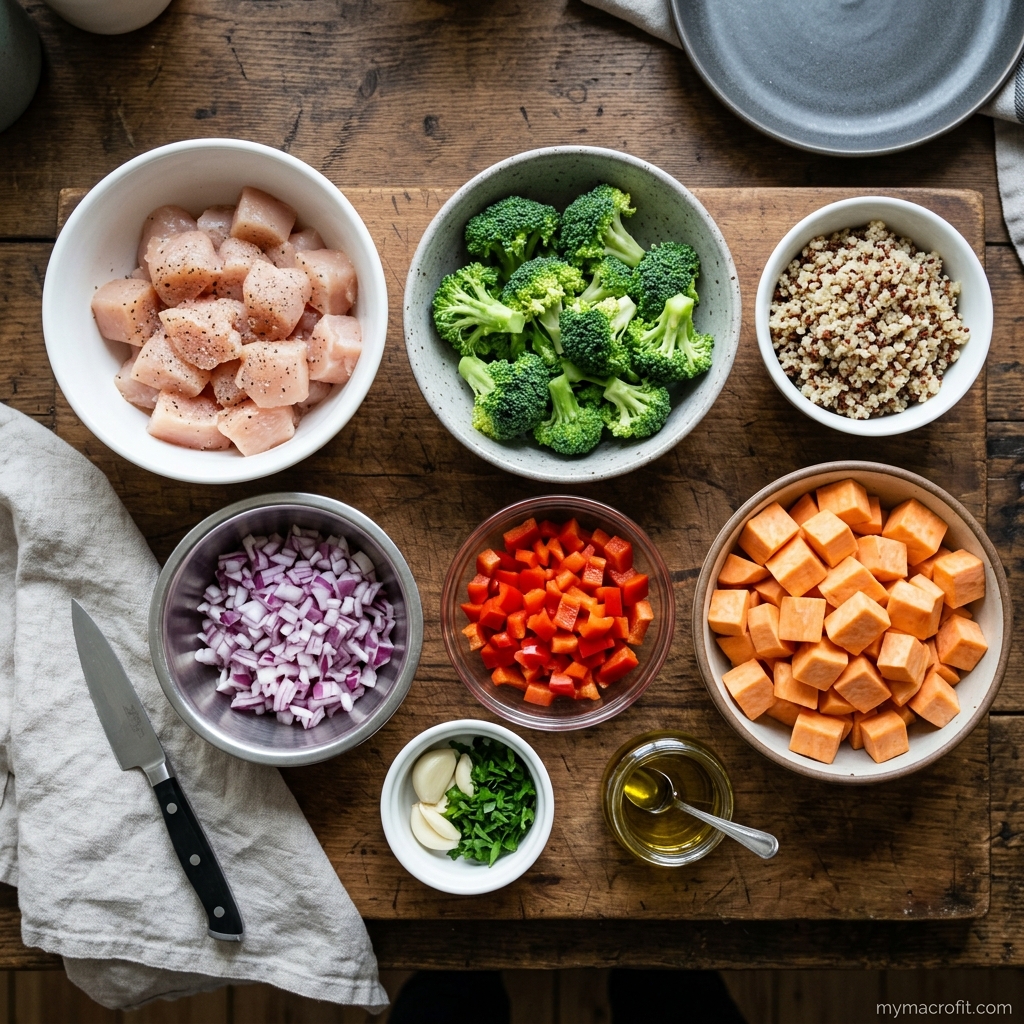
What to Prep for a High-Protein Week
Protein Options (choose 2-3)
Chicken breast, the most versatile prep protein. Bake 6-8 breasts at 180°C for 25-30 min. Season: salt + pepper + paprika + garlic powder. Cool and refrigerate whole; slice when serving.
Salmon fillets, prep 4-5 portions. 200°C for 12-15 min. Pairs with virtually anything.
Boiled eggs, prep 8-10 at once. Store unpeeled in the fridge for up to 7 days.
Lentils, cook a large batch (400g dry = ~1kg cooked). Freeze half for later use.
Tuna, no cooking required. Keep canned tuna as a backup protein for when prep runs out.
Carbohydrates (choose 1-2)
Rice, cook 400g dry rice, portion into 150-200g servings (~4-5 portions per person)
Oats, dry-stored, quick to cook fresh. Better prepped daily.
Sweet potato, cube and roast 1kg at a time. Also works boiled.
Quinoa, cook 300g dry, portion like rice.
Vegetables
Roasted veg mix: Broccoli, red onion, courgette, bell peppers, cherry tomatoes, roast at 200°C for 25-30 min. Use as a side with everything.
Salad base: Spinach, mixed leaves, cucumber, cherry tomatoes, washed and portioned. Add protein and dressing when serving.
Pre-cut stir-fry veg: Peppers, mushrooms, snap peas, pak choi, can be raw-stored in a container for 3 days. Quick to cook when needed.
Sample Week Using the Components
Assume prepped: chicken breast (6 portions), lentils, rice, roasted vegetables, boiled eggs, salad base.
| Day | Lunch | Dinner |
|---|---|---|
| Monday | Chicken + rice + roasted veg | Lentil soup with crusty bread |
| Tuesday | Egg salad bowl + mixed greens | Chicken stir-fry with rice |
| Wednesday | Leftover lentils + sweet potato | Chicken + new batch salad |
| Thursday | Tuna + rice + roasted veg | Egg fried rice (uses leftover rice) |
| Friday | Chicken + fresh salad base | Whatever, free night |
This is five days of lunches and dinners from a 2-hour Sunday prep. Each meal hits 30-50g protein.
Portion and Macro Control
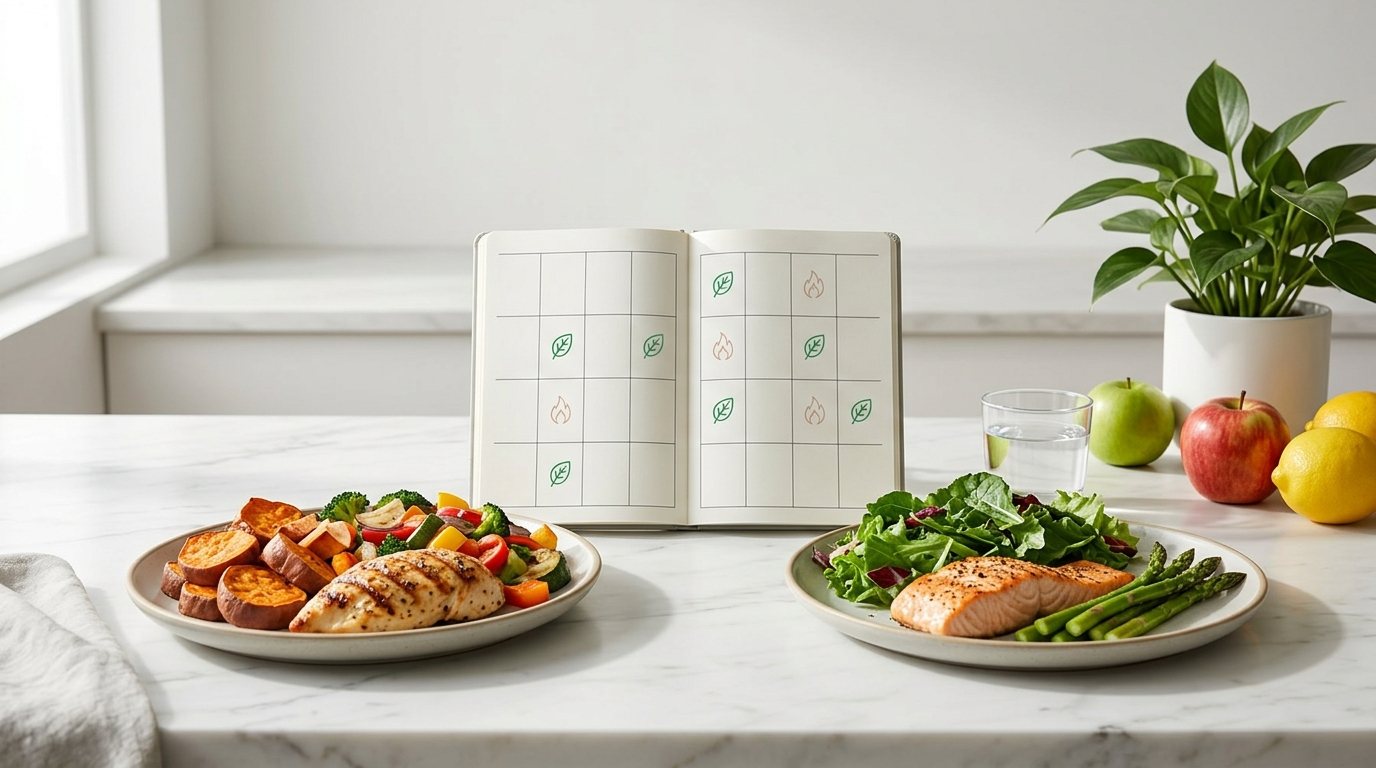
Meal prep is only effective for nutrition goals if portions are tracked. When portioning:
- Weigh cooked protein, a "chicken breast" can be 100g or 250g. Portion to your macro target (typically 150-200g cooked).
- Weigh cooked grains, a serving of rice can be anywhere from 100g to 400g. Decide your portion (typically 150-200g cooked) and keep it consistent.
- Vegetables are essentially free, don't worry about weighing most vegetables. The exception is calorie-dense prep items (roasted vegetables in significant oil).
→ Read more: High Protein Meal Prep: 5 Batch-Cooked Recipes
Fridge vs Freezer Strategy
Fridge (prep Sunday, eat within 5 days):
- Monday-Thursday meals in portion containers
- Friday is fresh or flex
Freezer (for weeks 2-3):
- Freeze: cooked lentils, cooked beans, sauces, soup
- Portion in zip-lock bags or containers
- Label with date and contents
Never freeze: cooked rice more than 1 day old (food safety), salad greens, soft cooked vegetables (go mushy), hard-boiled eggs
Making Meal Prep Stick
Most people start meal prep with enthusiasm and abandon it within a month. The failure mode is usually:
Prepping too much variety, trying to make 4 different proteins and 3 different grains "to avoid boredom" turns a 2-hour session into a 4-hour overwhelming project. Start with 2 proteins, 1 grain, 1 roasted veg, 1 raw veg. Simplicity is sustainable.
All-or-nothing thinking, prepping 3 meals instead of 7 is still 3 meals you don't have to cook during the week. Partial prep beats no prep.
No grocery list discipline, a 2-hour prep session needs a very deliberate grocery shop. Know what you're buying, in what quantities.
All Articles in This Guide
Save & share on Pinterest
Click any card to pin it — or share with someone who needs it.
The Complete Meal Prep Guide: How to Prep a Week of Healthy Food in 2 Hours
A complete meal prep guide, what to prep, how to structure a prep session, storage times, macro-frie…
A complete meal prep guide, what to prep, how to structure a prep session, stora…
Read the full guide: The Complete Meal Prep Guide: How to Prep a Week of Healthy Food in 2 Hours
Free fitness tools
The Complete Meal Prep Guide: How to Prep a Week of Healthy Food in 2 Hours — use our free calculato…
Pinterest opens in a new tab. You can edit the description before saving.
Frequently Asked Questions
How long does meal prep take?+
How many days in advance can you meal prep?+
Is meal prep good for weight loss?+
What are the best containers for meal prep?+
About the Author

I'm a kinesiologist and personal trainer. I've spent eight years helping women lose fat and get stronger without handing their whole life over to a diet.
View full profile →