The Complete Perimenopause & Menopause Guide

RHC · Pre/Postnatal Fitness Specialist
Perimenopause is the phase of life that nobody talks about until it's happening to them, and then it's often misunderstood, misdiagnosed, and undertreated. If you're in your 40s and noticing weight appearing around your middle that wasn't there before, sleep that suddenly isn't restoring you, and energy and mood that feel unpredictable, this is the guide you need.
This is not about resigning yourself to "hormonal changes." It's about understanding exactly what's happening physiologically, and responding with targeted, evidence-based nutrition, training, and lifestyle strategies.
The Hormonal Timeline: What's Actually Happening
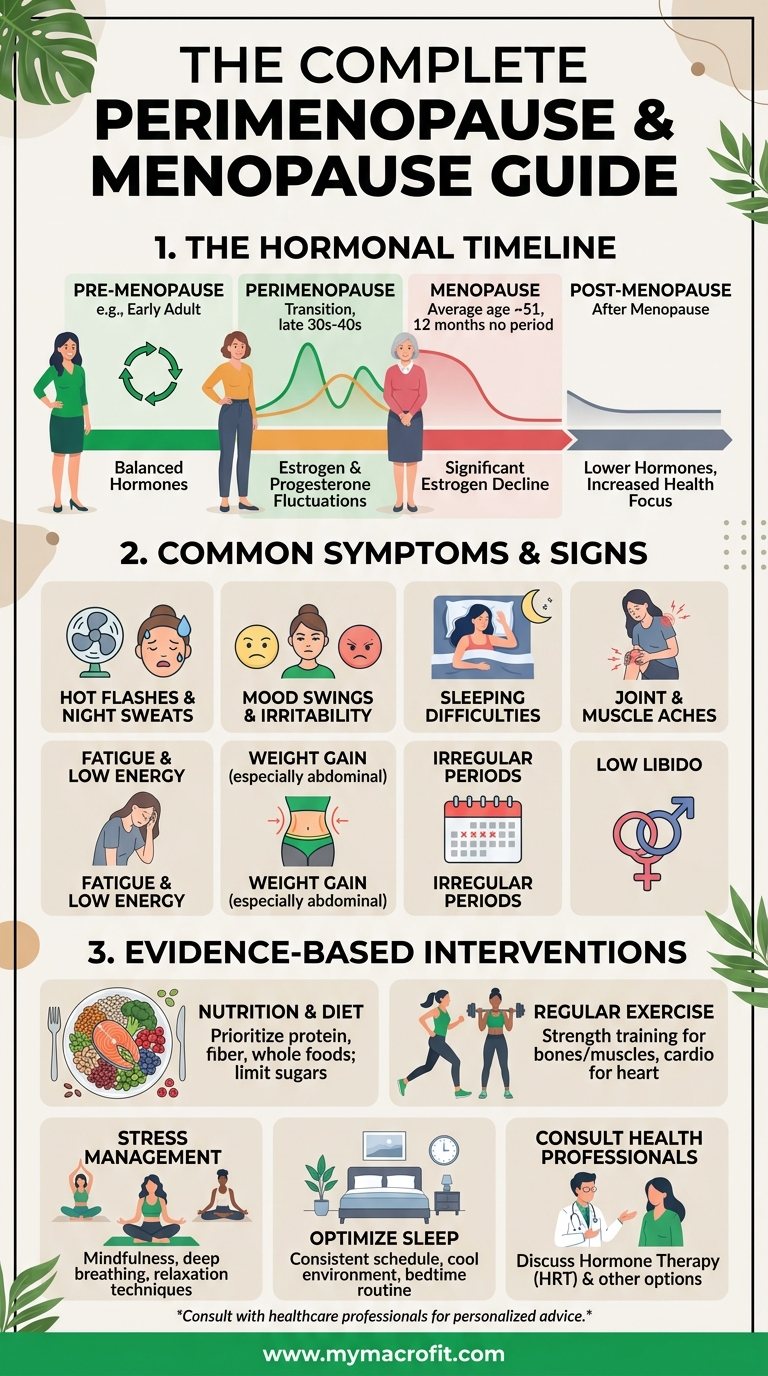
Perimenopause (typically 40s-early 50s)
Perimenopause begins when ovarian function starts declining, oestrogen and progesterone levels become irregular and gradually fall. This phase lasts an average of 4-8 years.
Key hormonal changes:
- Oestrogen: Fluctuates erratically before declining, this is why periods become irregular and why symptoms can be unpredictable
- Progesterone: Declines earlier and more consistently than oestrogen
- FSH (follicle-stimulating hormone): Rises as the pituitary gland tries to stimulate increasingly unresponsive ovaries
- Testosterone: Also declines gradually, affecting libido and energy
Menopause
Defined as 12 consecutive months without a menstrual period. The average age in Western countries is 51-52. Post-menopause, oestrogen settles at a consistently low level.
Why This Matters for Body Composition
Oestrogen isn't just a reproductive hormone, it's metabolically active throughout the body:
- Supports insulin sensitivity
- Protects against visceral (abdominal) fat accumulation
- Supports muscle protein synthesis
- Regulates appetite hormones (leptin and ghrelin)
- Supports bone density
- Regulates serotonin and dopamine (hence mood changes)
When oestrogen declines, all of these processes are affected.
The Weight Gain Mechanism: Why It Happens
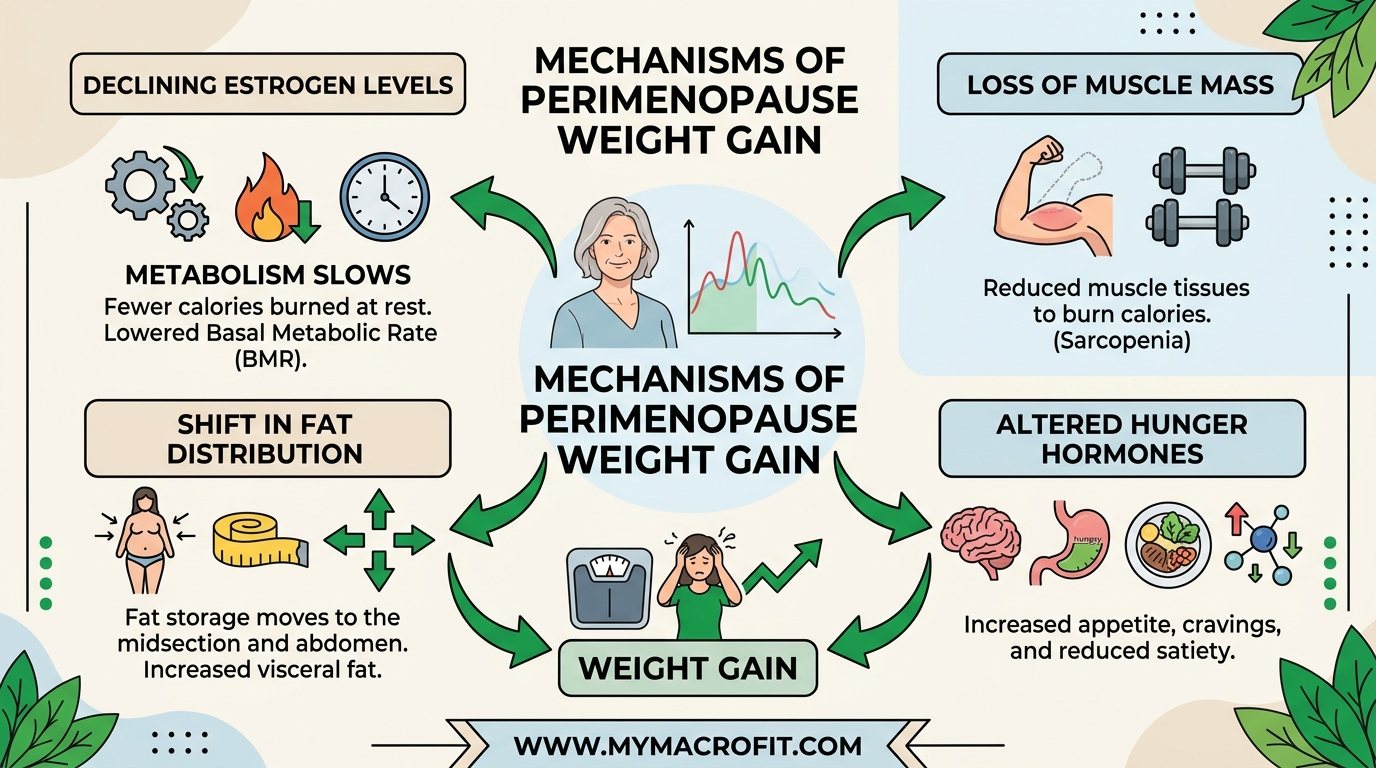
Many women notice weight gain during perimenopause despite no change in diet or exercise. This isn't imagination, it's physiology. Multiple mechanisms drive it simultaneously:
1. Fat redistribution Oestrogen promotes fat storage in the hips, thighs, and buttocks (subcutaneous fat). As oestrogen declines, fat storage shifts to the abdomen (visceral fat). Visceral fat is metabolically active and increases cardiovascular and metabolic disease risk.
2. Muscle loss (sarcopenia) Muscle mass declines at ~1% per year after 40, accelerating after menopause. Less muscle means lower resting metabolic rate. A woman who loses 5kg of muscle over 10 years burns approximately 65-75 fewer calories per day at rest.
3. Metabolic rate decline Resting metabolism declines approximately 2-3% per decade. A woman eating the same amount at 50 as she did at 35 is now in a calorie surplus.
4. Sleep disruption Hot flushes, night sweats, and anxiety disrupted sleep raise cortisol and ghrelin (hunger hormone) and lower leptin (satiety hormone). Poor sleep makes dietary adherence significantly harder.
5. Insulin resistance Declining oestrogen reduces insulin sensitivity, meaning carbohydrates are processed less efficiently and more likely to be stored as fat.
Nutrition Strategy for Perimenopause
1. Increase Protein, Significantly
Protein requirements increase during perimenopause and menopause. The combination of declining muscle protein synthesis (due to lower oestrogen) and anabolic resistance (muscles respond less efficiently to the same protein dose) means you need more.
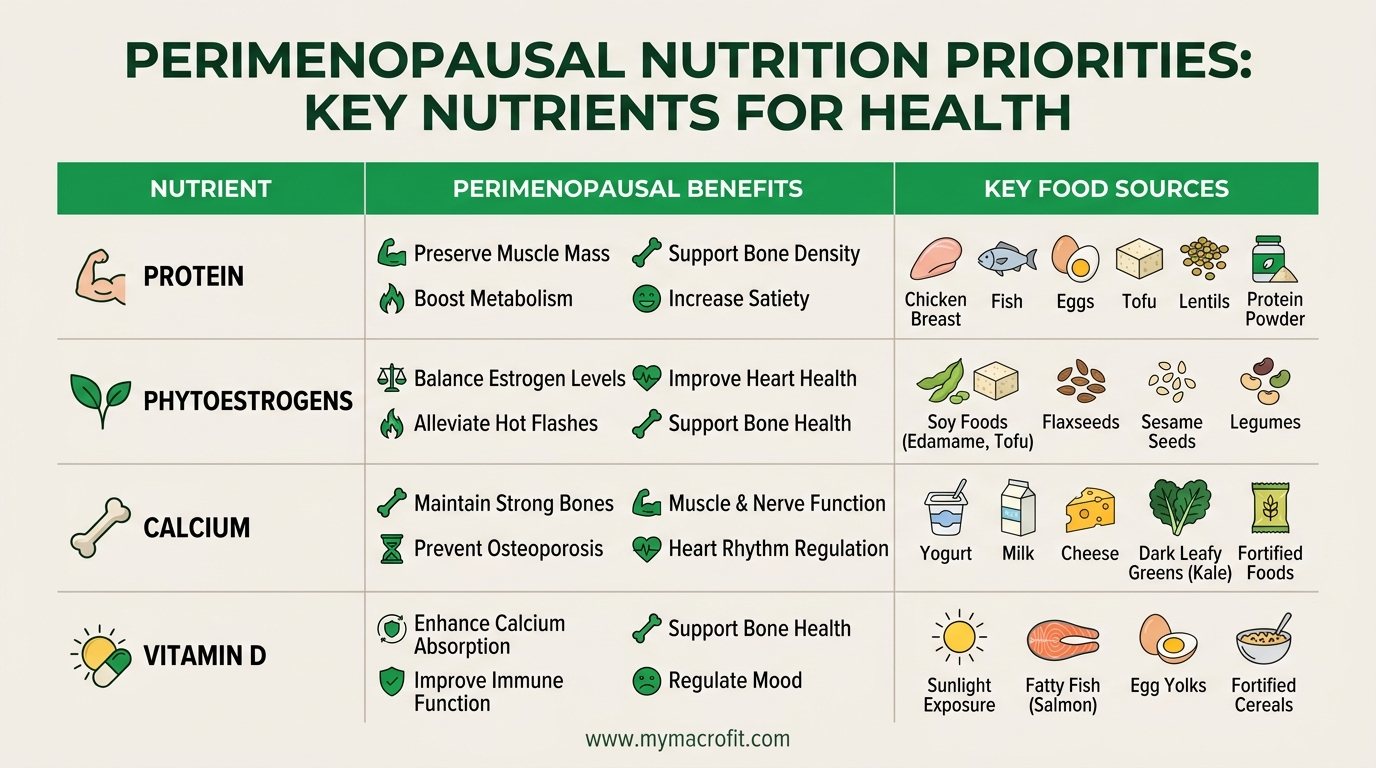
Target: 1.8-2.2g of protein per kg bodyweight daily.
For a 65kg woman: 117-143g protein/day. This is substantially above standard recommendations but well-supported by research for muscle preservation in peri- and post-menopausal women.
Prioritise high-quality complete proteins: chicken, fish, eggs, dairy (especially Greek yogurt and cottage cheese), tofu, legumes. Distribute across meals, aim for 30-40g per meal rather than concentrating protein in one large meal.
2. Prioritise Resistance Training, More Than Ever
Resistance training is the most powerful intervention available for perimenopausal women. It:
- Preserves and builds muscle (counteracting sarcopenia)
- Improves insulin sensitivity
- Increases bone density (crucial as oestrogen decline accelerates bone loss)
- Reduces visceral fat more effectively than cardio
- Improves sleep quality
Target: 3-4 strength training sessions per week. Compound movements (squats, deadlifts, rows, presses) that work large muscle groups are more metabolically effective than isolation exercises.
For a complete programme, see our Strength Training for Weight Loss guide.
3. Manage Insulin Sensitivity Through Carbohydrate Quality
Perimenopausal insulin resistance means carbohydrate quality matters more than it did in your 30s. You don't need to go low-carb, but refined carbohydrates and high-glycaemic foods will cause greater blood sugar fluctuations and fat storage than they did previously.
Prioritise:
- Legumes (lentils, chickpeas, beans), high fibre, slow glucose release
- Oats, quinoa, sweet potato, brown rice
- All non-starchy vegetables (unlimited)
Reduce:
- White bread, pasta, rice eaten alone
- Sugary snacks and drinks
- Ultra-processed foods
4. Phytoestrogens (Optional, Evidence Mixed)
Phytoestrogens, plant compounds that weakly mimic oestrogen in the body, are found in soy, flaxseed, chickpeas, and lentils. Some research suggests they may modestly reduce hot flush frequency and intensity.
Evidence: Inconsistent across studies. Effect sizes are small (20-30% reduction in hot flush frequency in responsive women). Not a substitute for HRT in severe cases, but a worthwhile dietary addition.
Key sources:
- Soy products (tofu, edamame, tempeh, soy milk), highest phytoestrogen content
- Ground flaxseed, lignans convert to weak oestrogens in the gut
- Legumes generally
5. Support Bone Density
Post-menopausal bone loss accelerates due to oestrogen decline. The window of perimenopausal intervention matters enormously, building and protecting bone density now reduces osteoporosis risk significantly.
Nutritional support:
- Calcium: 1,000-1,200mg daily (dairy, fortified plant milks, tinned sardines with bones, leafy greens)
- Vitamin D3: 1,500-2,000 IU daily for calcium absorption
- Vitamin K2: Helps direct calcium to bones rather than arteries, found in fermented foods and supplements
- Protein: High protein intake supports bone matrix, not just calcium
Exercise: Weight-bearing and resistance exercise is as important as nutrition for bone density. Walking, strength training, and impact activities (hiking, tennis) stimulate bone remodelling.
Key Supplements for Perimenopausal Women
Evidence-based:
Vitamin D3 + K2: Almost universally needed for bone health. D3 2,000 IU + K2 100mcg daily.
Magnesium glycinate: Sleep improvement, cortisol reduction, bone support. 300-400mg before bed. See our magnesium guide.
Omega-3 (EPA/DHA): Cardiovascular protection (risk increases post-menopause), inflammation reduction, mood support. 2-3g EPA+DHA daily.
Emerging evidence:
Ashwagandha (KSM-66): May reduce cortisol, improve sleep quality, and modestly support thyroid function. 300-600mg standardised extract daily. See our ashwagandha guide.
Collagen peptides: Joint support, skin elasticity (both affected by declining oestrogen). 10-15g daily with vitamin C. See our collagen guide.
Inositol: Particularly useful if insulin resistance is present. 2-4g myo-inositol daily. Evidence is strongest for PCOS but extends to perimenopausal insulin resistance.
Understanding HRT: The Facts
Hormone Replacement Therapy is one of the most effective interventions for menopausal symptoms, and one of the most misunderstood. The 2002 WHI study triggered widespread fear of HRT by associating it with breast cancer and cardiovascular risk. Subsequent reanalysis has significantly revised this picture:
The current evidence:
- Modern HRT (body-identical hormones, particularly transdermal) has a more favourable safety profile than the older conjugated equine oestrogen used in the WHI study
- For women aged 50-59 (or within 10 years of menopause onset), the benefits of HRT typically outweigh risks
- Risk varies by individual health history, family history, and HRT type
- HRT remains controversial for women with certain hormone-sensitive cancers, specialist assessment is essential
What HRT can do:
- Effectively treat hot flushes and night sweats (most reliable intervention)
- Improve sleep quality
- Protect bone density
- Support cardiovascular health when started early in menopause
- Improve mood, concentration, and libido
What HRT cannot do:
- Directly cause weight loss
- Reverse lifestyle-related health issues
- Replace the need for resistance training and adequate protein
The decision about HRT is personal and medical, discuss your individual situation with a GP or menopause specialist. NICE guidelines (UK) now actively support HRT as a first-line treatment for menopausal symptoms in most women.
Calorie Needs in Perimenopause: How to Adjust
The combination of lower muscle mass and declining resting metabolism means calorie needs genuinely decrease during perimenopause. Many women experience weight gain without changing what they eat, because their calorie requirements have dropped.
Use our Menopause Calorie Calculator to estimate your adjusted TDEE, accounting for hormonal changes and activity level.
General adjustments:
- Expect a decline of approximately 100-200 kcal/day in maintenance calories compared to your 30s
- Do not aggressively cut calories, this accelerates muscle loss and worsens metabolic adaptation
- Instead, focus on protein quality, reduce refined carbohydrates, and increase resistance training
Practical 7-Day Perimenopausal Meal Framework
The goal: high protein, phytoestrogen-rich, anti-inflammatory, bone-supportive.
Daily non-negotiables:
- 30-40g protein at each of 3 main meals
- At least 2 portions of oily fish per week (or omega-3 supplement)
- 1-2 servings of soy or legumes daily
- Ground flaxseed (1-2 tbsp) added to oats or smoothies
- Calcium-rich food at 2 meals (dairy or fortified alternatives)
- Unlimited vegetables
Sample day:
- Breakfast: Greek yogurt (250g) + oats (50g) + ground flaxseed (1 tbsp) + berries, 42g protein
- Lunch: Salmon fillet + quinoa + large salad with edamame, 45g protein
- Afternoon snack: Cottage cheese (200g) + apple, 20g protein
- Dinner: Tofu stir-fry with broccoli, pak choi, and brown rice, 35g protein
Total: ~142g protein, 2 servings phytoestrogens, high calcium, high fibre.
The Bottom Line
Perimenopause is a physiologically complex transition that requires a targeted response, not just "eating less" and "moving more." The evidence points clearly toward:
- Higher protein intake (1.8-2.2g/kg) to preserve muscle
- Resistance training 3-4x/week as the primary exercise modality
- Mediterranean-style eating with emphasis on legumes, oily fish, and vegetables
- Strategic supplementation (vitamin D, omega-3, magnesium)
- Understanding the role of HRT and making an informed decision with medical guidance
For a comprehensive nutrition guide with a 12-week protocol, see our Perimenopause Nutrition Guide, a downloadable PDF covering every aspect of this transition in detail.
Sources
- Nutrition and menopause, Maury et al., Maturitas, 2019
- Protein and muscle preservation in menopause, Beasley et al., Nutrients, 2013
- Phytoestrogens and menopausal symptoms, Setchell & Cassidy, Journal of Nutrition, 1999
- NICE Guidelines on menopause, NICE, 2015 (updated 2019)
Save & share on Pinterest
Click any card to pin it — or share with someone who needs it.
The Complete Perimenopause & Menopause Guide
A complete guide to perimenopause and menopause, understanding hormonal changes, managing weight gai…
A complete guide to perimenopause and menopause, understanding hormonal changes,…
Read the full guide: The Complete Perimenopause & Menopause Guide
Try the free Menopause Calorie Calculator
The Complete Perimenopause & Menopause Guide — use our free calculators for instant personalised res…
Pinterest opens in a new tab. You can edit the description before saving.
Ready to get your numbers?
Free calculator, instant results, no signup required.
Frequently Asked Questions
When does perimenopause start?+
Why do women gain weight during perimenopause?+
What diet is best for perimenopause?+
Does HRT help with perimenopausal weight gain?+
About the Author

I'm a registered health coach and pre/postnatal specialist. I look at the whole person, your sleep, your stress, your hormones, because the number on the scale is only ever part of the story.
View full profile →