Peptides for Muscle Growth: What They Are and What the Science Actually Says

BSc Kinesiology · CPT
Peptides are everywhere in fitness marketing right now, sold as a shortcut to faster recovery, leaner physiques, and injury repair that "the pros don't want you to know about." This guide cuts through that. It explains what these compounds actually are, what they're claimed to do, and, crucially, how much real human evidence sits behind the claims.
A note before we start: this is an educational article, not advice to use anything. Many peptides discussed in fitness circles are unapproved for human use, unregulated, and sometimes banned in sport. Nothing here is a protocol or a dose.
What "peptides" actually means
A peptide is just a short chain of amino acids, smaller than a full protein. Your body makes thousands of them, and they do everything from signalling hunger to triggering tissue repair. That broad definition is part of why peptide marketing is so slippery: technically, the collagen in your coffee and an unapproved injectable are both "peptides," which lets sellers borrow the credibility of the harmless ones.
In a fitness context, the peptides people mean usually fall into two buckets:
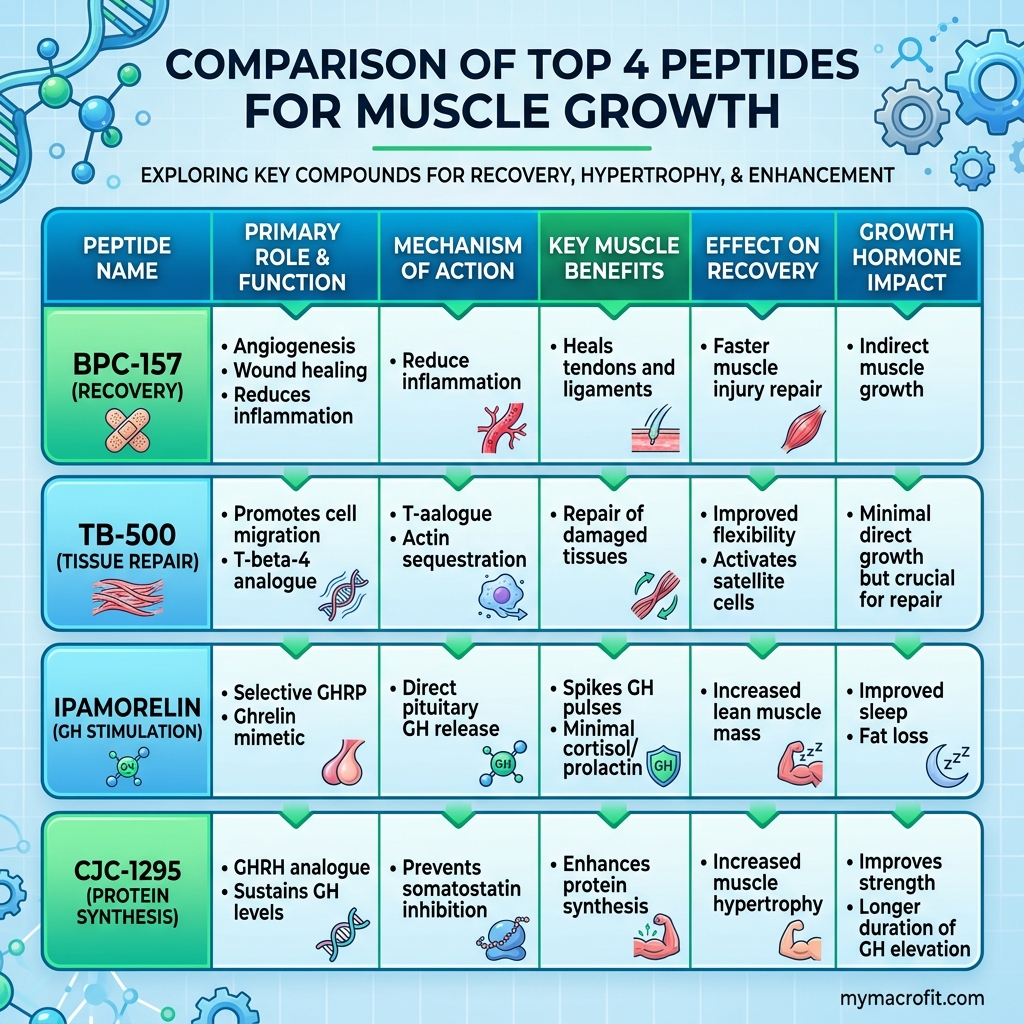
- Tissue-repair peptides, most famously BPC-157 and TB-500, claimed to speed healing of tendons, ligaments, and gut lining.
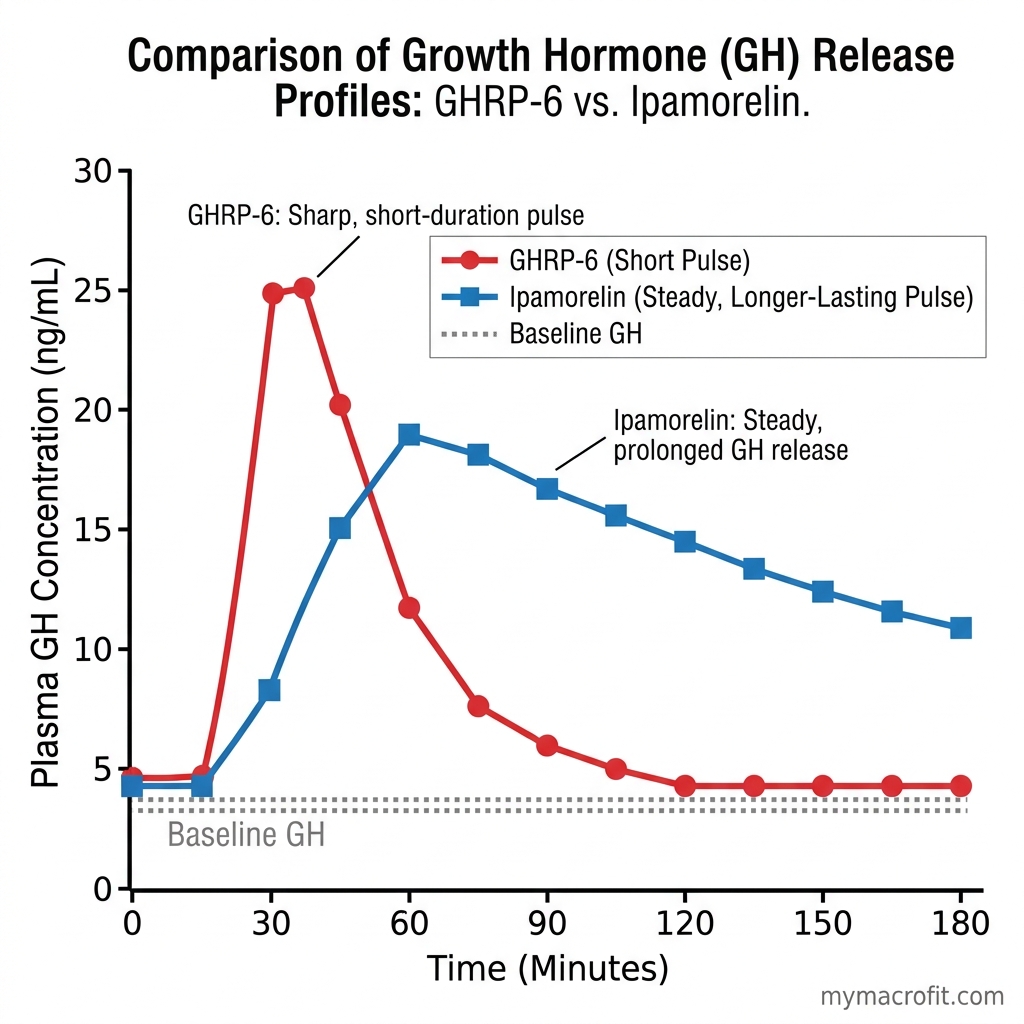
- Growth-hormone-releasing peptides (secretagogues) like ipamorelin, CJC-1295, and the GHRPs, which prompt your pituitary to release more of your own growth hormone.
The evidence problem
Here is the single most important thing to understand: for the muscle and recovery peptides, the human evidence is thin to nonexistent.
BPC-157 is the clearest example. Search the research and you'll find a genuinely interesting body of work, almost all of it in rats and mice. Accelerated tendon healing, protected gut lining, faster recovery from injury, in rodents. Controlled trials in humans are essentially absent. That gap matters enormously, because animal results frequently fail to translate, and we have no reliable human data on effective dose, long-term safety, or whether it does anything at all in a healthy trained person.
The growth-hormone secretagogues have more human data, because some were studied as potential medicines. They do reliably raise GH and IGF-1. But raising those hormones within a normal range produces modest body-composition effects, nothing like the physique-altering results the marketing implies, and the studies in healthy young athletes simply don't show a meaningful muscle-building benefit.
The risks that don't make the sales page
Because these are sold as "research chemicals not for human consumption," they sit entirely outside pharmaceutical quality control:
- Unknown purity and dose. Independent testing of grey-market peptides routinely finds underdosed, mislabelled, or contaminated product. You don't actually know what's in the vial.
- Injection risk. Most are injected. Non-sterile product or technique introduces infection risk that has nothing to do with the peptide itself.
- Metabolic and theoretical cancer risk. GH-raising peptides can disturb blood sugar and insulin sensitivity, and because GH and IGF-1 promote cell growth, there's a legitimate theoretical concern about accelerating the growth of an existing, undiagnosed cancer.
- No medical oversight. An unproven injectable is exactly the kind of thing that should be supervised, and in the grey market, it never is.

The peptide types, side by side
To keep the categories straight, here's how the commonly-marketed fitness peptides actually compare on the things that matter. This is a map of the landscape, not a recommendation to use any of them:
| Type | Examples | Human evidence | Status |
|---|---|---|---|
| Tissue-repair | BPC-157, TB-500 | Mostly rodent, little/no human | Unapproved, sold as "research" |
| GH secretagogues | Ipamorelin, CJC-1295 | Some, modest effects | Unapproved for fitness; WADA-banned |
| Collagen peptides | Hydrolysed collagen | Food-grade, modest joint/skin data | Legal food supplement |
Notice the only row that's a legal, regulated product is collagen, and it isn't a muscle-builder. The two groups people actually mean when they say "peptides for muscle" are precisely the ones with the weakest human evidence and the least oversight. That mismatch, big claims, thin data, real risk, is the whole story.
Why the marketing is so persuasive
It's worth understanding why these are sold so effectively, because the tactics are predictable once you see them. Sellers lean on the genuinely interesting animal research and present it as if it applies to humans. They borrow credibility from the word "peptide" (which also describes harmless food supplements). They use the "research chemical, not for human consumption" label as a legal shield while everyone understands the real intended use. And they point to anecdotal transformations that are impossible to separate from the training, diet, and sometimes other drugs going on alongside.
None of that is evidence. A compelling before-and-after from an anonymous forum poster tells you nothing about safety, dose, or whether the peptide did anything at all. When the marketing is loud and the human trials are silent, the silence is the more important signal.
What the evidence actually supports for muscle
It's worth ending on what does have decades of high-quality human research behind it, because the contrast is stark:
- Progressive resistance training, applied consistently, is the irreplaceable driver of muscle growth.
- Protein at 1.6 to 2.2g per kg of bodyweight, spread across the day, supplies the raw material.
- A modest calorie surplus when you're trying to gain, paired with enough sleep for recovery to happen.
- A short list of proven supplements, creatine above all, then caffeine and whey protein, each with hundreds of human trials and excellent safety.
That stack isn't exciting, and nobody runs viral ads for it. But it's the honest answer to "what builds muscle," and it carries none of the legal, quality, or health risks of an unregulated injectable with no human evidence behind it. If you want to get the nutrition side right first, our Complete Supplement Guide for Beginners covers what's actually worth your money.
Save & share on Pinterest
Click any card to pin it — or share with someone who needs it.
Peptides for Muscle Growth: What They Are and What the Science Actually Says
An honest, no-hype explainer on peptides for muscle and recovery, what they are, how they're claimed…
An honest, no-hype explainer on peptides for muscle and recovery, what they are,…
Read the full guide: Peptides for Muscle Growth: What They Are and What the Science Actually Says
Free fitness tools
Peptides for Muscle Growth: What They Are and What the Science Actually Says — use our free calculat…
Pinterest opens in a new tab. You can edit the description before saving.
Frequently Asked Questions
Are peptides legal to buy?+
Do peptides build muscle like steroids?+
Is BPC-157 proven to heal injuries?+
What are the risks of using research peptides?+
What actually builds muscle that's proven and safe?+
Are collagen peptides the same as the peptides used for muscle?+
Is it safe to try peptides if I buy from a reputable-looking source?+
About the Author

I'm a kinesiologist and personal trainer. I've spent eight years helping women lose fat and get stronger without handing their whole life over to a diet.
View full profile →