Perimenopause and Weight Gain: Why It Happens and What to Do

RHC · Pre/Postnatal Fitness Specialist
Many women enter perimenopause, the transition phase preceding menopause, typically beginning in the mid-to-late 40s and lasting several years, and experience frustrating weight gain despite no change in their eating or exercise habits. This isn't imagination, and it isn't a willpower failure.
The hormonal changes of perimenopause directly alter where the body stores fat, how efficiently it uses energy, and how well muscle is maintained. Understanding these mechanisms is the first step to addressing them.
What Perimenopause Does to Body Composition
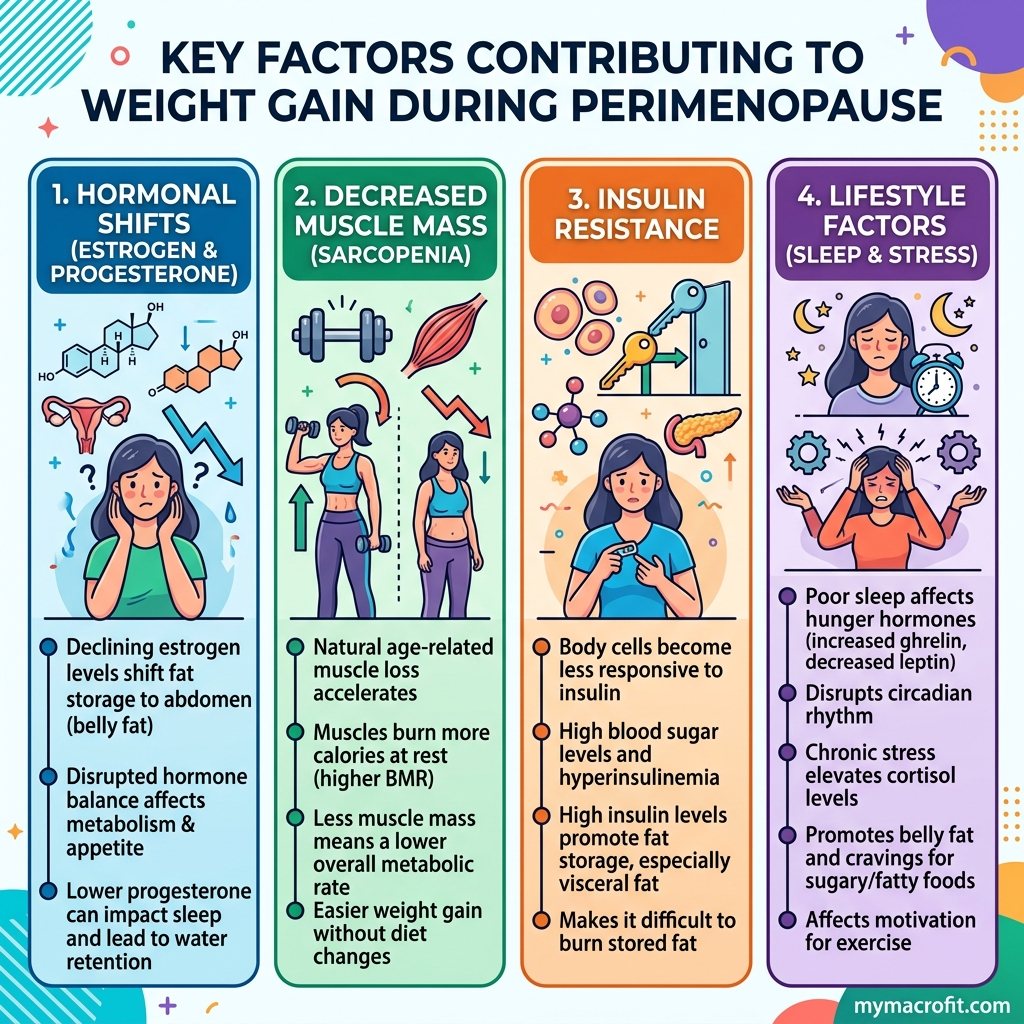
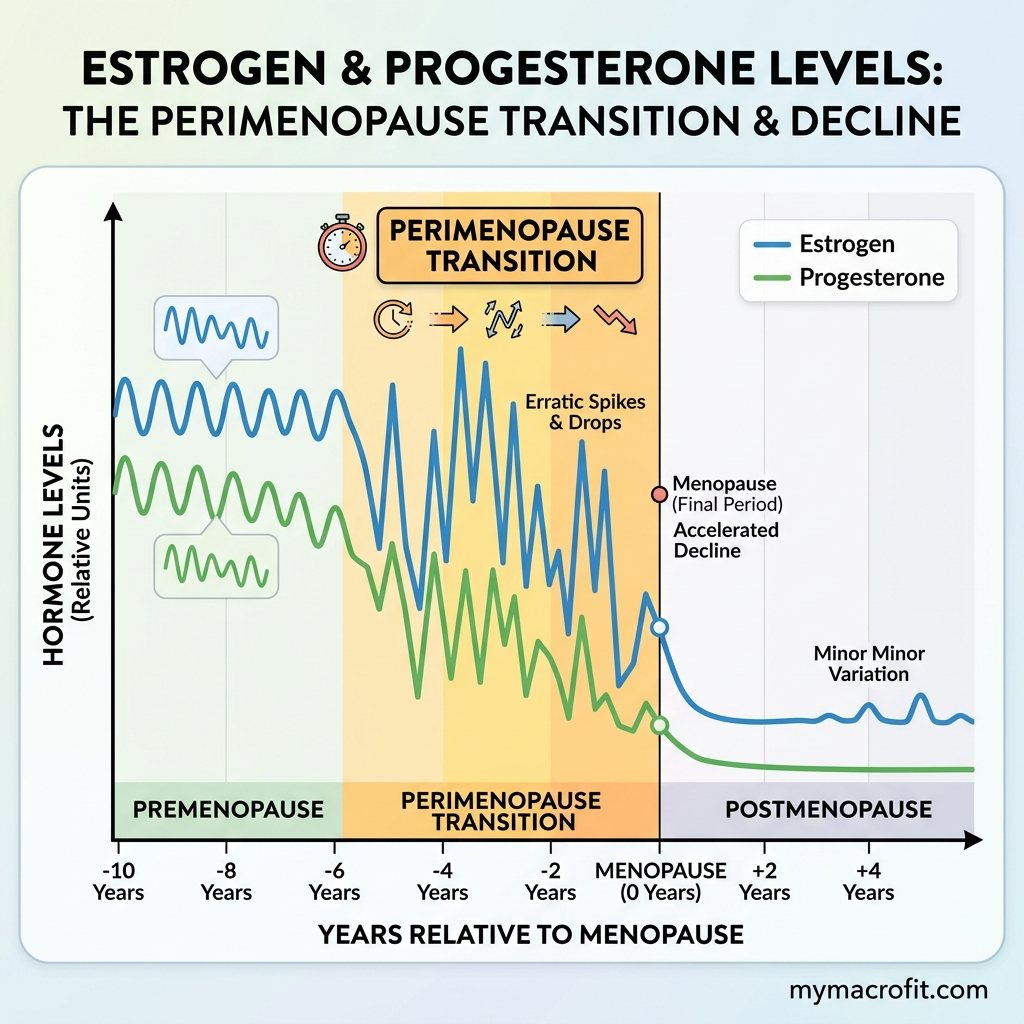
Perimenopause (typically ages 40-51, with wide individual variation) is characterised by irregular menstrual cycles, declining oestrogen, and fluctuating progesterone. These hormonal changes affect body composition through several mechanisms:
Fat Redistribution: The Belly Fat Shift
Oestrogen promotes subcutaneous fat storage at the hips, thighs, and buttocks, the classic female fat distribution pattern. As oestrogen declines, this signal weakens. Fat storage shifts centrally, to the abdominal region, including visceral fat around the internal organs.
This fat redistribution can occur even without a change in total body weight. A woman can maintain the same scale weight through perimenopause while her waist circumference increases and her hips narrow, a significant body composition change that the scale misses entirely.
Visceral fat is metabolically active and associated with elevated cardiovascular and metabolic disease risk, making this shift clinically significant beyond cosmetic concerns.
Reduced Insulin Sensitivity
Oestrogen has insulin-sensitising effects. As oestrogen declines, insulin sensitivity decreases, the body becomes less efficient at processing carbohydrates, blood glucose stays elevated longer after meals, and insulin remains high. Elevated insulin promotes fat storage and inhibits fat mobilisation.
For women who previously tolerated moderate carbohydrate intake without weight issues, this shift can mean the same carbohydrate-containing diet now promotes fat storage.
Accelerated Muscle Loss
Oestrogen supports muscle protein synthesis and maintenance. Its decline accelerates sarcopenia (age-related muscle loss). Combined with the general muscle loss of ageing, perimenopausal women can lose significant lean mass, reducing resting metabolic rate and making it harder to maintain weight on the same calorie intake.
Sleep Disruption
Hot flushes, night sweats, and hormonal fluctuations disrupt sleep during perimenopause. Poor sleep elevates cortisol (which promotes visceral fat storage) and increases ghrelin (hunger hormone), independently driving weight gain through hormonal mechanisms.
What Works in Perimenopause (Adjusted Strategies)
1. Recalculate Your Calorie Needs, They've Changed
The lower muscle mass and reduced hormonal metabolic support mean TDEE is typically 200-400 kcal lower in perimenopause compared to pre-menopausal years. Eating the same amount as before will now produce a surplus.
Use our Menopause Calorie Calculator to recalculate your specific needs.
2. Increase Protein: 2-2.2g/kg
Protein is even more important during perimenopause for two reasons:
Muscle preservation: Countering accelerated muscle loss requires adequate protein stimulus alongside resistance training.
Satiety: With reduced calorie allowance, protein ensures you feel full and satisfied on fewer total calories.
For a 65kg woman: 130-143g/day distributed across 3-4 meals of 35-45g each.
3. Resistance Training: Non-Negotiable
Resistance training directly counters the two primary mechanisms of perimenopausal weight gain: muscle loss and reduced insulin sensitivity.
Multiple studies show resistance training in perimenopausal and postmenopausal women:
- Preserves and builds lean mass
- Significantly improves insulin sensitivity (comparable to medication in some studies)
- Reduces visceral fat specifically
- Improves sleep quality
- Supports bone density (critical in this life stage given increased osteoporosis risk)
Minimum: 3 sessions per week of progressive compound resistance training. This is where fitness investment pays the most returns during the menopausal transition.
4. Moderate Carbohydrates, Focus on Quality
With reduced insulin sensitivity, large amounts of quickly digested carbohydrates are more problematic than before perimenopause. This doesn't mean eliminating carbohydrates, it means prioritising:
- High-fibre, slow-release carbohydrates: oats, legumes, sweet potato, brown rice
- Smaller portions of refined carbohydrates
- Pairing carbohydrates with protein and fat to blunt glucose response
A Mediterranean-style dietary pattern, high in vegetables, legumes, lean protein, olive oil, and moderate whole grains, has the strongest evidence for perimenopausal weight management and cardiometabolic health.
5. Prioritise Sleep Above All Else
Improving sleep quality directly reduces the cortisol-visceral fat accumulation cycle. Practical approaches:
- Keep bedroom cool (helpful for hot flushes)
- Consistent sleep and wake times
- Limit alcohol (worsens hot flushes and sleep quality)
- Magnesium glycinate 200-400mg before bed has modest evidence for sleep improvement
6. Manage Stress Actively
With declining oestrogen reducing the natural buffer against cortisol's effects, stress management becomes more important. Daily movement, nature exposure, and social connection are the most evidence-supported non-pharmaceutical interventions.
The Strategy at a Glance
If you take nothing else away, here's the whole approach in one view, each hormonal change matched to what actually counters it:
| What's changing | Why it adds weight | What counters it |
|---|---|---|
| Muscle loss | Lower resting metabolism | Strength training + protein |
| Insulin sensitivity dips | More fat storage from carbs | Quality, slower carbs |
| Fat shifts to the middle | More visceral fat | The whole approach, plus sleep |
| Sleep disruption | Raises cortisol and hunger | Protect sleep deliberately |
| TDEE falls 200-400 kcal | Old intake is now a surplus | Recalculate your calories |
Notice that resistance training and protein appear against more than one row, that's why they're the foundation. Address the mechanisms in this table and you're working with your biology instead of fighting it with willpower alone.
What Doesn't Work (Or Works Less Well)
Aggressive calorie restriction: A very large deficit elevates cortisol, accelerates muscle loss, impairs sleep, and creates a worse hormonal environment for fat loss. In perimenopause, this backfires more than at younger ages.
Excessive cardio without resistance training: Cardio without resistance training accelerates muscle loss and has limited effect on the insulin sensitivity and visceral fat concerns specific to perimenopause.
Focusing solely on the scale: Waist circumference, strength numbers, and energy levels are more informative progress measures during the perimenopausal transition than scale weight.
The Digital Product Resource
For a comprehensive 8-week nutrition and exercise protocol specifically designed for the perimenopausal transition, including specific meal plans, training schedule, and supplement guidance:
The Bottom Line
Perimenopausal weight gain is primarily driven by fat redistribution, reduced insulin sensitivity, muscle loss, and sleep disruption, all connected to declining oestrogen. The strategies that work address these mechanisms directly: recalculated calorie target, higher protein, resistance training, moderate-quality carbohydrates, and serious sleep prioritisation.
The scale may not tell the full story during this transition, waist measurements and strength are more informative indicators of whether your approach is working.
Sources
- Menopause, NHS.
- Menopause weight gain: Stop the middle-age spread, Mayo Clinic.
- Obesity and overweight, World Health Organization.
Save & share on Pinterest
Click any card to pin it — or share with someone who needs it.
Perimenopause and Weight Gain: Why It Happens and What to Do
Why women gain weight during perimenopause despite no change in habits, and the evidence-based dieta…
Why women gain weight during perimenopause despite no change in habits, and the …
Read the full guide: Perimenopause and Weight Gain: Why It Happens and What to Do
Try the free Menopause Calorie Calculator
Perimenopause and Weight Gain: Why It Happens and What to Do — use our free calculators for instant …
Pinterest opens in a new tab. You can edit the description before saving.
Ready to get your numbers?
Free calculator, instant results, no signup required.
Frequently Asked Questions
Why do women gain weight in perimenopause even without eating more?+
How much weight do women typically gain during perimenopause?+
Does HRT (hormone replacement therapy) help with weight gain in perimenopause?+
How long does it take to lose perimenopause weight?+
Why is the weight mostly going to my belly now?+
Can I still lose weight in perimenopause without HRT or medication?+
About the Author

I'm a registered health coach and pre/postnatal specialist. I look at the whole person, your sleep, your stress, your hormones, because the number on the scale is only ever part of the story.
View full profile →