Pregnancy Nutrition: What to Eat, How Much, and When

RHC · Pre/Postnatal Fitness Specialist
Pregnancy nutrition is one of the most important yet most confusing areas of women's health, surrounded by outdated advice, internet myths, and genuine complexity. Getting it right matters: foetal development in the first and second trimesters is exquisitely sensitive to nutritional environment.
This guide provides clear, evidence-based guidance for each trimester.
Calorie Needs by Trimester
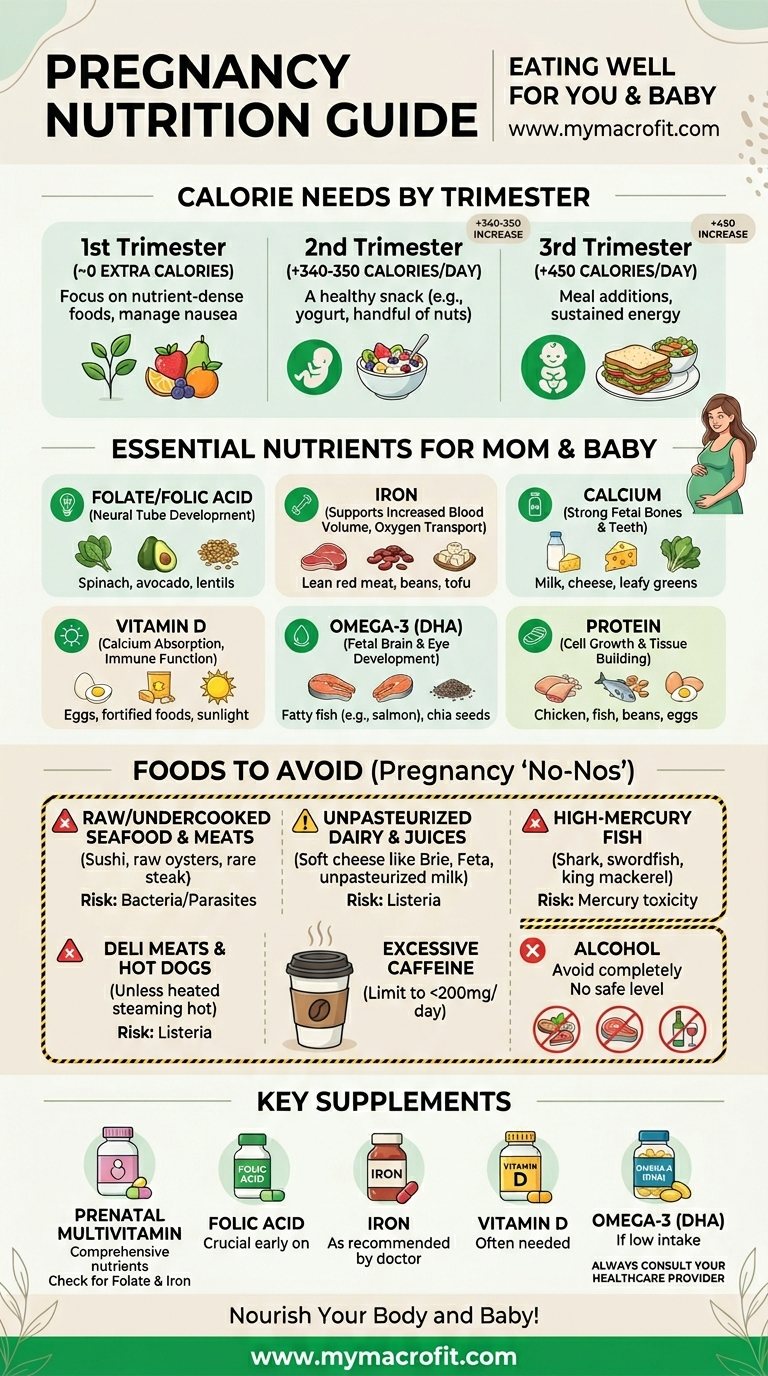
The "eating for two" concept significantly overstates pregnancy calorie needs. The developing foetus is small and grows gradually, actual additional calorie requirements are modest:
First trimester (weeks 0-12): No significant increase needed. ~0-100 extra kcal/day. Focus entirely on nutrient quality, not quantity.
Second trimester (weeks 13-26): Approximately 300-350 extra kcal/day above pre-pregnancy maintenance.
Third trimester (weeks 27-40): Approximately 450-500 extra kcal/day above pre-pregnancy maintenance.
Use our Pregnancy Nutrition Calculator for a personalised estimate based on your pre-pregnancy weight and activity level.
Weight gain guidance (BMI-based recommendations):
- BMI under 18.5: 12.5-18kg total gain
- BMI 18.5-24.9: 11.5-16kg total gain
- BMI 25-29.9: 7-11.5kg total gain
- BMI 30+: 5-9kg total gain
The Essential Pregnancy Nutrients
Folate/Folic Acid: Before You're Even Pregnant
Folate (natural form) or folic acid (supplement form) is required for neural tube development, which occurs in the first 4 weeks of pregnancy, often before most women know they're pregnant.
Recommendation: 400 mcg folic acid supplement daily from when trying to conceive through the first 12 weeks of pregnancy. Women with previous neural tube defect pregnancies or on certain medications need higher doses (5,000 mcg), discuss with GP.
Food sources: Dark leafy greens, legumes, fortified cereals, asparagus, broccoli, avocado. Dietary folate alone is insufficient, supplementation is essential.
Iron: Needs Nearly Double
Iron requirements increase significantly in pregnancy:
- Pre-pregnancy: 14mg/day
- Pregnancy: 27mg/day
Iron supports expanded blood volume, foetal iron stores, and placental development. Iron deficiency anaemia in pregnancy increases risk of preterm birth and low birth weight.
Best dietary sources:
- Haem iron (highest bioavailability): beef, lamb, pork, chicken, fish
- Non-haem iron (plant-based): lentils, spinach, tofu, fortified cereals, always paired with vitamin C to enhance absorption
Note: Tea and coffee significantly inhibit iron absorption, avoid drinking within 1 hour of meals.
DHA (Omega-3): Brain and Eye Development
DHA accumulates in the foetal brain and retina during the third trimester. Maternal DHA intake directly influences foetal brain development.
Recommendation: 200-300mg DHA/day throughout pregnancy (higher than general adult recommendation)
Sources: Oily fish 2-3x/week (salmon, mackerel, sardines). Women who don't eat fish should supplement with algae-derived DHA.
Mercury caution: Limit tuna to 2 portions/week; avoid shark, swordfish, marlin entirely.
Calcium: 1,000mg/day
Foetal bone mineralisation draws heavily on maternal calcium stores. If dietary intake is insufficient, the body demineralises maternal bone.
Sources: Dairy (300mg per glass milk), fortified plant milks, sardines with bones, kale, almonds, fortified soy.
Vitamin D: 10-25 mcg/day
Required for calcium absorption and foetal bone development. Most UK women are deficient October-March. Supplementation is recommended throughout pregnancy.
Iodine: 220 mcg/day
Critical for foetal thyroid development and neurological function. Iodine deficiency is the most common cause of preventable intellectual disability worldwide.
Sources: Dairy, fish, eggs, iodised salt. Many prenatal supplements don't contain iodine, check the label.
Choline: 450 mg/day
Often missing from prenatal supplements. Choline is critical for brain and spinal cord development, and may reduce neural tube defect risk complementarily with folate.
Best source: Egg yolks (150mg per egg). Also: beef liver, salmon, chickpeas. Prenatal supplements typically provide 55-200mg, eating 2 eggs/day covers most remaining needs.
First Trimester Nutrition: The Quality Phase
The challenge: Nausea affects up to 80% of women in the first trimester, making consistent eating difficult.
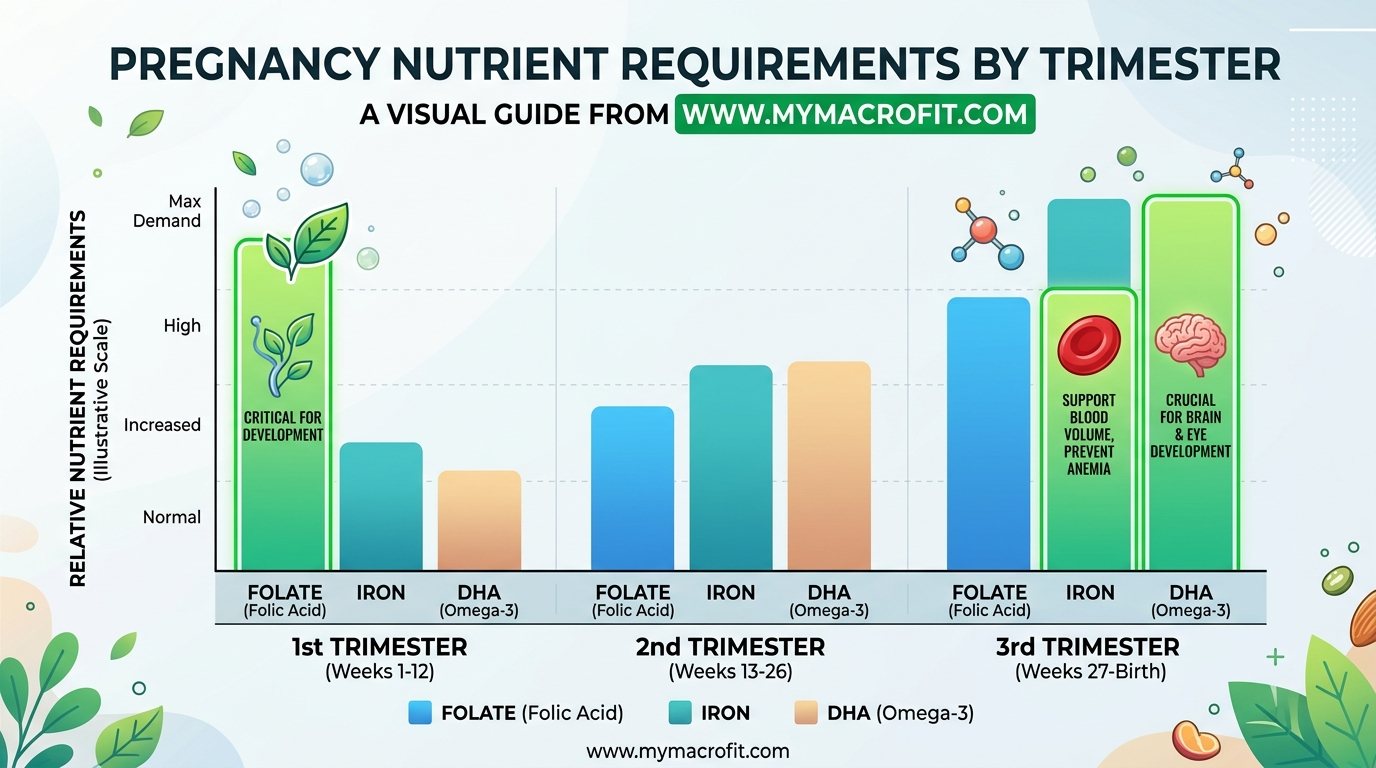
Key focus: Folate, iron, DHA, and maintaining adequate hydration despite nausea.
Nausea management strategies:
- Eat small amounts frequently (empty stomach worsens nausea)
- Cold foods are better tolerated than hot (less aroma)
- Ginger, fresh, tea, or capsules, shown to reduce nausea in RCTs
- Plain, bland carbohydrates when nothing else appeals (crackers, plain rice)
- Avoid strong cooking smells
Supplements to start immediately:
- Folic acid 400 mcg (or a complete prenatal supplement containing folic acid)
- Vitamin D 10-25 mcg
Second Trimester Nutrition: The Comfort Phase
Nausea typically resolves by weeks 12-14. Appetite returns and often increases.
Additional focus: Iron (demand increasing), calcium (foetal skeleton developing rapidly), protein (foetal muscle growth accelerates).
Protein: Increase to approximately 1.1g/kg bodyweight above pre-pregnancy levels (~75-100g total/day for most women). Protein supports foetal tissue growth, placental development, and expanded blood volume.
Practical additions:
- Add a daily serving of legumes (lentil soup, chickpea dishes), iron, protein, fibre
- Oily fish 2-3x/week consistently, DHA
- Eggs daily if possible, choline, protein, vitamin D
Third Trimester Nutrition: The Growth Phase
Foetal growth accelerates dramatically, brain development is rapid (DHA accumulation peaks), birth weight is established, and iron stores must be built before delivery.
Increased calorie intake: 450-500 extra kcal/day, this is the trimester where calorie increase is most meaningful.
Iron peaks in importance: Request a haemoglobin/ferritin check at 28 and 36 weeks. Iron supplementation may be recommended if levels are low.
Heartburn management: Common in the third trimester from upward pressure on the stomach.
- Eat smaller, more frequent meals
- Avoid lying down immediately after eating
- Reduce fatty, spicy, and acidic foods if symptomatic
Foods to Avoid in Pregnancy
| Food | Reason | Alternative |
|---|---|---|
| Raw/undercooked meat and poultry | Toxoplasma, Salmonella | Thoroughly cooked meat |
| Unpasteurised dairy, soft cheeses (Brie, Camembert, blue cheese) | Listeria | Hard cheeses, pasteurised options |
| Raw shellfish | Listeria, Vibrio | Thoroughly cooked shellfish |
| Shark, swordfish, marlin | High mercury | Salmon, sardines, mackerel |
| Liver and pâté | Very high vitamin A | Occasional small amounts of liver only |
| Raw eggs/undercooked eggs | Salmonella | Fully cooked eggs (or British Lion stamped) |
| Alcohol | No safe level established | Non-alcoholic options |
Caffeine: Limit to 200mg/day (approximately 1-2 cups of filter coffee). Higher intake is associated with low birth weight.
The Prenatal Supplement Checklist
A good prenatal supplement should contain:
- ✅ Folic acid: 400 mcg (or methylfolate for MTHFR variants)
- ✅ Vitamin D: 10-25 mcg
- ✅ Iron: 14-30 mg
- ✅ Iodine: 150-220 mcg ← often missing, check your label
- ✅ DHA: 200-300 mg ← often missing, check your label
If your prenatal supplement doesn't contain iodine and DHA, add them separately.
The Bottom Line
Pregnancy nutrition is about specific nutrient sufficiency more than total calorie intake, particularly folate (before and in early pregnancy), iron, DHA, iodine, and vitamin D. The calorie increase is modest and gradual; the nutrient requirements are significant from the earliest weeks.
Start a prenatal supplement before conception if possible. Prioritise oily fish, eggs, legumes, dairy, and colourful vegetables as food group foundations.
Save & share on Pinterest
Click any card to pin it — or share with someone who needs it.
Pregnancy Nutrition: What to Eat, How Much, and When
Evidence-based pregnancy nutrition guide, calorie needs by trimester, essential nutrients, foods to …
Evidence-based pregnancy nutrition guide, calorie needs by trimester, essential …
Read the full guide: Pregnancy Nutrition: What to Eat, How Much, and When
Try the free Pregnancy Nutrition Calculator
Pregnancy Nutrition: What to Eat, How Much, and When — use our free calculators for instant personal…
Pinterest opens in a new tab. You can edit the description before saving.
Ready to get your numbers?
Free calculator, instant results, no signup required.
Frequently Asked Questions
How many extra calories do you need during pregnancy?+
What are the most important nutrients in pregnancy?+
What foods should I avoid during pregnancy?+
About the Author

I'm a registered health coach and pre/postnatal specialist. I look at the whole person, your sleep, your stress, your hormones, because the number on the scale is only ever part of the story.
View full profile →