Water Weight vs Fat Loss: How to Tell the Difference

RHC · Pre/Postnatal Fitness Specialist
You've been on your diet for 4 days and already lost 2.5kg. Then in week 3, the scale barely moves despite eating perfectly. Is week 3 a failure? No, it's the difference between losing water weight and losing fat, and understanding this difference removes enormous frustration from any fat loss journey.
What Is Water Weight?
Your body stores significant amounts of water throughout its tissues. This water is regulated by several factors:
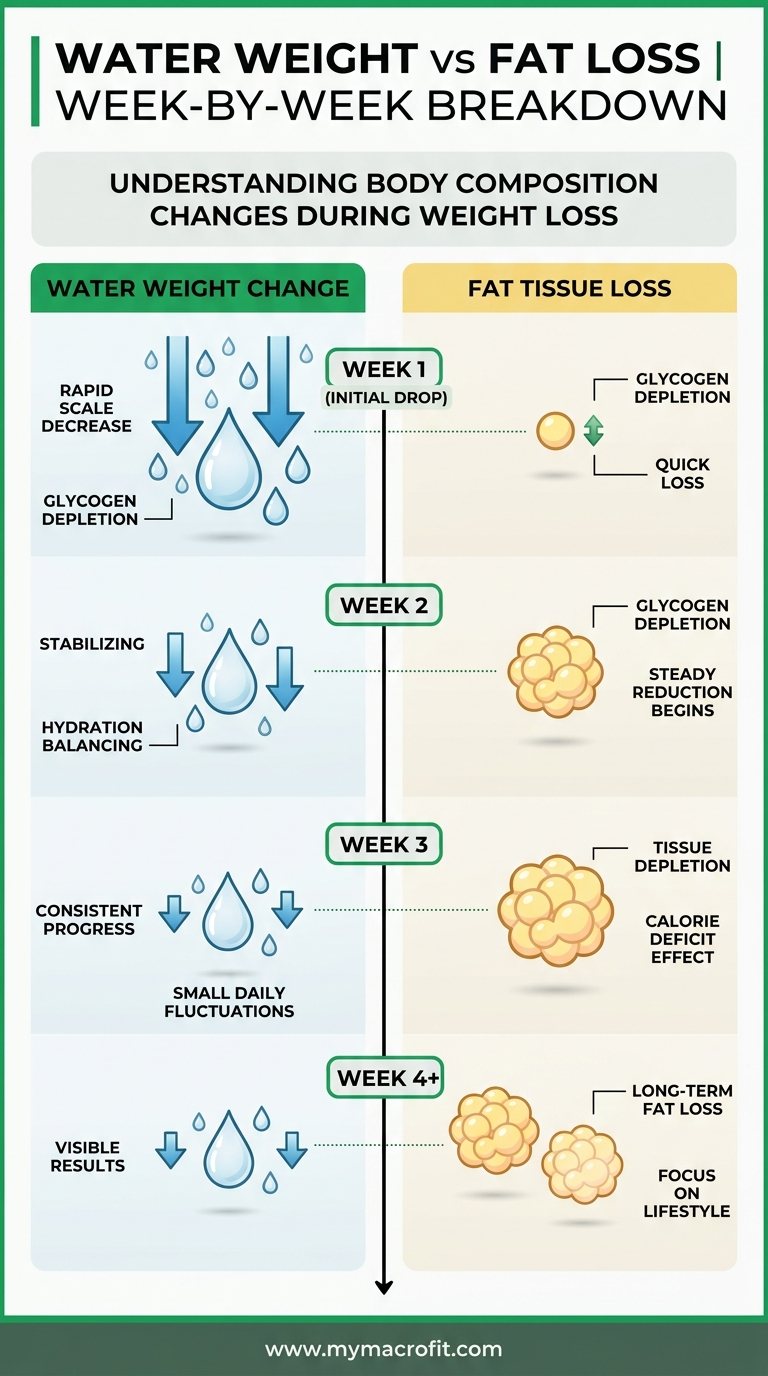
Glycogen stores: The body stores carbohydrates as glycogen in the liver (~100g) and muscles (~300-400g). Every gram of glycogen is stored alongside approximately 3 grams of water. When you start a diet and deplete glycogen, you release both the glycogen and the water, typically 1-2kg in the first week.
Sodium balance: High sodium intake causes the kidneys to retain water. A high-sodium meal can cause 0.5-1kg of water retention within hours. Reducing sodium intake leads to rapid water loss.
Hormonal fluctuations: Cortisol, oestrogen, and progesterone all affect fluid retention. The luteal phase of the menstrual cycle commonly causes 1-3kg of fluid retention that disappears after the period starts.
Inflammation: After intense exercise, muscle tissue becomes temporarily inflamed as part of the repair process. This inflammation holds water, contributing 0.5-1kg to scale weight after a hard training week.
None of this is fat. These fluctuations happen independently of your calorie balance.
Why the Scale Can Lie So Dramatically
Here's how scale weight on any given morning differs from "true" weight:
| Factor | Scale Impact |
|---|---|
| Glycogen depletion (low carb day) | −1 to −1.5kg |
| Glycogen refill (higher carb day) | +1 to +1.5kg |
| High sodium meal | +0.5 to +1kg |
| Menstrual cycle (luteal phase) | +1 to +2kg |
| Intense training (inflammation) | +0.3 to +0.7kg |
| Eating later in the day | +0.5 to +1kg (food weight) |
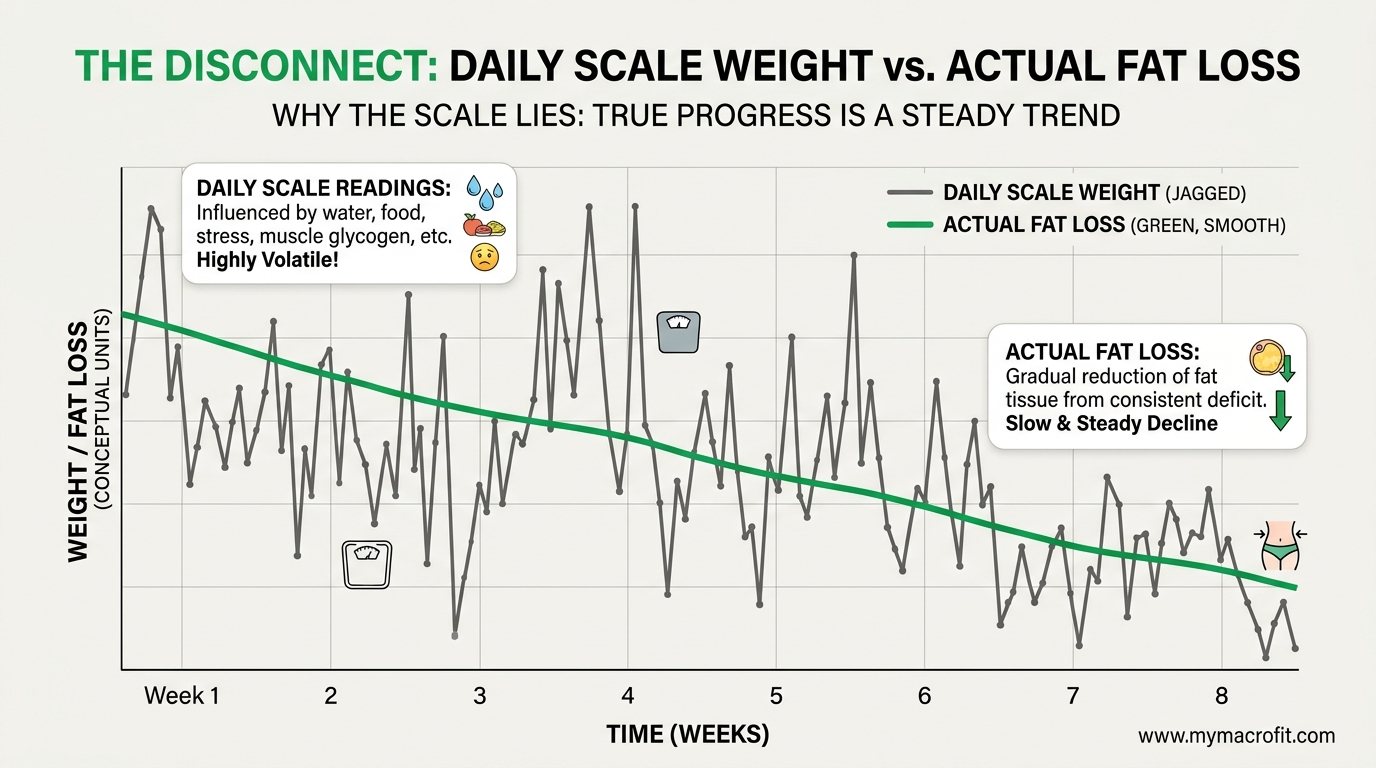
A 3kg swing between two consecutive mornings, with no change in body fat, is entirely possible. This is why daily scale readings create unnecessary anxiety.
The Actual Rate of Fat Loss
This is the number that matters:
1kg of fat = 7,700 kcal. To lose 1kg of fat per week, you need a 7,700 kcal weekly deficit, 1,100 kcal per day. For most people, this is not achievable without significant muscle loss and other problems.
Sustainable fat loss:
- 500 kcal/day deficit → ~0.5kg fat/week
- 700 kcal/day deficit → ~0.65kg fat/week
Week 1 weight loss of 2-3kg is mostly glycogen + water. Actual fat loss in week 1: 0.3-0.5kg.
The scale drops faster in week 1 than the body is actually losing fat, and then appears to slow down significantly in weeks 2-4 even though real fat loss is occurring at a consistent rate.
How to Distinguish Fat Loss From Water Loss
Body measurements: Tape measurements of waist, hips, and thighs change when fat is lost. Water retention doesn't meaningfully reduce circumference. A decreasing waist measurement confirms actual fat loss, regardless of the scale.
Weekly averages: Calculate a weekly average from daily weigh-ins. Compare week 3 average to week 1 average. A 0.3-0.5kg drop in weekly average = genuine fat loss occurring at the right pace.
Progress photos: Visible changes in body composition over 4+ weeks confirm fat loss. Water fluctuation doesn't show in photos taken a month apart.
The 4-week trajectory: If month 1 vs month 2 average shows a 1.5-2.5kg drop, fat loss is happening correctly, even if individual weeks looked flat.
When Rapid Weight Loss Is Mostly Water
These situations produce rapid scale drops that are mostly water, not fat:
Starting a low-carb or keto diet: Carbohydrate restriction depletes glycogen rapidly, causing 1-3kg of water loss in the first week, sometimes more. This is real weight loss but minimal fat loss.
Starting after a period of high sodium/processed food eating: The body sheds stored water rapidly when dietary sodium drops.
Beginning of a diet after a holiday or period of indulgence: Reduced calorie and sodium intake simultaneously causes dramatic early drops.
All of these are legitimate progress, just not the fat loss that determines long-term results.
The Practical Framework
Daily: Weigh yourself at the same time (morning, after bathroom). Record it. Don't react emotionally.
Weekly: Calculate the 7-day average. Compare to last week's average.
Monthly: Review body measurements and progress photos. This is where true fat loss progress becomes visible.
Expecting 0.3-0.7kg/week in weekly average decline (after the first week's glycogen drop) is the realistic fat loss target. Anything faster is mostly water.
For more on tracking what actually matters, see our guide to non-scale victories.
The Bottom Line
Week 1 weight loss is dramatic because it includes 1-2kg of glycogen and water. Weeks 2-4 feel slow because you're now losing predominantly fat, at a physiologically accurate 0.3-0.6kg per week. Neither is wrong. The week-1 scale drop and the week-3 "stall" are both exactly what they should be.
Weekly average weight, body measurements, and progress photos tell the real story. The scale on any given day tells you about water, food timing, and hormones, not about fat.
Save & share on Pinterest
Click any card to pin it — or share with someone who needs it.
Water Weight vs Fat Loss: How to Tell the Difference
Why scale weight fluctuates so dramatically, how to tell whether you're losing fat or just water, an…
Why scale weight fluctuates so dramatically, how to tell whether you're losing f…
Read the full guide: Water Weight vs Fat Loss: How to Tell the Difference
Free fitness tools
Water Weight vs Fat Loss: How to Tell the Difference — use our free calculators for instant personal…
Pinterest opens in a new tab. You can edit the description before saving.
Frequently Asked Questions
How much water weight can you lose in a week?+
How quickly can water weight return?+
How do I know if I've lost fat vs water?+
What causes day-to-day water weight fluctuations?+
Should I worry about water weight, or just ignore it?+
Does drinking more water reduce water retention?+
About the Author

I'm a registered health coach and pre/postnatal specialist. I look at the whole person, your sleep, your stress, your hormones, because the number on the scale is only ever part of the story.
View full profile →