Caffeine Cutoff Calculator
Coffee is great — until it quietly ruins your deep sleep. Enter your bedtime, sensitivity, and usual dose, and get the latest time you can drink caffeine without paying for it that night.
Quick answer
Caffeine has a half-life of about 5 to 6 hours, so a late coffee still affects sleep. A common rule is no caffeine within 8 to 10 hours of bed. This calculator sets your personal cutoff time.
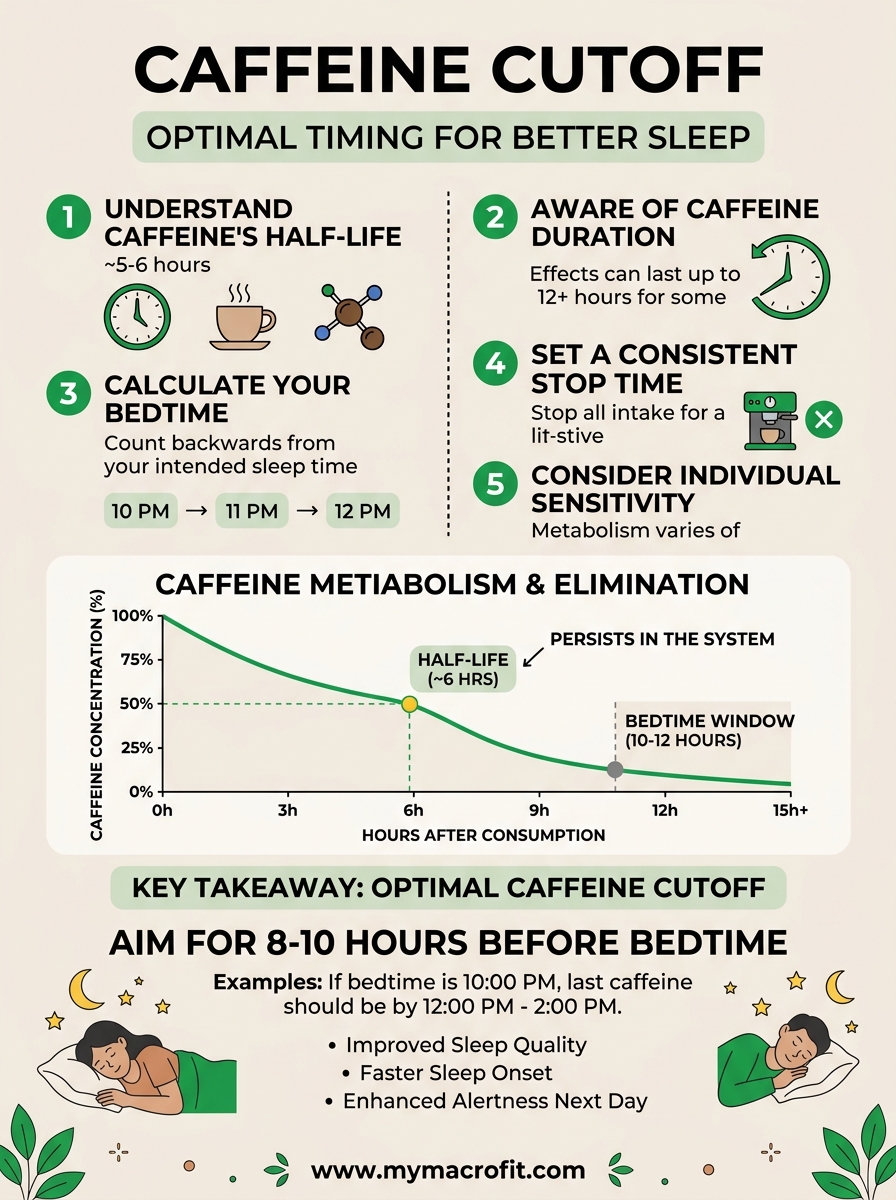
The Half-Life Problem Nobody Calculates
Caffeine doesn't wear off when you stop feeling it. It has a half-life of roughly 4–6 hours: a 2pm double-shot (200mg) leaves about 100mg in your blood at 7pm and 50mg at midnight — enough to measurably cut deep sleep in most people, even those who fall asleep easily.
The fix isn't quitting coffee. It's knowing your personal cutoff time: the latest point where your last dose decays below the ~50mg threshold by bedtime. That's exactly what this calculator does.
Why This Matters for Fat Loss and Muscle
- Hunger hormones: one short night raises ghrelin and lowers leptin — you eat an average of 300+ extra calories the next day without noticing.
- Recovery: deep sleep is when growth hormone peaks and muscle repair happens. Caffeine-fragmented sleep blunts both.
- Cortisol: poor sleep elevates next-day cortisol, which drives belly-fat storage and cravings — a vicious cycle that often starts with a 4pm latte.
Practical Rules That Work
- Front-load your caffeine: have your biggest dose within 90 minutes of waking, taper after lunch.
- Watch the stealth doses: pre-workout (150–300mg), energy drinks (80–160mg), and even "refreshing" iced teas count toward your cutoff.
- Swap, don't stop: after your cutoff, switch to decaf or herbal tea — the ritual survives, the half-life problem doesn't.
Sleep is half the fat-loss equation.
The other half is eating right — get your calorie and macro targets in the free guide.
Get the Free Macro Guide →Frequently Asked Questions
How long before bed should I stop drinking coffee?
Why does afternoon coffee affect sleep even if I fall asleep fine?
Does caffeine sensitivity really differ between people?
Does poor sleep affect weight loss?
What about decaf, tea, and pre-workout?
How it's calculated: this tool uses established, published equations. See the full calculator methodology for the formulas and assumptions behind it.
Results are estimates for general guidance, not medical advice. See our disclaimer, and speak to a qualified healthcare professional before making medical or dietary changes.
Related Tools
Save & share on Pinterest
Click any card to pin it — or share with someone who needs it.
Caffeine Cutoff Calculator
Coffee is great — until it quietly ruins your deep sleep. Enter your bedtime, sensitivity, and usual…
Coffee is great — until it quietly ruins your deep sleep. Enter your bedtime, se…
Read the full guide: Caffeine Cutoff Calculator
Try the free Caffeine Cutoff Calculator
Caffeine Cutoff Calculator — use our free calculators for instant personalised results. No signup re…
Pinterest opens in a new tab. You can edit the description before saving.
Get Your Free Macro Cheat Sheet
One-page PDF with all the key formulas. Free, no spam ever.
Get the Free Macro Guide