7-Day Meal Plan for Muscle Building (High Protein)

BSc Kinesiology · CPT
This 7-day muscle-building meal plan is designed for a lean bulk phase, eating slightly above maintenance to support muscle growth while minimising fat gain. Built around 2,500 kcal and 175g protein per day.
Before starting: Use our Lean Bulk Calculator to establish your personal calorie and protein targets. Scale portions accordingly.
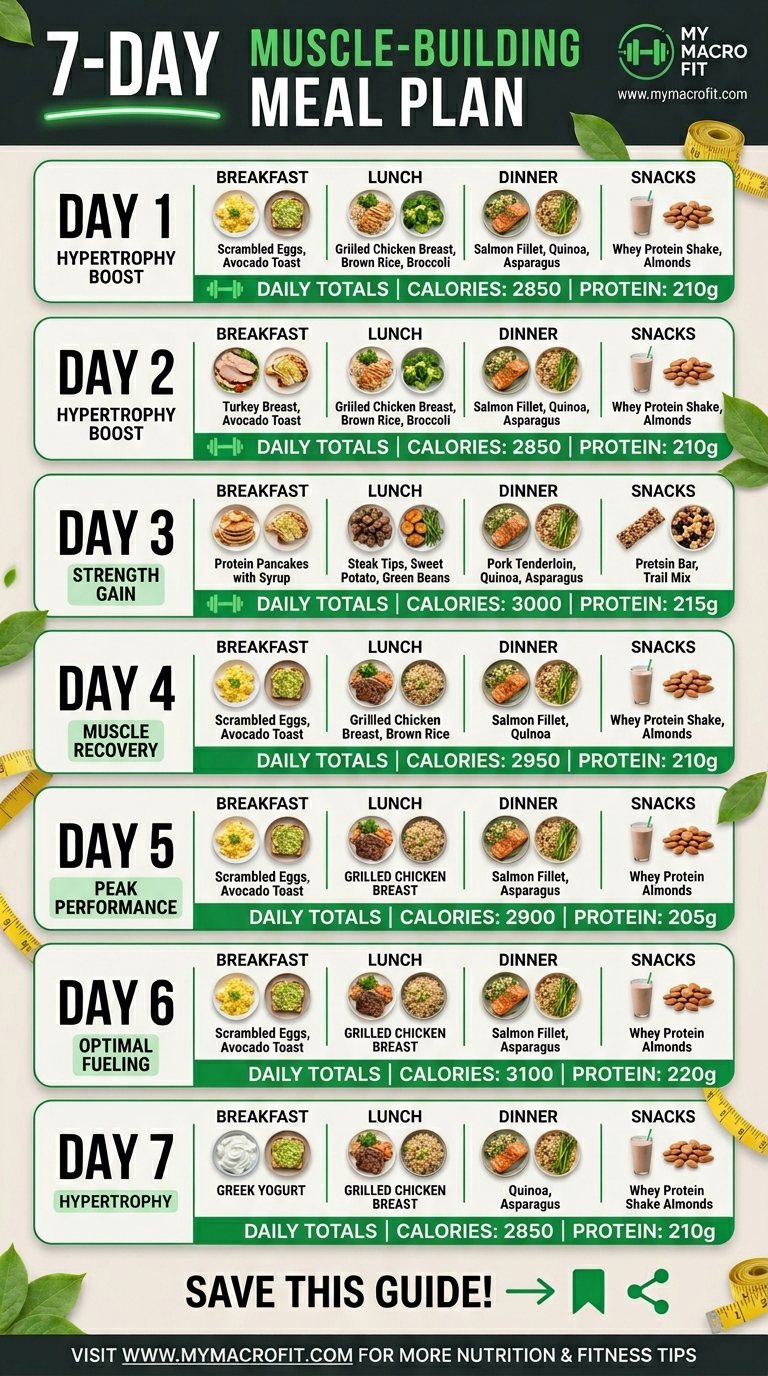
The Plan at a Glance
Daily targets: ~2,500 kcal, 175g protein, 250g carbs, 80g fat Suitable for: Men ~75-80kg in a lean bulk phase, training 3-4×/week Women/smaller individuals: Scale down by 20-30% to reach your personal targets
Day 1, Monday (Training Day)
Breakfast: Power porridge (520 kcal, 40g protein)
- 70g oats with 300ml whole milk
- 1 scoop vanilla whey protein stirred in
- 1 banana (sliced)
- 2 tbsp peanut butter
- 1 tbsp ground flaxseed
Lunch: Chicken rice bowl (650 kcal, 55g protein)
- 180g chicken breast (grilled)
- 250g cooked white rice
- 200g roasted broccoli and peppers
- Teriyaki sauce (1 tbsp)
Post-Workout Snack: Cottage cheese and berries (250 kcal, 25g protein)
- 200g cottage cheese
- 150g mixed berries
Dinner: Beef stir-fry (650 kcal, 50g protein)
- 180g lean beef strips
- 200g cooked egg noodles
- Mixed vegetables (broccoli, peppers, mangetout, onion)
- Oyster sauce, garlic, sesame oil
Evening Snack: Casein shake (250 kcal, 30g protein)
- 1 scoop casein protein in milk (250ml)
Day 1 Total: ~2,320 kcal, 200g protein
Day 2, Tuesday (Rest Day)
Breakfast: Egg scramble (500 kcal, 40g protein)
- 4 whole eggs scrambled
- 100g smoked salmon
- 2 slices wholemeal toast
- Avocado ¼ (spread)
Lunch: Tuna pasta salad (620 kcal, 48g protein)
- 100g dry wholemeal pasta (cooked)
- 2 cans tuna (240g total drained)
- Sweetcorn, peas, light mayo (1 tbsp)
- Mixed leaves, lemon
Snack: Greek yogurt + granola (380 kcal, 28g protein)
- 250g full-fat Greek yogurt
- 40g granola
- 100g blueberries
Dinner: Salmon with quinoa (600 kcal, 45g protein)
- 160g salmon fillet (baked)
- 80g dry quinoa (cooked: ~250g)
- Asparagus (200g, roasted)
- Lemon butter dressing
Day 2 Total: ~2,100 kcal, 161g protein (slightly lower on rest day, appropriate)
Day 3, Wednesday (Training Day)
Breakfast: Protein French toast (560 kcal, 42g protein)
- 4 slices wholemeal bread
- 3 eggs + 1 scoop vanilla protein in egg mixture
- 200ml milk
- Cinnamon, topped with Greek yogurt (100g) and strawberries
Pre-workout snack: Banana + protein bar (280 kcal, 20g protein)
Lunch: Turkey and rice (670 kcal, 55g protein)
- 180g turkey breast
- 250g cooked white rice
- Large mixed salad with olive oil dressing
Dinner: Chicken and sweet potato mash (620 kcal, 50g protein)
- 180g chicken thigh (baked, skin removed)
- 300g sweet potato (mashed with milk)
- Green beans and peas (200g)
- Gravy (low-calorie)
Snack: Cottage cheese + pineapple (270 kcal, 24g protein)
Day 3 Total: ~2,400 kcal, 191g protein
Day 4, Thursday (Rest Day)
Breakfast: Overnight oats (520 kcal, 38g protein)
- 70g oats
- 250ml whole milk
- 1 scoop protein powder
- Chia seeds (1 tbsp), mixed berries
Lunch: Beef and lentil bowl (630 kcal, 52g protein)
- 150g lean beef mince
- 200g cooked lentils
- Roasted vegetables
- Cumin, coriander, tomato sauce
Snack: Smoked salmon + rye crispbread (340 kcal, 28g protein)
- 100g smoked salmon
- 4 rye crispbreads
- Cream cheese (light, 30g)
- Cucumber
Dinner: King prawn curry (620 kcal, 48g protein)
- 200g king prawns
- Curry sauce (tomato-based, moderate oil)
- 200g cooked basmati rice
- Naan bread (small)
Day 4 Total: ~2,110 kcal, 166g protein
Day 5, Friday (Training Day)
Breakfast: Power shake + toast (570 kcal, 48g protein)
- 300ml whole milk + 1.5 scoops whey protein + 1 banana + 1 tbsp peanut butter (blended)
- 2 slices wholemeal toast with honey
Lunch: Chicken and avocado wrap (640 kcal, 48g protein)
- 2 large wholemeal wraps
- 160g chicken breast
- ½ avocado
- Mixed salad, tomato, jalapeño, light mayo
Post-workout: Protein shake (200 kcal, 25g protein)
Dinner: Pork tenderloin with roasted vegetables and potato (680 kcal, 52g protein)
- 180g pork tenderloin
- 250g roasted new potatoes
- Roasted courgette, onion, peppers (200g)
- Mustard sauce
Day 5 Total: ~2,090 kcal, 173g protein (slightly lower, normal variation)
Day 6, Saturday (Active Day, Higher Calories)
Breakfast: Full muscle breakfast (650 kcal, 50g protein)
- 4 whole eggs (2 scrambled, 2 fried)
- 4 turkey rashers
- Half tin baked beans
- 2 slices wholemeal toast
- Grilled tomatoes and mushrooms
Lunch: Big rice bowl (700 kcal, 52g protein)
- 200g chicken breast
- 280g cooked white rice
- Edamame (100g)
- Cucumber, avocado, teriyaki sauce
Dinner: BBQ beef with jacket potato (720 kcal, 55g protein)
- 200g lean rump steak
- 200g baked jacket potato
- Coleslaw (light, 100g)
- Mixed salad
Snack: 250g Greek yogurt + honey (350 kcal, 25g protein)
Day 6 Total: ~2,420 kcal, 182g protein
Day 7, Sunday (Recovery Day)
Breakfast: Egg and vegetable frittata (520 kcal, 40g protein)
- 5 eggs
- 50g feta cheese
- Spinach, tomato, red pepper, mushroom
- 2 slices wholemeal toast
Lunch: Tuna nicoise (580 kcal, 48g protein)
- 2 cans tuna (240g drained)
- 4 new potatoes (100g, boiled)
- Green beans (100g), boiled egg, olives, salad leaves
- Olive oil + lemon dressing
Dinner: Roast chicken (650 kcal, 55g protein)
- 200g chicken breast
- 200g roast potatoes (in minimal oil)
- Broccoli, carrots, peas
- Gravy (low-cal)
Snack: Casein + milk (250 kcal, 28g protein)
Day 7 Total: ~2,000 kcal, 171g protein
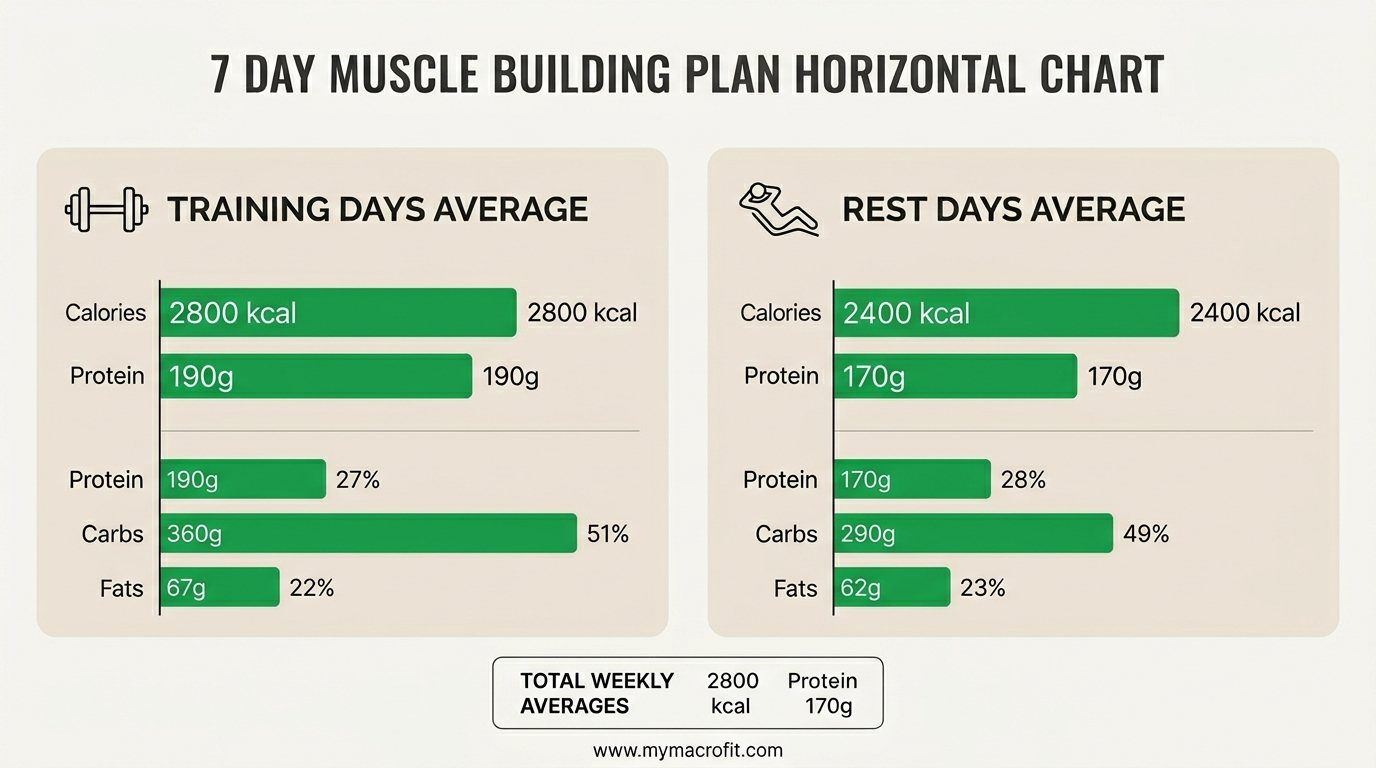
Core Shopping List
Proteins: Chicken breast, chicken thighs, turkey breast, turkey mince, lean beef, lean pork tenderloin, salmon, tuna (canned), smoked salmon, king prawns, eggs, Greek yogurt (full-fat), cottage cheese, whey + casein protein powder
Carbohydrates: Oats, wholemeal bread, white rice, brown rice, basmati rice, pasta (wholemeal), sweet potato, new potatoes, quinoa, egg noodles
Fats: Peanut butter, avocado, olive oil, ground flaxseed, walnuts, chia seeds
Vegetables: Broccoli, peppers, courgette, spinach, asparagus, green beans, tomatoes, onion, garlic, mixed salad
The Bottom Line
Muscle building is a slow, consistent process that requires sustained calorie surplus and high protein. This 7-day plan provides the framework, adjust portions to hit your personal targets, maintain protein at every meal, and train consistently with progressive overload.
Save & share on Pinterest
Click any card to pin it — or share with someone who needs it.
7-Day Meal Plan for Muscle Building (High Protein)
A complete 7-day muscle-building meal plan at 2,500 calories and 175g protein, designed for people i…
A complete 7-day muscle-building meal plan at 2,500 calories and 175g protein, d…
Read the full guide: 7-Day Meal Plan for Muscle Building (High Protein)
Try the free Lean Bulk Calculator
7-Day Meal Plan for Muscle Building (High Protein) — use our free calculators for instant personalis…
Pinterest opens in a new tab. You can edit the description before saving.
Ready to get your numbers?
Free calculator, instant results, no signup required.
Frequently Asked Questions
How many calories do I need to build muscle?+
Can you build muscle on a plant-based diet?+
How often should I eat on a muscle building diet?+
How do I scale this meal plan to my own calorie needs?+
What if I struggle to eat this much food to build muscle?+
About the Author
I'm a kinesiologist and personal trainer. I've spent eight years helping women lose fat and get stronger without handing their whole life over to a diet.
View full profile →