120g Protein Meal Plan: A Full Day of High-Protein Eating

BSc Kinesiology · CPT
If you've been told to "eat more protein" but have no idea what that looks like on a plate, this is your template. A 120g protein day is an excellent target for many people, enough to drive fat loss, fullness, and muscle protection without feeling like a bodybuilding chore. Here's a full, realistic day, who it suits, and how to scale it.
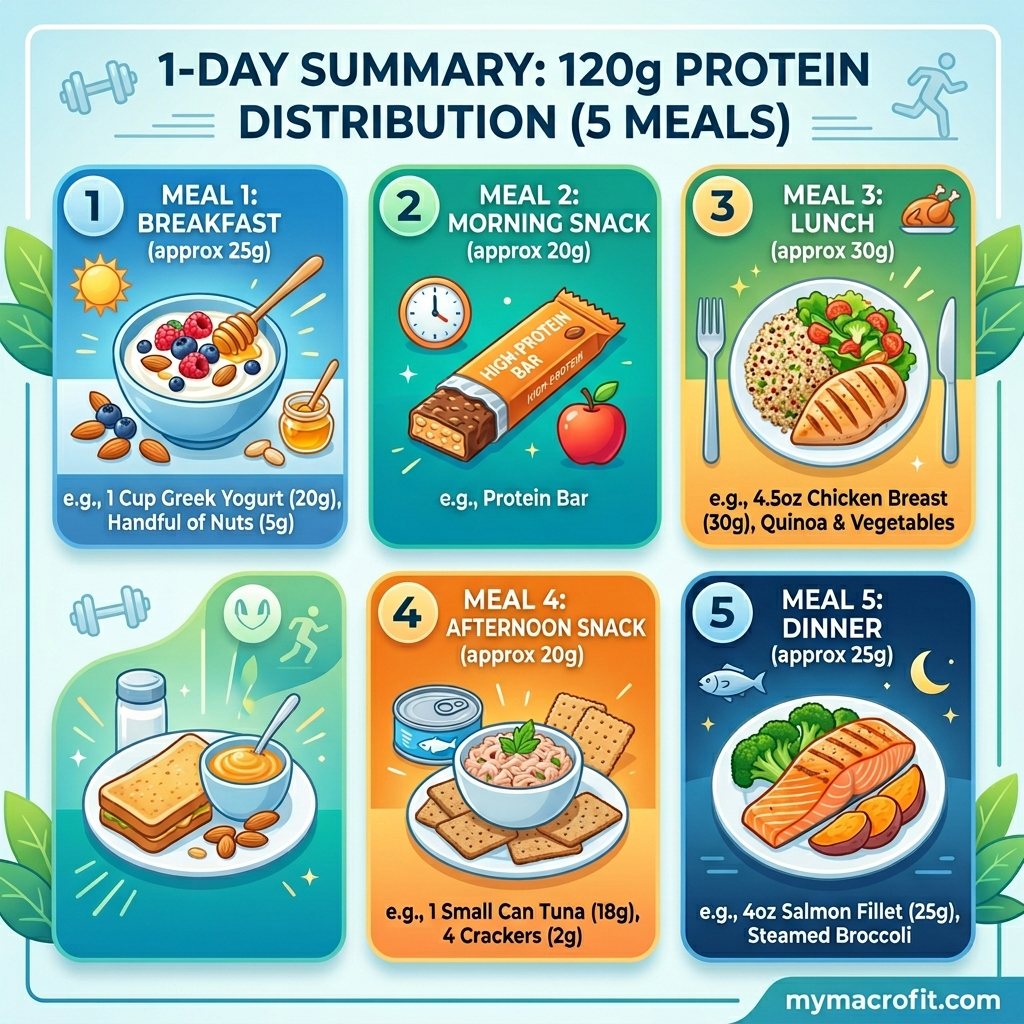
Who 120g of protein suits
120g per day works well for someone roughly 55-75kg aiming for fat loss or general health, landing in the evidence-based 1.6-2.2g per kg range. If you're larger, very active, or building muscle, you may want 150g+; if you're smaller, 120g might already be on the higher end. Confirm your personal number with the Protein Calculator, but 120g is a clean, achievable target for a lot of women and smaller men.
The full 120g day
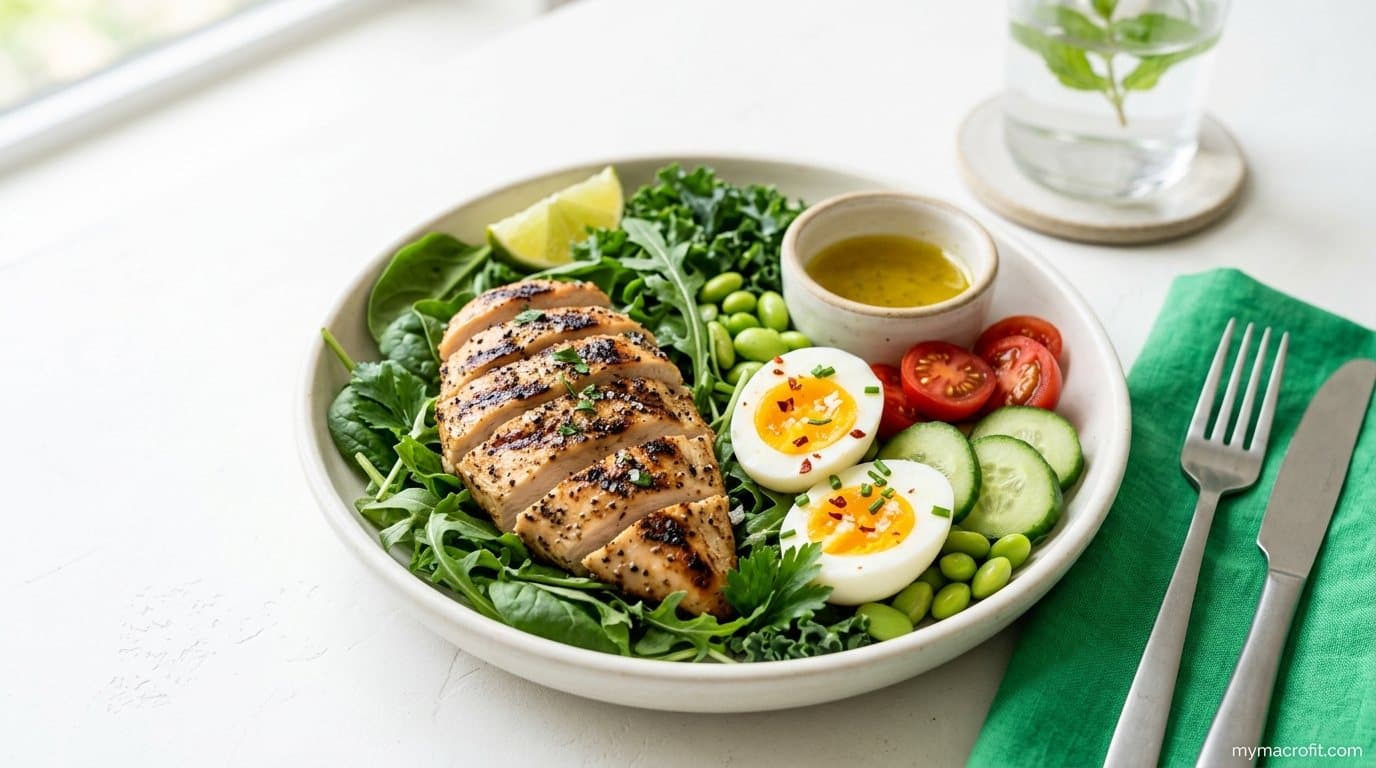
The trick is simple: anchor each meal with a palm-sized protein and add one protein-rich snack.
| Meal | Food | Protein |
|---|---|---|
| Breakfast | 3-egg omelette + spinach, side of Greek yogurt | 32g |
| Lunch | Grilled chicken breast, mixed veg, 100g rice | 42g |
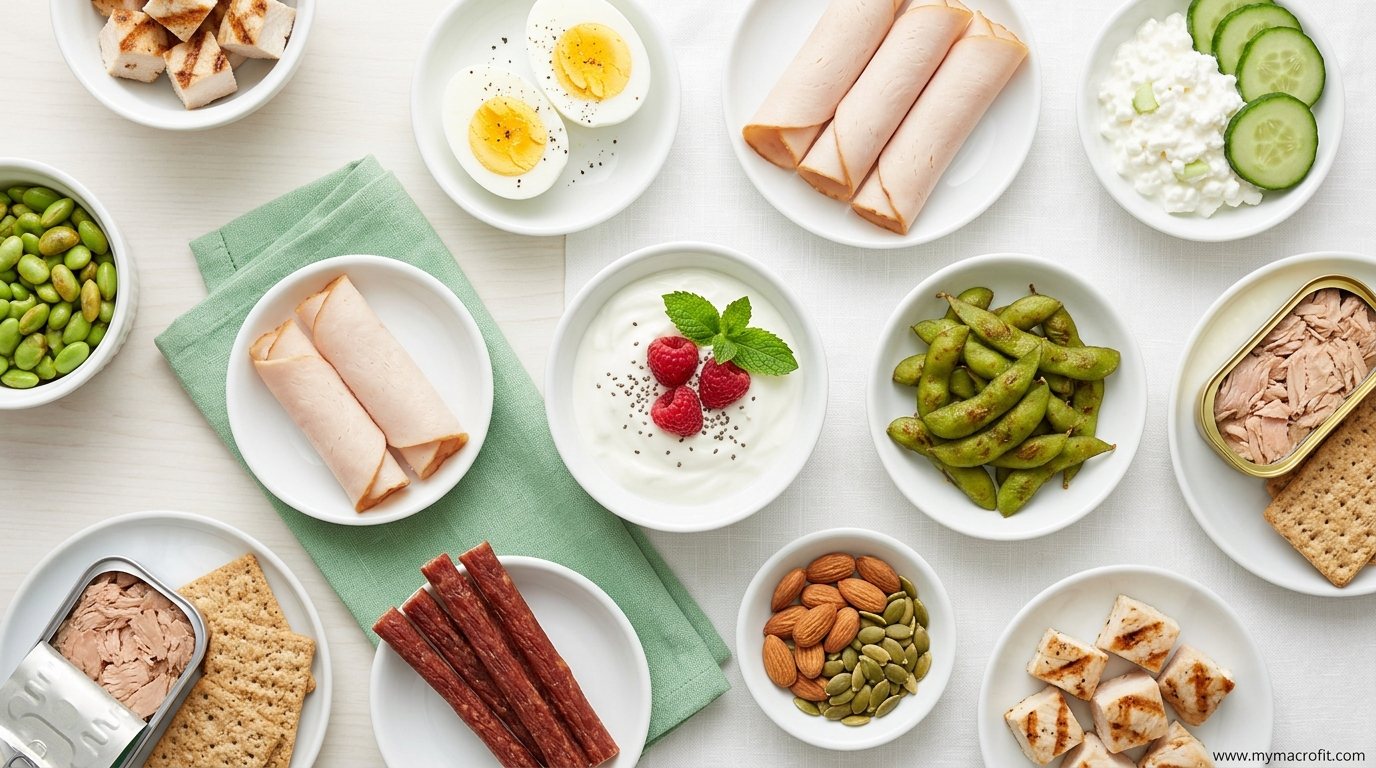
| Snack | Cottage cheese with tomato, or a small shake | 18g |
| Dinner | Baked salmon or tofu, potatoes, greens | 30g |
| Total | ~122g |
That's four feeds, each built around a protein source, landing right on target without obsessive tracking.
Is 120g right for you?
The free Protein Calculator gives your personal daily target based on your weight and goal.
Calculate My Protein →How to scale it
- Need more (150g+)? Add protein to the snack (double the cottage cheese or add a full shake) and bump the dinner protein portion. See the 150g protein meal plan.
- Need less? Drop the snack or halve it.
- Vegetarian? Swap in tofu, tempeh, Greek yogurt, eggs, and a plant protein shake, see the plant-based protein guide.
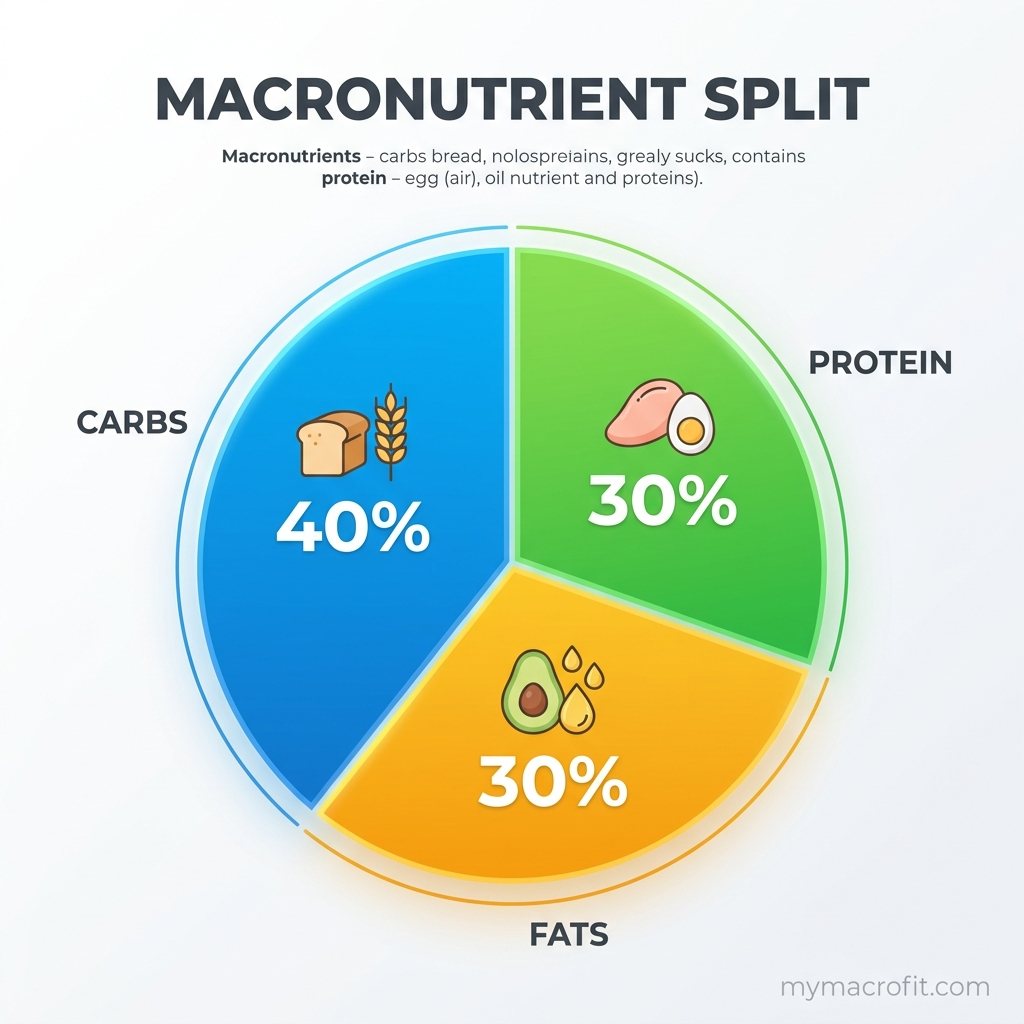
The protein-per-portion cheat sheet
Once you can eyeball how much protein common foods carry, you stop needing a plan at all. These are the numbers I want my clients to memorise, because they let you rebuild a 120g day out of whatever's in your fridge.
| Food | Typical portion | Protein |
|---|---|---|
| Chicken or turkey breast | Palm-sized (120g cooked) | ~37g |
| White fish or salmon | 1 fillet (120g) | ~26g |
| Eggs | 2 large | ~12g |
| Greek yogurt (0-2%) | 150g pot | ~15g |
| Cottage cheese | 100g | ~12g |
| Tofu (firm) | 150g | ~18g |
| Cooked lentils | 1 cup | ~18g |
| Whey protein | 1 scoop | ~25g |
Add any three of the bigger items plus a yogurt or shake, and you're at 120g without a calculator. That's the whole skill.
A common mistake: back-loading all your protein
The single most common pattern I see is a tiny breakfast (toast, coffee), a light lunch, then a huge protein dinner to "catch up". You can technically still hit 120g that way, but you miss most of the benefit. Spreading protein across meals gives you a better muscle-protein-synthesis response and keeps you fuller through the afternoon, which is exactly when most people snack off-plan. Aim for at least 25-30g at breakfast. It's the meal that sets the tone for the whole day.
A second mistake is forgetting that "high protein" foods aren't all lean. Regular Greek-style yogurt, fattier cuts of meat, and cheese carry protein but also a lot of calories. If fat loss is the goal, lean toward the leaner options in the table above so your protein doesn't quietly eat your whole calorie budget.
Make it fit your calories
Protein is one piece, your total calories decide weight change. Set your calorie target with the Calorie Deficit Calculator (for fat loss) or the TDEE Calculator (for maintenance), then fit this protein around it, filling the rest with carbs and fats you enjoy. The Macro Calculator ties it all together.
Is 120g safe?
Yes. For people with normal kidney function, 120g is a moderate, healthy intake, the old worry that high protein harms healthy kidneys isn't supported by evidence. If you have existing kidney disease, check with your doctor; everyone else can eat 120g with confidence.
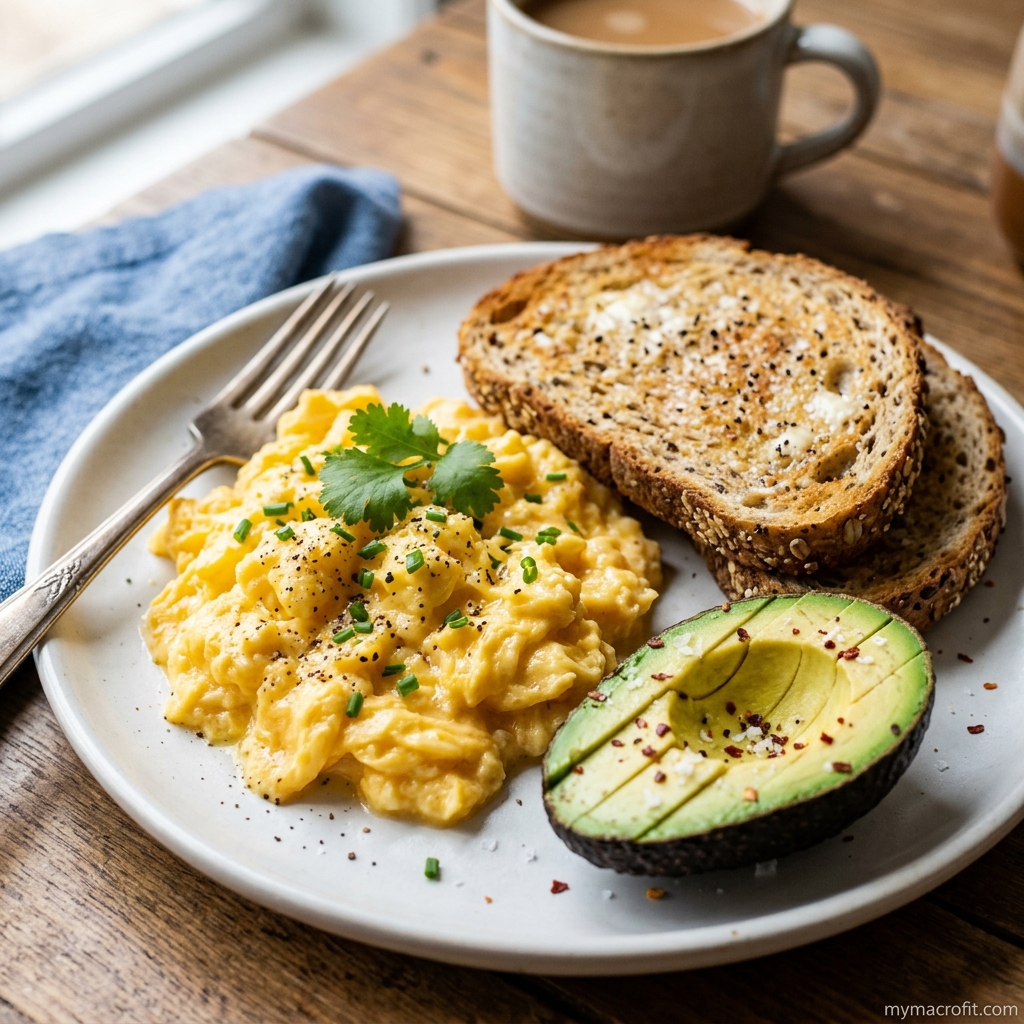
Start with one meal
A 120g protein day is one of the most useful habits you can build for fat loss and health: four meals, each anchored by a protein, plus a protein snack. Confirm it's your number with the Protein Calculator, fit it inside your calorie target, and scale up or down as your goals change.
If a full plan feels like a lot, don't overhaul everything at once. Pick the meal where your protein is currently weakest, usually breakfast, and fix that one first. Get a reliable 30g into your morning for a week, then move to the next meal. Built one feed at a time, 120g stops being a target you chase and becomes just how you eat.
Save & share on Pinterest
Click any card to pin it — or share with someone who needs it.
120g Protein Meal Plan: A Full Day of High-Protein Eating
A simple, realistic 120g protein day, who it suits, a full meal-by-meal plan, and how to scale it up…
A simple, realistic 120g protein day, who it suits, a full meal-by-meal plan, an…
Read the full guide: 120g Protein Meal Plan: A Full Day of High-Protein Eating
Try the free Protein Calculator
120g Protein Meal Plan: A Full Day of High-Protein Eating — use our free calculators for instant per…
Pinterest opens in a new tab. You can edit the description before saving.
Ready to get your numbers?
Free calculator, instant results, no signup required.
Frequently Asked Questions
Is 120g of protein a day enough?+
How do I eat 120g of protein in a day?+
Will 120g of protein help me lose weight?+
Is 120g of protein too much?+
What foods are highest in protein for this plan?+
Do I need to eat protein right after a workout?+
About the Author

I'm a kinesiologist and personal trainer. I've spent eight years helping women lose fat and get stronger without handing their whole life over to a diet.
View full profile →