Back to Fitness Routine: The Autumn Reset Plan

BSc Kinesiology · CPT
September is the most underrated month to restart fitness. The school-year rhythm creates a natural psychological reset, many people feel ready to rebuild structure after summer's flexibility. This autumn reset plan takes advantage of that energy.
Why Autumn Is the Best Time for a Reset
Before the January mythology takes over, consider September's advantages:
Structure returns naturally. School terms, work routines, and social calendars re-establish themselves. The chaos of summer holidays ends. Routine is easier to build when external structure supports it.
The weather cooperates. Autumn weather is ideal for outdoor exercise, cool enough for running, walking, and cycling without summer heat. Not yet cold enough to create a barrier.
The 3-month runway. September to December is exactly 12 weeks, the optimal length for a fitness phase to produce visible, meaningful changes. Doing 12 focused weeks from September positions you well physically and psychologically for January, rather than entering January from a complete restart.
Gym culture. Autumn gyms are quieter than January. Equipment is available, staff have time for instruction, and the environment is less overwhelming for returning members.
Assessing Where You're Starting From
Before diving into a programme, honestly assess your current state:
How long was the break?
- Under 4 weeks: You've lost very little. Return to previous routine at 80% intensity.
- 4-8 weeks: Some cardiovascular and slight strength decline. Start at 65-70% of previous loads.
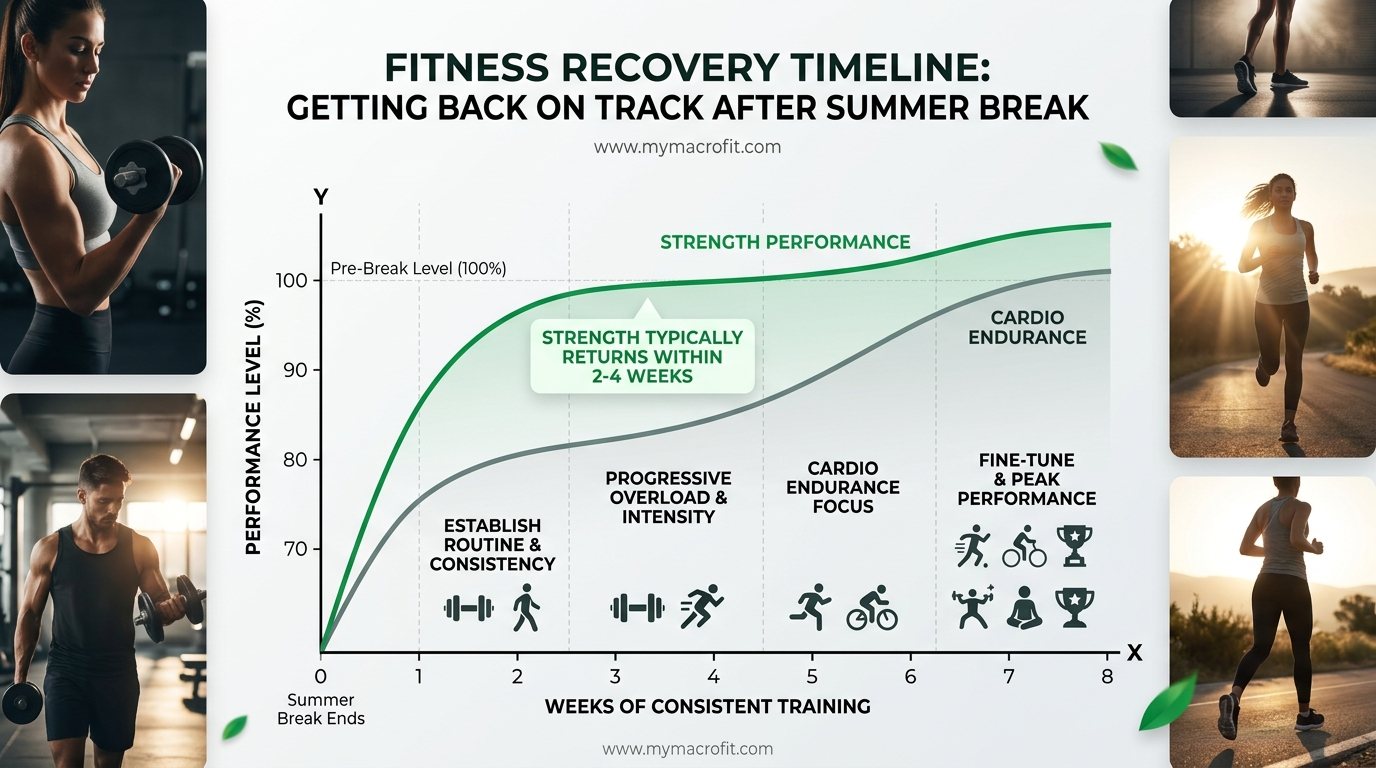
- 8+ weeks: Meaningful cardiovascular decline; strength largely retained through muscle memory. Start at 60% and build back over 3-4 weeks.
What actually lapsed?
- Exercise only (nutrition was maintained): Recovery is faster, body composition hasn't significantly changed.
- Both exercise and nutrition (summer eating): More significant reset needed for both habits simultaneously.
What derailed the routine? Understanding why it lapsed helps build a more resilient re-start. Travelled too much? Plan for travel now. Lost motivation? Set a short-term goal (a 5K race, a 12-week strength programme) rather than vague fitness goals.
The Autumn Reset: 4-Week Relaunch Plan
Week 1: Re-establish the pattern (not the pace)
Goal: 3 training sessions. Not harder than moderate intensity. Focus on movement patterns, not performance.
Training days: Monday, Wednesday, Friday (or similar, with rest days between)
Each session (40-45 minutes):
- 10-minute warm-up: walk, bike, or easy movement
- Compound movement 1 (squat pattern): 3 × 10 at 60% of previous working weight
- Compound movement 2 (hinge pattern): 3 × 10 at 60%
- Upper body push: 3 × 10
- Upper body pull: 3 × 10
- 10-15 minutes Zone 2 cardio (easy pace, not breathless)
Weeks 2-3: Increase intensity progressively
Add weight (+2.5-5kg) each session when all reps are completed comfortably. Add a 4th set to primary movements in week 3. Cardio: increase to 20 minutes, or add a dedicated cardio session.
Week 4: Establish your ongoing programme
By week 4, you're approaching your previous strength levels and cardiovascular fitness is significantly improved. Set a 12-week goal for October-December. This might be: "Squat my bodyweight," "Run 5km under 30 minutes," "Complete 12 weeks of [specific programme]."
Nutrition Reset for Autumn
Summer often brings less structured eating, more meals out, more alcohol, less meal prep. The autumn reset is also a nutritional reset:
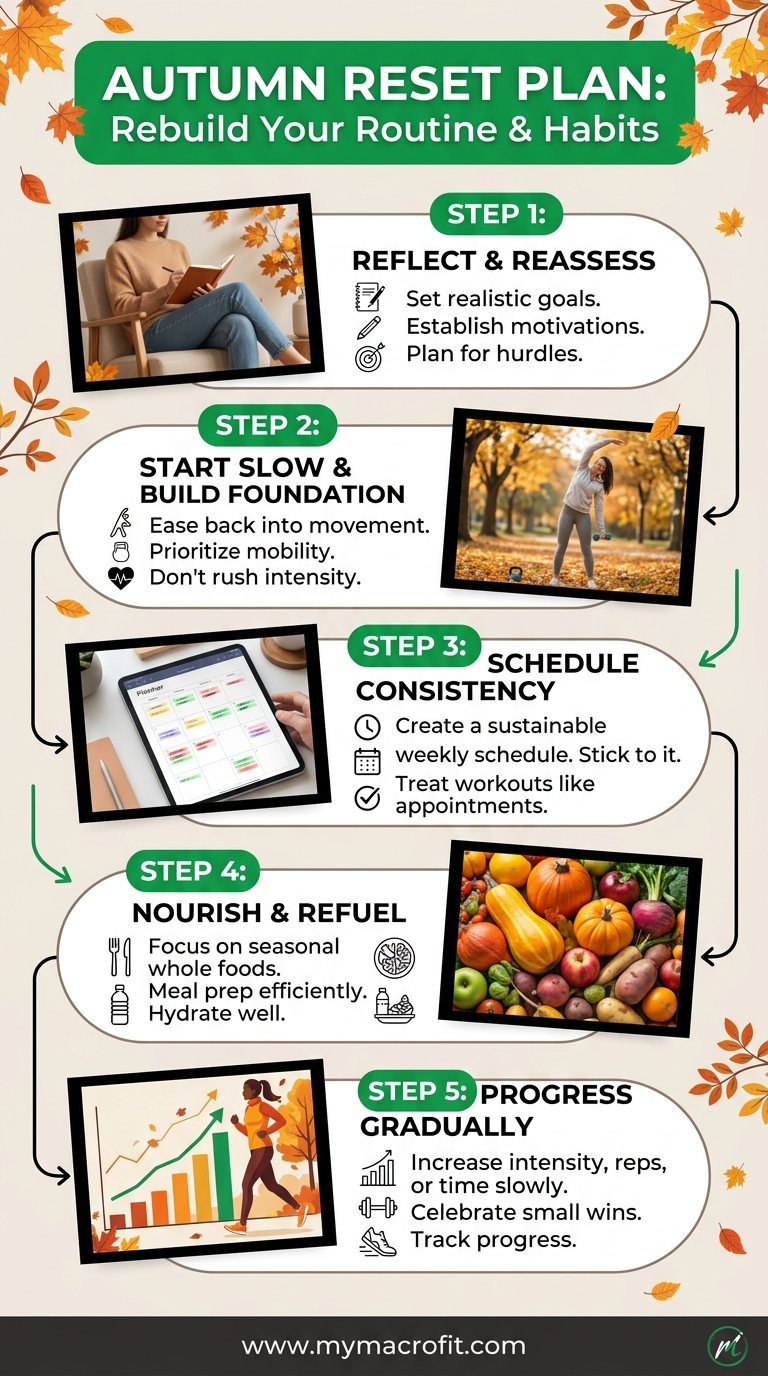
Step 1: Recalculate your TDEE. Use our TDEE Calculator, your activity level has likely changed from summer, and your body composition may have shifted modestly.
Step 2: Return to meal prep. The structural change autumn brings also allows the Sunday meal prep routine that summer schedules disrupt. Even one prep session per week (batch-cooked protein, grains, vegetables) reduces daily nutrition friction significantly.
Step 3: Protein re-prioritisation. Summer often sees a reduction in protein foods in favour of lighter meals, salads, and barbecue/social foods. Re-establish 1.6-2g protein per kg bodyweight as the daily target.
Step 4: Don't overhaul everything at once. If training lapsed and nutrition drifted, address training first (weeks 1-2), then layer nutrition structure back in (weeks 3-4). Simultaneous wholesale changes increase dropout probability.
12-Week Autumn Goal Setting
From the first week of September, 12 weeks lands you at early December, just before the Christmas period. This is a meaningful training block.
Goal types that work well for autumn:
Specific fitness performance:
- Run a 5K under X minutes
- Deadlift/squat X kg
- Complete 10 pull-ups
- Walk 10,000 steps every day for 8 weeks
Body composition:
- Lose X kg by December 1st
- Drop one clothing size
- Reduce waist measurement by X cm
Habit consistency:
- Complete 3 training sessions/week for 12 consecutive weeks
- Track food for 10 out of 12 weeks
The specificity of the goal matters more than what the goal is. "Get in shape" fails. "Squat 70kg for 3×5 by December" succeeds.
The Bottom Line
Autumn is an excellent time for a fitness reset, better than waiting for January. Return to training at 60-70% of previous intensity, build back over 3-4 weeks, and set a 12-week goal that carries you through to December. The psychological momentum from 12 weeks of autumn training makes January maintenance, rather than January starting from zero, a much better position. Start with your TDEE from our TDEE Calculator, set realistic targets, and use September's natural rhythmic reset to build something that carries through the year.
Save & share on Pinterest
Click any card to pin it — or share with someone who needs it.
Back to Fitness Routine: The Autumn Reset Plan
How to rebuild your fitness routine after summer, a structured autumn reset plan for getting back on…
How to rebuild your fitness routine after summer, a structured autumn reset plan…
Read the full guide: Back to Fitness Routine: The Autumn Reset Plan
Try the free TDEE Calculator
Back to Fitness Routine: The Autumn Reset Plan — use our free calculators for instant personalised r…
Pinterest opens in a new tab. You can edit the description before saving.
Ready to get your numbers?
Free calculator, instant results, no signup required.
Frequently Asked Questions
How quickly do you lose fitness after a break?+
How should I restart my workout routine after time off?+
What's the best time of year to start a fitness routine?+
How do I stay motivated to rebuild my routine?+
Will I have lost all my progress after a long break?+
About the Author

I'm a kinesiologist and personal trainer. I've spent eight years helping women lose fat and get stronger without handing their whole life over to a diet.
View full profile →