How Much Should I Lift? Beginner's Guide to Sets, Reps, and Weight

BSc Kinesiology · CPT
Sets, reps, and weights are the language of strength training, and the terminology can feel confusing when you're starting out. Understanding these basics makes every programme you'll ever follow immediately more intelligible.
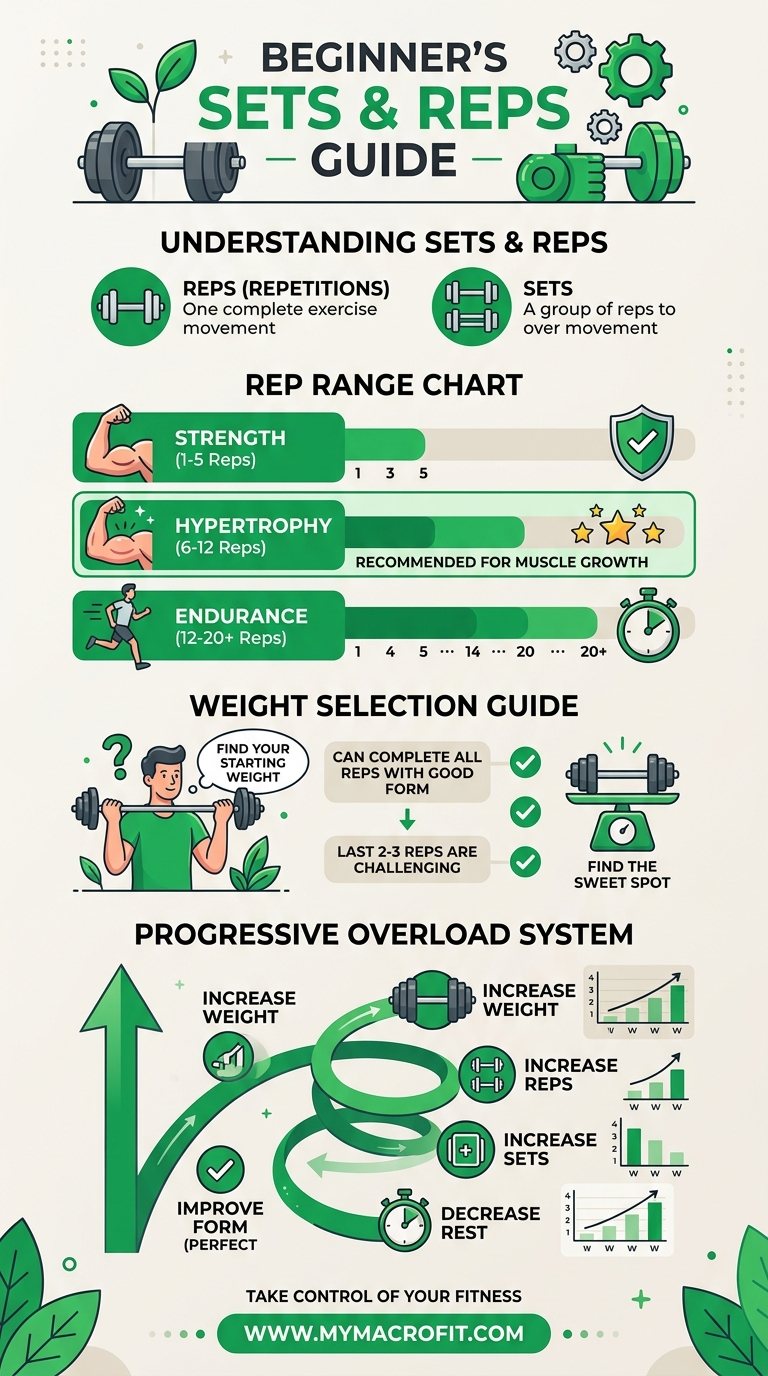
The Basic Terminology
Rep (repetition): One complete movement of an exercise. One squat = one rep. Lowering down and standing back up counts as one rep.
Set: A group of consecutive reps performed without resting. "3 sets of 10 squats" = do 10 squats, rest, do 10 squats, rest, do 10 squats.
Working weight: The load used for a set. Expressed as kg or lbs on a barbell, or dumbbell weight.
Rest period: The time between sets. Typically 60-180 seconds depending on goal and exercise.
Rep Ranges and What They Train
Different rep ranges produce somewhat different adaptations:
| Rep range | Primary adaptation | Appropriate weight |
|---|---|---|
| 1-5 reps | Maximum strength, neural efficiency | Very heavy, 85-95% of 1RM |
| 6-12 reps | Hypertrophy (muscle size), strength + size | Moderate-heavy, 65-85% of 1RM |
| 12-20 reps | Hypertrophy + muscular endurance | Moderate, 50-65% of 1RM |
| 20-30 reps | Muscular endurance, metabolic training | Lighter, 40-55% of 1RM |
For beginners: The 8-12 rep range is the most practical starting point:
- Heavy enough to stimulate muscle growth
- Light enough to maintain good technique while learning
- Allows progressive overload through both reps and weight increases
The research nuance: Rep range matters less than proximity to failure. A set of 20 reps taken to near-failure builds as much muscle as a set of 8 reps taken to near-failure, when volume (total work) is equated.
How Many Sets Per Exercise?
For beginners: 3 sets per exercise provides sufficient stimulus without excessive fatigue.
Volume recommendations:
- Per muscle group per week: 10-20 sets total (across all exercises targeting that muscle)
- Per session: 3-4 exercises × 3 sets = 9-12 sets per major movement pattern
As a beginner, more is not better. Recovery capacity is limited. 3 sets per exercise, 3-4 exercises per session, 3 days/week is sufficient for significant progress. Excessive volume reduces recovery quality and increases injury risk.
How to Choose Your Starting Weight
The most common beginner mistake: using weights that are embarrassingly light out of social self-consciousness, or the opposite, using weights that are so heavy they break form immediately.
The correct approach:
- Start with a weight you estimate is about 60-70% of what you could lift once with maximum effort
- Perform 8-10 reps at this weight
- Assess: Could you do 4+ more reps? Too light. Could you barely finish? Too heavy. Adjust accordingly.
- For technique learning (first 2-4 weeks): Use weights light enough to ensure perfect form, then increase.
Starting weight examples for a complete beginner (average-sized woman):
- Goblet squat: 8-12kg dumbbell
- Romanian deadlift: 10-15kg dumbbells or 20kg barbell
- Dumbbell shoulder press: 5-7kg each hand
- Bent-over row: 8-12kg dumbbells or 30kg barbell
- Lat pulldown: 25-35kg
These are starting points, not targets. Increase quickly once technique is solid.
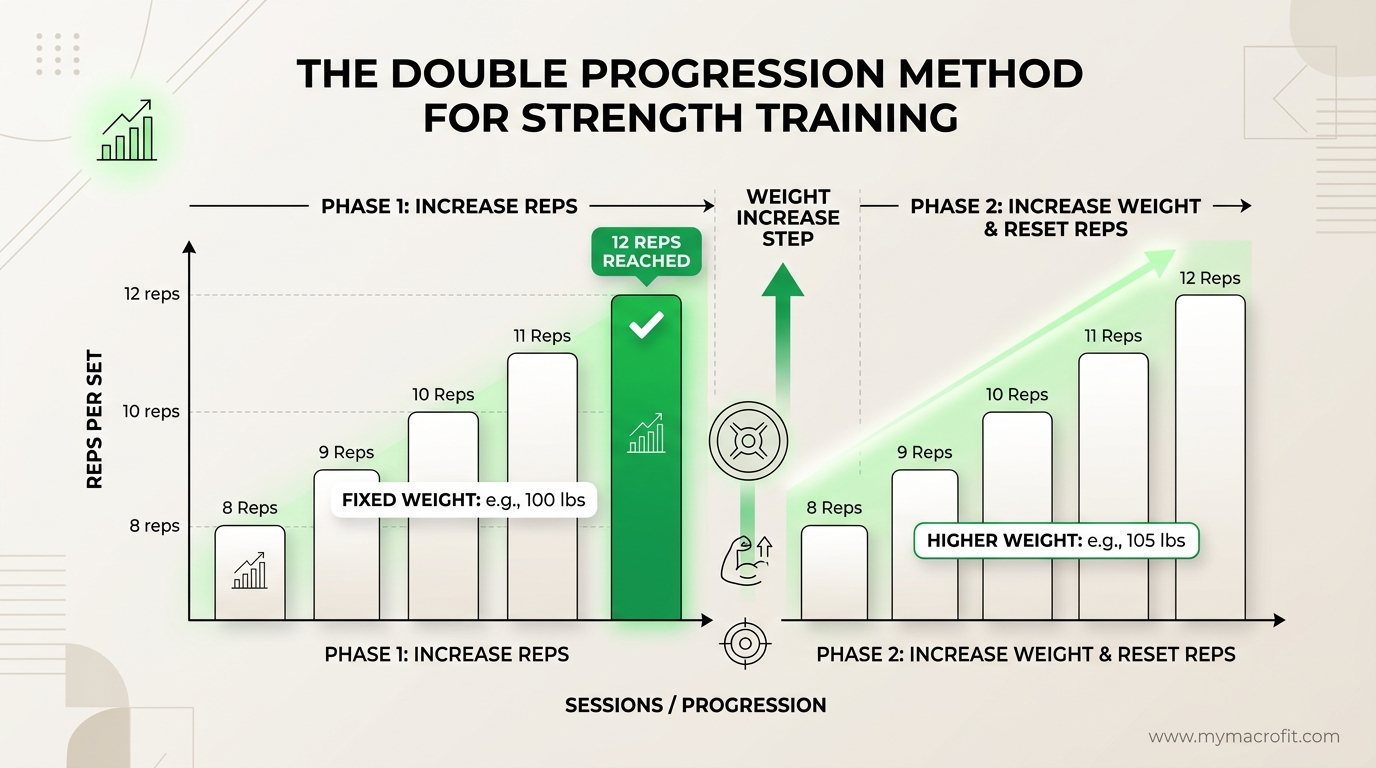
The Double Progression Method (Beginner Protocol)
The simplest system for progressive overload as a beginner:
- Choose a rep range (e.g., 8-12)
- Set a target rep count at the top of the range (12) and bottom (8)
- Start at the bottom of the range with a challenging weight
- Each session, try to add reps until reaching the top of the range for all sets
- When all sets hit the top (3×12), increase weight by the smallest increment and reset to the bottom of the range (3×8 at new weight)
Example:
- Week 1: 3×8 at 40kg (hard)
- Week 2: 3×10 at 40kg
- Week 3: 3×12 at 40kg (easy)
- Week 4: 3×8 at 42.5kg (hard again with new weight)
- Repeat
This simple system produces consistent progress for 6+ months as a beginner.
Rest Times Between Sets
Rest determines the training quality in subsequent sets:
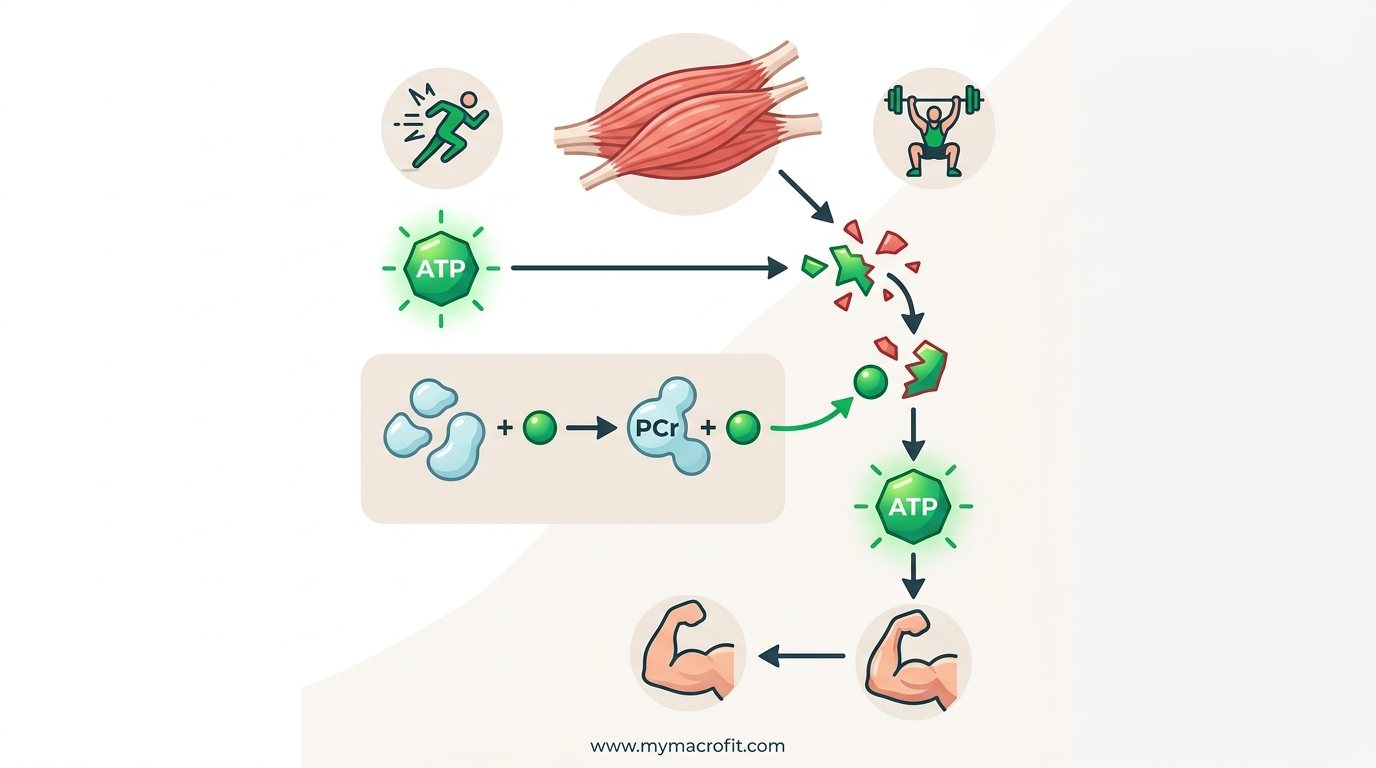
For strength focus (4-8 reps, heavy): 2-3 minutes rest minimum, allows near-complete ATP recovery
For hypertrophy (8-15 reps): 90-150 seconds, balances recovery with metabolic stimulus
For endurance/circuit work: 45-90 seconds
For beginners: Err toward longer rest periods. Being adequately recovered for each set is more important than keeping rest short. 2 minutes is a sensible default for most exercises.
Common Mistakes with Sets and Reps
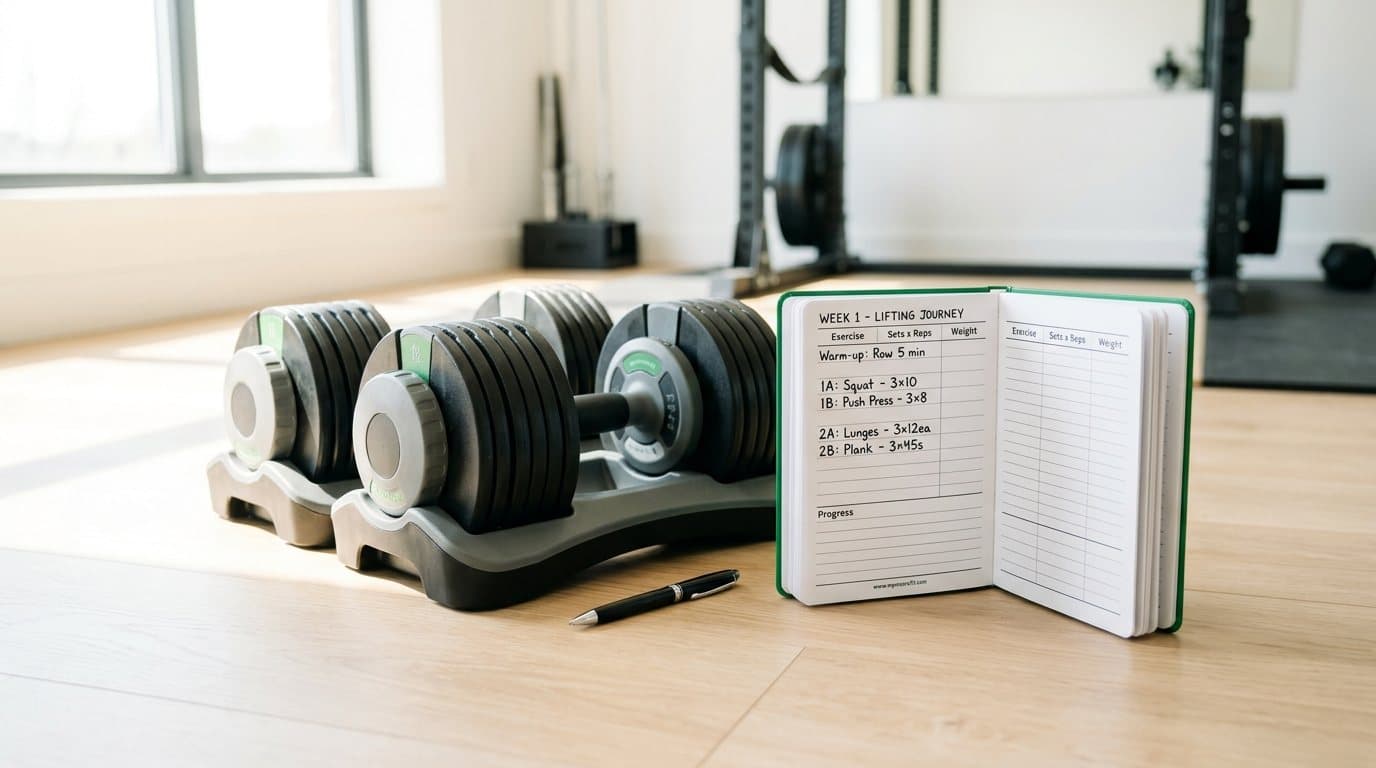
Not tracking what you do: Without a log, there's no way to implement progressive overload consistently. Record every session.
Using the same reps and weight indefinitely: This is the most common plateau cause. Increase weight or reps every 1-2 weeks.
Stopping too far from failure: A set that ends at 8 reps when you could do 15 isn't providing meaningful stimulus. Sets should be challenging, completing them should require real effort.
Chasing soreness as a goal: Muscle soreness (DOMS) doesn't correlate with training effectiveness. Progressive overload metrics (weight/reps improving) are the correct indicator.
The Bottom Line
For beginners: 3 sets of 8-12 reps per exercise, 3-4 exercises per session, 3 days per week. Choose weights that are challenging for the last 2-3 reps. Use double progression to increase reps then weight over time. Record every session.
This straightforward system produces consistent progress for 6 months or more before more complex programming becomes necessary.
Save & share on Pinterest
Click any card to pin it — or share with someone who needs it.
How Much Should I Lift? Beginner's Guide to Sets, Reps, and Weight
A clear explanation of sets, reps, weight selection, and rep ranges for beginners, how to choose sta…
A clear explanation of sets, reps, weight selection, and rep ranges for beginner…
Read the full guide: How Much Should I Lift? Beginner's Guide to Sets, Reps, and Weight
Free fitness tools
How Much Should I Lift? Beginner's Guide to Sets, Reps, and Weight — use our free calculators for in…
Pinterest opens in a new tab. You can edit the description before saving.
Frequently Asked Questions
Is it better to lift heavy with fewer reps or light with more reps?+
What is 3 sets of 10 reps?+
How do I know if a weight is too heavy or too light?+
How many sets and reps should a beginner do per exercise?+
Should I train to failure as a beginner?+
About the Author

I'm a kinesiologist and personal trainer. I've spent eight years helping women lose fat and get stronger without handing their whole life over to a diet.
View full profile →