Can You Build Muscle at Home Without a Gym?

BSc Kinesiology · CPT
Gym membership isn't a prerequisite for building muscle. The cellular mechanisms of muscle hypertrophy, mechanical tension, metabolic stress, and muscle protein synthesis, operate identically whether the training load comes from a barbell in a gym or dumbbells in a living room.
The key question is whether you can create sufficient, progressively increasing challenge from home equipment.
What You Can Achieve at Home
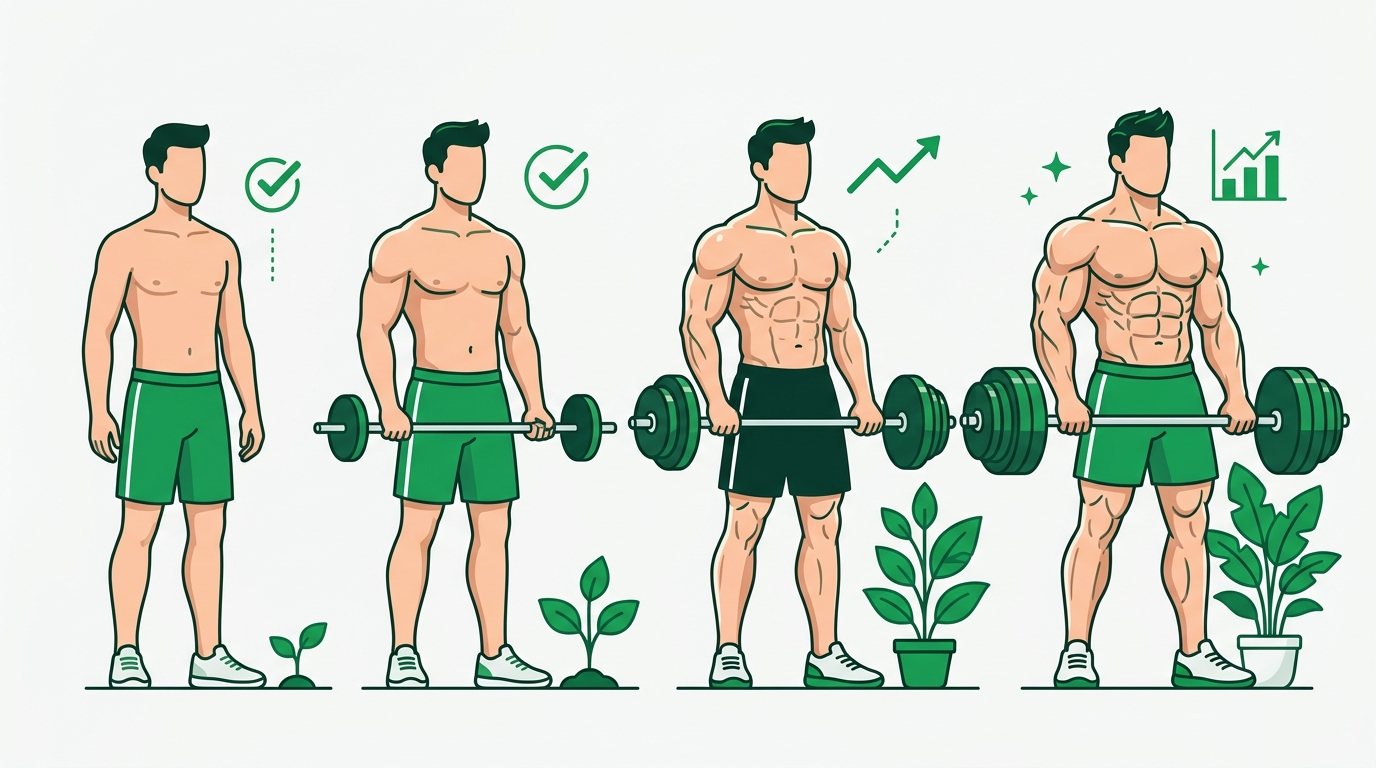
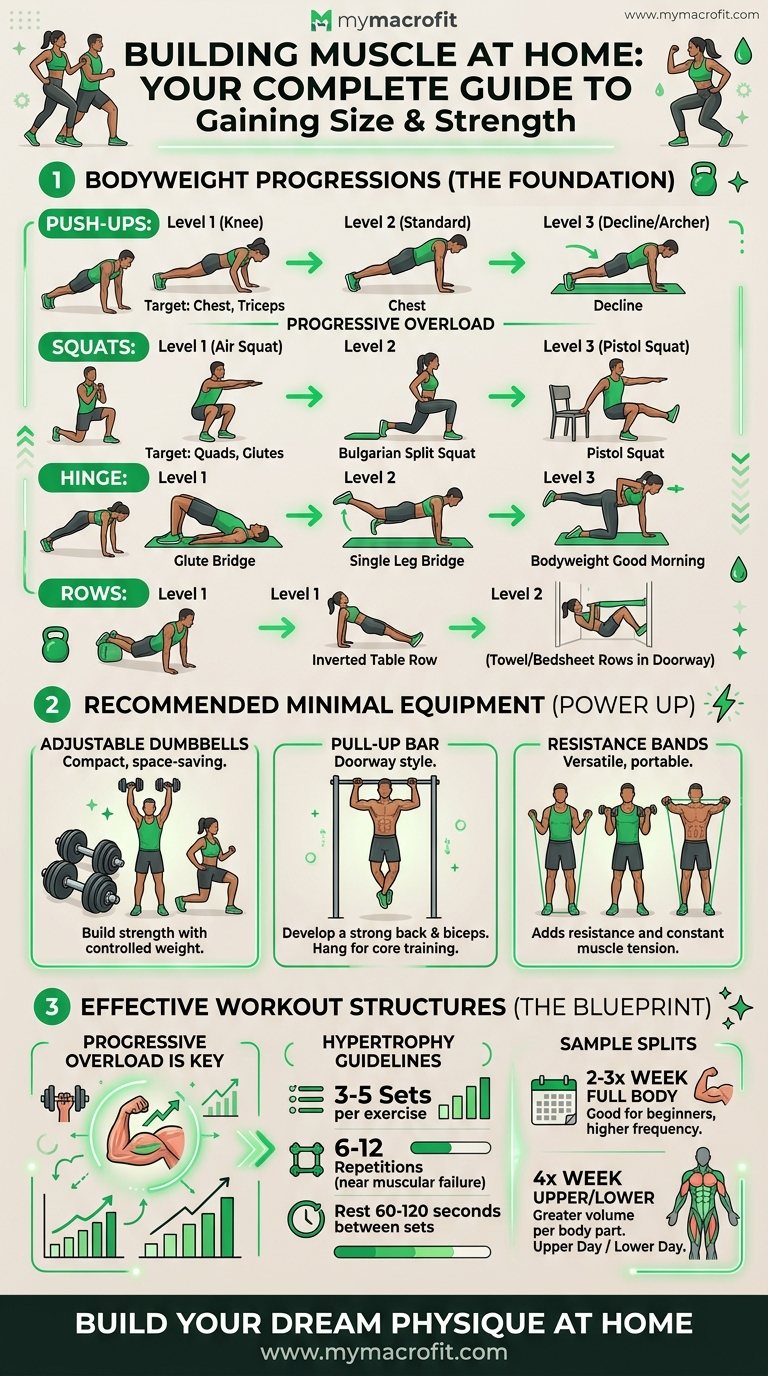
With bodyweight only: Building muscle, particularly as a beginner. Bodyweight training produces real muscle gains for untrained individuals. Limitations appear as strength increases and exercises become insufficiently challenging.
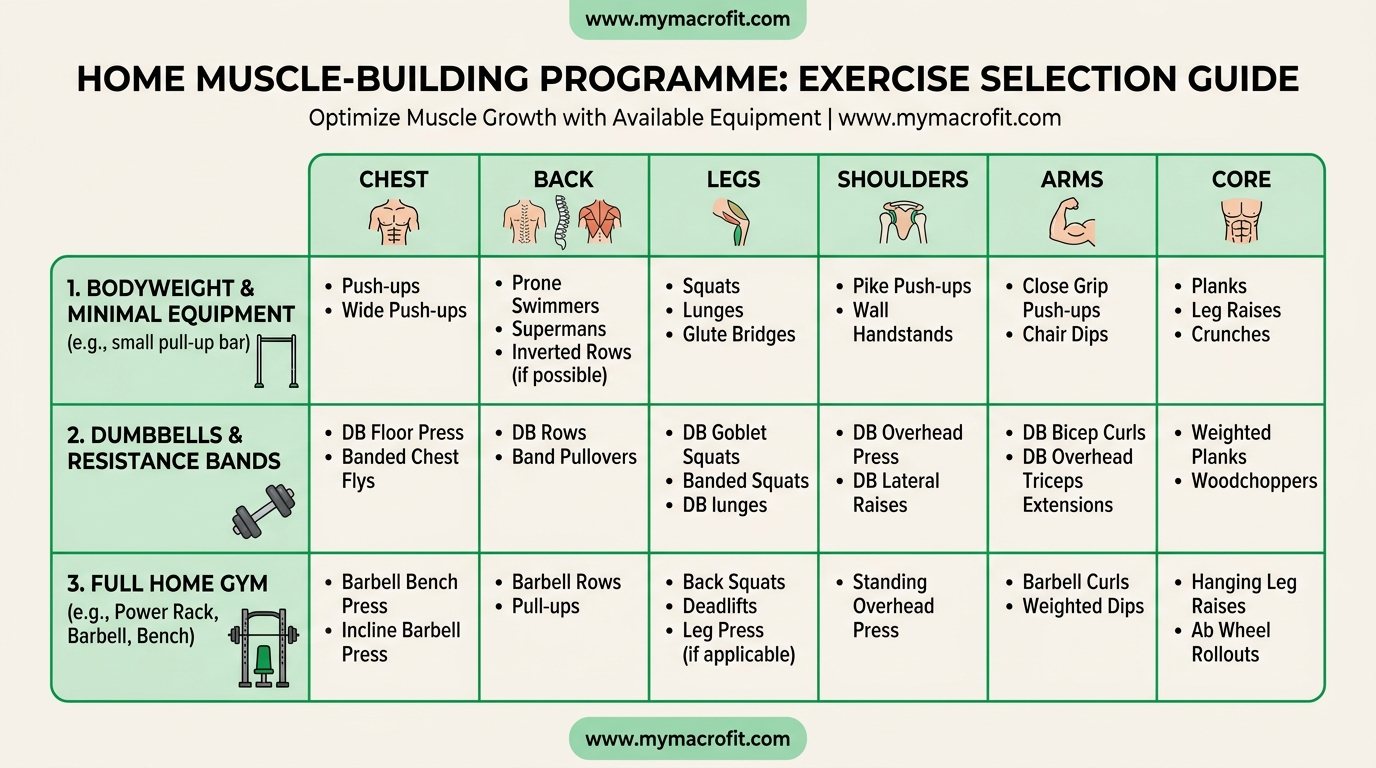
With minimal equipment (dumbbells + pull-up bar): A comprehensive muscle-building programme that covers all major muscle groups effectively. The gym-alternative for most people.
With dumbbells + resistance bands + pull-up bar + adjustable bench: A very complete home setup that limits only the heaviest compound barbell work.
Bodyweight Training: What Works and What Doesn't
Highly Effective Bodyweight Exercises
Push (chest, shoulders, triceps):
- Push-ups (floor → decline → weighted → one-arm progressions)
- Pike push-ups (shoulder emphasis)
- Tricep dips (between chairs or floor)
- Handstand push-up progressions (advanced)
Pull (back, biceps):
- Pull-ups (door bar essential)
- Chin-ups (more bicep involvement)
- Australian rows / inverted rows (under a table)
- Single-arm rows (with a dumbbell or bag)
Lower body:
- Bodyweight squats → jump squats → pistol squat progressions
- Single-leg Romanian deadlifts (bodyweight → dumbbell)
- Bulgarian split squats (foot on chair)
- Hip thrusts (shoulder on sofa)
- Step-ups (on a sturdy box or step)
- Nordic hamstring curls (feet under sofa)
Core:
- Plank variations
- Dead bugs
- Ab wheel (if available)
- L-sits
The Progressive Overload Challenge With Bodyweight
The primary limitation of pure bodyweight training: once you can do 15+ push-ups easily, you need a harder variation, not just more reps. This requires learning more complex movement patterns that have a steeper technique learning curve than simply adding plates to a barbell.
Bodyweight progression systems:
- Push-up → diamond push-up → archer push-up → one-arm push-up
- Pull-up (assisted) → pull-up → weighted pull-up → one-arm pull-up
- Squat → Bulgarian split squat → pistol squat
The Recommended Minimal Equipment Setup
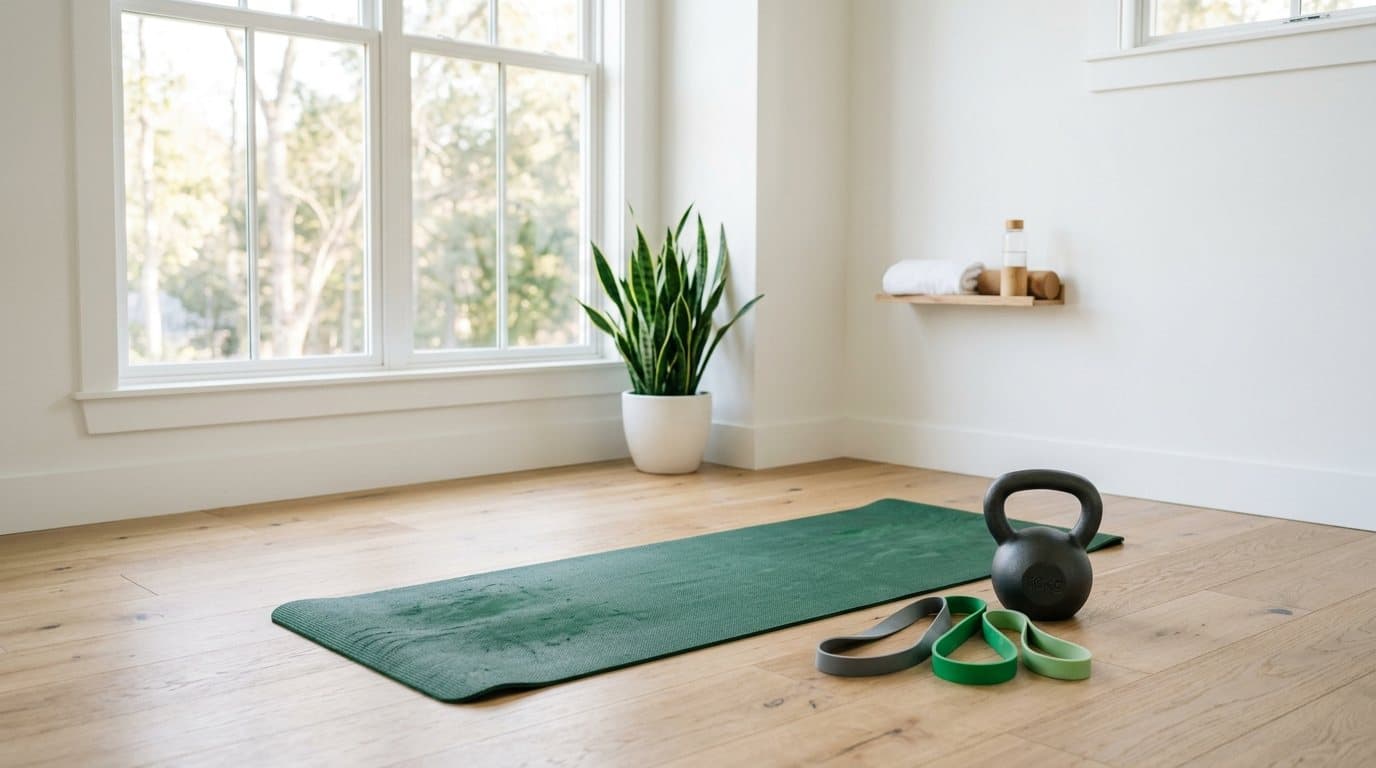
Priority 1: Adjustable dumbbells (5-25kg range)
A single set of adjustable dumbbells (or multiple fixed pairs) opens the entire range of pressing, pulling, hinging, and isolation exercises. The most impactful purchase for home training.
Exercises unlocked: dumbbell bench press, row, Romanian deadlift, shoulder press, lateral raise, curl, lunge, Bulgarian split squat, hip thrust, tricep exercises.
Priority 2: Pull-up bar (door-mounted)
£20-30. Essential for back and bicep development. The most efficient investment for home training.
Exercises unlocked: all pull-up and chin-up variations, hanging core work.
Priority 3: Resistance bands
Versatile, inexpensive. Add accommodating resistance to bodyweight exercises, substitute for cable exercises, add resistance to bodyweight squats, provide assisted pull-up training.
Optional but useful: Adjustable bench, dip bars, ab wheel, gymnastic rings (for intermediate/advanced).
A 3-Day Home Dumbbell Programme
Session A (upper body push/pull):
- Dumbbell bench press (floor or bench): 4×8-12
- Pull-ups or dumbbell rows: 4×8-12
- Dumbbell shoulder press: 3×10-12
- Dumbbell lateral raise: 3×12-15
- Tricep overhead extension: 3×12
- Bicep curl: 3×12
Session B (lower body):
- Goblet squat (dumbbell): 4×8-12
- Romanian deadlift (dumbbells): 4×8-12
- Bulgarian split squat (rear foot on sofa): 3×10 each leg
- Hip thrust (shoulders on sofa, dumbbell on hips): 4×12-15
- Nordic hamstring curl (feet under sofa): 3×6-10
- Calf raise: 4×15-20
Session C (full body + emphasis):
- Pull-ups (weighted with backpack): 4×6-10
- Push-up variation (decline or weighted): 4×10-15
- Single-leg Romanian deadlift: 3×10 each
- Dumbbell row: 4×10-12
- Lateral raise: 3×15
- Face pull with band: 3×15
- Core work: 3 exercises × 30-45 sec
Rotation: A/B/C weekly, 3 days with rest between.
Progressive overload: Increase dumbbell weight when completing all sets at the top of the rep range. When dumbbells max out, increase reps, sets, or use harder exercise variations.
Nutrition Matters Equally at Home
The muscle-building nutrition requirements are identical whether training at home or in a gym:
Protein: 2g/kg bodyweight (use our Protein Calculator for your target)
Calories: Maintenance for body recomposition (beginners) or slight surplus (100-200 kcal) for muscle gain focus
Timing: Protein meal within 2-3 hours of training sessions
The Bottom Line
You can build meaningful muscle at home with minimal equipment. The key requirements are the same as in any training environment: progressive overload (increasing challenge over time), adequate protein (2g/kg), and consistency over months.
A pull-up bar and a set of dumbbells covering 5-25kg is the most practical and cost-effective home training setup for most people. Beyond this basic setup, the return on additional equipment investment diminishes quickly.
Save & share on Pinterest
Click any card to pin it — or share with someone who needs it.
Can You Build Muscle at Home Without a Gym?
The evidence on home workouts for muscle building, what's possible with bodyweight and minimal equip…
The evidence on home workouts for muscle building, what's possible with bodyweig…
Read the full guide: Can You Build Muscle at Home Without a Gym?
Try the free Protein Calculator
Can You Build Muscle at Home Without a Gym? — use our free calculators for instant personalised resu…
Pinterest opens in a new tab. You can edit the description before saving.
Ready to get your numbers?
Free calculator, instant results, no signup required.
Frequently Asked Questions
Can you really build muscle with bodyweight exercises?+
What is the minimum equipment needed to build muscle at home?+
What muscles are hardest to build at home?+
How do I keep progressing at home when exercises get easy?+
Is it harder to build muscle at home than in a gym?+
About the Author
I'm a kinesiologist and personal trainer. I've spent eight years helping women lose fat and get stronger without handing their whole life over to a diet.
View full profile →