
Deload Week: What It Is, When to Take One, and How to Do It
Kinesiotherapist · Pilates Coach
Deload weeks are one of the most underused tools in strength training, and as someone who works with people's recovery for a living, that always makes me wince a little. Most people either do not know they exist or refuse to take them, terrified of losing progress. It is the opposite. A well-timed deload reliably gives you better long-term progress than grinding hard every single week. Your body is your only investment, and a deload is you protecting it.
Why fatigue hides your fitness
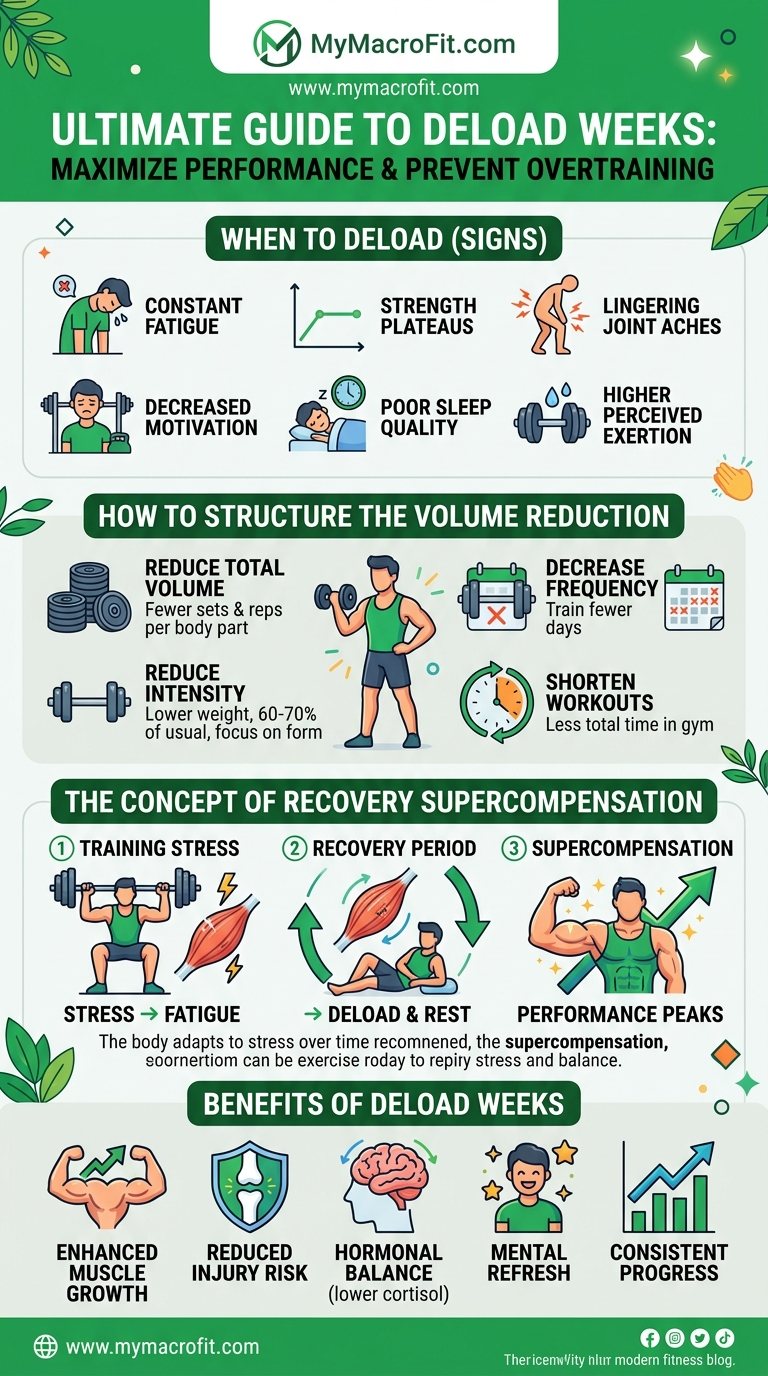
When you train hard week after week, fatigue quietly builds up in several places at once. Your muscles and connective tissue never quite finish repairing between sessions. Your nervous system, the thing that fires your muscles, gets tired and a little less efficient. Your stress hormones creep up. And mentally, the whole thing starts to feel heavier than it should.
Here is the key idea. Your fitness is still climbing underneath all of this, but the fatigue is climbing too, and fatigue masks fitness. You are genuinely more capable than your performance is showing, because the tiredness is sitting on top of it and holding it down.
A deload lets that fatigue drain away faster than your fitness fades. When you come back to full training, the fitness that was hidden suddenly shows itself, which is why people so often say they feel stronger after a deload than before it.
How to structure a deload week
There is more than one way to do it. Pick the one that fits where you are.
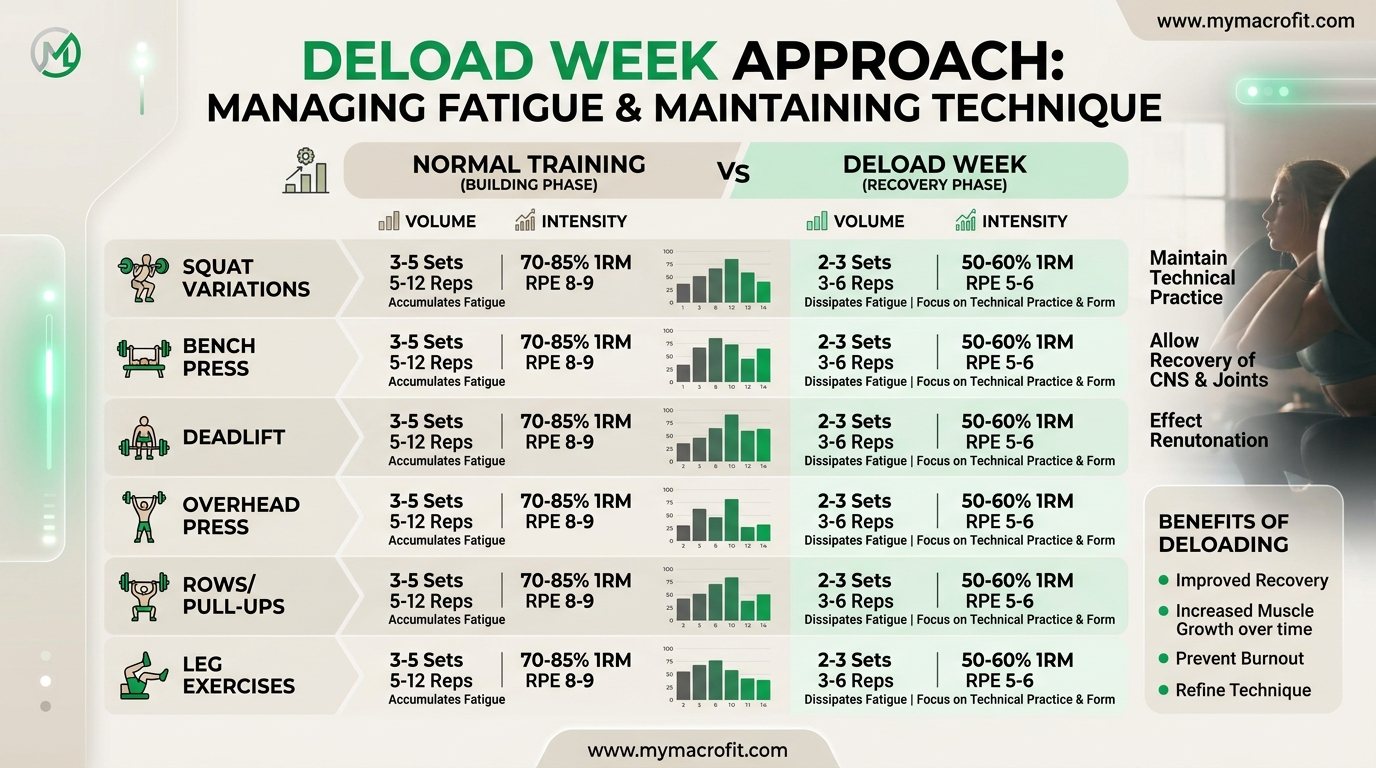
Option 1, drop your volume (my usual recommendation). Keep the same exercises and the same weights, but cut your number of sets by roughly half.
- Normal: 4 sets of 8 squats. Deload: 2 sets of 8.
- Normal: 4 sets of 10 bench. Deload: 2 sets of 10.
Option 2, drop your weights. Keep the same sets and reps, but bring the weight down to around 50 to 60% of your usual working load.
- Normal: 4 sets of 6 at 100kg. Deload: 4 sets of 6 at 60kg.
Option 3, drop both for a deeper reset, useful if you are quite run down.
- Normal: 4 sets of 6 at 100kg. Deload: 2 to 3 sets of 6 at 60 to 70kg.
Option 4, a full rest week. Complete rest for seven days. This is not a typical deload, it is what you reach for after illness, injury, or genuine burnout, when your body truly needs to stop.
For most people, dropping the volume is the kindest and most practical choice. You keep practising your technique and your movement patterns while the fatigue clears.
What to do during the week
Training: shorter sessions, fewer sets, same movements. Use the lighter loads to polish your technique rather than chase anything.
Eating: keep your protein up, because your body is still repairing and needs the building blocks. You can ease your calories down slightly if you are barely training, but do not slash them.
Sleep: lean into it. This is the week to get more, not less. Recovery does its best work while you sleep.
Mobility: a deload is the perfect window for the mobility and gentle movement work that always gets skipped when you are training hard, the kind I cover in the posture and pain-free movement guide.
Signs your body is asking for one
Listen for these. In your performance: strength sliding for two weeks or more, reps that used to feel easy now feeling hard, technique falling apart with no change in weight. In your recovery: a resting heart rate sitting higher than normal for a few days, soreness dragging on for four days when it used to be two, joints aching during or after training. And in your head: dreading training rather than looking forward to it, motivation gone, a shorter temper that tracks with your training stress.
If three or more of these are true, take a deload now, wherever you happen to be in your programme. Your body has stopped asking politely.
Plan them, don't wait for them
You can take deloads two ways. Planned ones go into your programme every 4 to 8 weeks whether or not you feel you need them, and this is the version I prefer, because you head off the fatigue before it becomes a problem. Reactive ones are taken once the warning signs are undeniable. They work, but by then you have let things build up further than ideal.
For most people, plan a deload every 5 to 6 weeks of consistent training. It keeps you steady and strong rather than lurching between feeling great and feeling wrecked.
A note for beginners
If you are in your first three or four months of training, you rarely need a formal deload. Your recovery is keeping up with the fairly modest load, and your body is still busy learning the movements rather than digging itself into a deep hole. The exception is if you have thrown yourself into very high volume or heavy loading quickly, in which case the same warning signs apply to you as anyone else.
How I'd leave it with you
A deload week is an investment in your progress, not an admission of weakness. Planned every 5 to 6 weeks, it lets the fatigue clear without costing you any real fitness, and it usually hands you a little jump in performance when you return. Drop your volume or your weights to around half, keep your protein up, sleep more, and come back genuinely recovered. Your training will thank you, and so will your joints. Rest is not the opposite of progress, it is part of it, which is why I am just as protective of your rest days.
Save & share on Pinterest
Click any card to pin it — or share with someone who needs it.
Deload Week: What It Is, When to Take One, and How to Do It
The purpose of deload weeks in a training programme, when they're needed, how to structure them, and…
The purpose of deload weeks in a training programme, when they're needed, how to…
Read the full guide: Deload Week: What It Is, When to Take One, and How to Do It
Free fitness tools
Deload Week: What It Is, When to Take One, and How to Do It — use our free calculators for instant p…
Pinterest opens in a new tab. You can edit the description before saving.
Frequently Asked Questions
What is a deload week?+
When should you take a deload week?+
Will I lose muscle or strength during a deload week?+
How exactly should I structure a deload week?+
Should beginners take deload weeks?+
What is the difference between a deload and a rest week?+
About the Author
I'm a kinesiotherapist and Pilates coach. I help people move well and get strong without breaking down, from fixing a stiff back to building real strength using nothing but their own bodyweight.
View full profile →