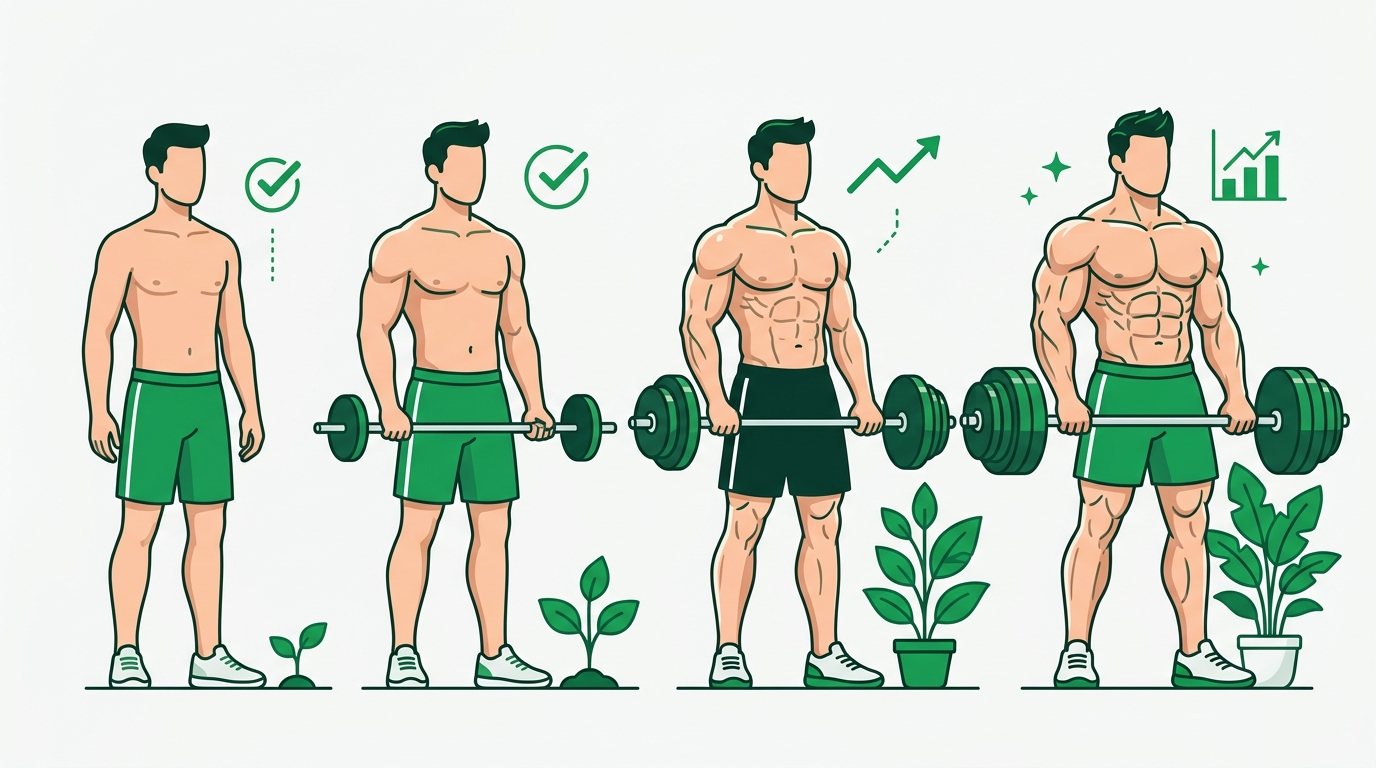
How Creatine Builds Muscle: The Science Explained Simply

CN · Metabolic Health Coach
Creatine is the most thoroughly researched and consistently effective supplement in sports nutrition, with over 500 peer-reviewed studies. Despite this, most users take it without understanding why it works. The mechanism is elegant and worth knowing.
The Energy Systems Primer
To understand creatine's mechanism, you need to understand how muscles generate energy during high-intensity exercise.
Your body uses three energy systems for different exercise durations:
Phosphocreatine (PCr) system (0-10 seconds): Fastest energy system. ATP is regenerated from phosphocreatine. Powers maximum effort activities, heavy lifting, sprinting.
Glycolytic system (10 seconds-2 minutes): Glucose is broken down to generate ATP. Powers moderate-to-high intensity exercise.
Aerobic system (2+ minutes): Oxygen-dependent metabolism. Powers longer duration, lower intensity exercise.
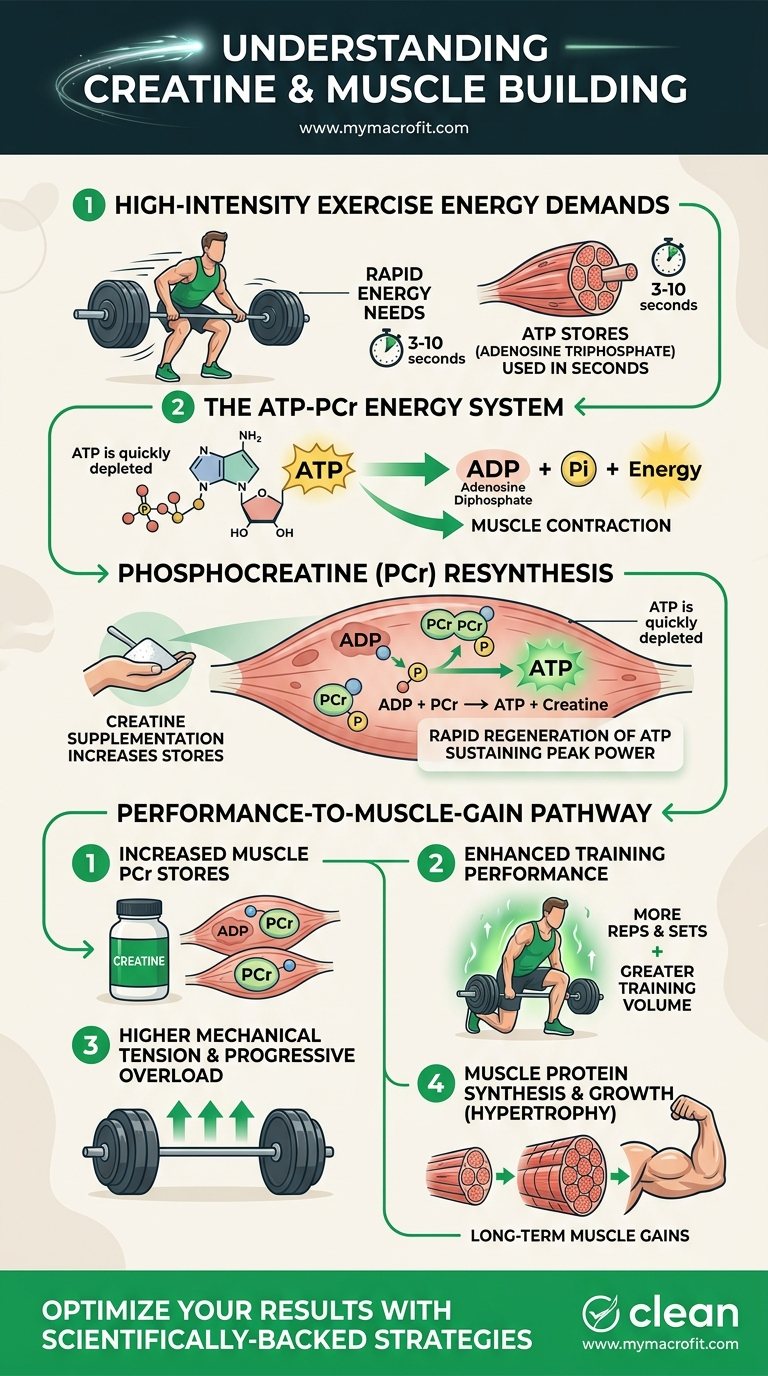
For strength training, the relevant system: The PCr system is the primary energy source for maximum effort sets (1-10 reps). When you're lifting heavy, ATP is depleted in seconds. Phosphocreatine is the immediate reserve.
The Creatine Mechanism
Step 1: ATP depletion
During a heavy squat or bench press set, muscle cells consume ATP at a rate that exceeds aerobic synthesis. Within 3-5 seconds of maximum effort, available ATP is largely depleted.
Step 2: Phosphocreatine donation
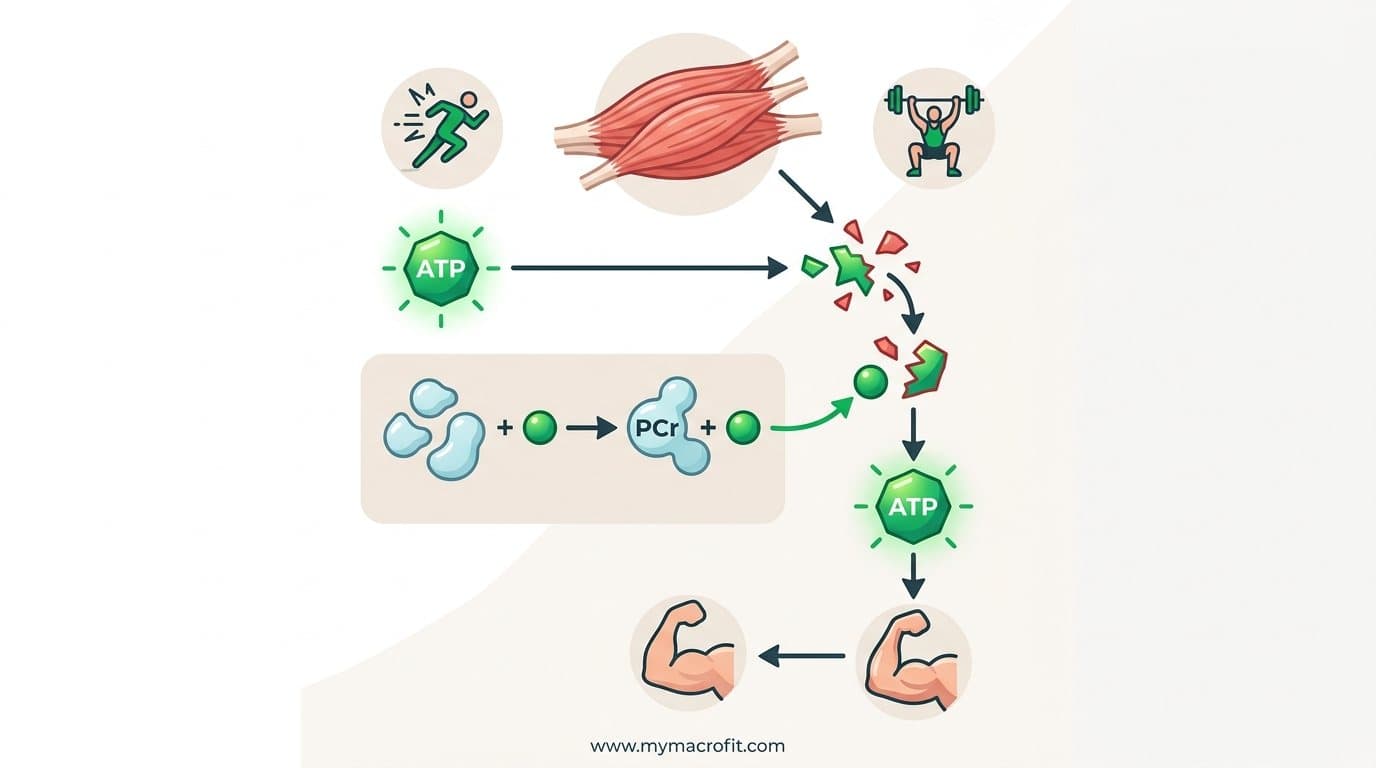
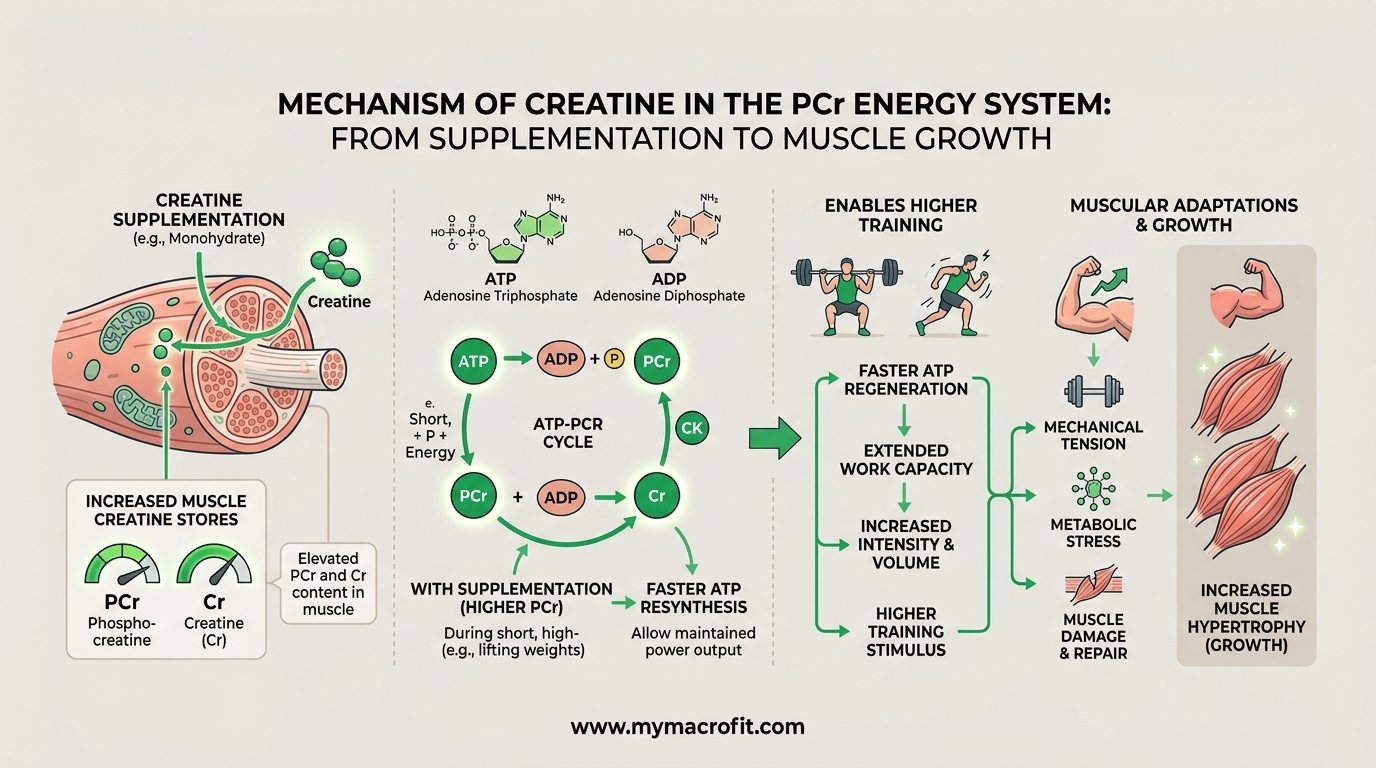
Phosphocreatine (PCr) stored in muscle cells transfers a phosphate group to ADP, regenerating ATP:
PCr + ADP → Creatine + ATP
This reaction is extremely rapid, it provides immediate ATP without oxygen. The phosphocreatine store is the "buffer" that extends maximum effort beyond the initial ATP supply.
Step 3: The limit
Natural phosphocreatine stores support approximately 8-12 seconds of maximum effort. Once depleted, the glycolytic system takes over, slower, less powerful, leading to the "fatigue" you feel during a hard set.
What creatine supplementation does: Increases muscle phosphocreatine stores by 20-40%. This means the PCr buffer is larger, you can maintain maximum effort (high force output) for longer before the glycolytic system must compensate.
Practical effect: You can complete 2-3 additional reps at your maximum weight, or complete the same reps at higher weight, before fatigue-induced force reduction occurs.
From Performance to Muscle: The Indirect Mechanism
More reps at higher weights = greater training volume = greater muscle protein synthesis stimulus.
The creatine → muscle gain pathway:
- Higher PCr stores
- More reps per set at working weight
- Greater training volume over time
- Greater cumulative hypertrophic stimulus
- More muscle growth
This is the primary pathway. A meta-analysis of creatine + resistance training studies shows average lean mass gains of 1.4-2kg more than resistance training alone over 4-12 weeks. This excess gain is largely explained by the training volume increase.
The Direct Cellular Effects
Research has identified several direct effects beyond performance:
Satellite cell activation: Creatine supplementation appears to increase satellite cell (muscle stem cell) activation in response to training. Satellite cells fuse with existing muscle fibres during repair, increasing fibre diameter.
IGF-1 signalling: Creatine may enhance IGF-1 (insulin-like growth factor 1) signalling in muscle tissue, a direct anabolic stimulus.
Myostatin reduction: Some studies show creatine reduces myostatin expression. Myostatin is a protein that limits muscle growth; reducing it may allow greater hypertrophic response.
Glycogen synthesis: Creatine improves glycogen synthesis efficiency, likely through enhanced insulin signalling. More glycogen in muscles supports training performance and recovery.
The Initial "Water Weight" Explanation
In the first 1-2 weeks of creatine supplementation, scale weight increases by 0.5-2kg. This is water, not fat.
Mechanism: Creatine is stored in muscle cells as phosphocreatine, creatine molecules are osmotically active. More creatine in muscle cells draws more water into the cell (intracellular water). This increases muscle cell volume and slightly increases total body water weight.
This intracellular water is stored inside muscle cells, it causes them to appear fuller and may actually enhance anabolic signalling (cell swelling is an anabolic signal). It's not subcutaneous water that causes a "bloated" appearance.
Who Responds Most
Vegetarians and vegans: Dietary creatine comes primarily from meat. Meat-free diets have very low creatine intake → lower baseline muscle stores → greatest supplementation response.
Beginners: Untrained muscles have lower creatine turnover and may have more room to increase stores.
High fast-twitch fibre individuals: The PCr system is the primary fuel for fast-twitch (type II) muscle fibres. People with a higher proportion of fast-twitch fibres (sprinters, powerlifters) may respond more strongly.
Non-responders (~25%): Already saturated natural stores from high dietary meat intake, or predominantly slow-twitch fibre composition. Supplementation produces minimal additional performance benefit.
Use our Creatine Calculator to determine your optimal dose based on bodyweight.
The Bottom Line
Creatine builds muscle by increasing phosphocreatine stores in muscle cells, extending maximum-effort exercise capacity, enabling greater training volume, and directly enhancing cellular anabolic signalling. It is the single best-evidenced non-protein supplement for muscle building.
3-5g/day of creatine monohydrate is the dose supported by the vast majority of research. No loading phase is required, stores reach saturation within 3-4 weeks at the maintenance dose.
Save & share on Pinterest
Click any card to pin it — or share with someone who needs it.
How Creatine Builds Muscle: The Science Explained Simply
The biochemical mechanism behind creatine's muscle-building effects, how it works in the ATP-PCr sys…
The biochemical mechanism behind creatine's muscle-building effects, how it work…
Read the full guide: How Creatine Builds Muscle: The Science Explained Simply
Try the free Creatine Calculator
How Creatine Builds Muscle: The Science Explained Simply — use our free calculators for instant pers…
Pinterest opens in a new tab. You can edit the description before saving.
Ready to get your numbers?
Free calculator, instant results, no signup required.
Frequently Asked Questions
What exactly does creatine do in the body?+
Does creatine directly build muscle, or just improve training?+
Does creatine work for everyone?+
Why does creatine cause weight gain, and is it fat?+
Does creatine help with anything besides muscle?+
How long does it take creatine to start working?+
About the Author

I'm a certified nutritionist and metabolic health coach. I went deep on keto and metabolism after reversing my own insulin resistance, and I'd rather give you the actual numbers than a hand-wave.
View full profile →