Bulking vs Cutting: Which Phase Should You Start With?

CN · Metabolic Health Coach
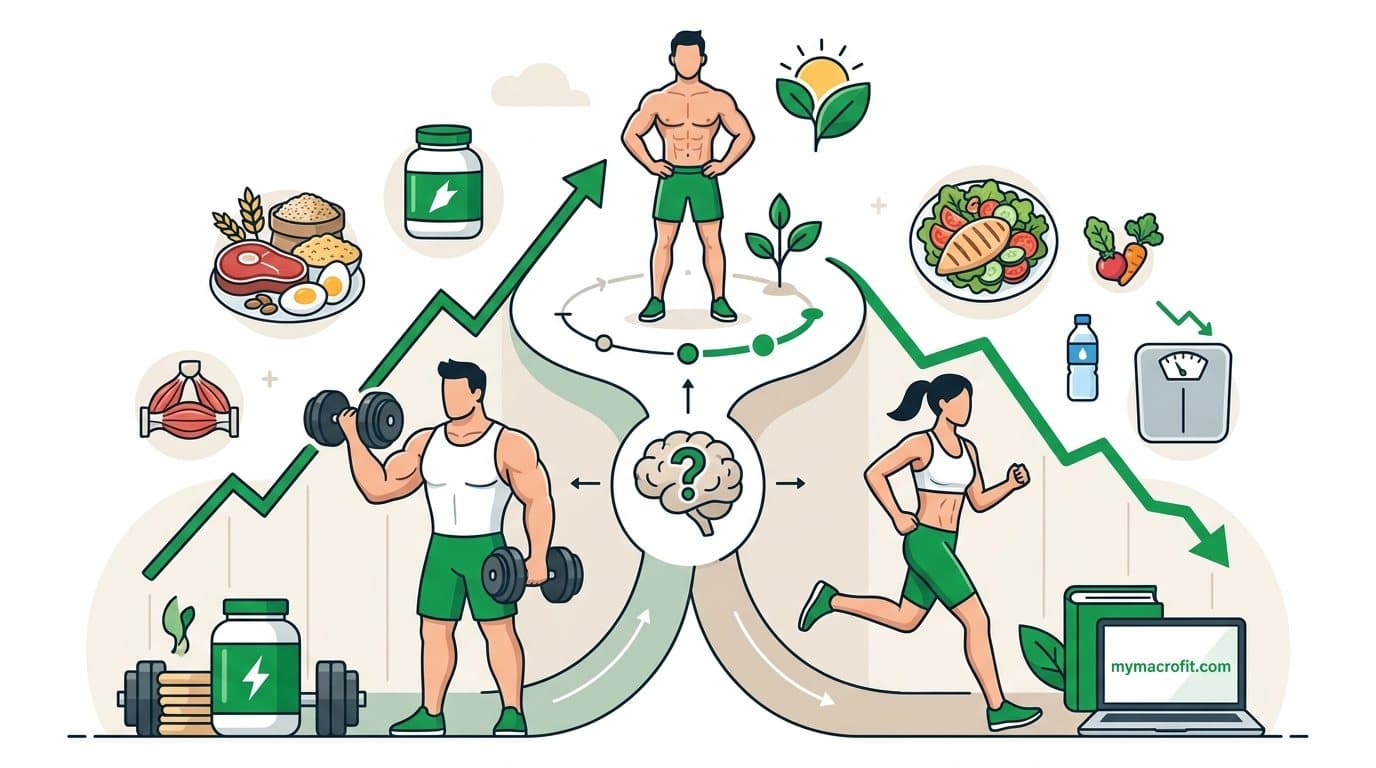
Bulking and cutting are the two primary phases of intentional body composition development. Understanding when to use each, and avoiding common errors in both, makes the difference between efficient long-term transformation and spinning wheels.
Definitions
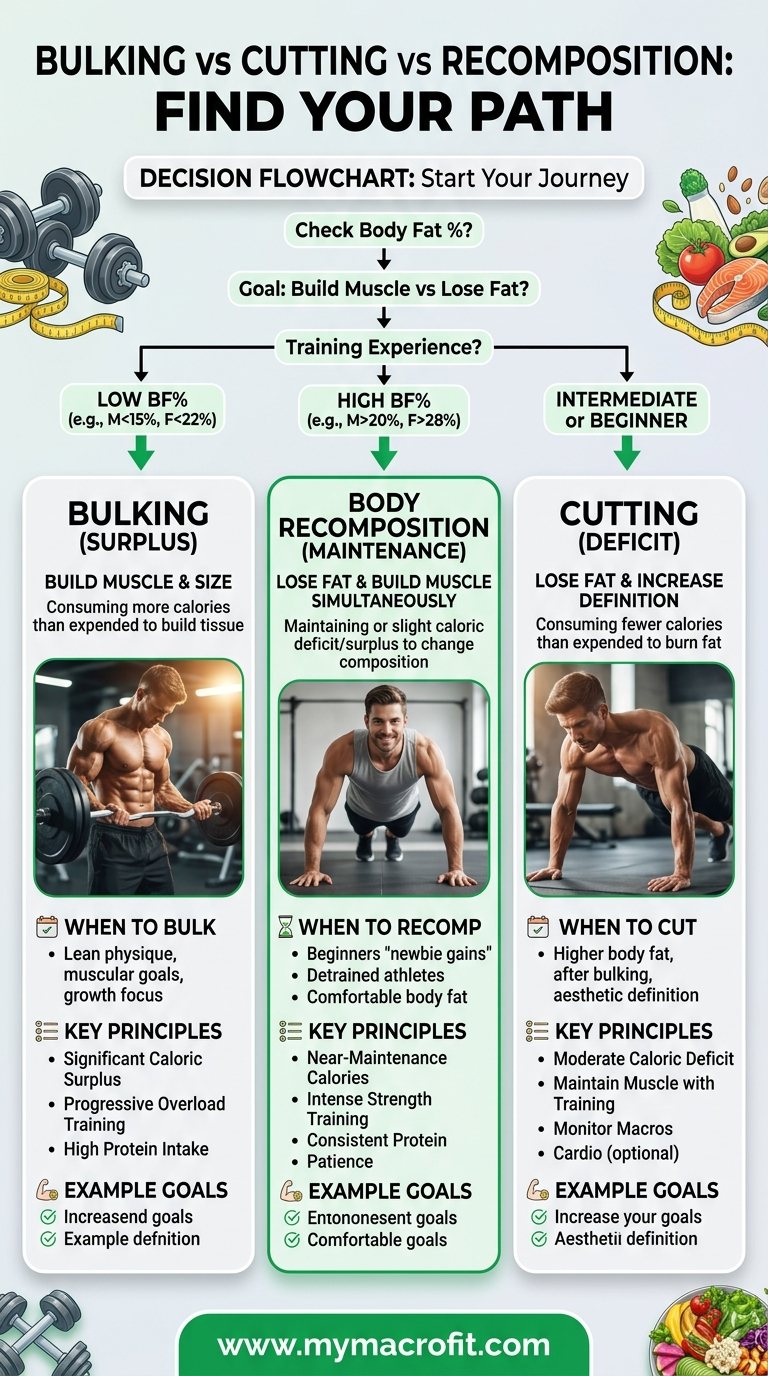
Bulking (calorie surplus phase): Eating above TDEE to support muscle growth. Creates a positive energy environment for muscle protein synthesis. Produces some fat gain alongside muscle gain.
Cutting (calorie deficit phase): Eating below TDEE to lose body fat. Produces fat loss with some muscle loss risk (mitigated by adequate protein and training).
Body recomposition: Training and eating at or near maintenance calories to simultaneously lose fat and gain muscle. Most effective for beginners and those returning after a break.
The Physiological Argument for Cycling
Why not just stay at maintenance forever?
Body recomposition is inefficient at intermediate and advanced levels. The rate of muscle gain at maintenance calories is significantly slower than at a surplus. After the beginner phase, building meaningful muscle requires a calorie surplus, the body needs more energy and amino acid substrate than maintenance provides.
Why not bulk indefinitely?
Beyond a certain body fat level, several factors impair muscle building:
- Higher body fat → elevated oestrogen (via aromatase in fat cells) → reduced testosterone
- Insulin resistance increases at higher body fat → reduced muscle protein synthesis signalling
- Cortisol elevation at high body fat → impairs anabolic environment
- Reduced insulin sensitivity → reduced glycogen storage
Bulking to very high body fat before cutting is inefficient, the extended cut required causes muscle loss and negates the time advantage.
The Decision Framework
For Beginners (Under 6 Months Training)
Recommendation: Body recomposition at maintenance (or slight deficit)
Beginners gain muscle efficiently at calorie maintenance because the newbie gains effect provides a powerful anabolic stimulus regardless of energy status. Fat loss and muscle gain can happen simultaneously.
Starting with an aggressive bulk as a beginner gains mostly fat, beginners don't have the training capacity to use a large surplus for muscle.
For Intermediates with Higher Body Fat (>20% men, >30% women)
Recommendation: Cut first
Higher body fat levels impair muscle building through the hormonal mechanisms above. Reducing body fat first creates a better hormonal environment for subsequent muscle building. The cut doesn't need to be extreme, reducing to 12-15% (men) or 20-25% (women) before bulking is sufficient.
For Intermediates with Healthy Body Fat
Recommendation: Lean bulk
If body fat is in the healthy range and you want to build muscle, a lean bulk (300-400 kcal surplus) produces the best muscle:fat gain ratio with manageable body fat accumulation.
For Advanced Trainees
Recommendation: Traditional bulk-cut cycles with longer phases
Advanced trainees require larger surpluses for meaningful muscle growth (the diminishing returns of training make the "response" to a given stimulus smaller, requiring more stimulus and more substrate). Phases of 4-6 months bulk followed by 8-12 week cuts are common.
Lean Bulk vs. Dirty Bulk
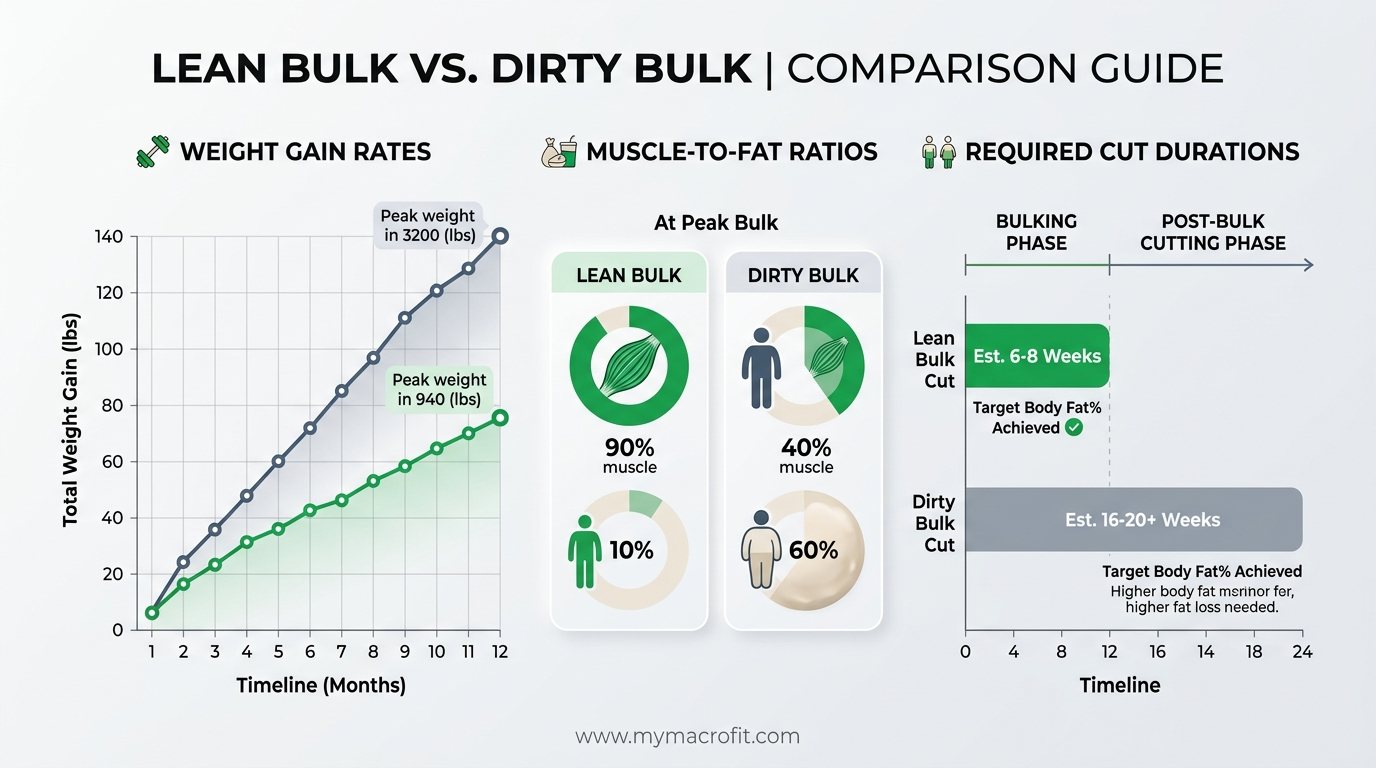
Lean bulk (+250-500 kcal/day):
- Weight gain: 0.2-0.4kg/week
- Muscle:fat ratio: 1:0.5-1:1 (approximately)
- Cut required afterward: 4-8 weeks
- Hormonal environment: remains positive throughout
Dirty bulk (+1,000+ kcal/day):
- Weight gain: 0.5-1kg/week (faster, but most is fat)
- Muscle:fat ratio: 1:2-3 (much more fat than muscle)
- Cut required afterward: 12-20 weeks (much longer)
- Hormonal environment: deteriorates as body fat rises
Time comparison (to add 5kg muscle):
Lean bulk: gain 5kg muscle + 4kg fat in 6 months → 8-week cut → net result after 8 months
Dirty bulk: gain 5kg muscle + 12kg fat in 4 months → 16-week cut → net result after 8 months
Same end result in approximately the same total time. The dirty bulk provides no real advantage, and produces a worse experience (being significantly fatter for months) without better final outcomes.
Body Fat Checkpoints: When to Switch
Switch from bulk to cut when:
- Men: body fat approaches 18-20%
- Women: body fat approaches 28-30%
- At these levels, the hormonal environment for muscle growth is beginning to deteriorate
Switch from cut to bulk when:
- Men: body fat reaches 10-13%
- Women: body fat reaches 18-22%
- These levels represent good conditions for muscle building without excessive leanness (which impairs hormones and performance)
The Practical Setup
Starting a lean bulk:
- Calculate TDEE using our Lean Bulk Calculator
- Add 300-400 kcal/day to establish surplus
- Set protein at 2-2.2g/kg
- Train 3-4x/week with progressive overload
- Monitor weekly weight average, target 0.2-0.4kg/week gain
- Adjust calories based on actual rate of gain
When starting a cut: See our calorie deficit guide for cut setup.
The Bottom Line
For beginners: body recomposition at maintenance is most efficient. For those with higher body fat: cut first to optimise the hormonal environment. For those ready to build: lean bulk at 300-400 kcal surplus, cycling to a cut when body fat gets high.
Dirty bulking is a false economy, the extended cut required negates the speed advantage, and the experience of being significantly fatter for an extended period is unnecessary.
Save & share on Pinterest
Click any card to pin it — or share with someone who needs it.
Bulking vs Cutting: Which Phase Should You Start With?
The difference between bulking and cutting phases, how to decide which to prioritise, and the eviden…
The difference between bulking and cutting phases, how to decide which to priori…
Read the full guide: Bulking vs Cutting: Which Phase Should You Start With?
Try the free Lean Bulk Calculator
Bulking vs Cutting: Which Phase Should You Start With? — use our free calculators for instant person…
Pinterest opens in a new tab. You can edit the description before saving.
Ready to get your numbers?
Free calculator, instant results, no signup required.
Frequently Asked Questions
Should I bulk or cut first?+
How long should a bulk last?+
Can you build muscle and lose fat at the same time?+
How do I know when to switch from bulking to cutting?+
Will I lose all my muscle if I cut?+
Is body recomposition slower than separate bulk and cut phases?+
About the Author

I'm a certified nutritionist and metabolic health coach. I went deep on keto and metabolism after reversing my own insulin resistance, and I'd rather give you the actual numbers than a hand-wave.
View full profile →