How Long Does It Take to Build Visible Muscle? (Realistic Timeline)

BSc Kinesiology · CPT
The most common frustration in muscle building: starting with enthusiasm, training consistently for 6 weeks, and feeling like you look exactly the same. The physiology explains both why this happens and how it resolves, and the timeline is almost always longer than people expect.
The Timeline in Phases
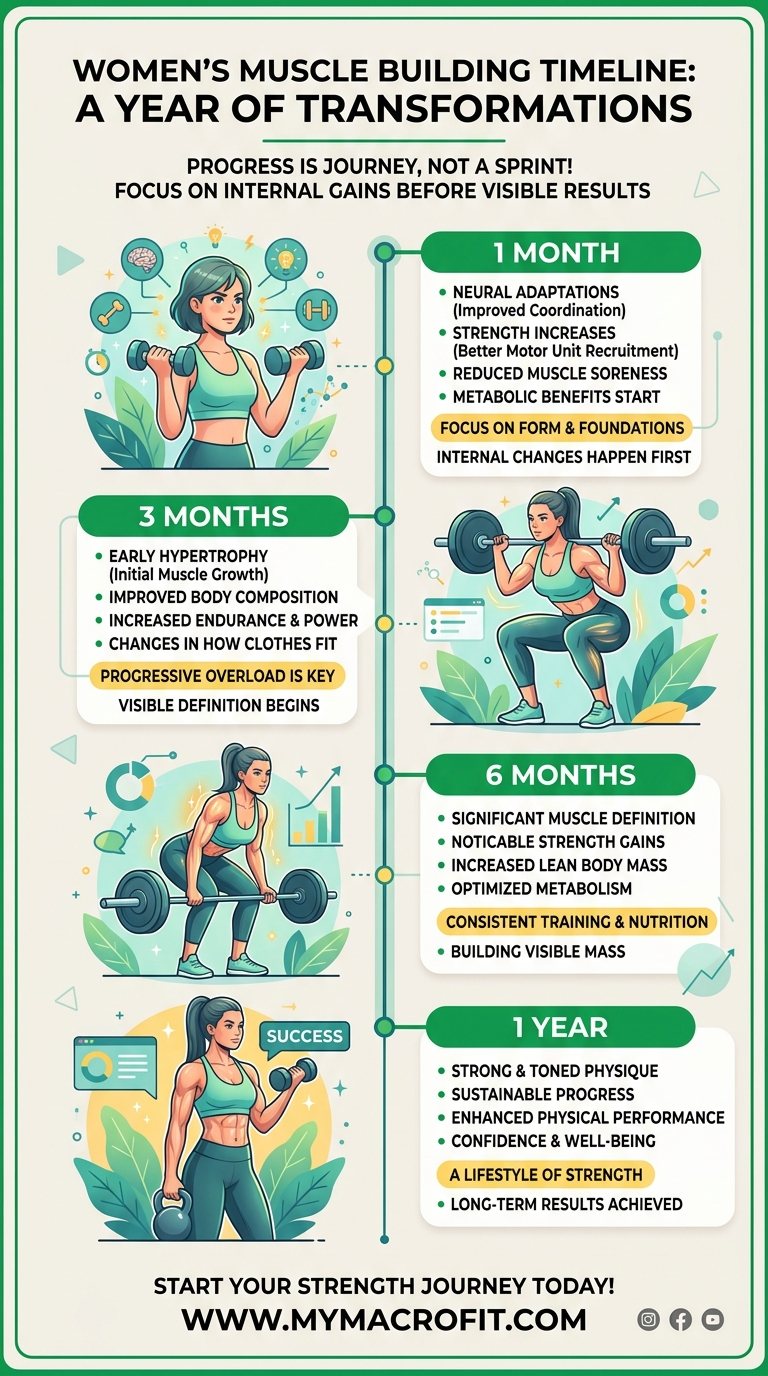
Month 1: Neurological Adaptation
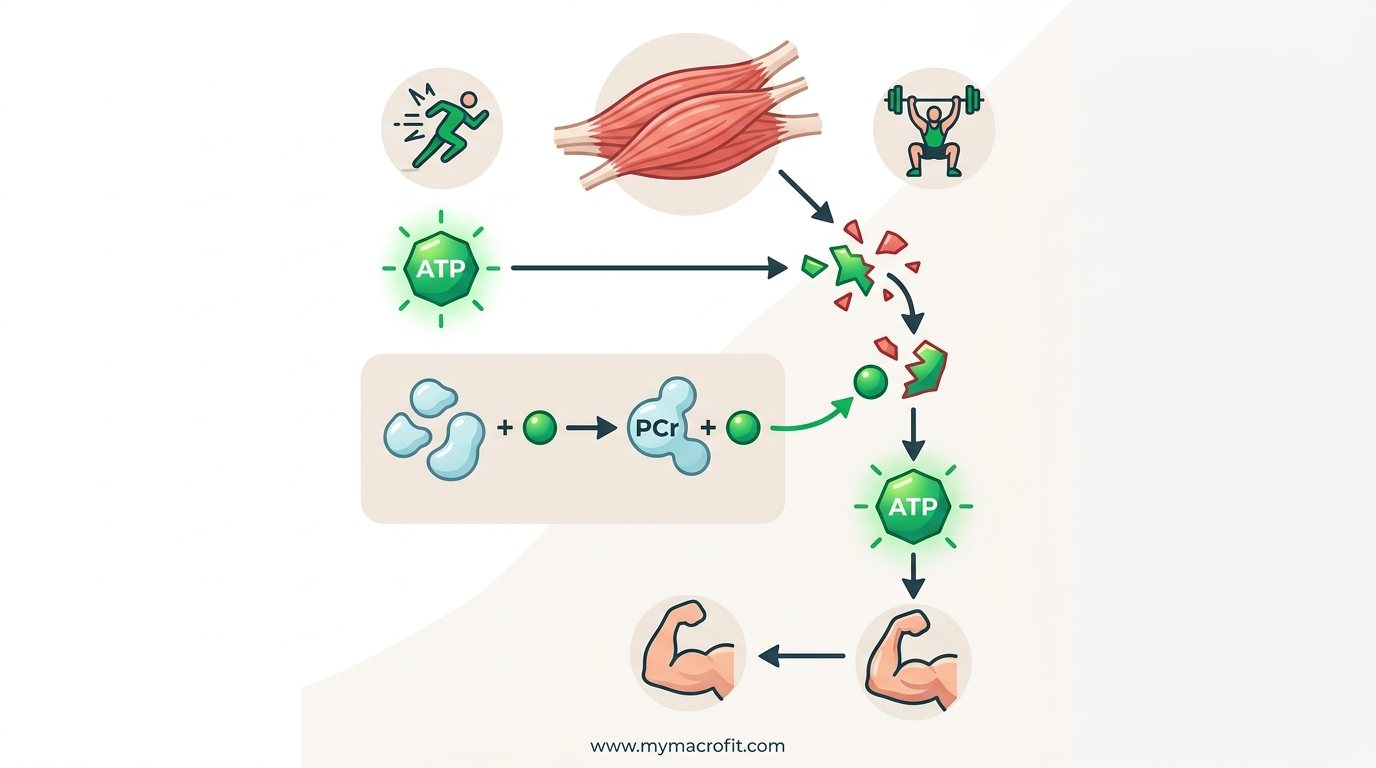
What's happening: The first month of resistance training primarily produces neurological adaptation, your nervous system learns to recruit more motor units, fire them more synchronously, and coordinate movement patterns more efficiently.
Visible changes: Minimal. You're not building significant muscle yet, you're getting better at using what you have.
On the inside: Strength is increasing rapidly (beginners often gain 20-40% strength in month 1). Muscle protein synthesis is elevated after every session. The repair-and-build cycle is beginning.
Scale weight: May increase 0.5-2kg from glycogen storage and water retention (if eating adequate carbohydrates for training). Not muscle yet.
The challenge: Month 1 feels like a lot of effort for little visible result. This phase is almost everyone's dropout risk point.
Months 2-3: Early Muscle Development
What's happening: Muscle fibre cross-sections are meaningfully increasing. Satellite cells have been recruited and are incorporating into muscle fibres. The repair process is adding net muscle protein.
Visible changes: Subtle, close observation in progress photos shows changes. Arms and shoulders typically show earliest visible development. Clothing may fit slightly differently.
Measurable changes: Arms, thighs, and chest measurements may increase 1-2cm. If dietary protein has been adequate: 1-3kg lean mass gained.
Strength: Continues improving rapidly, most people are using significantly heavier weights than week 1.
Months 4-6: The First Clear Transformation
What's happening: Enough muscle has accumulated that changes are clearly visible in photos and in the mirror. Body composition has improved meaningfully.
Visible changes: Clearly noticeable to you and others. Arms are visibly more defined. Chest, shoulders, and back noticeably developed. Waist looks smaller (both from fat loss if in a modest deficit, and from the developed surrounding musculature).
Measurable changes: 3-6kg lean mass gained (with optimal conditions). Strength numbers dramatically higher than start.
The key milestone: The 6-month before/after is where most people are genuinely impressed with their progress. The investment of consistency is paying off visibly.
Months 7-12: Substantial Development
What's happening: Muscle building rate begins slowing (intermediate phase). Progress continues but more slowly. Each additional kilogram of muscle requires more precise training and nutrition.
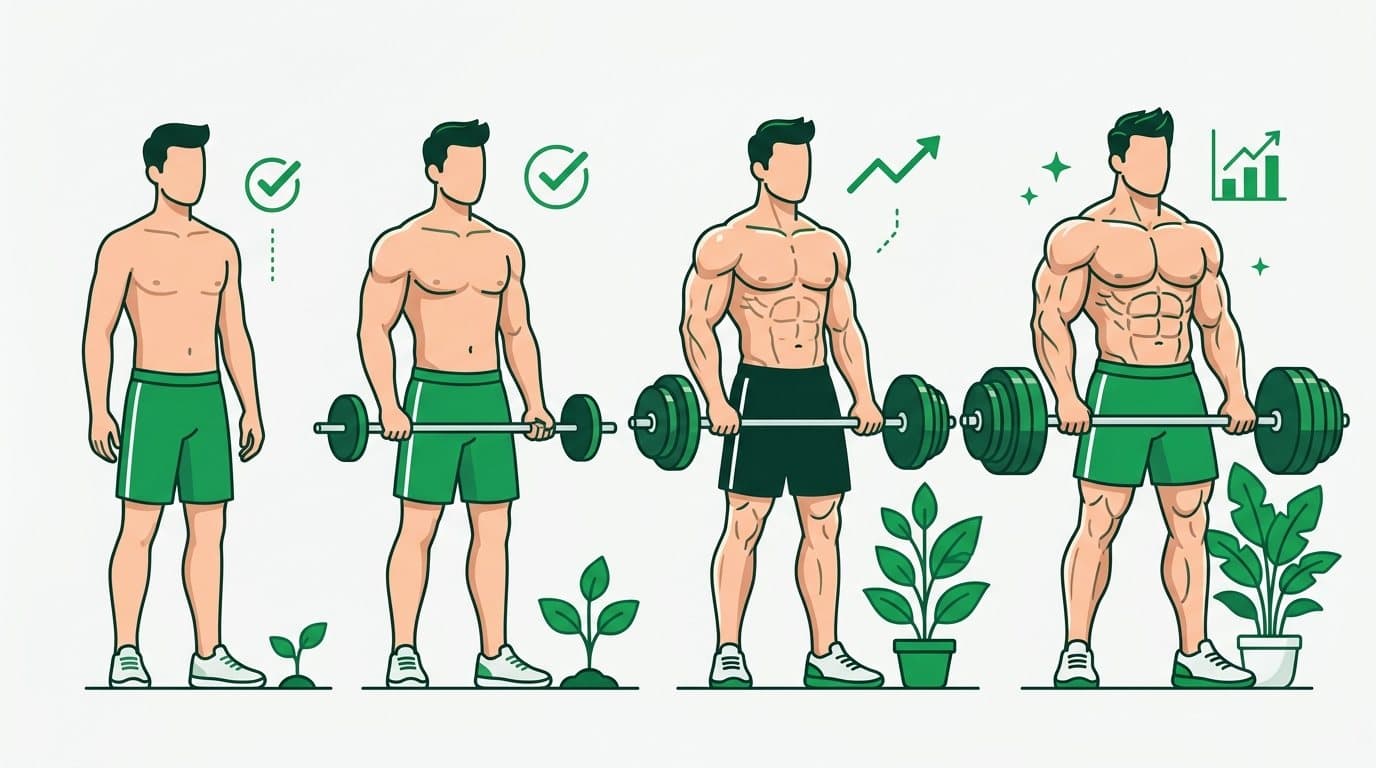
Visible changes: At 12 months of consistent training with adequate protein: a physique that's fundamentally different from the starting point. Visible muscle development in all trained areas.
Measurable gains: Intermediates gain 0.5-1kg lean mass per month. After 12 months: 6-12kg total lean mass gain under optimal conditions.
Definition: With body fat in the moderate range (15-20% for men, 22-27% for women), muscle definition, seeing shape and separation, becomes apparent.
Factors That Affect the Rate
Training specificity: Progressive overload-focused compound training produces faster muscle development than casual gym use or repetitive machine circuits.
Protein intake: 2g/kg bodyweight is the most important nutritional variable. Under 1g/kg: minimal muscle gain regardless of training. The difference between 1g/kg and 2g/kg protein in a beginner is large.
Calorie status: Slight surplus (100-200 kcal) maximises muscle gain rate. Aggressive deficit significantly impairs it.
Sleep: Under 6 hours/night meaningfully reduces GH output and MPS rate. Optimising sleep to 7-9 hours accelerates visible muscle development.
Genetics: Significant variation in muscle-building speed exists, influenced by testosterone levels, myostatin expression, muscle fibre type composition, and other genetic factors. Some people gain visibly faster than average; some slower.
Training history: Beginners gain fastest. Every additional year of training slows the rate of new muscle gain.
Why Progress Photos Are Essential
The muscle building process is gradual enough that day-to-day changes are invisible. The brain adapts to seeing the same reflection, changes that feel invisible when experienced daily become dramatic in a 3-month or 6-month comparison.
Rule: Take photos every 4 weeks, same conditions (morning, same angle, same lighting). Compare only to 4 weeks ago, not yesterday.
Realistic Maximums (Under Optimal Conditions)
| Experience level | Max muscle gain/month | Annually |
|---|---|---|
| Beginner (0-1 year) | 1-2kg | 8-15kg |
| Intermediate (1-3 years) | 0.5-1kg | 5-8kg |
| Advanced (3+ years) | 0.2-0.5kg | 2-4kg |
These are ceiling estimates for optimal conditions. Average gains are typically 50-70% of these values.
The Bottom Line
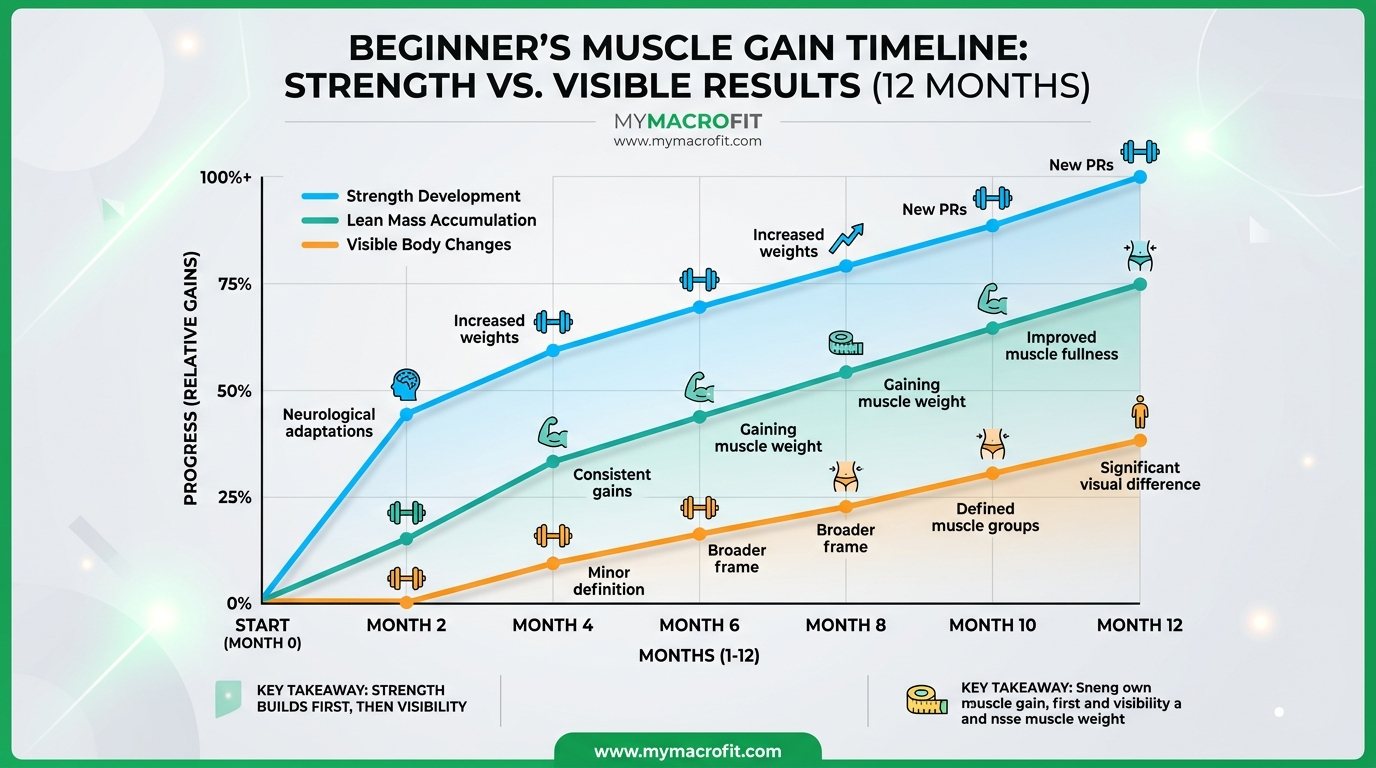
Visible muscle development requires 3-6 months of consistent training with adequate protein. Dramatic transformation (the before/after that looks unrecognisable) takes 6-12 months. The neurological adaptation of month 1 produces no visible change but builds the foundation.
The pattern is: rapid invisible progress early → gradual visible progress from month 2 → clear transformation by months 4-6 → continued meaningful development through year 1.
Save & share on Pinterest
Click any card to pin it — or share with someone who needs it.
How Long Does It Take to Build Visible Muscle? (Realistic Timeline)
A realistic timeline for building visible muscle, what to expect at 1 month, 3 months, 6 months, and…
A realistic timeline for building visible muscle, what to expect at 1 month, 3 m…
Read the full guide: How Long Does It Take to Build Visible Muscle? (Realistic Timeline)
Free fitness tools
How Long Does It Take to Build Visible Muscle? (Realistic Timeline) — use our free calculators for i…
Pinterest opens in a new tab. You can edit the description before saving.
Frequently Asked Questions
How long does it take to see muscle definition?+
How many kg of muscle can you gain per month?+
Why don't I look muscular even after months of training?+
Does muscle-building speed differ between men and women?+
Can you build muscle and lose fat at the same time?+
About the Author

I'm a kinesiologist and personal trainer. I've spent eight years helping women lose fat and get stronger without handing their whole life over to a diet.
View full profile →