Fibre and Weight Loss: How Much You Need and Why It Matters

RHC · Pre/Postnatal Fitness Specialist
Fibre is one of the most underused tools in fat loss nutrition. It's not a supplement, doesn't require counting, costs almost nothing, and has broad health benefits beyond weight management. Yet most UK adults consume barely 60% of the recommended daily amount.
Here's the mechanism behind fibre's fat loss benefits and the most practical ways to increase your intake.
How Fibre Supports Fat Loss
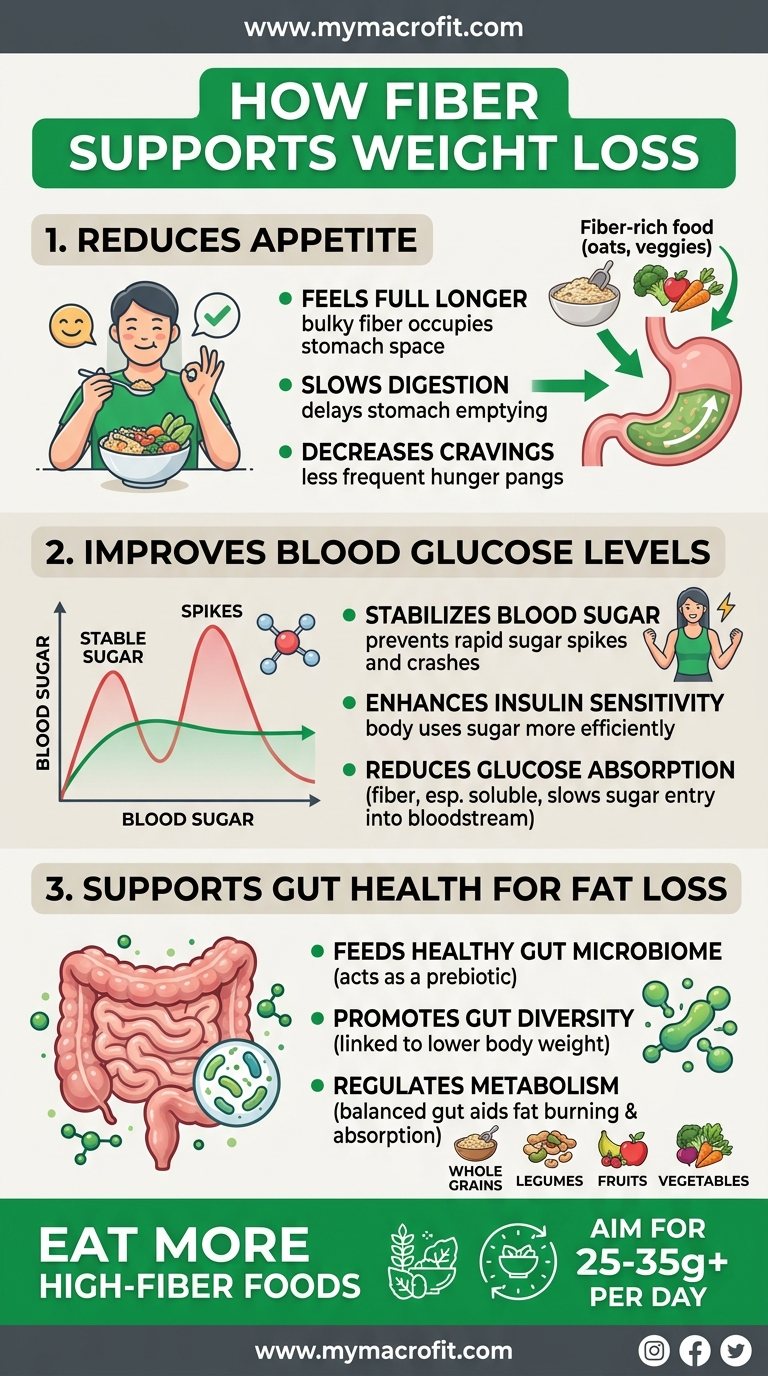
1. Physical Volume Without Calories
Fibre provides physical bulk in the stomach with very few calories. High-fibre foods have much lower calorie density than low-fibre equivalents:
- 100g oats: 66g carbs, 10g fibre, 380 kcal
- 100g white rice: 80g carbs, 0.4g fibre, 361 kcal
Per gram of carbohydrate, oats provide far more physical food with significant satiety benefits from their fibre content.
2. Slows Gastric Emptying
Soluble fibre (beta-glucan in oats, pectin in apples, inulin in onions) forms a gel in the stomach and small intestine that slows the passage of food. The practical effect: fullness lasts longer after a fibre-rich meal than after an equivalent calorie low-fibre meal.
3. Blood Glucose Regulation
Soluble fibre blunts the blood glucose response to carbohydrates. Instead of a sharp glucose spike and subsequent insulin surge (which promotes fat storage and can trigger reactive hunger), high-fibre meals produce a gradual, sustained glucose rise.
Consistently lower blood glucose fluctuations reduce:
- Insulin-driven fat storage
- Reactive hypoglycaemia (the energy crash that causes cravings 2 hours after high-sugar meals)
- Overall appetite through more stable energy levels
4. Short-Chain Fatty Acids (SCFA)
When gut bacteria ferment dietary fibre (primarily in the colon), they produce short-chain fatty acids, including butyrate, propionate, and acetate. These SCFAs:
- Signal the release of PYY and GLP-1 (gut satiety hormones)
- Directly reduce appetite
- Improve insulin sensitivity
- Support gut barrier integrity
This mechanism links fibre intake to appetite regulation through gut microbiome signalling, one of the most active areas of nutrition research.
Types of Fibre and Their Benefits
Soluble fibre (dissolves in water, forms gel):
- Beta-glucan (oats, barley), strongest evidence for cholesterol reduction and blood glucose
- Pectin (apples, citrus, berries), ferments to produce satiety-promoting SCFAs
- Inulin/FOS (chicory, garlic, onions, asparagus), prebiotic, feeds beneficial bacteria
Insoluble fibre (doesn't dissolve, adds bulk):
- Cellulose, hemi-cellulose (vegetables, wholegrains, bran), increases stool bulk, reduces transit time, physical satiety from volume
Both types are important. Most whole plant foods contain a mixture.
How Much Fibre for Weight Loss
UK recommendation: 30g/day for adults UK average: ~18g/day Fat loss target: 30g+ from whole food sources
Use our Fibre Intake Calculator to estimate your current intake and see how to close the gap.
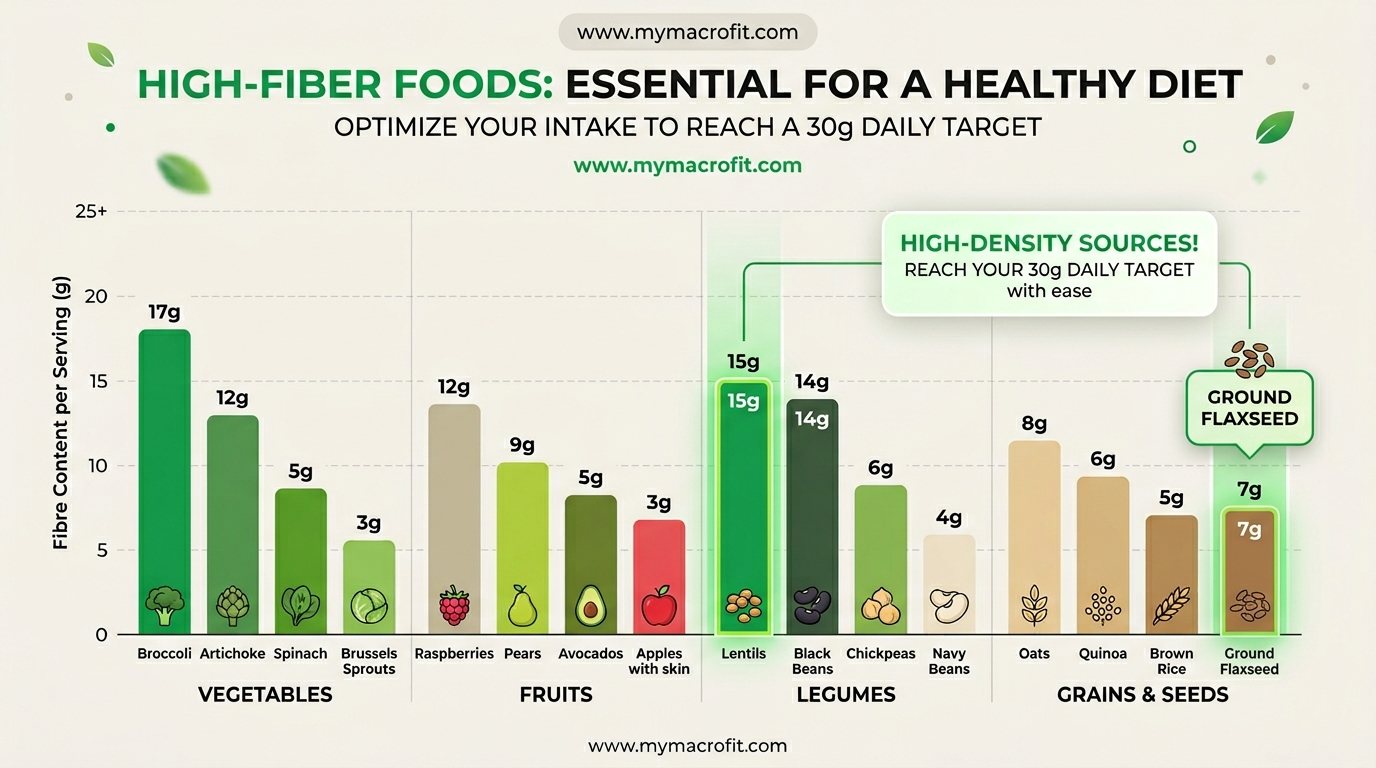
The Best High-Fibre Foods
| Food | Portion | Fibre |
|---|---|---|
| Lentils (cooked) | 200g | 8g |
| Black beans (cooked) | 180g | 10g |
| Chickpeas (cooked) | 180g | 8g |
| Oats (dry) | 40g | 4g |
| Avocado | 1 whole (170g) | 9g |
| Ground flaxseed | 2 tbsp (20g) | 5g |
| Pear | 1 medium (180g) | 6g |
| Broccoli | 200g | 6g |
| Apple (with skin) | 1 medium (180g) | 4g |
| Almonds | 30g | 3.5g |
| Sweet potato | 200g baked | 6g |
| Edamame | 150g | 8g |
Practical Ways to Reach 30g Daily
Breakfast (+8-10g):
- 40g oats porridge + 1 tbsp ground flaxseed = 7g
- Add berries or pear: +3-4g
Lunch (+8-10g):
- Large salad with chickpeas or lentils: 8-10g
- OR lentil soup: 10g
Dinner (+8-10g):
- 200g roasted broccoli + 180g beans or lentils as protein source: 14g
- OR mixed vegetable stir-fry with brown rice: 7-9g
Snacks (+2-5g):
- 1 apple + 30g almonds: 6g
- Greek yogurt + berries: 2-3g
Total: easily 30g+ without counting fibre specifically.
Introducing Fibre Gradually
If you're currently eating 10-15g fibre/day and move directly to 30g+, expect significant bloating, gas, and digestive discomfort for 1-3 weeks while gut bacteria adapt.
Gradual increase: Add 5g fibre per week until reaching 30g. This allows gut microbiome adjustment and reduces digestive discomfort significantly.
Drink more water: Insoluble fibre requires water to move through the digestive tract effectively. Increase water intake alongside fibre intake.
The Bottom Line
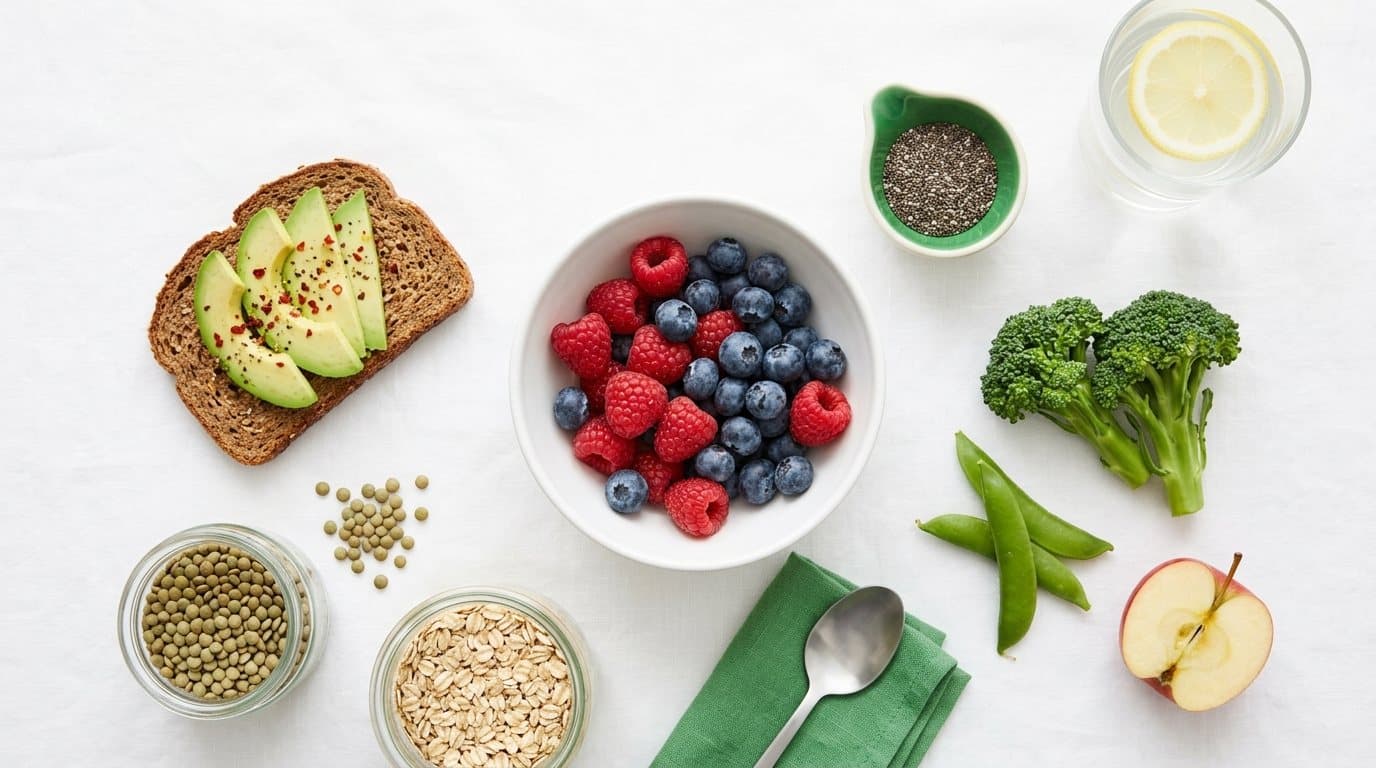
Fibre is one of the most impactful, underused fat loss tools. Simply increasing daily fibre intake to 30g from whole food sources, legumes, oats, vegetables, fruit, ground flaxseed, improves satiety, reduces calorie intake naturally, stabilises blood glucose, and supports the gut microbiome signalling that regulates appetite hormones.
Start by adding legumes at lunch and ground flaxseed to breakfast. Those two changes alone can add 10-14g of fibre, closing most of the typical gap between current intake and the 30g target.
Save & share on Pinterest
Click any card to pin it — or share with someone who needs it.
Fibre and Weight Loss: How Much You Need and Why It Matters
How dietary fibre supports fat loss, the mechanisms behind fibre's effect on satiety, blood glucose,…
How dietary fibre supports fat loss, the mechanisms behind fibre's effect on sat…
Read the full guide: Fibre and Weight Loss: How Much You Need and Why It Matters
Try the free Fibre Intake Calculator
Fibre and Weight Loss: How Much You Need and Why It Matters — use our free calculators for instant p…
Pinterest opens in a new tab. You can edit the description before saving.
Ready to get your numbers?
Free calculator, instant results, no signup required.
Frequently Asked Questions
How does fibre help with weight loss?+
How much fibre should I eat per day for weight loss?+
What is the best fibre supplement for weight loss?+
How do I increase fibre without bloating or discomfort?+
What are the easiest high-fibre foods to add to my day?+
About the Author

I'm a registered health coach and pre/postnatal specialist. I look at the whole person, your sleep, your stress, your hormones, because the number on the scale is only ever part of the story.
View full profile →