How Much Protein to Preserve Muscle in a Calorie Deficit

CN · Metabolic Health Coach
Losing weight is the goal, but losing muscle along with the fat is the hidden tax that wrecks your physique and slows your metabolism. The good news: muscle loss in a diet is largely preventable, and the single biggest lever is protein. Here's exactly how much you need to protect your muscle in a calorie deficit, why it works, and the two other factors that have to be in place.
Why a deficit threatens your muscle
When you eat below maintenance, your body makes up the energy shortfall from its own stores. You want that to come from fat, but without the right signals, some comes from breaking down muscle tissue for fuel. Lose muscle and you end up "skinny-fat," weaker, and with a lower metabolic rate that makes keeping the weight off harder. Preserving muscle is what makes the difference between just being lighter and actually looking and performing better.
The number: protein in a deficit
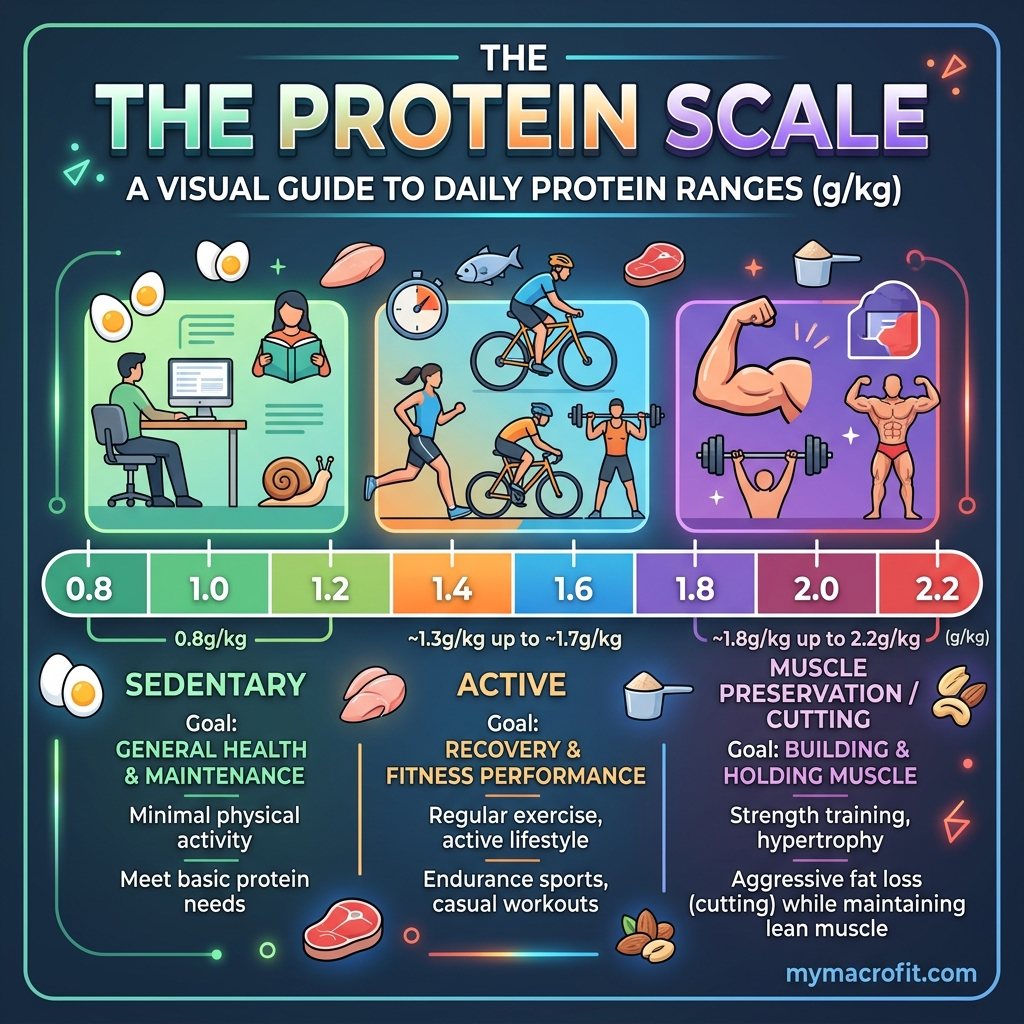
Protein needs rise when you're dieting, because protein is doing double duty, building blocks and muscle defence. The evidence-based target:
| Situation | Protein target |
|---|---|
| General maintenance | 1.6-1.8g per kg |
| Calorie deficit (cutting) | 2.0-2.4g per kg |
| Lean person, aggressive cut | Top of range (~2.4g/kg+) |
For an 80kg person cutting, that's roughly 160-190g per day. It feels like a lot, but it's the most protective thing you can do for your muscle. Find your exact number with the Protein Calculator.
Get your muscle-preserving protein target.
The free Protein Calculator sets the right daily number for cutting without losing muscle.
Calculate My Protein →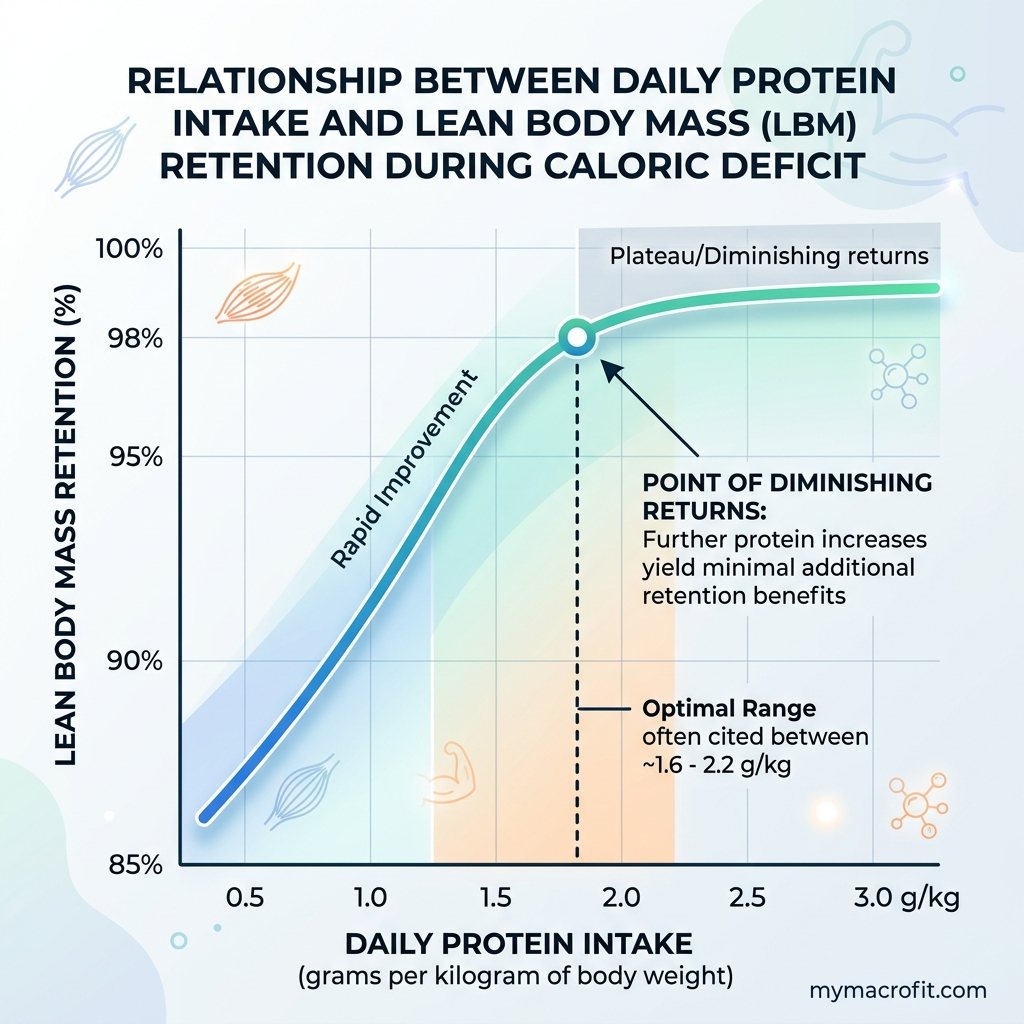
Protein isn't enough on its own
High protein is the foundation, but two other factors decide whether your muscle survives a cut:
1. Resistance training. Lifting weights is the signal that tells your body the muscle is needed, so don't break it down. Without training, even high protein only slows muscle loss. Keep lifting hard (and heavy) through your cut, see progressive overload.
2. A moderate deficit. The bigger the calorie shortfall, the harder muscle is to hold. A moderate deficit (15-25% below maintenance) with high protein preserves muscle far better than a crash diet. Set yours with the Calorie Deficit Calculator. Fast loss that strips muscle is a worse outcome than slower loss that keeps it.
Together, high protein + resistance training + moderate deficit, these three steer nearly all your weight loss toward fat.
What the research actually shows
This isn't broscience. A well-known study in resistance-trained men running an aggressive cut found that the group eating roughly 2.3-3.1g/kg held onto more lean mass than the group at lower protein, while still losing fat. The broader literature points the same way: in a deficit, higher protein plus lifting consistently shifts the ratio of weight lost toward fat and away from muscle.
The mechanism is simple once you see it. In a deficit, muscle protein breakdown ticks up as your body looks for fuel and amino acids. Flooding the system with dietary protein, spread across the day, keeps muscle protein synthesis high enough to offset that breakdown. Add the training signal and your body has both the reason and the raw material to keep the muscle. That's the entire physiological case for eating what feels like an absurd amount of chicken while cutting.
Two ways the same diet ends
To make it concrete, here's the same 12-week cut run two ways, identical calorie deficit, different supporting habits:
| Low protein, no lifting | High protein + lifting | |
|---|---|---|
| Weight lost | ~8kg | ~8kg |
| Roughly from fat | ~5kg | ~7.5kg |
| Roughly from muscle | ~3kg | ~0.5kg |
| End result | Lighter but soft, weaker | Leaner, defined, strength held |
Same number on the scale, completely different mirror. The scale can't tell the difference between these two people. Their physiques tell you everything. That gap is almost entirely protein and resistance training.
Lean people need more
There's a sliding scale: the leaner you are, the less fat your body has to pull from, so muscle becomes more vulnerable and protein needs climb toward the top of the range. Someone with a lot of fat to lose can sit nearer 2.0g/kg; a lean lifter finishing a cut should push toward 2.4g/kg (relative to lean mass). This is also central to body recomposition, where protein and training do the heavy lifting.
Protect the muscle, the rest follows
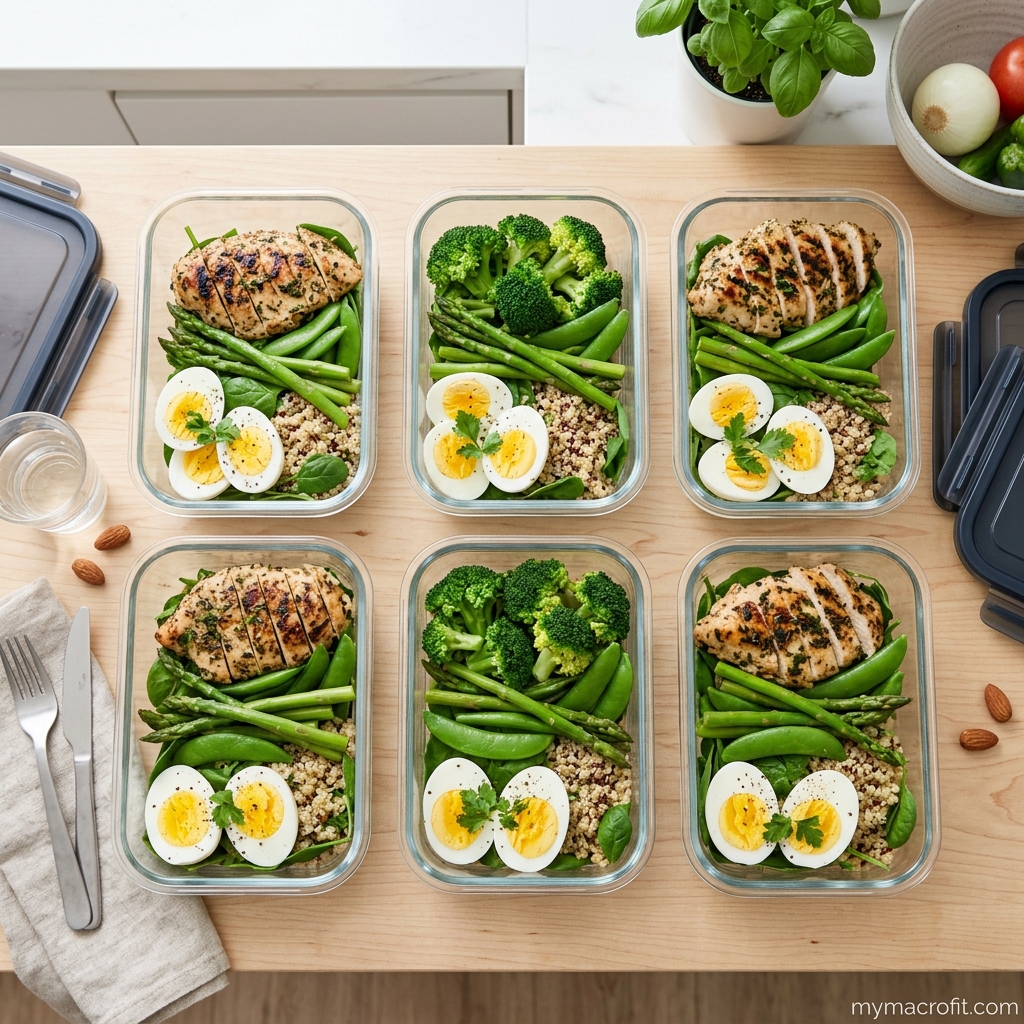
To keep your muscle while losing fat, raise protein to 2.0-2.4g per kg in a deficit, keep lifting, and keep the deficit moderate. That trio protects the muscle that gives you shape and keeps your metabolism humming, so what you lose is fat. Start by getting your number from the Protein Calculator.
If you remember one thing, make it this: the goal of a cut isn't to lose weight, it's to lose fat while keeping everything else. Protein and a barbell are how you tell your body which tissue to keep. Get those right and the person in the mirror at the end of the diet looks the way you actually wanted, not just smaller.
Save & share on Pinterest
Click any card to pin it — or share with someone who needs it.
How Much Protein to Preserve Muscle in a Calorie Deficit
Losing weight risks losing muscle too. Here's exactly how much protein protects your muscle in a def…
Losing weight risks losing muscle too. Here's exactly how much protein protects …
Read the full guide: How Much Protein to Preserve Muscle in a Calorie Deficit
Try the free Protein Calculator
How Much Protein to Preserve Muscle in a Calorie Deficit — use our free calculators for instant pers…
Pinterest opens in a new tab. You can edit the description before saving.
Ready to get your numbers?
Free calculator, instant results, no signup required.
Frequently Asked Questions
How much protein do I need to keep muscle while losing weight?+
Why do you lose muscle in a calorie deficit?+
Is protein alone enough to preserve muscle when cutting?+
Does a bigger calorie deficit cause more muscle loss?+
Should I eat more protein the leaner I get?+
How do I know if I'm losing muscle instead of fat?+
About the Author

I'm a certified nutritionist and metabolic health coach. I went deep on keto and metabolism after reversing my own insulin resistance, and I'd rather give you the actual numbers than a hand-wave.
View full profile →