Macros for Muscle Gain: Lean Bulk Targets That Build Muscle, Not Just Fat

BSc Kinesiology · CPT
Building muscle has a reputation for requiring you to "eat big." The reality is more precise, and more flattering to your waistline. You need a small calorie surplus and enough protein, not a free-for-all. Get the macros right and you add muscle while staying lean enough to actually see it. Get them wrong and a "bulk" just becomes a slow fat gain. Here are the numbers that build muscle, not just bodyweight.
Muscle needs a surplus, a small one
Fat loss needs a deficit; muscle gain needs the opposite: slightly more energy than you burn, giving your body the raw material to build new tissue. The key word is slightly.
Find your maintenance with the TDEE Calculator, then add about 10%, roughly 250-350 calories. That's it. A bigger surplus won't build muscle faster (muscle growth is capped by your training and recovery, not by extra calories); it'll just add fat. The Lean Bulk Calculator sets this surplus precisely.
The lean-bulk macro split
| Macro | Target | Why |
|---|---|---|
| Protein | 1.6-2.2g per kg bodyweight | The building blocks for new muscle |
| Fat | 0.8-1g per kg bodyweight | Hormone production (incl. testosterone), health |
| Carbs | All remaining calories (kept high) | Fuels heavy training and recovery |
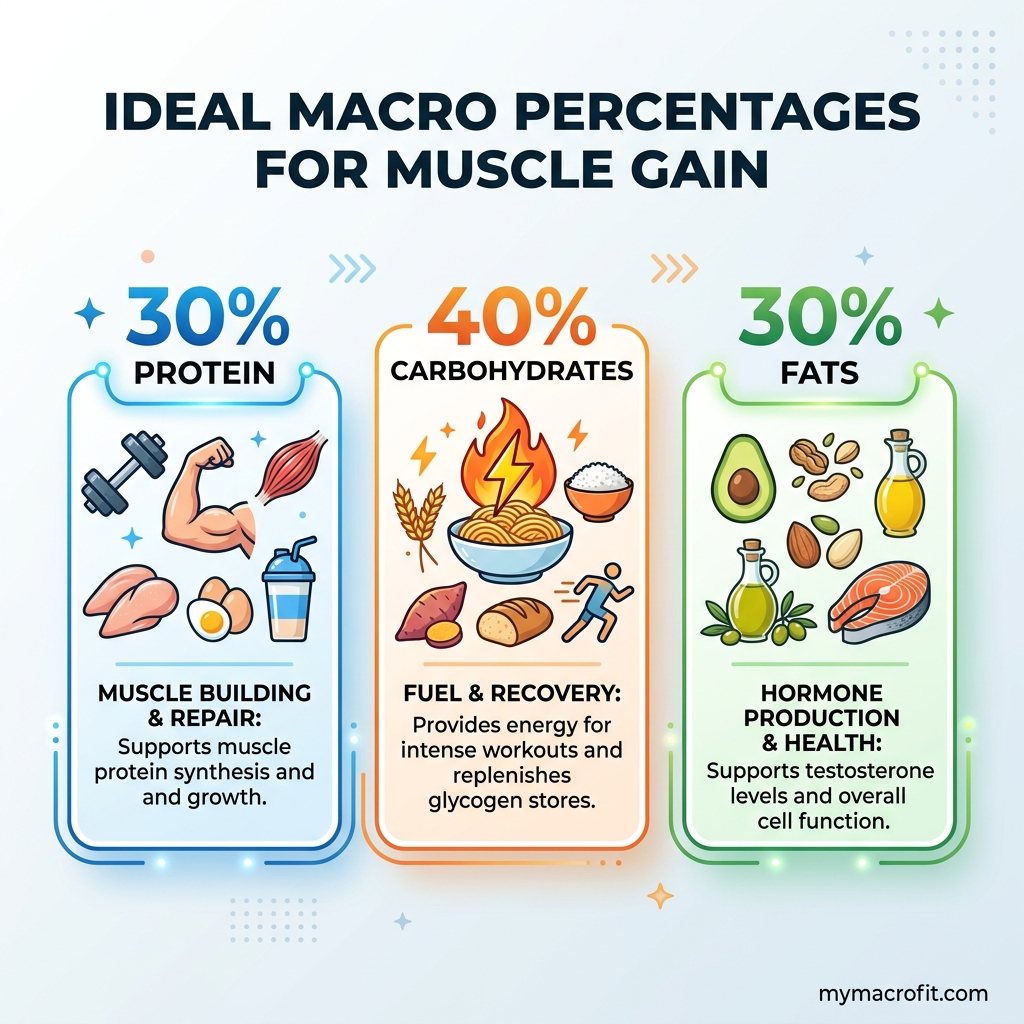
In percentages this often lands near 30% protein / 45% carbs / 25% fat. Notice carbs are higher than in a fat-loss split, because here you want the training fuel and the anabolic edge that carbs provide.
A worked example
A 75kg lifter at maintenance of 2,500, bulking at +10% = 2,750 calories:
- Protein: 75 × 2.0 = 150g (600 cal)
- Fat: 75 × 0.9 = 68g (612 cal)
- Carbs: remaining 1,538 cal ÷ 4 = ~384g
Plug your own stats into the Macro Calculator and set the goal to muscle gain.
Get your lean-bulk macros.
The free Macro Calculator sets a controlled surplus and a muscle-building split instantly.
Calculate My Macros →Protein: enough, not endless
Protein is the raw material, but more isn't better past a point. Aim for 1.6-2.2g per kg, spread across three or four meals so you're feeding muscle protein synthesis through the day. Beyond ~2.2g/kg there's no extra muscle benefit, those calories are better spent on carbs that fuel your training. Confirm your number with the Protein Calculator.
Don't fear the carbs
This is where lean bulking and fat loss genuinely differ. Carbs replenish the glycogen your muscles burn during heavy sets, power your hardest workouts, and help create the anabolic environment muscle growth thrives in. Keeping carbs high is a feature, not a cheat. Pair the nutrition with progressive overload, without the training stimulus, even perfect macros just add fat.
Why a bigger surplus backfires
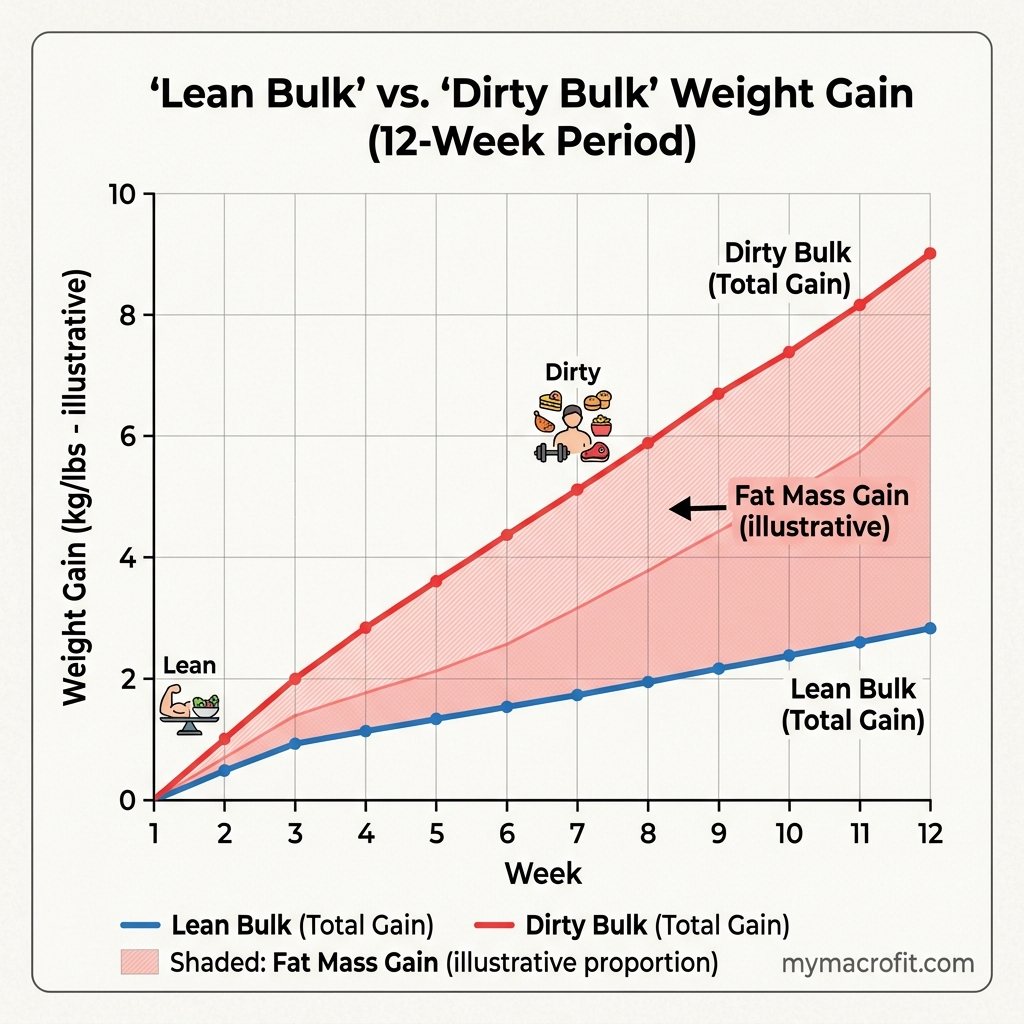
It's worth labouring this point, because "eat big to get big" is the advice that ruins more physiques than anything else. Your body can only assemble new muscle so fast, and that rate is set by your training and recovery, not your calorie intake. Once you've supplied enough energy and protein to support that rate, every extra calorie has nowhere useful to go, it's stored as fat.
Picture two lifters bulking for four months:
| Small surplus (+300) | Big surplus (+700) | |
|---|---|---|
| Muscle gained | ~1.5kg | ~1.5kg |
| Fat gained | ~1kg | ~3-4kg |
| Cut needed after | Short, easy | Long, miserable |
Same muscle. Wildly different fat. The "dirty bulker" doesn't end up more muscular, just fatter, facing a longer cut that risks the very muscle they spent months building. A controlled surplus is the patient, smarter path, and it keeps you looking good the whole way through, not just at the end.
How to know it's working
A lean bulk is slow by design, so judge it over weeks, not days. The signs you've got the surplus right:
- The scale creeps up gently, roughly 0.25-0.5% of bodyweight a week. Faster than that and you're adding fat; flat for weeks and you may need a few more calories.
- Your lifts are climbing. This is the real proof. Progressive overload, more weight or reps over time, is what tells you the food is becoming muscle.
- Your waist stays relatively stable while your strength rises. If your belt is loosening, the surplus is too big.
If the scale is jumping and your lifts aren't moving, that's fat gain, not muscle, ease the calories back. Let strength be your north star.
Lean bulk vs recomposition
If you're a beginner, returning after time off, or carrying higher body fat, you may not need a surplus at all, you can build muscle and lose fat at once (a recomposition). For most trained lifters, though, a small surplus is the faster, more reliable route. Choose lean bulk to maximise muscle; choose recomp to prioritise staying lean.
The takeaway
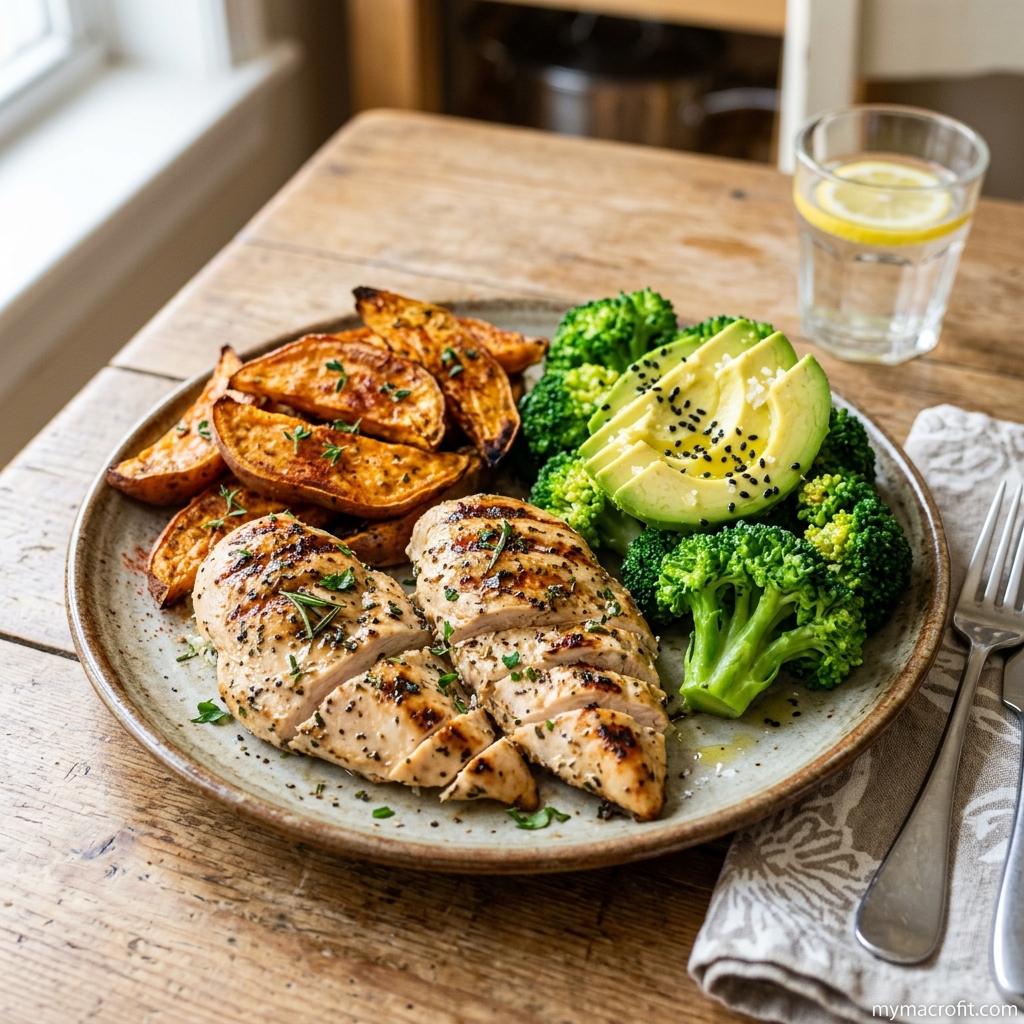
Muscle-gain macros are a small surplus, solid protein (1.6-2.2g/kg), and generous carbs to fuel the work. Resist the urge to eat big, patience and a controlled surplus build a physique you don't have to "cut" for months to reveal. Get your exact targets from the Macro Calculator.
Save & share on Pinterest
Click any card to pin it — or share with someone who needs it.
Macros for Muscle Gain: Lean Bulk Targets That Build Muscle, Not Just Fat
Building muscle needs a calorie surplus and high protein, but only a small surplus, or you just gain…
Building muscle needs a calorie surplus and high protein, but only a small surpl…
Read the full guide: Macros for Muscle Gain: Lean Bulk Targets That Build Muscle, Not Just Fat
Try the free Macro Calculator
Macros for Muscle Gain: Lean Bulk Targets That Build Muscle, Not Just Fat — use our free calculators…
Pinterest opens in a new tab. You can edit the description before saving.
Ready to get your numbers?
Free calculator, instant results, no signup required.
Frequently Asked Questions
What macros should I eat to build muscle?+
How big should my calorie surplus be to gain muscle?+
How much protein do I need to build muscle?+
Are carbs important for building muscle?+
Can I build muscle without a surplus?+
How fast can I realistically gain muscle?+
How long should I bulk before cutting?+
About the Author

I'm a kinesiologist and personal trainer. I've spent eight years helping women lose fat and get stronger without handing their whole life over to a diet.
View full profile →