How to Eat More Protein Without Eating More Meat

BSc Kinesiology · CPT
Protein targets for muscle building and fat loss, 1.6-2.2g/kg bodyweight, can feel daunting if you're trying to reach them without relying heavily on chicken, beef, and pork. Whether for ethical, environmental, health, or simply preference reasons, there are excellent non-meat protein sources that make hitting your target entirely practical.
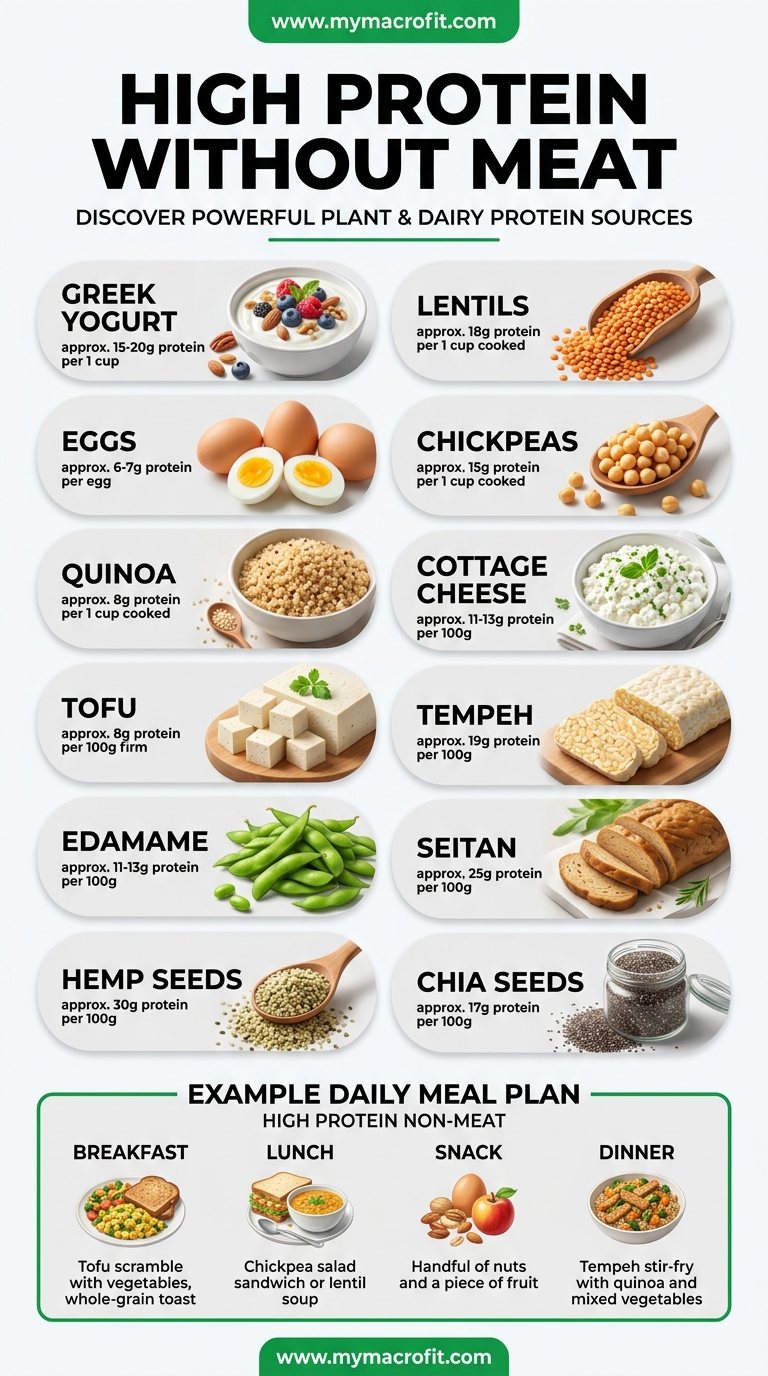
The Best Non-Meat Protein Sources
Fish and Seafood
If you eat fish (pescatarian approach), you have access to some of the highest-quality protein available:
| Food | Protein per 100g | Calories per 100g |
|---|---|---|
| Tuna (canned in water) | 26g | 109 kcal |
| Cod fillet | 20g | 82 kcal |
| Salmon fillet | 20g | 208 kcal |
| Prawns/shrimp | 18g | 85 kcal |
| Sardines (canned) | 25g | 208 kcal |
| Haddock | 20g | 87 kcal |
Fish provides complete protein with excellent bioavailability, plus DHA omega-3, making it one of the most nutritionally valuable protein sources available.
Eggs and Dairy
| Food | Protein per serving | Notes |
|---|---|---|
| Eggs (3 whole) | 18-21g | Complete amino acid profile |
| Egg whites (6) | 24g | Very high protein, low calorie |
| Greek yogurt (200g) | 20g | Also calcium and probiotics |
| Cottage cheese (200g) | 22g | Casein protein, slow release |
| Quark (200g) | 24g | High protein, very low fat |
| Skyr (200g) | 24g | Icelandic style, very high protein |
| Ricotta (150g) | 11g | Lower protein but versatile |
| Milk (300ml) | 10g | Convenient addition to meals |
| Cheese (cheddar, 40g) | 10g | High calorie density |
Dairy provides complete protein with excellent leucine content, comparable to animal muscle protein for muscle protein synthesis signalling.
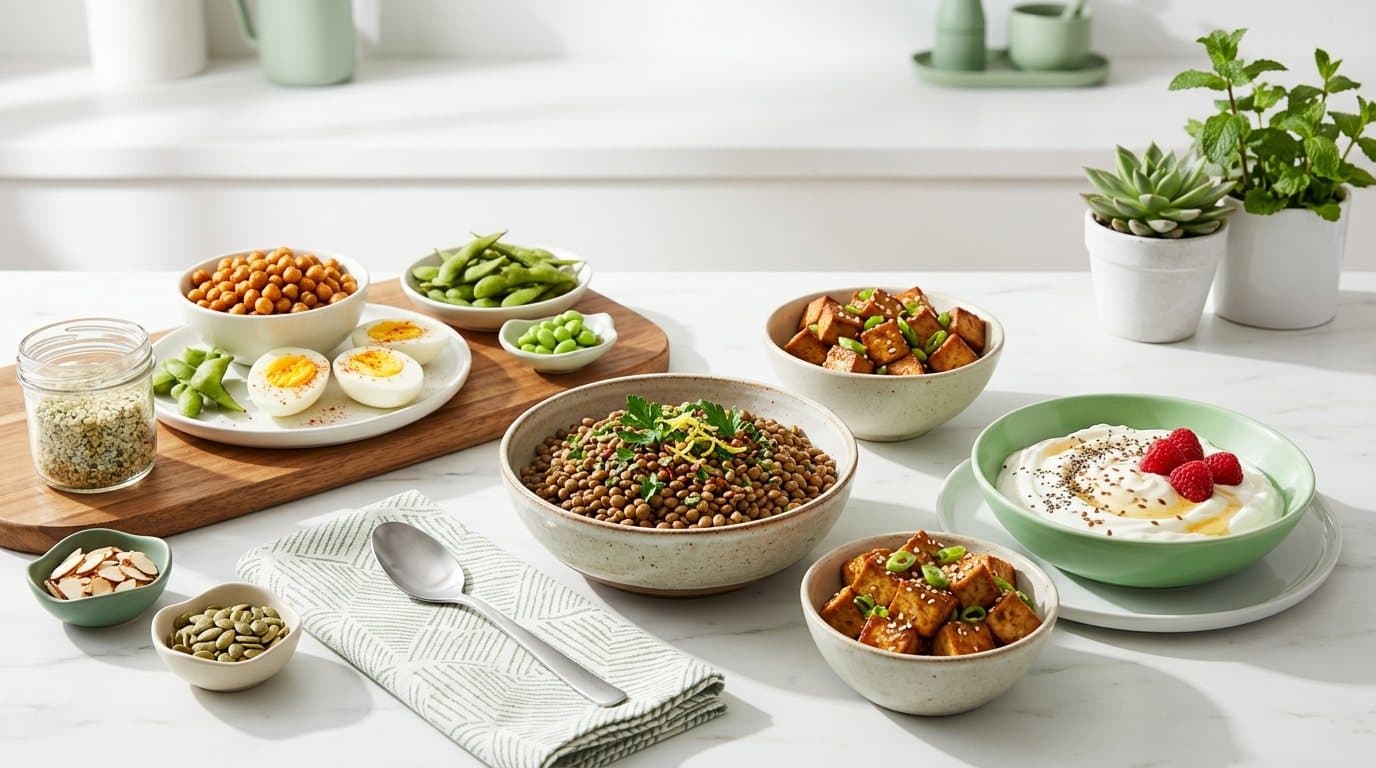
Plant-Based Proteins
| Food | Protein per serving | Cooked/as stated |
|---|---|---|
| Tempeh (100g) | 19g | Complete, highly digestible |
| Edamame (150g) | 17g | Complete protein, fresh/frozen |
| Tofu, firm (150g) | 18g | Complete amino acid profile |
| Lentils, cooked (200g) | 18g | Missing some essential AAs |
| Chickpeas, cooked (200g) | 15g | Combine with grains |
| Black beans (200g) | 15g | High fibre |
| Kidney beans (200g) | 16g | |
| Seitan (100g) | 25g | Wheat gluten, avoid if gluten-free |
Important for plant protein: Many plant proteins are "incomplete", they lack one or more essential amino acids in sufficient quantities. Legumes are low in methionine; grains are low in lysine. Combining different plant protein sources across the day (beans + rice, hummus + bread, lentil soup + grain) creates a complete amino acid profile. You don't need to combine at every meal, adequate variety across the day is sufficient.
Protein Supplements (Non-Meat, Non-Animal Options)
| Product | Protein per serving | Notes |
|---|---|---|
| Pea protein isolate | 22-25g | Good amino profile, high leucine |
| Brown rice protein | 20-24g | Complement with pea for completeness |
| Pea+rice blend | 22-25g | Most popular complete plant powder |
| Whey protein (vegetarian OK) | 20-25g | From dairy, vegetarian, not vegan |
| Casein protein (vegetarian) | 24-28g | Slow release, from dairy |
A Full Day of 140g Protein Without Meat
For a 70kg person targeting 2g/kg = 140g protein
Breakfast (38g protein):
- 200g Skyr + 1 tbsp almond butter + berries = 24g
- 2 eggs scrambled = 14g
Lunch (35g protein):
- 200g firm tofu stir-fried with vegetables = 26g
- 200g edamame as side = 12g (-3g to count 9g net = tofu is the main source)
Snack (22g protein):
- 200g cottage cheese + cucumber slices = 22g
Dinner (40g protein):
- 150g salmon fillet = 30g
- 200g cooked lentils = 18g (total 48g, easily above target)
Total: ~137-147g protein ✓
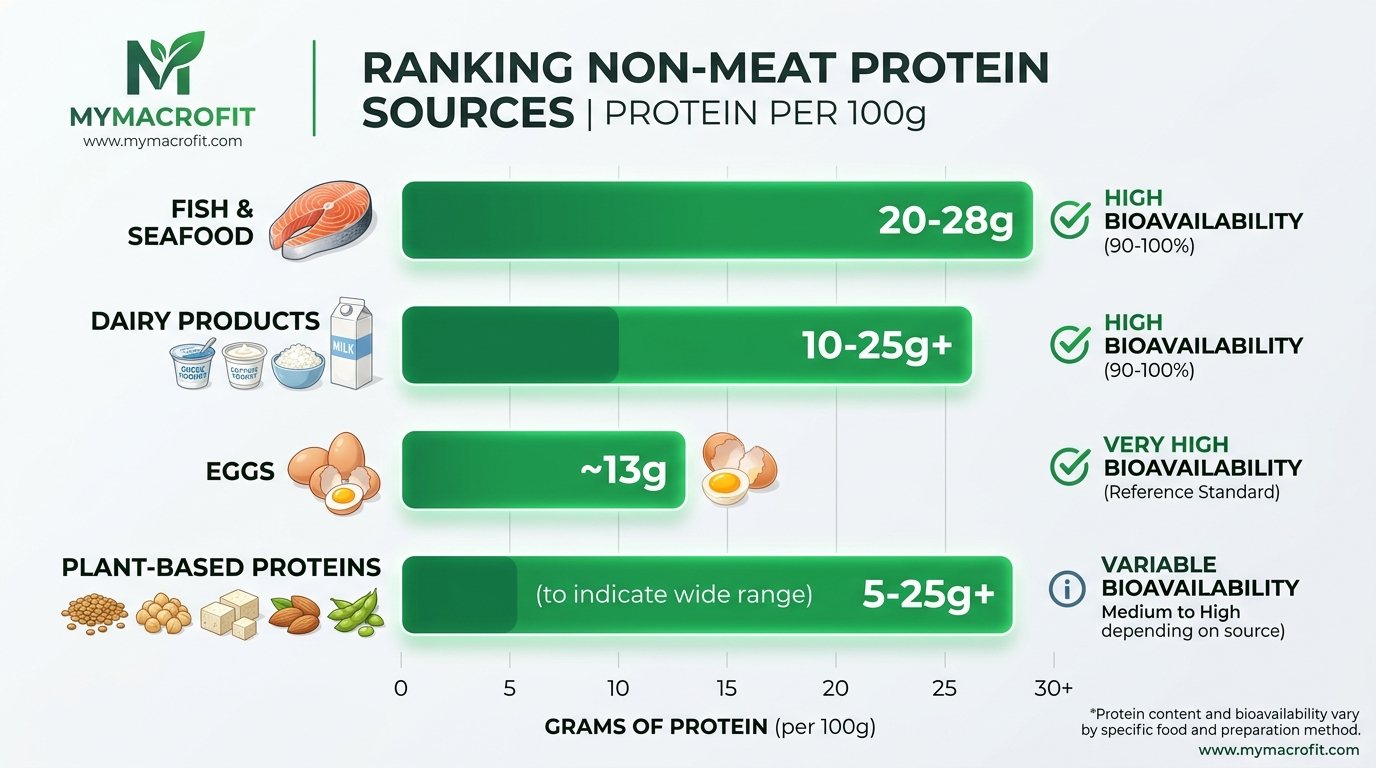
The Most Practical Strategy: Anchor Every Meal
Whether you eat fish or are fully plant-based, the most effective approach is ensuring every meal has a substantial protein anchor:
Breakfast anchors: Eggs (any style), Greek yogurt, skyr, cottage cheese, protein shake
Lunch anchors: Tuna (canned, easy), salmon, cottage cheese bowl, large portion legumes (250g chickpeas = 20g), firm tofu
Dinner anchors: Fish fillet, egg-based dish (frittata, omelette), tempeh, large legume serving + complementary plant protein
Snack anchors: Greek yogurt, cottage cheese, edamame, protein bar, cheese and crackers
Use our Protein Calculator to establish your daily target and plan your meals accordingly.
The Bottom Line
Meeting 2g/kg protein targets without meat is entirely achievable. Fish is the easiest path if you're pescatarian. Dairy (Greek yogurt, cottage cheese, skyr, quark) and eggs provide complete, highly bioavailable protein for vegetarians. For fully plant-based diets, tempeh, firm tofu, and edamame lead the way, supplemented with a quality pea or pea+rice protein powder to bridge gaps.
Save & share on Pinterest
Click any card to pin it — or share with someone who needs it.
How to Eat More Protein Without Eating More Meat
The best non-meat protein sources, how much they provide, and practical strategies for hitting high …
The best non-meat protein sources, how much they provide, and practical strategi…
Read the full guide: How to Eat More Protein Without Eating More Meat
Try the free Protein Calculator
How to Eat More Protein Without Eating More Meat — use our free calculators for instant personalised…
Pinterest opens in a new tab. You can edit the description before saving.
Ready to get your numbers?
Free calculator, instant results, no signup required.
Frequently Asked Questions
Can you get enough protein without eating meat?+
Are plant proteins as good as animal proteins for muscle building?+
What is the best plant protein powder?+
What does a high-protein day without meat actually look like?+
Do I need to combine plant proteins at every meal to get complete protein?+
About the Author

I'm a kinesiologist and personal trainer. I've spent eight years helping women lose fat and get stronger without handing their whole life over to a diet.
View full profile →