How to Eat Out and Still Hit Your Macros

BSc Kinesiology · CPT
Eating out is a regular part of life, social meals, work lunches, date nights, family occasions. The idea that you must either avoid all social eating or abandon your nutrition goals while eating out is a false choice.
With the right strategies, you can participate fully in social eating while keeping your overall nutrition largely on track.
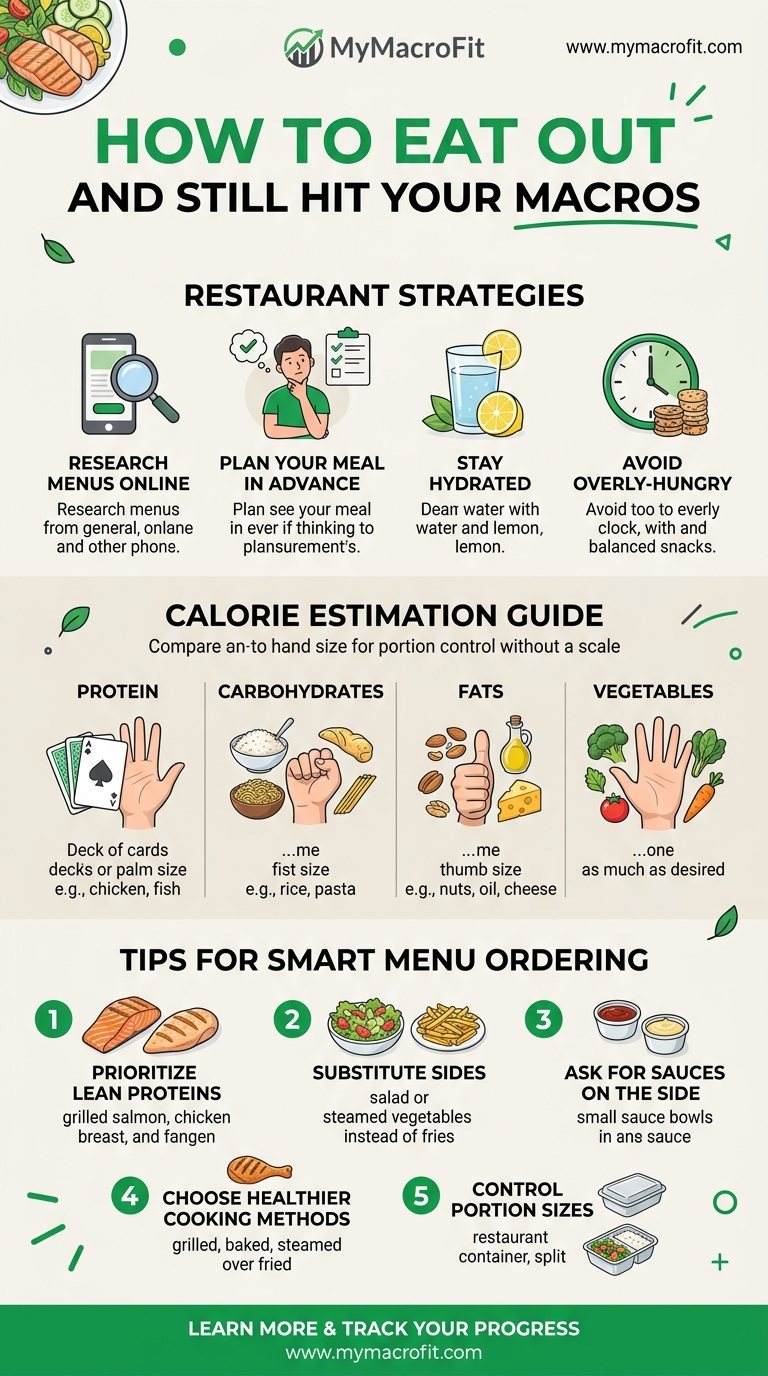
The Mindset Shift: Plan for It, Not Around It
The most effective approach to eating out is planned flexibility, accepting that restaurant meals will typically be higher calorie than home cooking, and accounting for this in your weekly budget rather than treating it as a diet failure.
Weekly calorie budget perspective:
If your daily target is 1,600 kcal (weekly 11,200 kcal), a restaurant meal at 1,000 kcal instead of your usual 600 kcal dinner adds 400 kcal. Over the week, this creates a slightly smaller deficit, but doesn't erase it.
If you eat out once per week and the meal is 400 kcal higher than normal, your weekly deficit is 100 kcal/week smaller, equivalent to losing 0.45kg/month instead of 0.5kg/month. Negligible.
The problem isn't the occasional restaurant meal, it's frequency (3-4 per week) or the psychology of treating eating out as total dietary suspension.
Estimating Calories at Restaurants
Chain Restaurants (Easiest)
UK restaurant chains are legally required to display calorie information. Check:
- The menu itself (usually displayed)
- The restaurant's website or app
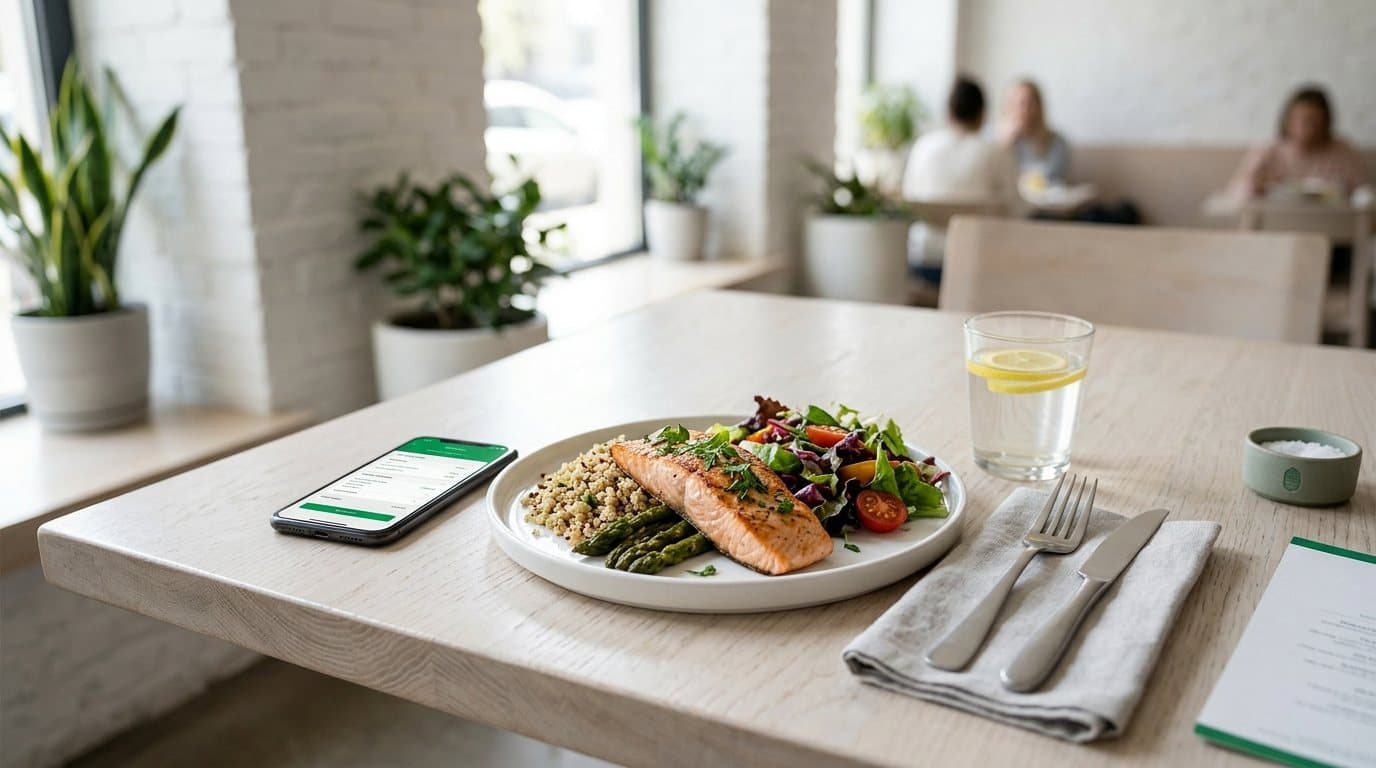
- Calorie tracking apps, major chains are usually in the database
Independent Restaurants (Requires Estimation)
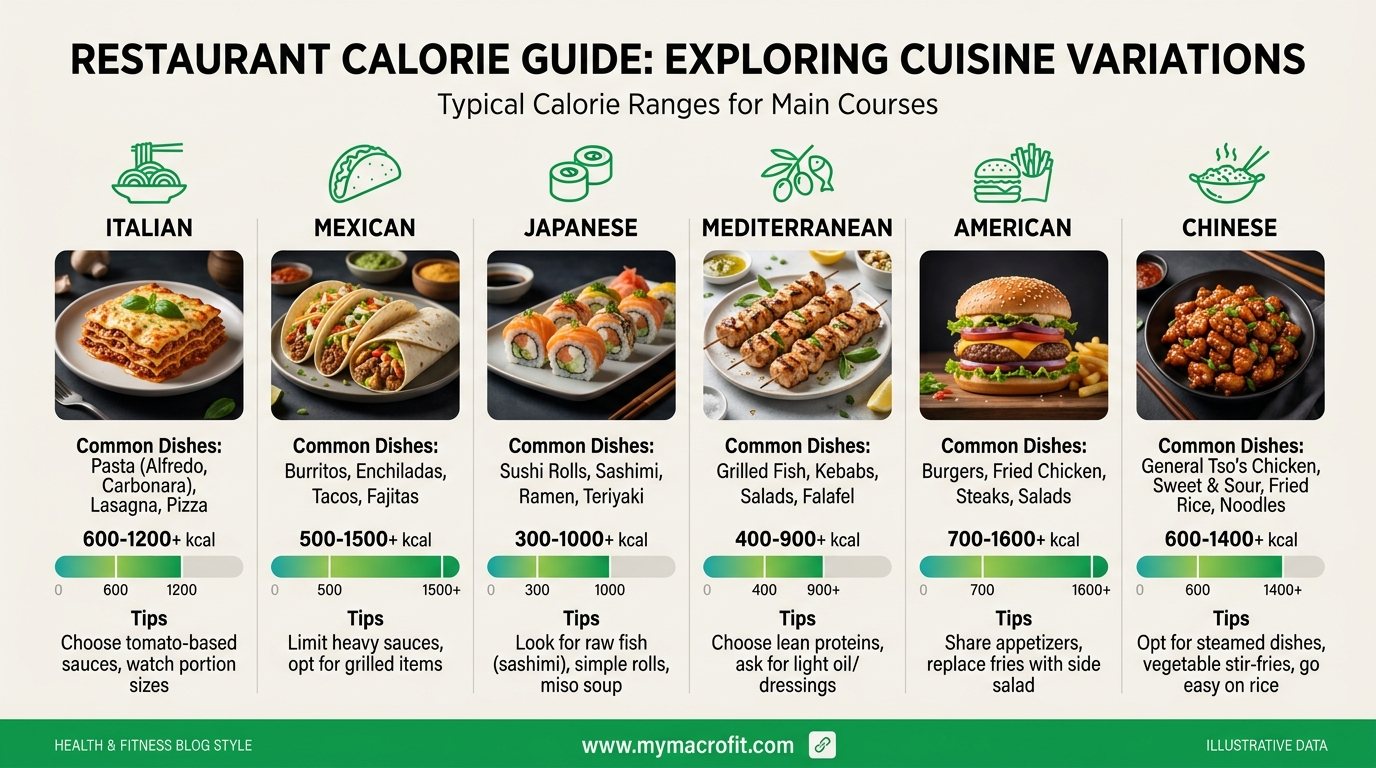
By cuisine type, typical main course ranges:
| Cuisine | Typical main course | Key calorie drivers |
|---|---|---|
| Italian (pasta with cream sauce) | 900-1,400 kcal | Cream/butter, pasta portion size |
| Italian (tomato-based pasta) | 600-900 kcal | More moderate |
| Indian curry (chicken) | 500-800 kcal | Cooking oil content varies widely |
| Indian rice/naan side | 300-600 kcal | Portion size |
| Sushi (salmon/tuna based) | 350-600 kcal | Relatively lower calorie |
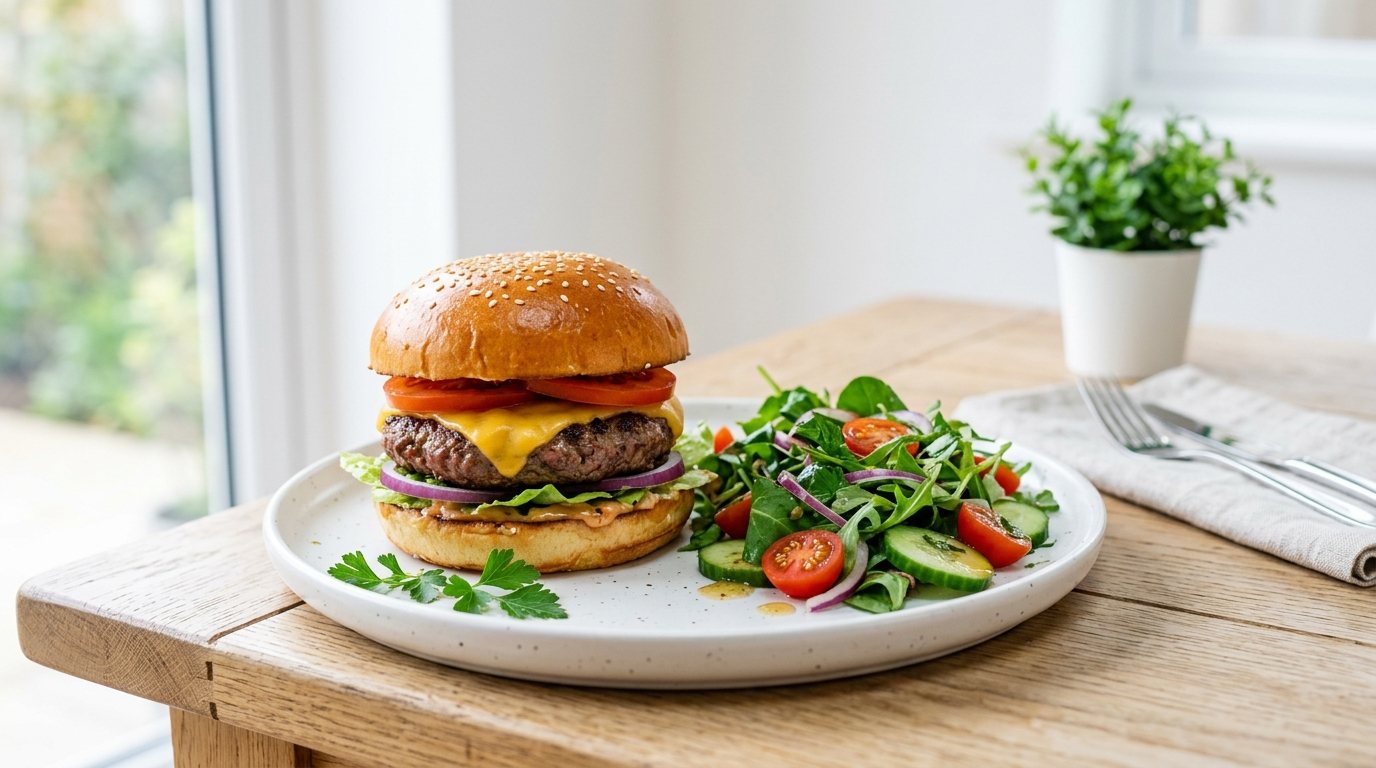
| Burgers (gourmet) | 700-1,200 kcal | Cheese, sauce, bun additions |
| Steak + sides | 800-1,400 kcal | Cut, sauce, side dishes |
| Grilled fish + salad | 400-700 kcal | Sauce/dressing is the variable |
Component estimation method:
- Protein source (150-200g chicken/fish = 250-330 kcal; 200g steak = 300-450 kcal)
- Starch (200g rice = 260 kcal; portion of chips = 300-500 kcal)
- Sauce/cooking fat (cream sauce = 200-400 kcal; light tomato = 50-150 kcal)
- Add 20-30% for restaurant cooking oils and butter you can't see
Smart Ordering Strategies
Protein-first ordering: Build your meal around the protein source, lean options (grilled fish, chicken, lean steak) provide high satiety with fewer calories than cream/pastry-based dishes.
Sauce on the side: Sauces and dressings account for 200-600 kcal in many restaurant meals. Asking for them on the side allows you to control quantity.
Skip the bread basket: Pre-meal bread at 200-400 kcal before you've even ordered adds calories with minimal satiety benefit.
Be specific about sides: Ask for extra vegetables instead of chips; salad instead of fries. Restaurants almost always accommodate this.
Share dessert: If you want dessert, sharing with the table halves the calorie impact while still providing the experience.
Alcohol at Restaurants
Alcohol is often the largest hidden calorie contribution to restaurant meals:
- Glass of wine (175ml): 150-160 kcal
- Pint of beer: 180-250 kcal
- Cocktail: 150-350+ kcal
Two glasses of wine = 300-320 kcal, the equivalent of a significant side dish, invisible in the meal's calorie count.
Practical approach: If drinking, know the calorie content. Budget for it in your day's allocation. Opt for lower-calorie choices (dry wine over sweet; light beer; spirits with low-cal mixers).
The Protein Preservation Strategy
When eating out, protein is the macro hardest to hit and most worth protecting:
Before the meal: Have a high-protein snack (Greek yogurt, cottage cheese, protein bar) if you expect the meal to be lower protein, particularly for social occasions where you may eat less than planned.
At the restaurant: Choose dishes with substantial protein components, not for calorie savings, but because protein contributes to satiety and preserving muscle even when overall calories are higher.
Social Occasions: The Right Perspective
Food is central to human social experience. A nutrition approach that requires you to obsess about every restaurant gram, order salads when everyone else is eating pasta, or avoid all social meals is not sustainable long-term.
The sustainable approach:
- Eat normally most of the week
- Participate in social meals without guilt
- Make reasonable choices without being the person who interrogates the waiter
- Accept that this meal is part of a flexible, sustainable approach to food
Progress is made over months, not derailed by a single enjoyable meal.
Use our Macro Calculator to understand your weekly targets and how much flexibility you genuinely have.
The Bottom Line
Eating out doesn't derail macro targets if done strategically. Use calorie information where available; estimate by component where not. Order protein-first, control sauces, be mindful of alcohol. Accept that one restaurant meal is one data point in a weekly and monthly picture, not a reason for guilt or compensatory restriction.
Save & share on Pinterest
Click any card to pin it — or share with someone who needs it.
How to Eat Out and Still Hit Your Macros
Practical strategies for tracking and estimating macros when eating at restaurants, cafes, and socia…
Practical strategies for tracking and estimating macros when eating at restauran…
Read the full guide: How to Eat Out and Still Hit Your Macros
Try the free Macro Calculator
How to Eat Out and Still Hit Your Macros — use our free calculators for instant personalised results…
Pinterest opens in a new tab. You can edit the description before saving.
Ready to get your numbers?
Free calculator, instant results, no signup required.
Frequently Asked Questions
How do I track calories when eating at a restaurant?+
How many calories are in a typical restaurant meal?+
Should I eat less during the day if I'm going for a meal out?+
What are the best menu choices to stay on track when eating out?+
How do I handle drinks and alcohol when eating out on a diet?+
About the Author

I'm a kinesiologist and personal trainer. I've spent eight years helping women lose fat and get stronger without handing their whole life over to a diet.
View full profile →