How to Lose 5kg: A Realistic, Sustainable Plan
Founder, MyMacroFit
5kg is the sweet spot. It is enough to actually see and feel, but small enough that you do not have to wreck your life to get there. It is specific enough to plan around and short enough to stay focused on. I have lost this exact amount more times than I would like to admit, and the version below is the one that finally worked without me white-knuckling through it.
Here is the whole setup: your calories, your protein, the training, and the mindset to get there without hating every week of it.
Step 1: know your numbers
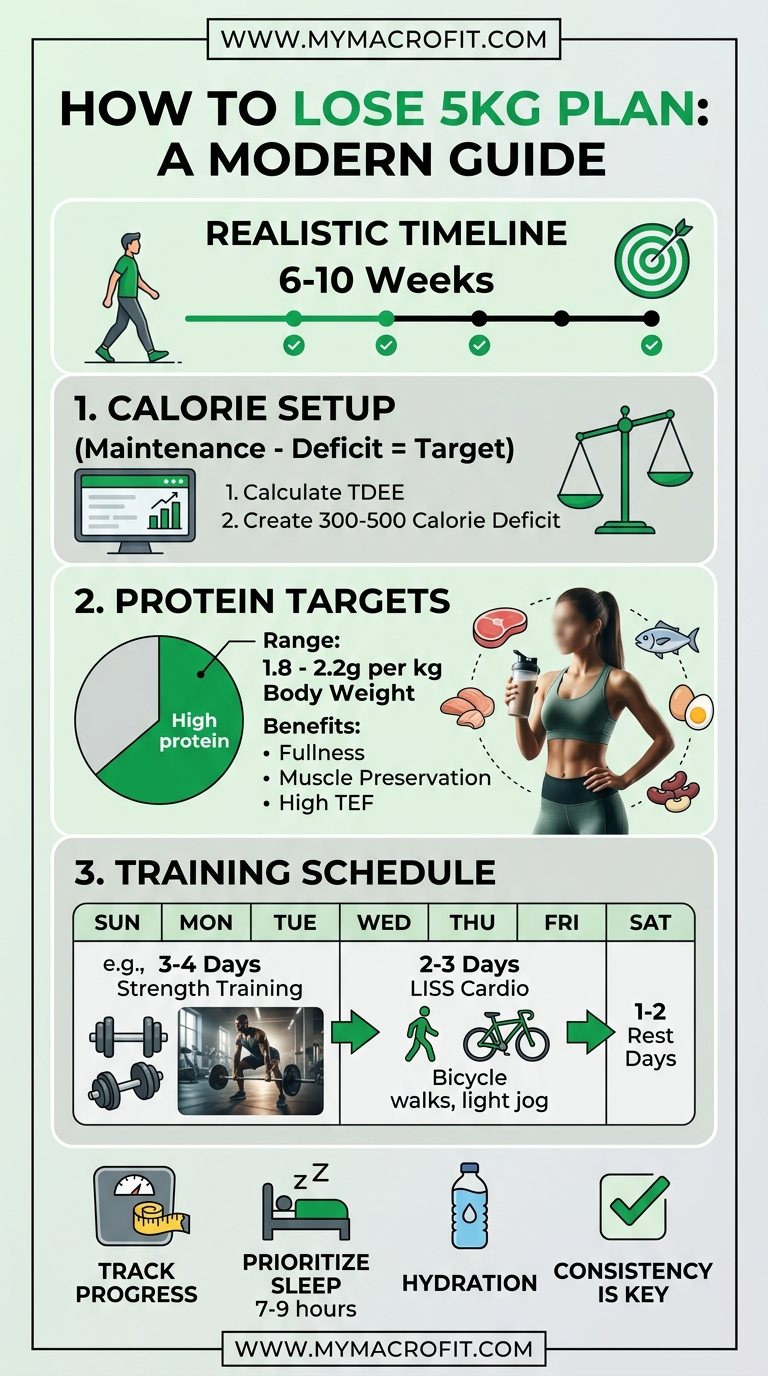
Before any of this works, you need to know where you are starting from. Your maintenance, sometimes called your TDEE, is just how many calories your body burns in a day at your current activity. Eat under it and you lose. That is the whole game.
Use our Calorie Deficit Calculator to find your maintenance and the deficit you need. Having a real number instead of a vague "I'll eat better" was the thing that finally made it click for me.
A few sensible rules:
- Maintenance minus 500 a day gets you about half a kilo a week.
- Maintenance minus 700 a day gets you nearer 0.7kg a week, which is about as aggressive as I would go.
- Do not drop below roughly 1,200 a day if you are a woman or 1,500 if you are a man, whatever the calculator says.
Step 2: get your protein up
If I could only get you to fix one thing about your food, it would be protein. It protects your muscle while you lose, it keeps you full so the deficit is bearable, and your body even burns a few extra calories digesting it.
Aim for around 1.8 to 2.2g per kg of bodyweight. For a 70kg person that is roughly 126 to 154g a day, spread across three or four meals. Honestly, just hitting your protein, eating plenty of veg, and sitting in a moderate deficit is enough for most people to lose 5kg. No complicated plan required.
Step 3: what a week looks like
Training:
- Three resistance sessions, full-body or an upper/lower split.
- Two or three easy cardio sessions, 30 to 40 minutes of walking, cycling, or swimming.
Food:
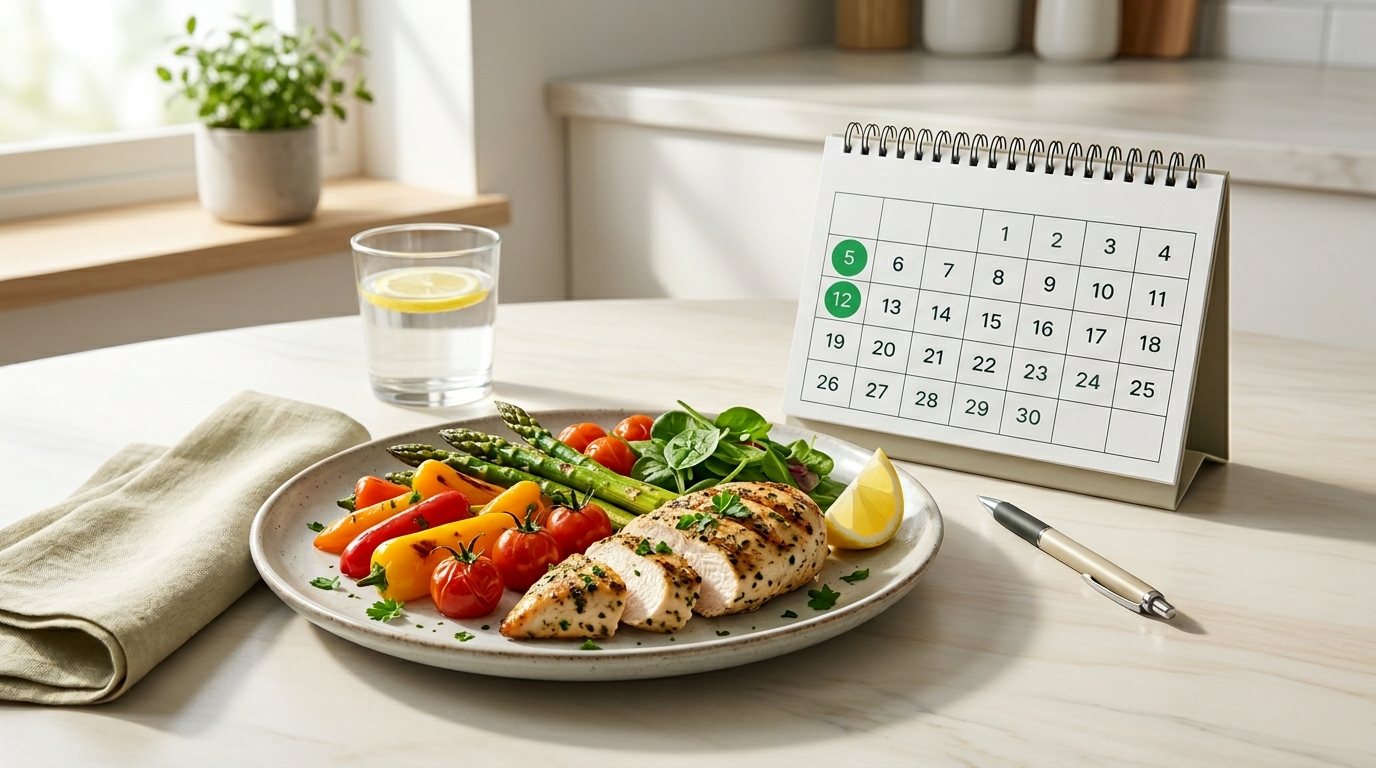
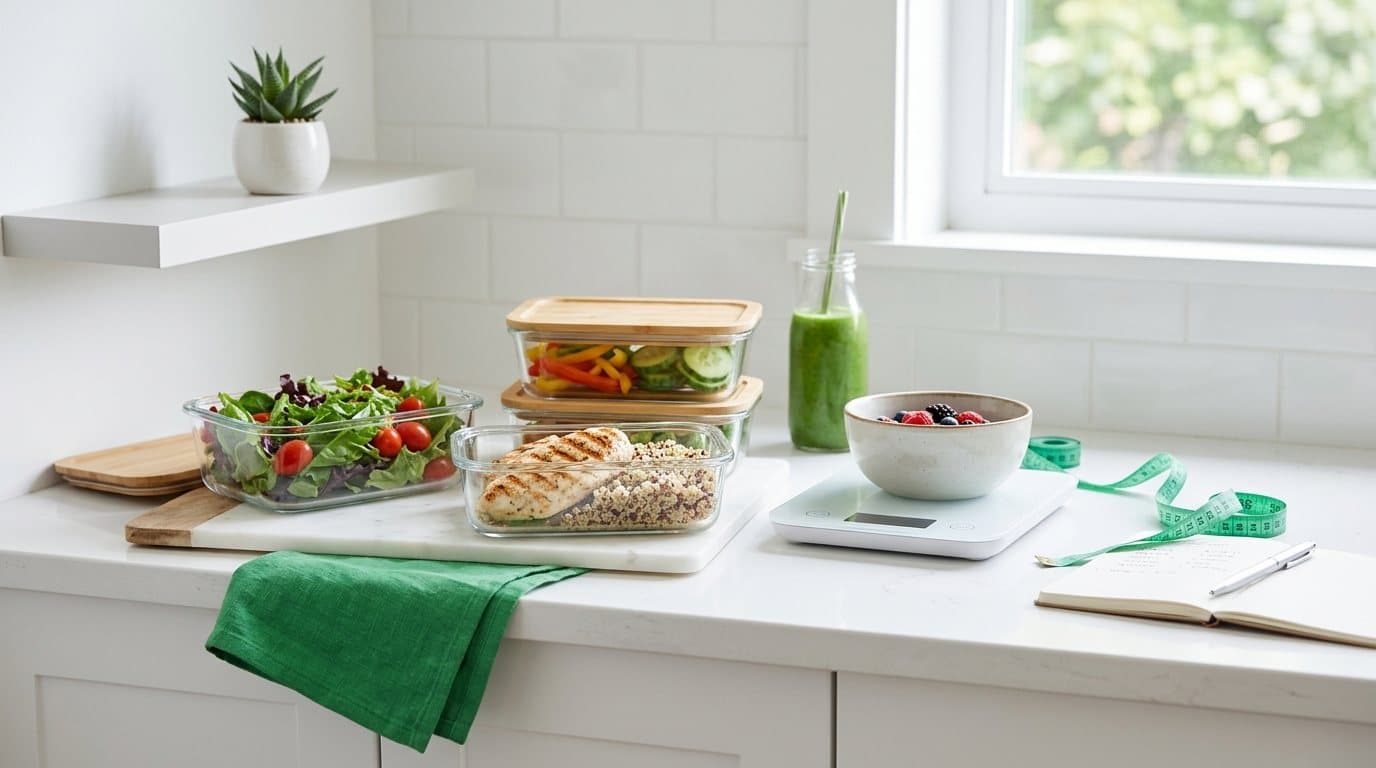
- A bit of prep on a Sunday: a few lunches sorted, breakfasts ready, protein cooked so you are not stuck deciding when you are tired.
- Hit your protein first, then fill the rest with veg and some decent carbs.
The simple daily version is this: protein at every meal, vegetables filling half your plate at lunch and dinner, and tracking your food for the first couple of weeks until you have got your eye in.
What to expect week by week
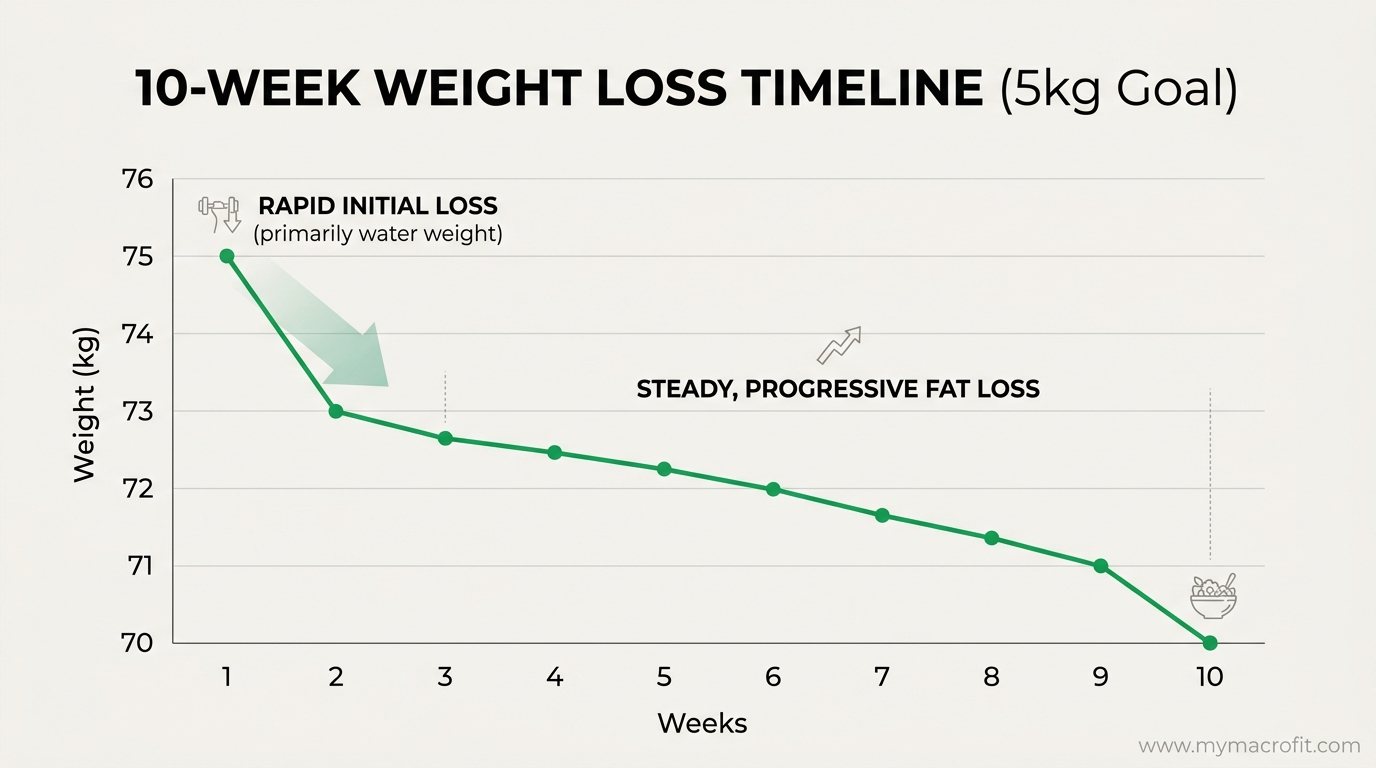
Weeks 1 to 2: the scale drops fast, maybe a kilo or more. Brace yourself, because most of that is water, not fat. It is normal and it is not the real trend.
Weeks 3 to 8: steady fat loss of around 0.3 to 0.6kg a week. The scale will still jump around day to day, so weigh most mornings and watch the weekly average, not the daily number.
That week 4 or 5 wobble: loss often stalls for a bit while your body adjusts. Do not panic and slash your food. Hold steady and give it two weeks before you change anything. I cover the head-side of this in the mental side of plateaus.
Why these plans usually fall apart
Every time I failed at this, it was one of these:
Not tracking early on. "Eating healthily" without any numbers means you are almost never in the deficit you think you are. Track properly for two to four weeks, then you can ease off.
Alcohol. One big night out can wipe out a week of effort. A bottle of wine is 600-plus calories. I am not saying never, just count it.
Weekends. A tidy deficit Monday to Friday followed by a free-for-all Saturday and Sunday adds up to roughly nothing for the week. The weekend is where most people quietly undo it all.
Too little protein. Lose 5kg on barely any protein and some of what you lose is muscle. You end up lighter but softer, which is not what anyone is actually after.
Not lifting. Cardio-only fat loss just gives you a smaller version of the same shape. Add some strength work and you keep the muscle that makes the difference.
A simple eating framework
Breakfasts:
- Greek yogurt (250g), berries, granola, around 380 kcal and 30g protein.
- Three scrambled eggs with wholegrain toast, around 350 kcal and 28g protein.
- Overnight oats (50g oats, 200g Greek yogurt, berries), around 400 kcal and 28g protein.
Lunches:
- Chicken breast (150g), quinoa (80g dry), salad, around 430 kcal and 48g protein.
- Two cans of tuna, mixed leaves, cucumber, a tablespoon of olive oil, around 320 kcal and 42g protein.
- Tofu stir-fry (200g), brown rice (150g cooked), veg, around 400 kcal and 30g protein.
Dinners:
- Salmon (150g), roasted veg, broccoli, around 400 kcal and 36g protein.
- Lean beef mince (150g), courgette noodles, tomato sauce, around 380 kcal and 35g protein.
- Prawn stir-fry (200g), noodles (100g), pak choi, around 360 kcal and 30g protein.
That is roughly 1,150 to 1,250 calories and 110 to 125g protein across three meals, leaving room for snacks like yogurt, fruit, or boiled eggs. For a fuller day mapped out, see what to eat on 1500 calories.
Keeping the 5kg off
Here is the part nobody warns you about: losing it is the easy bit, keeping it off is where most of us fall down. A few things that helped me actually hold it:
- Ease your calories back up to your new maintenance instead of celebrating with everything in sight. That gradual easing-up is reverse dieting, and it is the missing piece for a lot of people.
- Keep your protein up. Do not drift back to barely eating any.
- Keep training. The muscle you kept is what holds your metabolism steady.
- Weigh weekly and act early. It is far easier to nudge 1 or 2kg back off than to let 5kg creep back on. I wrote about breaking that cycle in how I stopped yo-yo dieting.
Where I land on it
5kg is 7 to 12 weeks of a moderate deficit, decent protein, and some consistent training. Not a crash, not a detox, not a punishment. Find your number with the Calorie Deficit Calculator, get your protein to around 1.8 to 2g per kg, lift a few times a week, and hit your numbers most days. Do that and it just works, slowly and reliably, which is the only way it ever lasted for me.
Save & share on Pinterest
Click any card to pin it — or share with someone who needs it.
How to Lose 5kg: A Realistic, Sustainable Plan
A practical step-by-step plan to lose 5kg, how long it takes, the calorie setup, the training progra…
A practical step-by-step plan to lose 5kg, how long it takes, the calorie setup,…
Read the full guide: How to Lose 5kg: A Realistic, Sustainable Plan
Try the free Calorie Deficit Calculator
How to Lose 5kg: A Realistic, Sustainable Plan — use our free calculators for instant personalised r…
Pinterest opens in a new tab. You can edit the description before saving.
Ready to get your numbers?
Free calculator, instant results, no signup required.
Frequently Asked Questions
How long does it take to lose 5kg?+
How many calories to lose 5kg?+
What is the fastest healthy way to lose 5kg?+
About the Author
I'm the founder of MyMacroFit. I'm not a coach or a dietitian. I'm someone who wanted to lose weight, worked it out the hard way, and built the tools I wish I'd had.
View full profile →