How to Read a Nutrition Label

BSc Kinesiology · CPT
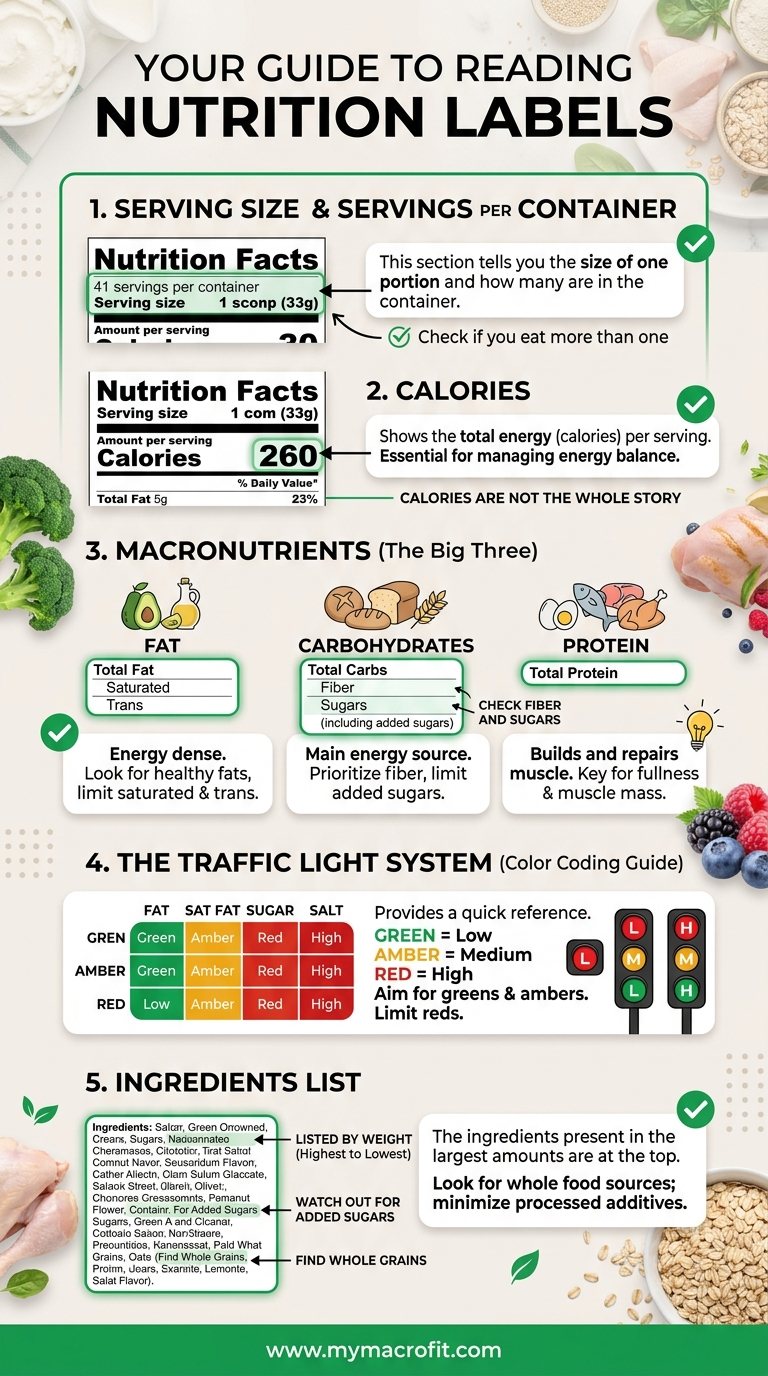
Food labels contain everything you need to make informed nutrition decisions, but only if you know how to read them. Once you understand the structure, reading a food label takes about 10 seconds.
The UK Food Label Structure
UK food labels must include:
- Energy (kJ and kcal)
- Fat (and of which saturates)
- Carbohydrates (and of which sugars)
- Fibre
- Protein
- Salt
Most labels show values both per 100g and per typical serving.
Section 1: Energy (Calories)
What you see: Energy per 100g and per serving, in both kilojoules (kJ) and kilocalories (kcal).
What to focus on: The kcal figure. The kJ number is simply kcal × 4.184, it's the same information in a different unit.
Per 100g vs per serving:
- Use per 100g to compare products of the same type
- Use per serving to understand what you're consuming, but always verify the serving size is realistic
Example trap: A chocolate bar listed as "2 servings" shows 200 kcal per serving. Total = 400 kcal. The label looks better per serving than it is in practice.
Section 2: Fat
Total fat: All fat types combined. Fat = 9 kcal/g, so high-fat foods are calorie-dense.
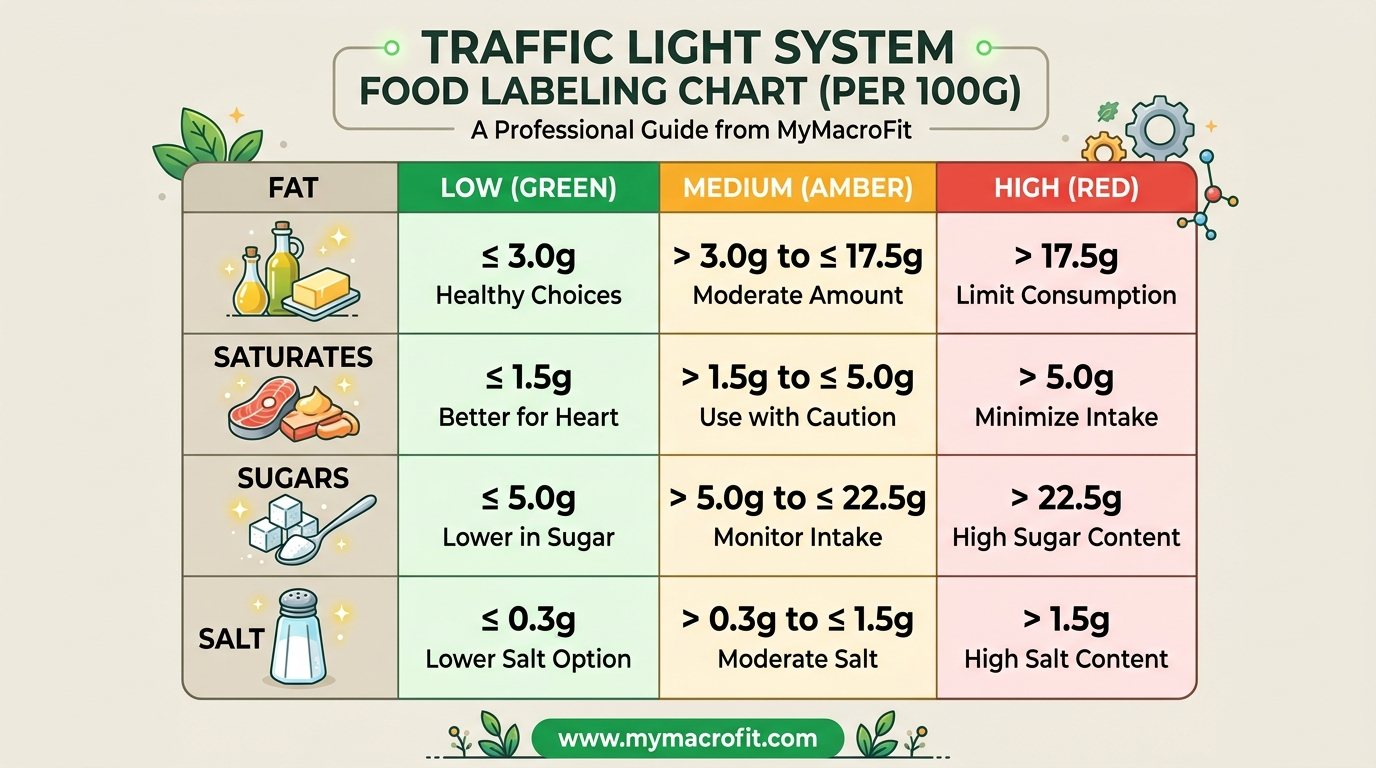
Saturated fat ("of which saturates"): The type most associated with LDL cholesterol elevation and cardiovascular risk. High: over 5g per 100g. Low: 1.5g per 100g or less.
What to know: Not all fat is problematic, mono and polyunsaturated fats (olive oil, nuts, avocado, oily fish) are beneficial. The saturated fat figure is most relevant for processed foods and fatty animal products.
Section 3: Carbohydrates
Total carbohydrates: All carbs combined.
"Of which sugars": Simple sugars, both naturally occurring (in fruit, dairy) and added. High: over 22.5g per 100g. Low: 5g per 100g or less.
Important limitation: The sugar figure doesn't distinguish between naturally occurring lactose in yogurt (not a health concern) and added sucrose in a biscuit (relevant). For a truer picture of added sugar, check the ingredients list for terms like: sugar, glucose, fructose, corn syrup, maltose, dextrose, honey, agave.
Section 4: Fibre
What it shows: Total dietary fibre content per 100g/serving.
Why it matters: Fibre improves satiety, feeds beneficial gut bacteria, supports blood glucose regulation, and is associated with lower cardiovascular and colorectal cancer risk.
High fibre: 6g per 100g or more. Low: less than 3g per 100g.
For weight management and gut health, choosing higher-fibre versions of similar foods (wholegrain bread vs. white, lentil pasta vs. plain) makes a meaningful cumulative difference.
Section 5: Protein
What it shows: Total protein per 100g/serving.
Why it matters: For most people with fitness goals, protein per serving is the most important single number on the label, supporting muscle building and repair, maximising satiety, and maintaining metabolic rate in a deficit.
High protein: Over 20g per 100g is excellent for a food source. For a meal, aim for 30-50g protein.
Section 6: Salt
Salt content. High: over 1.5g per 100g. Low: 0.3g per 100g or less.
High salt intake is associated with elevated blood pressure. Processed and packaged foods are the primary dietary salt source for most people, natural whole foods are typically very low in sodium.
The Traffic Light System
Many UK supermarket own-brand and branded products display a front-of-pack traffic light system showing fat, saturated fat, sugars, and salt per serving as red/amber/green:
- 🔴 Red: High, be mindful of portion and frequency
- 🟡 Amber: Medium, moderate consumption fine
- 🟢 Green: Low, positive choice for this nutrient
A product can be mostly green but red for one nutrient, context matters. A high-fat but low-sugar natural nut butter is very different from a high-fat, high-sugar cream cake.
The Ingredients List: Often More Informative Than the Numbers
The ingredients list is ordered by weight, the first ingredient is the largest component.
What to look for:
- Is a recognisable whole food the first ingredient? ✅
- Is sugar or a sugar synonym in the first 3 ingredients? ⚠️
- Is the list 25+ ingredients long with multiple numbers and chemical names? ⚠️ (indicator of ultra-processing)
For sugar identification: Any of these in the ingredient list = added sugar: sugar, glucose, fructose, glucose-fructose syrup, maltose, dextrose, agave, honey, treacle, molasses, corn syrup, invert sugar, fruit juice concentrate.
Using Labels for Specific Goals
Weight management: Focus on kcal per serving. Be honest about actual portion size vs. stated serving.
Muscle building: Look for protein per serving. Use our Macro Calculator to set your daily targets and track label data against them.
Blood sugar management: Focus on total sugars, fibre (higher = slower glucose release), and total carbohydrates.
Gut health: Fibre content and ingredients list (fermented foods, wholegrains, diverse plant ingredients).
The Bottom Line
The most important numbers for most people: calories and protein per serving. For health decisions, add: fibre content and the ingredients list.
Read the per 100g column for comparison between products; read the per serving column for understanding what you're actually consuming.
Save & share on Pinterest
Click any card to pin it — or share with someone who needs it.
How to Read a Nutrition Label
A complete guide to understanding food labels, what each section means, which numbers matter most, a…
A complete guide to understanding food labels, what each section means, which nu…
Read the full guide: How to Read a Nutrition Label
Try the free Macro Calculator
How to Read a Nutrition Label — use our free calculators for instant personalised results. No signup…
Pinterest opens in a new tab. You can edit the description before saving.
Ready to get your numbers?
Free calculator, instant results, no signup required.
Frequently Asked Questions
Which numbers on a nutrition label matter most?+
What is the difference between 'per serving' and 'per 100g' on food labels?+
How much sugar is too much per day?+
Are the front-of-pack 'traffic light' labels reliable?+
Can I trust health claims like 'low fat', 'high protein', or 'natural' on packaging?+
About the Author

I'm a kinesiologist and personal trainer. I've spent eight years helping women lose fat and get stronger without handing their whole life over to a diet.
View full profile →