Macros for Women Over 40: Protein First, Then Everything Else

RHC · Pre/Postnatal Fitness Specialist
There's a lot of fear-based noise about nutrition "after 40", that your metabolism is broken, that carbs are now the enemy, that you need some special protocol. The reality is calmer and more empowering: the macro principles that work at 30 still work at 50. What changes is that hormones make the fundamentals matter more, and the single most important one is protein. Here's how to set your macros for fat loss and strength in your 40s and beyond.
What actually changes after 40
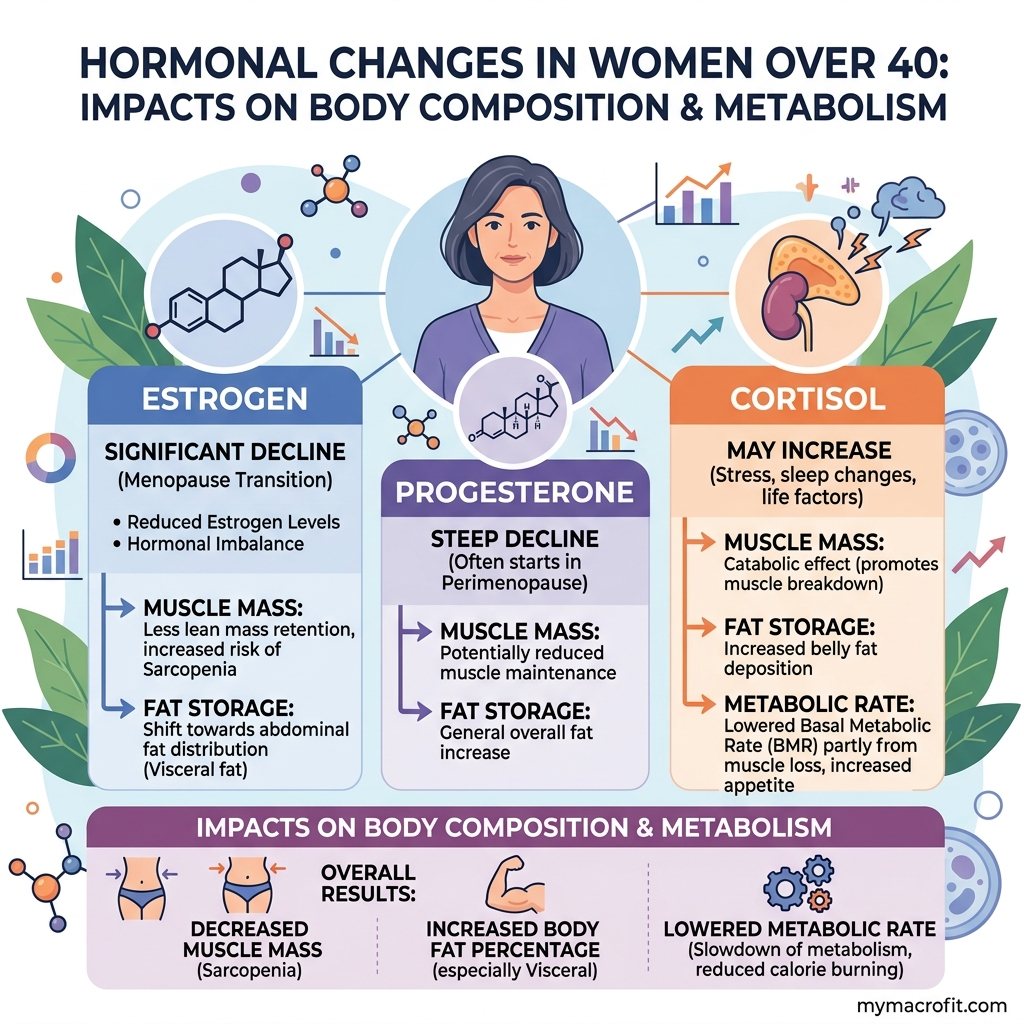
Two real shifts happen around perimenopause and menopause:
- Muscle becomes harder to keep. Falling oestrogen is linked to muscle loss, and muscle is metabolically active, so as it declines, your maintenance calories drop. Less muscle also means a softer, less toned look even at the same weight.
- Anabolic resistance rises. Older muscle responds less efficiently to protein, so you need more protein to get the same muscle-protective effect.
Notice what both point to: protect your muscle. That's the through-line of everything below. For the bigger picture, see is perimenopause weight gain permanent.
The macro framework (protein first)
| Macro | Target | Why it matters more after 40 |
|---|---|---|
| Protein | 1.8-2.2g per kg (higher end) | Counters muscle loss + anabolic resistance |
| Fat | 0.8-1g per kg | Hormone support, satiety |
| Carbs | Remaining calories | Fuels training; not the enemy |
Set protein and fat as gram floors, let carbs fill the rest of your calorie target, and the percentages take care of themselves. Get your personalised split from the Macro Calculator.
Get your macros for your 40s.
The free Macro Calculator sets protein-forward targets for fat loss or maintenance.
Calculate My Macros →Protein is non-negotiable
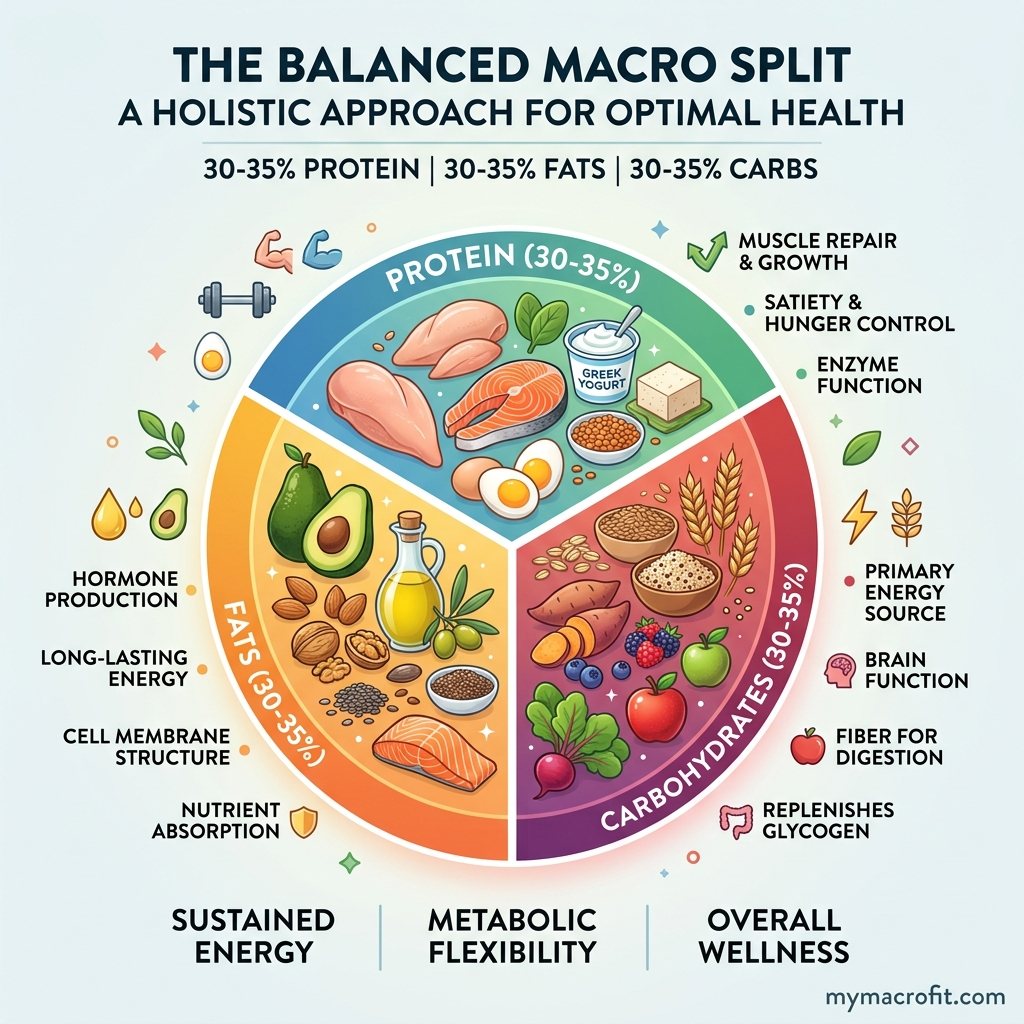
If there's one change to make after 40, it's eating more protein. It protects the muscle that keeps you strong, toned, and metabolically healthy, and it's the most filling macro, which helps with the appetite changes many women notice. Aim for the higher end (closer to 2.2g/kg) if you're losing fat or lifting. There's a full breakdown in protein for women over 40, and you can set your number with the Protein Calculator.
Calories: moderate, never crash
Because maintenance drifts down with muscle loss, it's tempting to slash calories, but that's the worst move after 40. A severe deficit accelerates muscle loss, tanks energy, and worsens sleep and stress, all of which fight back against fat loss. Use a moderate deficit (15-25%) from your real maintenance: find it with the Menopause Calorie Calculator or TDEE Calculator, then the Calorie Deficit Calculator. Recalculate as your weight changes, this matters more now.
Carbs aren't the enemy
You don't need to fear carbs after 40. Total calories and protein drive results; carbs fuel your training and your mood. Some women feel better slightly lower-carb, but it's a preference, not a rule. Keep enough to train well and enjoy your food.
What the numbers look like in practice
Let me make the framework concrete for a 68kg woman in her late 40s aiming to lose fat gently while keeping her strength:
| Macro | Target | Roughly |
|---|---|---|
| Protein | 2.0g/kg | ~136g |
| Fat | 0.9g/kg | ~61g |
| Calories | TDEE minus 20% | ~1,650 |
| Carbs | The remainder | ~150g |
That's a protein-forward, carb-included, genuinely livable day, not a punishing one. Notice there's nothing extreme here: no banished food group, no tiny calorie floor, plenty of carbs to fuel her workouts and steady her mood. This is what "macros after 40" should feel like, calm and sustainable, because the restrictive version is exactly what backfires in this decade.
The whole-person view macros can't capture
I set macros for a living, and I'll still tell you they're only one input. The women who thrive after 40 treat nutrition as part of a bigger picture: they protect their sleep, manage stress (which, unmanaged, raises cravings and saps the energy to move and lift), and they judge progress by how strong and steady they feel, not just a number on the scale.
So as you dial in your protein and calories, hold them gently alongside the rest of your life. A perfectly calculated macro target won't do its job if you're running on four hours' sleep and chronic stress. Nourishment, rest, movement, and calm all pull in the same direction, and after 40 they matter more, together, than any single number on a tracker. The scale is only ever part of the story.
The piece macros can't replace: lifting
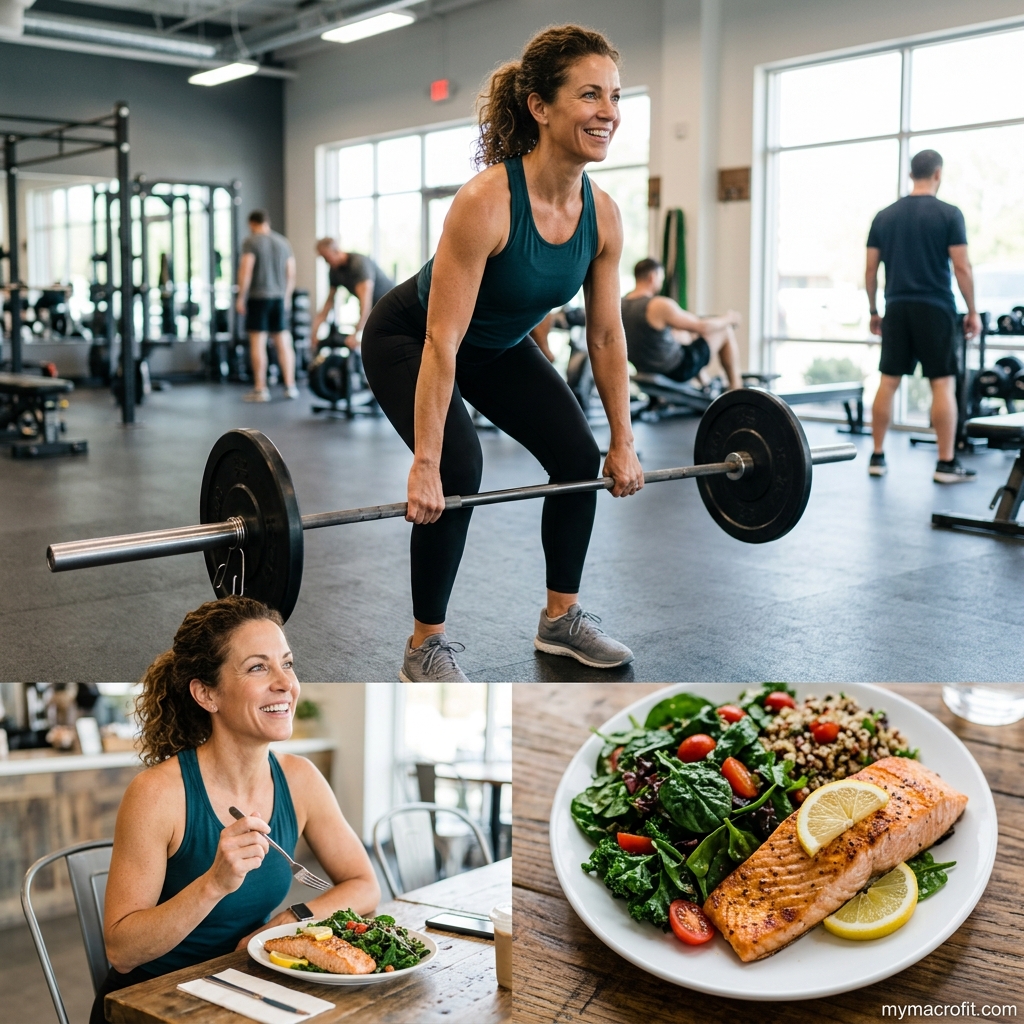
No macro setup preserves muscle without a reason to keep it. Resistance training is the partner to protein, together they're the proven antidote to the post-40 slowdown. Even two or three strength sessions a week change body composition, strength, and bone health dramatically.
The takeaway
Macros for women over 40 aren't a special diet, they're the same fundamentals with protein pushed to the front and a moderate, sustainable deficit. Prioritise protein, lift weights, keep carbs as fuel rather than a villain, and recalculate as your body changes. Start with your numbers from the Macro Calculator, and explore the full Women Over 40 hub.
Save & share on Pinterest
Click any card to pin it — or share with someone who needs it.
Macros for Women Over 40: Protein First, Then Everything Else
Hormones shift after 40, but the macro principles don't, they just matter more. Here's how to set pr…
Hormones shift after 40, but the macro principles don't, they just matter more. …
Read the full guide: Macros for Women Over 40: Protein First, Then Everything Else
Try the free Macro Calculator
Macros for Women Over 40: Protein First, Then Everything Else — use our free calculators for instant…
Pinterest opens in a new tab. You can edit the description before saving.
Ready to get your numbers?
Free calculator, instant results, no signup required.
Frequently Asked Questions
What macros should a woman over 40 eat?+
Do macros change after menopause?+
Why is it harder to lose weight after 40?+
How much protein do women over 40 need?+
Should women over 40 eat low carb?+
Do sleep and stress really affect my macros and weight after 40?+
How often should women over 40 recalculate their macros?+
About the Author

I'm a registered health coach and pre/postnatal specialist. I look at the whole person, your sleep, your stress, your hormones, because the number on the scale is only ever part of the story.
View full profile →