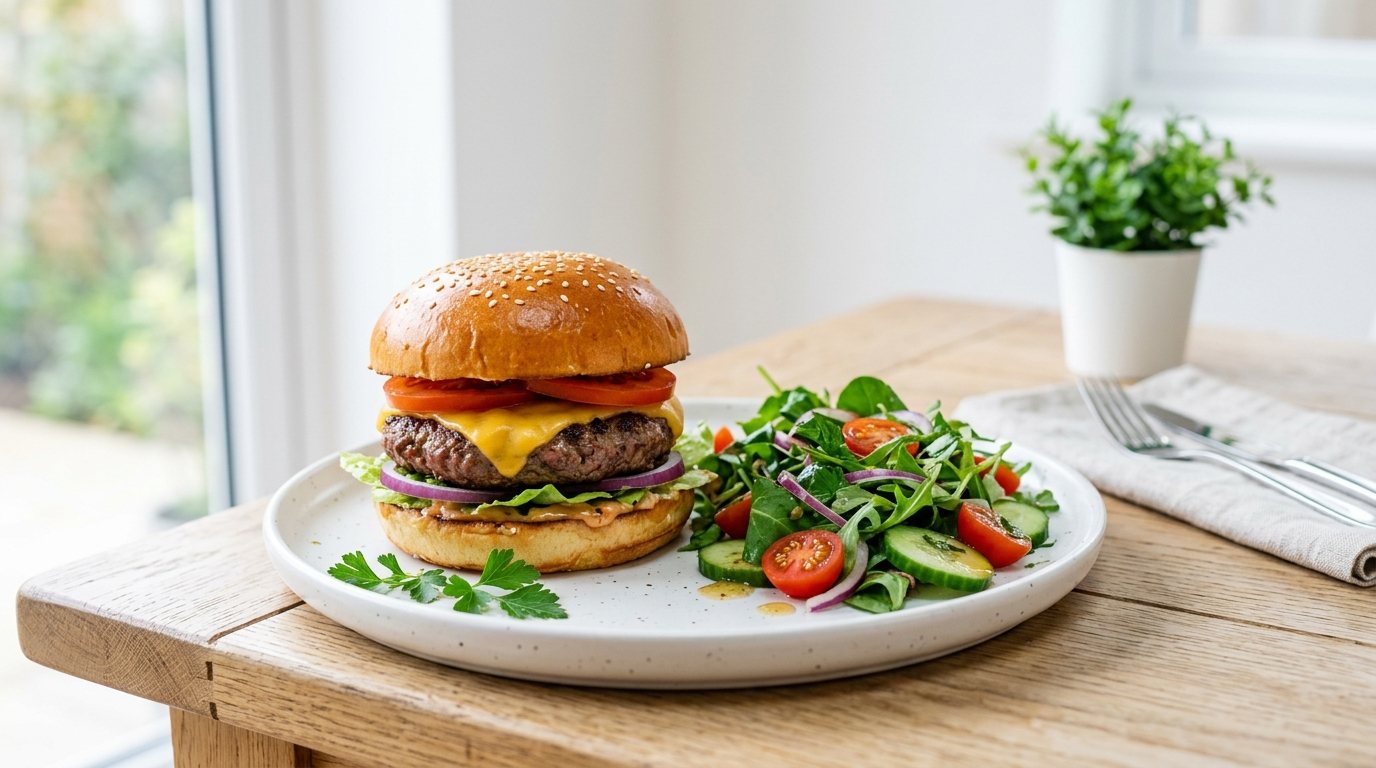
Nutrient Timing: Does When You Eat Actually Matter?

BSc Kinesiology · CPT
Nutrient timing, the idea that when you eat matters as much as what you eat, has been a significant focus of sports nutrition research. The popular version (eat protein within 30 minutes after training or muscle is lost) overstates the evidence. The nuanced version is more useful and more accurate.
Here's what the evidence actually shows about when to eat for fat loss, muscle building, and performance.
The Evidence Hierarchy
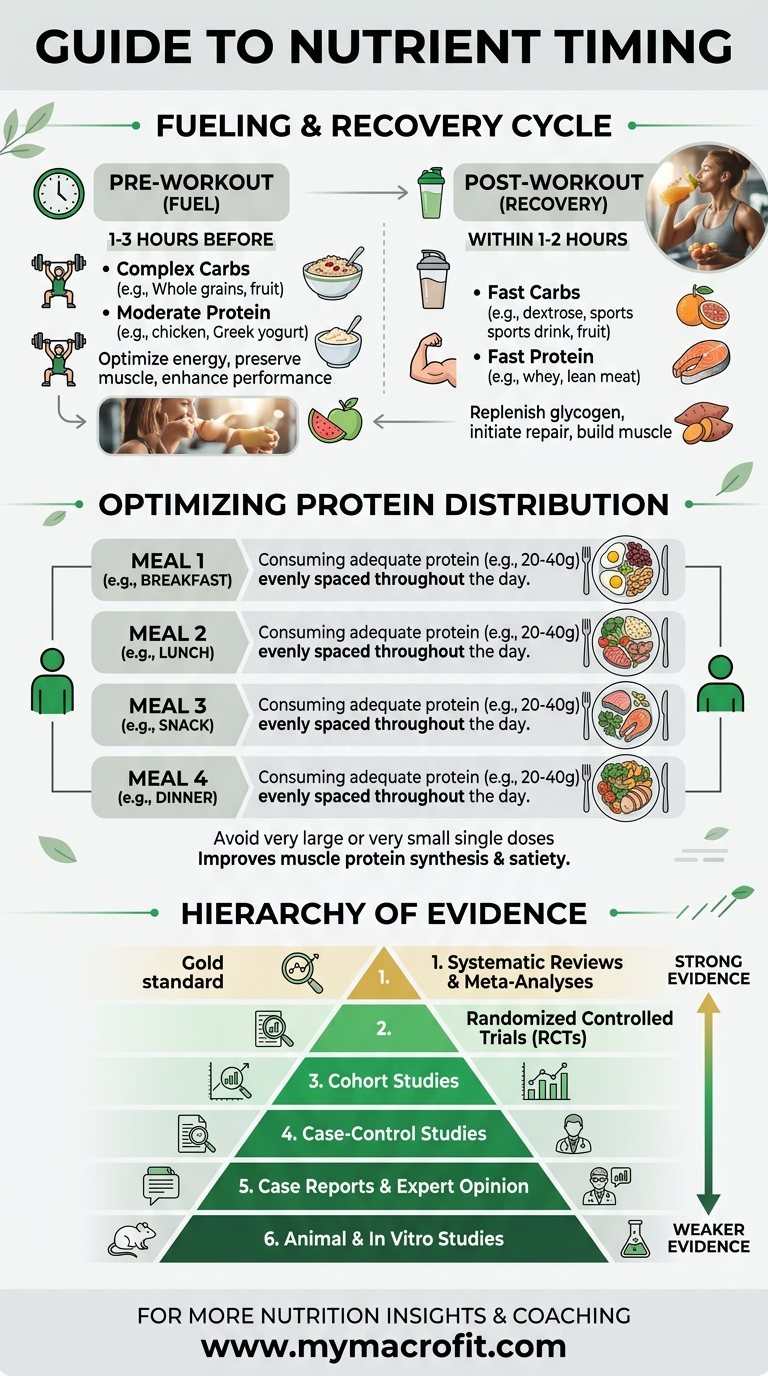
Understanding the relative importance of different nutritional variables prevents over-focusing on timing at the expense of fundamentals:
- Total daily calories, most important for weight management
- Total daily protein, most important for muscle preservation and building
- Protein distribution, moderate importance, meaningful above a threshold
- Nutrient timing (workout windows), real but modest effect, matters more for serious athletes
Most people would benefit more from improving fundamentals (1 and 2) than optimising timing (4). Timing becomes more important as the other variables are already well-managed.
Protein Distribution: This Does Matter
The evidence: Multiple studies show that distributing protein across 3-4 meals is superior to consuming equivalent protein in fewer, larger meals for maximising muscle protein synthesis.
The mechanism: Muscle protein synthesis (MPS) reaches a ceiling per meal, approximately 40-50g protein maximally stimulates MPS in the 3-5 hours post-meal. Additional protein above this in a single sitting contributes to oxidation (used for energy) rather than additional muscle synthesis. Eating more protein more frequently provides more MPS "pulses" over the day.
The practical recommendation:
- 3-4 meals per day, each containing 35-50g protein
- Space meals approximately 3-5 hours apart
- Total daily protein target remains the primary driver
For muscle building: If you currently eat 140g protein per day in 2 meals (70g each), splitting to 4 meals of 35g is likely to improve outcomes at the same total intake.
Pre-Workout Nutrition
Goals of the pre-workout meal:
- Provide readily available carbohydrates for energy during training
- Ensure amino acids are circulating for muscle protein synthesis during and after training
- Avoid GI distress during the session
Optimal pre-workout meal:
- Timing: 1-3 hours before training
- Carbohydrates: 0.5-1g per kg bodyweight (35-70g for a 70kg person)
- Protein: 20-40g
- Fat and fibre: Keep relatively low immediately before training (slow digestion can cause discomfort)
Examples:
- 200g chicken + 200g white rice + minimal vegetables (1-2 hours before)
- 40g oats + 30g protein powder in milk (1-1.5 hours before)
- Banana + Greek yogurt (30-60 minutes before as a smaller snack)
Fasted training: If training first thing in the morning, some people train fasted effectively. Research shows performance is modestly reduced for fasted resistance training vs. fed state. A small pre-workout protein/carbohydrate snack (banana + protein shake) improves performance if tolerated.
Post-Workout Nutrition
The anabolic window, the accurate version:
Muscle protein synthesis is elevated for 24-48 hours post-exercise (not just 30 minutes). The "window" is large. However, consuming protein sooner rather than later is marginally better, particularly after fasted training.
Practical recommendation:
- Consume a protein-containing meal within 2-3 hours post-training
- Target 35-50g protein
- Include carbohydrates to restore glycogen (0.5-0.8g/kg bodyweight)
The most important post-workout principle: Consistency. Having protein within 2-3 hours every session, across months and years, compounds to significant results. The specific timing to the minute matters very little.
Carbohydrate Timing
For performance and body composition:
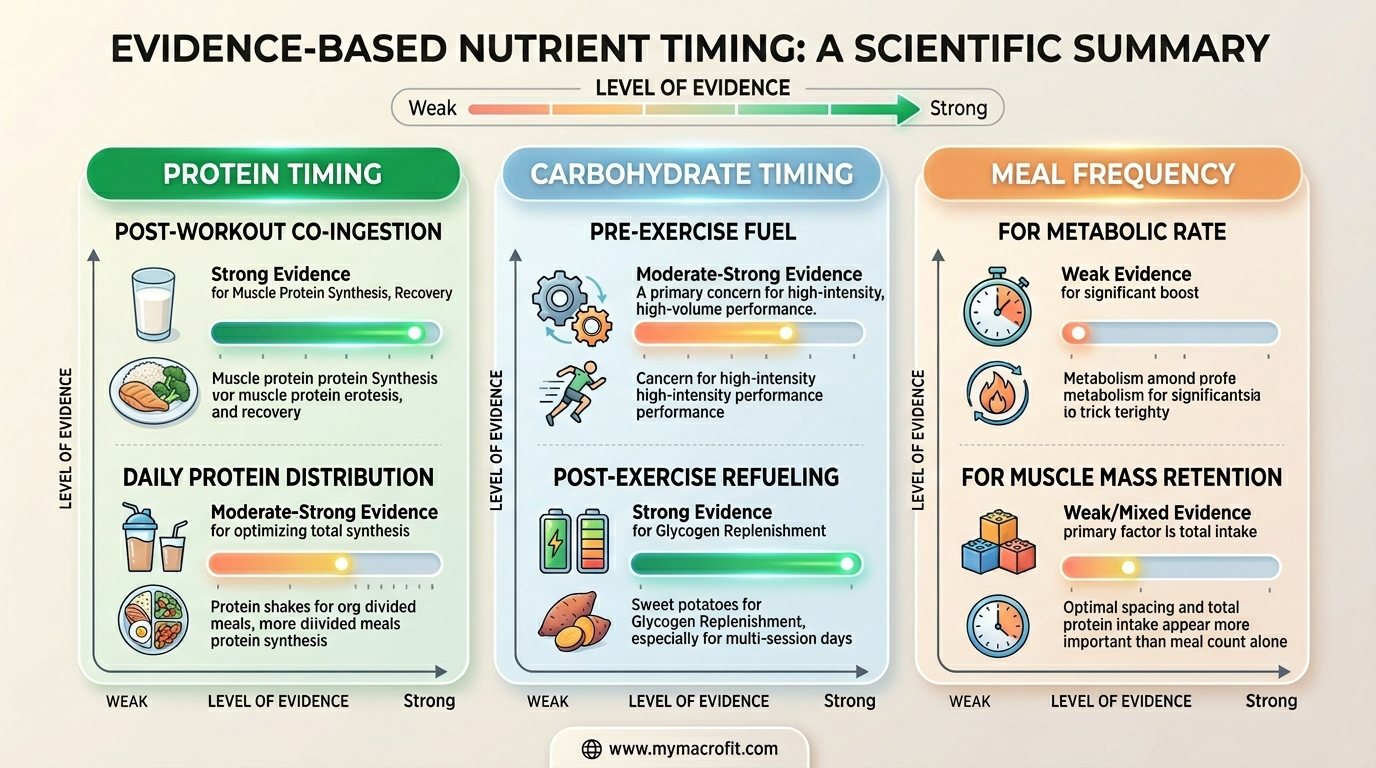
Before training: Carbohydrates provide glycogen for training intensity, particularly important for resistance training and HIIT where glycogen is the primary fuel.
After training: Carbohydrates restore glycogen, reducing muscle protein breakdown (protein is spared when glycogen is available) and reducing the cortisol spike from post-exercise hypoglycaemia.
Throughout the day: For general health and weight management, distributing carbohydrates with meals rather than concentrating them in evenings produces better blood glucose regulation and satiety.
For People Not Training
For non-athletes and general health:
Most important timing principle: Eat breakfast. Research consistently associates breakfast consumption with better weight management, likely through improved blood glucose regulation and reduced compensatory overeating later. The mechanism likely involves circadian alignment (the body is most insulin-sensitive in the morning).
Avoid eating very late: Large meals close to bedtime are associated with poorer sleep quality and modestly higher body weight in observational research, likely through disruption of circadian metabolic rhythms.
Consistent meal timing: Eating at roughly consistent times each day supports circadian clock regulation and blood glucose stability. This matters particularly for insulin sensitivity and metabolic health over the long term.
The Practical Summary
For muscle building:
- Eat 35-50g protein at each of 3-4 meals spread through the day
- Have a protein + carbohydrate meal within 2-3 hours post-workout
- Include carbohydrates before training for energy
For fat loss:
- Total daily protein and calorie deficit are far more important than meal timing
- Spreading protein across meals supports muscle preservation
- Don't skip breakfast
For performance:
- Pre-workout nutrition (carbohydrates especially) directly supports training intensity
- Post-workout glycogen restoration supports recovery for the next session
Save & share on Pinterest
Click any card to pin it — or share with someone who needs it.
Nutrient Timing: Does When You Eat Actually Matter?
The evidence on nutrient timing, what research shows about protein timing, carbohydrate timing, pre-…
The evidence on nutrient timing, what research shows about protein timing, carbo…
Read the full guide: Nutrient Timing: Does When You Eat Actually Matter?
Free fitness tools
Nutrient Timing: Does When You Eat Actually Matter? — use our free calculators for instant personali…
Pinterest opens in a new tab. You can edit the description before saving.
Frequently Asked Questions
Does it matter when you eat protein?+
Is the anabolic window real?+
What should I eat before a workout?+
How much does nutrient timing actually matter compared to total intake?+
Should I eat carbs at night, or does that cause fat gain?+
About the Author

I'm a kinesiologist and personal trainer. I've spent eight years helping women lose fat and get stronger without handing their whole life over to a diet.
View full profile →