Protein Timing for Muscle Growth: Does It Actually Matter?

BSc Kinesiology · CPT
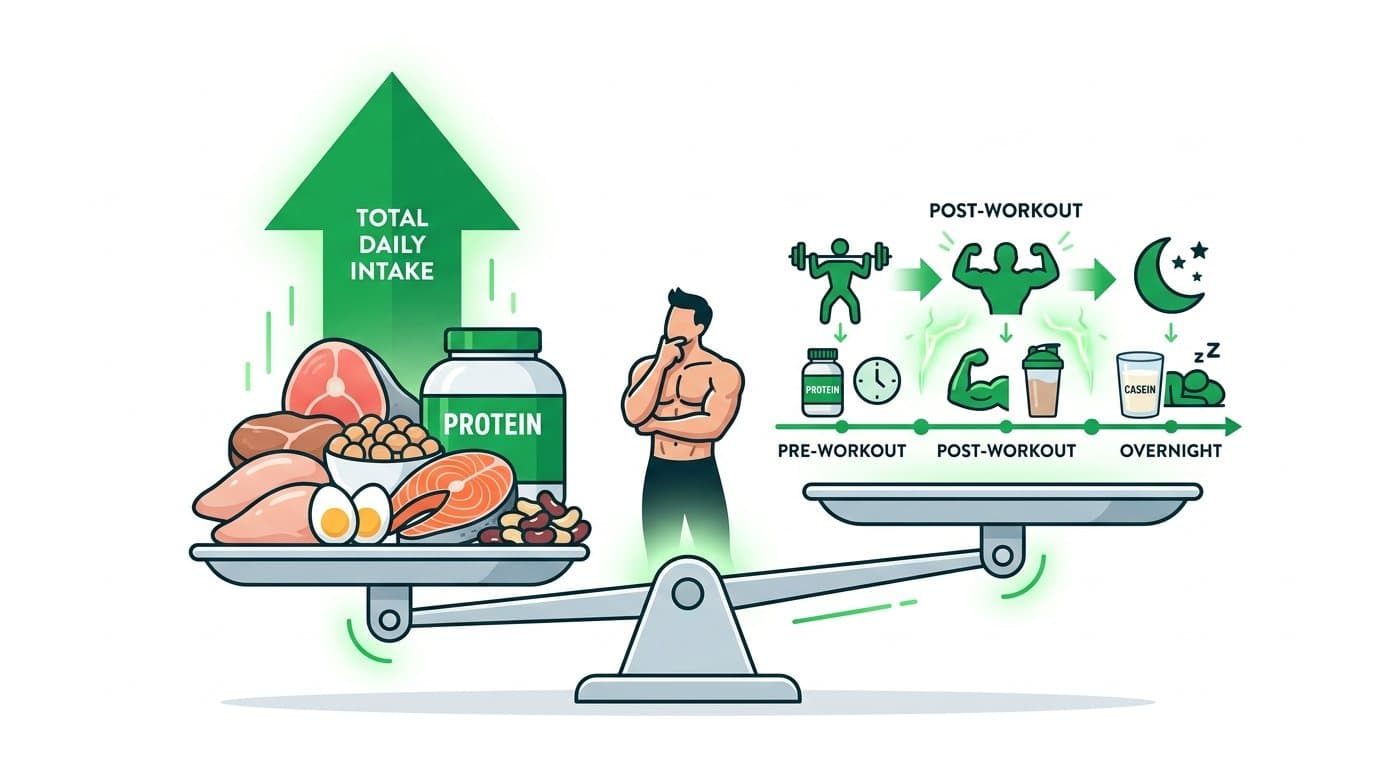
Protein timing, specifically the question of when to eat protein relative to training, is one of the most discussed topics in muscle-building nutrition. The simple answer: timing matters, but total daily protein matters more. Once you've got total intake right, timing is the refinement that squeezes out additional gains.
The Evidence Hierarchy
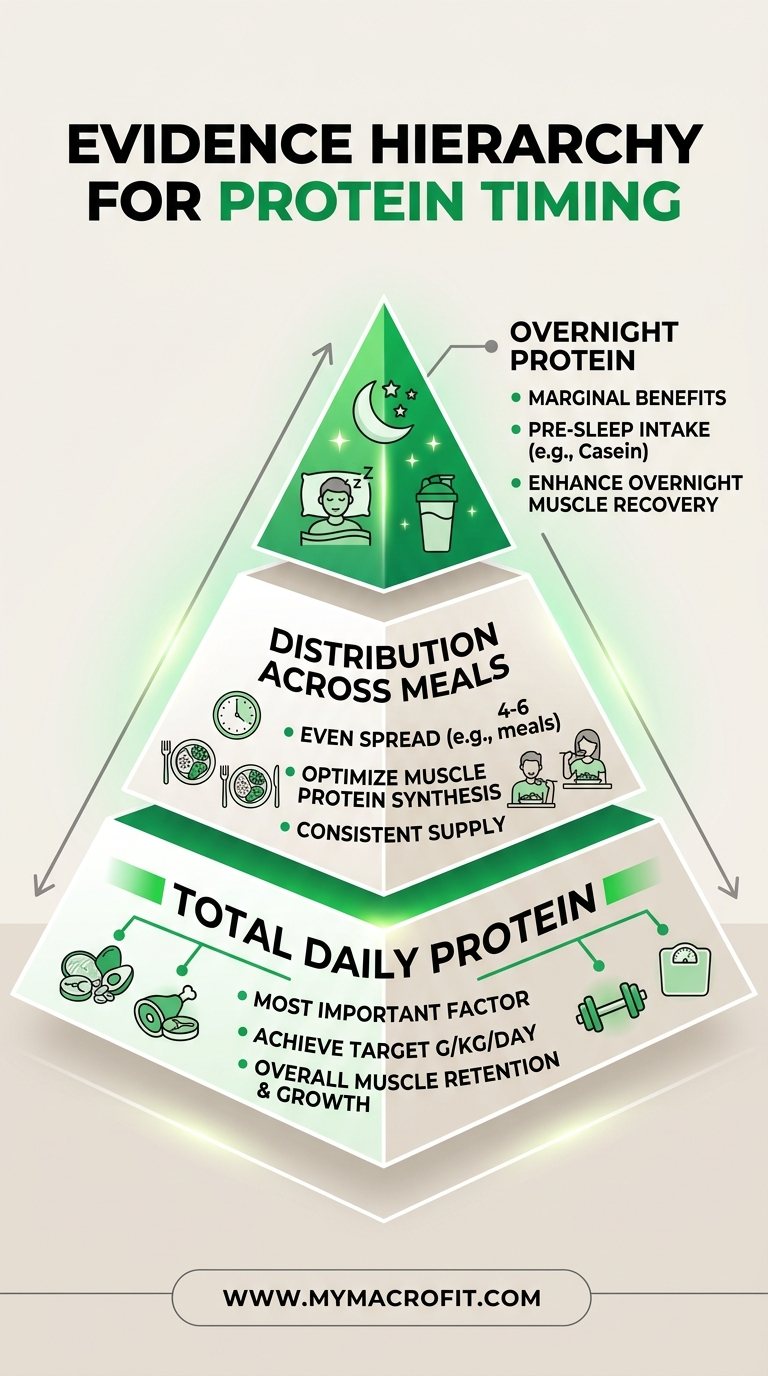
Before diving into specific timing strategies, the priority order:
- Total daily protein (1.6-2.2g/kg), most important
- Protein distribution (3-4 meals, 35-50g each), meaningful improvement
- Post-workout protein (within 2-3 hours), real benefit, timing window is flexible
- Pre-sleep protein, clear evidence for additional benefit
- Pre-workout protein, beneficial if no recent protein intake
Most people should focus on 1 and 2 before optimising 3, 4, or 5.
Protein Distribution: The Most Under-Appreciated Timing Factor
The single most evidence-backed protein timing principle isn't about workouts, it's about even distribution throughout the day.
Why it matters: Each protein meal stimulates a discrete pulse of muscle protein synthesis (MPS). MPS reaches a ceiling at approximately 40-50g protein per meal, additional protein above this in one sitting doesn't produce more synthesis; it's oxidised. Eating 150g protein in two meals of 75g produces fewer total MPS pulses than four meals of 37.5g at the same total.
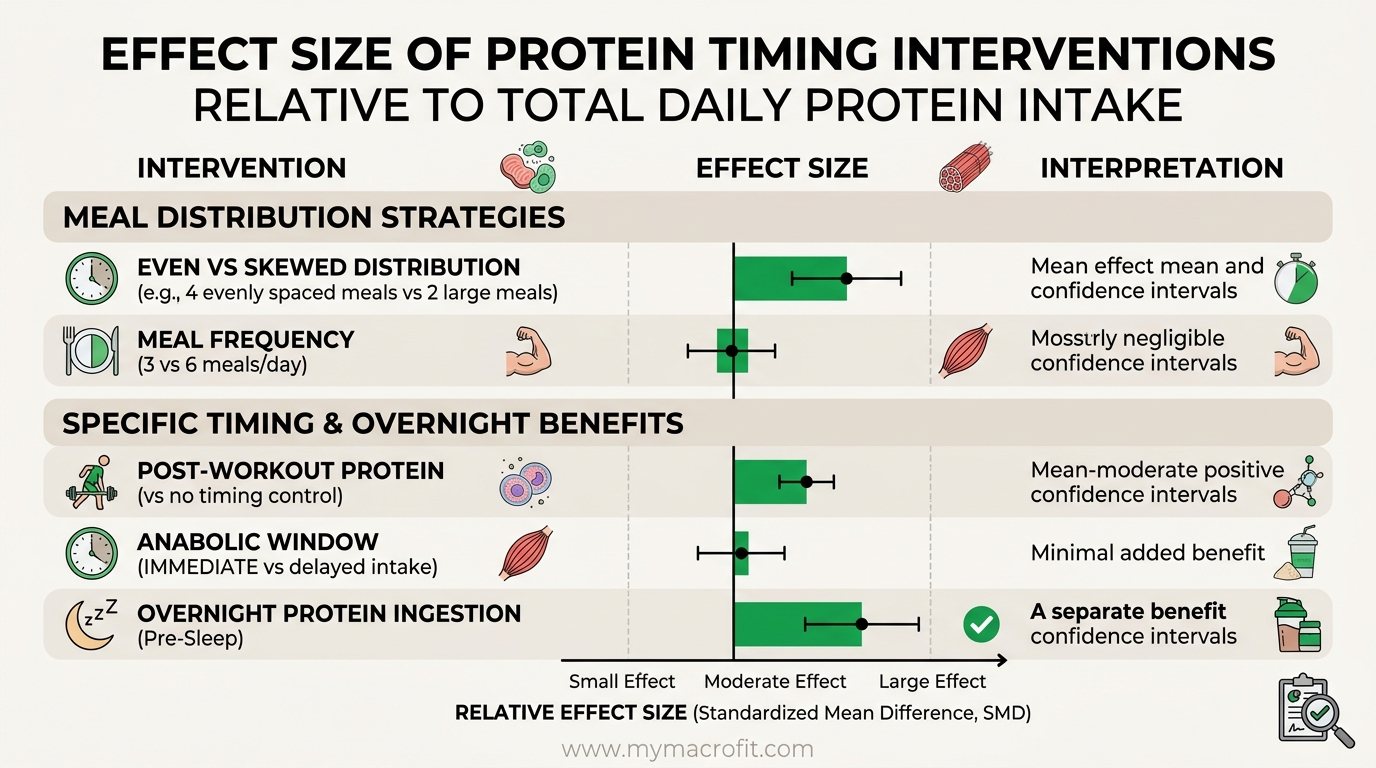
The evidence: Studies by Areta et al. and Moore et al. show that 4× daily protein distribution produces significantly greater MPS over 12 hours than 2× or 8× distribution at the same total intake.
Practical implementation: 3-4 meals containing 35-50g protein, spaced 3-5 hours apart. This produces the maximum daily MPS stimulus.
Use our Protein Calculator to determine your daily target and per-meal target.
The Post-Workout Window: Real, But Flexible
Muscle protein synthesis is elevated for 24-48 hours after resistance training. The post-workout "anabolic window" is real, but it's hours wide, not 30 minutes.
The evidence update: A 2013 meta-analysis by Schoenfeld et al. found that post-workout protein timing produces modest but real gains when studies are well-controlled. However, when pre-workout protein is adequate (consumed within 3 hours before training), the urgency for immediate post-workout protein is significantly reduced.
The practical guideline: Consume a protein-containing meal within 2-3 hours of training. Don't stress the exact minute, consistency across all sessions matters far more than perfect timing of any single session.
Exception: Fasted training. If training first thing after an overnight fast, the post-workout window is more important, consuming protein promptly after fasted training is meaningfully more beneficial than waiting several hours.
Pre-Workout Protein
Pre-workout protein provides amino acids circulating during and immediately after training, allowing muscle protein synthesis to begin during the session.
When it matters most:
- Fasted training (overnight fast), any protein before is beneficial
- Long gaps between meals (5+ hours before training)
When it matters less:
- You had a protein-containing meal 2-3 hours before training
- Your daily protein distribution is already good
Practical: If you can eat a full meal 1.5-2 hours before training, this covers both pre and post if the session is under 1.5 hours. If you train early morning, a small protein snack (protein shake, Greek yogurt) 30-60 minutes before is worthwhile.
Pre-Sleep Protein: Clear Evidence
Overnight is the longest amino acid gap in any 24-hour period, typically 7-9 hours without dietary protein. During this time, muscle protein breakdown slightly exceeds synthesis (catabolic state).
The research: Multiple studies by Luc van Loon's group at Maastricht University show:
- 40g casein protein 30 minutes before sleep increases overnight MPS by ~22%
- 12 weeks of pre-sleep casein supplementation produces significantly greater muscle mass and strength gains vs. non-supplemented control
Why casein specifically: Casein is a slow-digesting protein that forms a gel in the stomach, releasing amino acids gradually over 5-7 hours, ideal for bridging the overnight period. Whey is digested within 2-3 hours and less effective for overnight coverage.
Practical pre-sleep protein options:
- 200g cottage cheese (22g protein, primarily casein)
- 200g skyr or quark (22-24g protein)
- 250g 0% Greek yogurt with added protein powder (25-30g)
- Casein protein shake (25-30g), slightly better for overnight release than above
A Practical Protein Timing Framework
Meal 1 (breakfast or first meal): 35-50g protein Breakfast anchored with eggs, Greek yogurt, cottage cheese, protein shake, or combination.
Meal 2 (lunch): 35-45g protein Protein source: chicken, fish, tofu, legumes, tuna.
Pre-workout (if applicable): 20-40g protein Included in the nearest meal to training (can be meal 2 or 3 depending on schedule).
Post-workout (within 2-3 hours): 35-50g protein Full meal or protein-rich snack. Doesn't need to be immediately after.
Pre-sleep (optional but beneficial): 30-40g casein protein Cottage cheese, skyr, casein protein powder. Meaningful additional benefit if total daily protein is already met.
What Doesn't Matter as Much as You Think
Exact 30-minute window: The urgency of consuming protein immediately post-workout is significantly overstated. 2-3 hours is fine.
Protein type (for most purposes): Whey, casein, whole food protein sources all produce similar 24-hour outcomes when consumed at appropriate times. Type matters more for pre-sleep (casein preferred) and post-workout (whey modestly better for rapid response).
Fasted cardio protein: For moderate intensity, shorter cardio sessions, consuming protein before or after vs. no protein matters relatively little for muscle retention if daily protein is adequate.
The Bottom Line
Protein timing optimises muscle building, but only meaningfully once total daily intake (1.6-2.2g/kg) is established. The timing priority: distribute protein across 3-4 meals of 35-50g, consume protein within 2-3 hours of training, and add pre-sleep casein for additional overnight MPS stimulus.
Save & share on Pinterest
Click any card to pin it — or share with someone who needs it.
Protein Timing for Muscle Growth: Does It Actually Matter?
The evidence on protein timing for muscle building, what the research shows about pre, post, and ove…
The evidence on protein timing for muscle building, what the research shows abou…
Read the full guide: Protein Timing for Muscle Growth: Does It Actually Matter?
Try the free Protein Calculator
Protein Timing for Muscle Growth: Does It Actually Matter? — use our free calculators for instant pe…
Pinterest opens in a new tab. You can edit the description before saving.
Ready to get your numbers?
Free calculator, instant results, no signup required.
Frequently Asked Questions
Does protein timing matter for muscle growth?+
Is it better to eat protein before or after a workout?+
Does eating protein before bed help build muscle?+
How should I spread my protein across the day for the best results?+
Will I lose muscle if there's a long gap between protein meals?+
About the Author

I'm a kinesiologist and personal trainer. I've spent eight years helping women lose fat and get stronger without handing their whole life over to a diet.
View full profile →