Rest Days: How Many You Need and Why They Build More Muscle
Kinesiotherapist · Pilates Coach
In fitness culture, taking a rest day can feel like admitting you are not committed, as though the truly dedicated train every single day. As a kinesiotherapist, I promise you the opposite is true. Skipping rest does not make you better, it quietly stops you from getting better. Recovery is not time off from the work. It is where the work pays off. Your body is your only investment, and rest is how you protect it.
When muscle is actually built
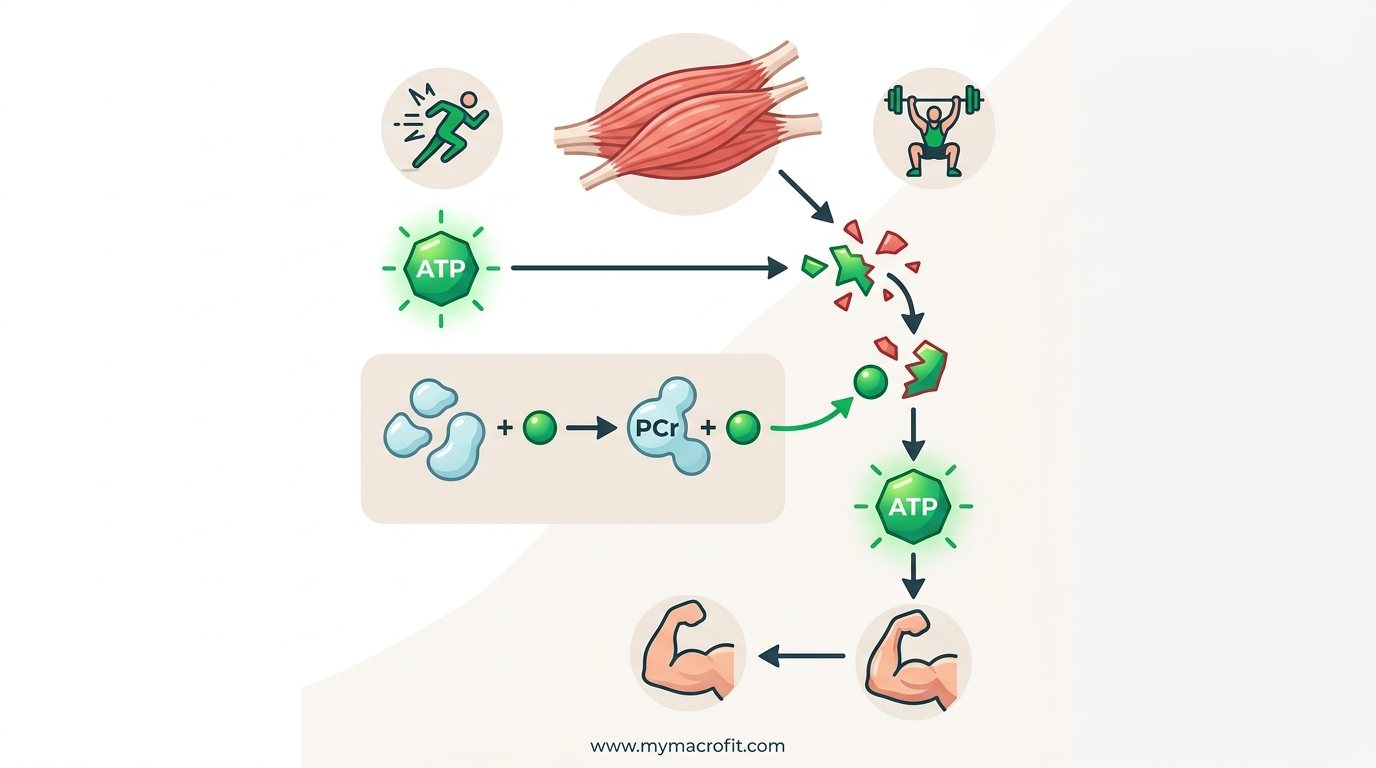
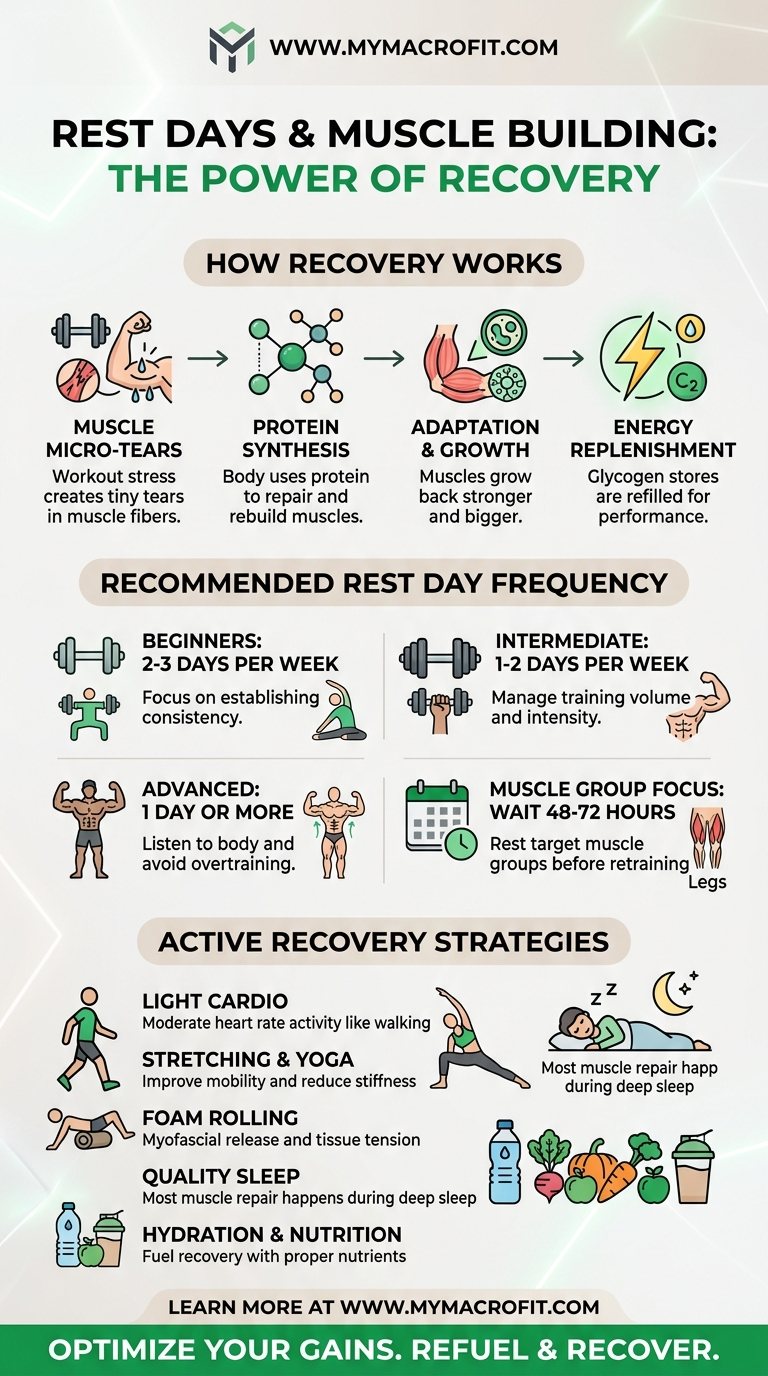
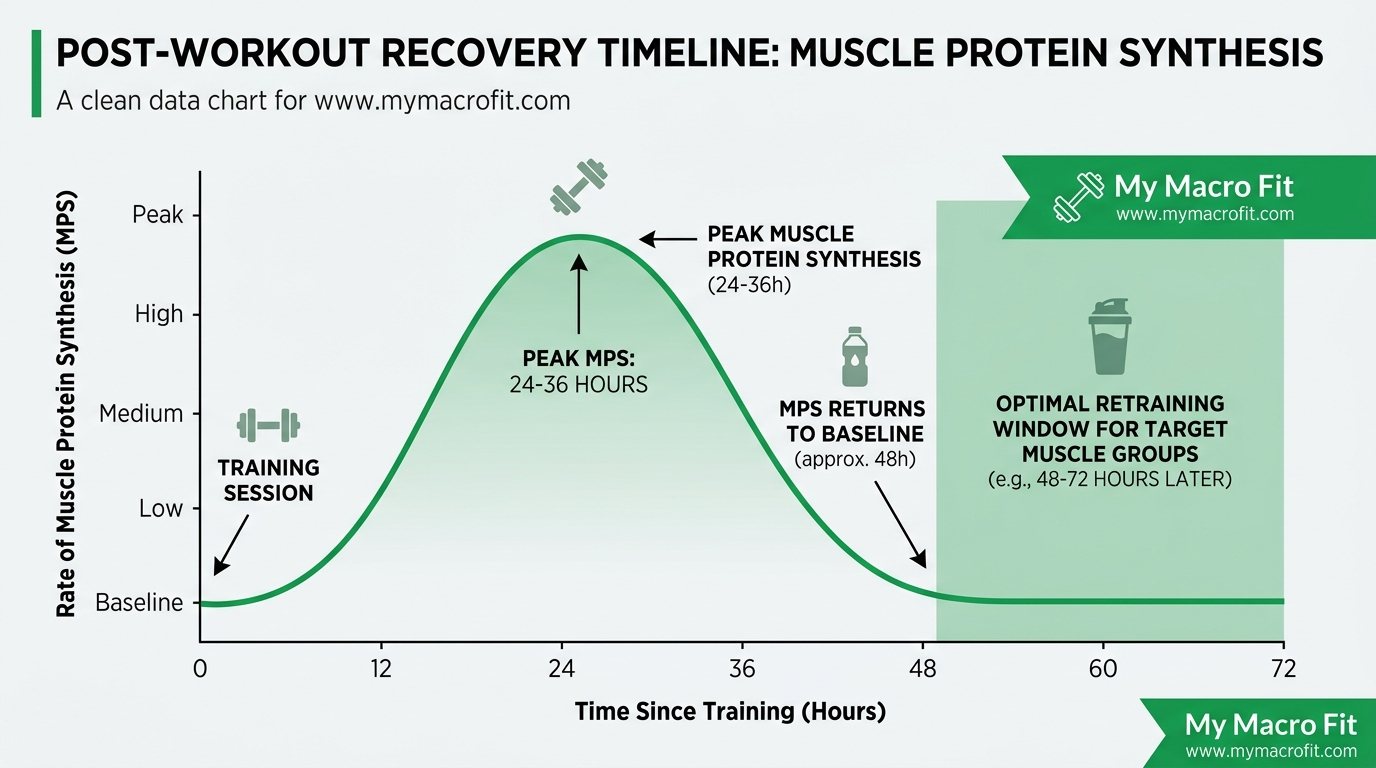
The workout is not when you build muscle. The workout is the request. The building happens afterwards, while you rest. Here is what is going on underneath:
- During training, you create small amounts of damage and stress in the muscle. This switches on the repair and growth machinery.
- For the next 24 to 48 hours, that machinery runs high. Repair cells get to work, new protein is laid down, and the fibres rebuild slightly stronger than before, provided you have given them enough protein and food.
- By around 48 to 72 hours, the process settles and the muscle has adapted to what you asked of it.
Train the same muscle again before that repair has finished, and you interrupt it. You end up creating damage faster than your body can mend it, which is the opposite of progress. So rest is not passive. It is the productive half of getting stronger.
How many rest days do you need?
It depends on how hard and how often you train, on your sleep, nutrition, stress, and age, and on which muscles you are working. As a guide:
- If you are new (first six months): around three training days and four rest days a week suits most people, leaving at least 48 hours between sessions for the same muscles.
- If you are more experienced: four training days and three rest days works well with a sensible split, hitting each muscle group about twice a week with a couple of days between.
- If you are advanced: five or six training days is possible using splits that let some muscles rest while others work, but keep at least one or two full rest days.
The one rule I hold everyone to: at least one complete rest day a week, no exceptions, whatever your level.
How to tell you need more rest
Listen to these signals. The short-term ones, meaning you need more rest this week:
- Your resting heart rate is up noticeably from its norm.
- You are clearly weaker than last session, same exercise, same effort, just less there.
- Soreness that lingers well past 48 to 72 hours.
- A genuine absence of any drive to train, not ordinary laziness but a flat, empty feeling about it.
And the longer-term ones, meaning your whole routine needs adjusting:
- Strength sliding week after week for three weeks or more despite training.
- Fatigue that sleep does not fix.
- Catching every bug going round.
- Poor sleep even though you are tired.
- A shorter temper and a lower mood than usual.
These are your body asking for recovery. The answer is more rest, not pushing harder through it.
Active recovery or complete rest?
Both have a place. A complete rest day means no structured exercise, though walking and gentle daily movement are always welcome.
An active recovery day means easy movement that brings blood flow without adding training stress:
- A gentle 15 to 30 minute walk.
- An easy, conversational cycle.
- Slow, relaxed swimming, not intervals.
- Gentle yoga or mobility work, the kind I cover in the posture and pain-free movement guide.
Easy movement like this can actually ease soreness by improving circulation. What to avoid on a rest day is anything that pushes your heart rate up hard for long stretches, or heavy lifting with other muscles, because then your rest day has quietly become another training day.
Eating on rest days
Your nutrition does not need to change dramatically on a rest day. Keep your protein up, around 2g per kg of bodyweight, because repair is still running for a day or two after training. You can ease your calories down a little, since you are moving less, perhaps by 200 to 300, but no more than that or you start to starve the recovery you are resting for. Keep some carbohydrate in too, because your muscles are quietly refilling their fuel stores for the next session.
Sleep is the real recovery tool
If rest days are important, sleep is the heart of them. The deepest, most genuine repair happens while you sleep, when your repair hormones peak and the stress hormones that work against you fall away. This is why staying up late on a rest day to somehow "recover faster" makes no sense. Protect your sleep, aim for seven to nine hours, and treat it as part of your training, because it is. There is a deeper recovery rhythm to plan around in the deload week guide.
What it comes down to
Rest days are not wasted days. They are when your body actually builds what your training asked for. Train relentlessly without recovery and you get diminishing returns, then you go backwards. Give yourself at least one or two full rest days a week, leave a couple of days between hitting the same muscle, sleep well, and use gentle movement to help things along. Training beyond what you can recover from is not dedication. Recovering well, so you can keep showing up, is.
Save & share on Pinterest
Click any card to pin it — or share with someone who needs it.
Rest Days: How Many You Need and Why They Build More Muscle
The physiology of rest and recovery, why rest days are when muscle is actually built, how many you n…
The physiology of rest and recovery, why rest days are when muscle is actually b…
Read the full guide: Rest Days: How Many You Need and Why They Build More Muscle
Free fitness tools
Rest Days: How Many You Need and Why They Build More Muscle — use our free calculators for instant p…
Pinterest opens in a new tab. You can edit the description before saving.
Frequently Asked Questions
Do rest days help you build muscle?+
What happens if you don't take rest days?+
Is it OK to do cardio on rest days from strength training?+
How many rest days a week do I actually need?+
What should I do on a rest day to recover better?+
Why am I more sore two days after training than the next day?+
About the Author
I'm a kinesiotherapist and Pilates coach. I help people move well and get strong without breaking down, from fixing a stiff back to building real strength using nothing but their own bodyweight.
View full profile →