What to Eat After a Workout for Recovery

BSc Kinesiology · CPT
What you eat after training directly influences how well your muscles recover and grow. The good news: post-workout nutrition is simpler than the supplement industry suggests, the fundamentals are protein, some carbohydrates, and timing that's more flexible than the "30-minute window" myth implies.
What Happens to Muscles After Training
Resistance training creates micro-damage in muscle fibres. In the hours and days following, the body repairs this damage, and if given adequate protein and calories, builds slightly more muscle than existed before.
The two key post-workout nutritional needs:
1. Amino acids (protein): Provide the building blocks for muscle repair and synthesis. Without adequate dietary protein, the body catabolises other muscle proteins for amino acids, net result is no muscle gain or muscle loss.
2. Glycogen replenishment (carbohydrates): Resistance training depletes muscle glycogen significantly. Replenishing glycogen:
- Reduces muscle protein breakdown (insulin's anti-catabolic effect)
- Supports recovery for the next session
- Reduces cortisol elevation post-exercise
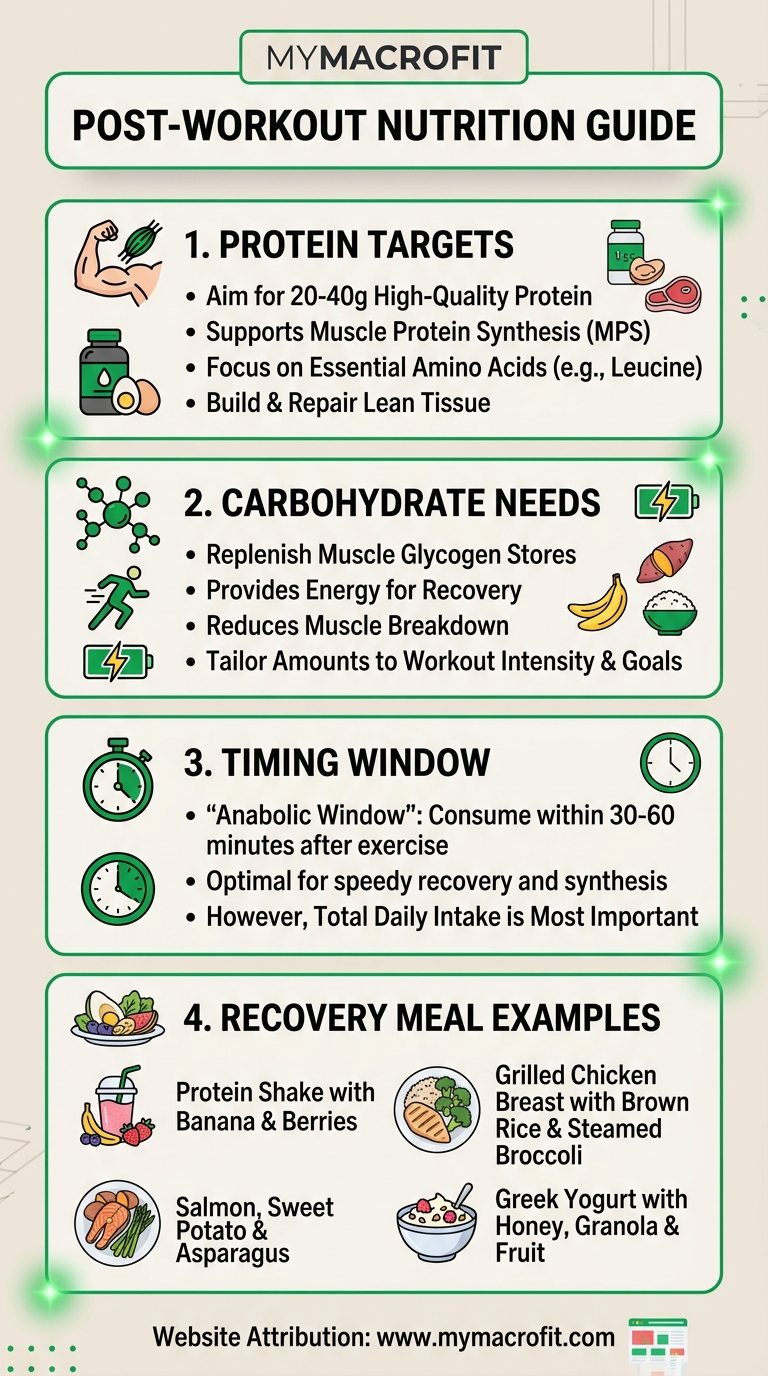
Post-Workout Protein Target
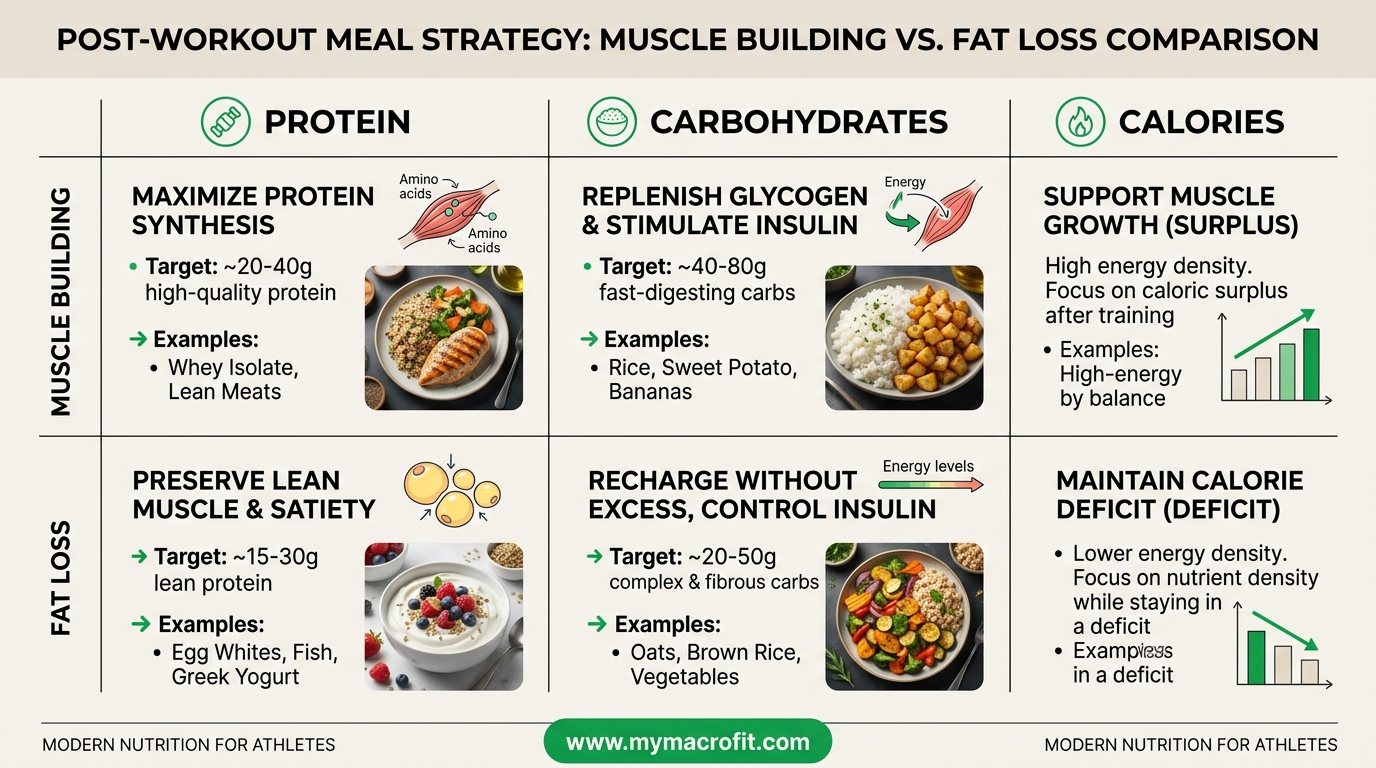
35-50g protein within 2-3 hours post-training
This is the range that maximises muscle protein synthesis in the post-exercise period for most adults. Under 25g is suboptimal for this purpose; over 50g in a single meal doesn't meaningfully add to MPS (the excess goes to oxidation).
For older adults (55+): The anabolic response to protein is blunted, the upper end of the range (40-50g) is more appropriate.
Best protein sources for recovery:
- Whey protein shake (fast absorption, highest leucine per gram)
- Chicken breast (30-35g per 150g serving)
- Salmon (30g per 150g)
- Cottage cheese (22g per 200g, casein, slower absorbing but effective)
- Eggs + egg whites combination
- Greek yogurt (20g per 200g)
Post-Workout Carbohydrate Target
For strength training: 0.4-0.6g carbohydrates per kg bodyweight immediately post-workout
For a 70kg person: 28-42g carbohydrates alongside the protein.
When carbs matter most post-workout:
- When you train twice in one day (glycogen must be restored quickly)
- When training frequency is high (4+ sessions/week)
- After long, glycogen-depleting sessions (60+ min intense)
When carbs matter less post-workout:
- Single daily session with 24+ hours until the next training
- Low-carbohydrate diet (body adapts to use fat more readily)
- After short sessions (under 45 min, moderate intensity)
Best Post-Workout Meals
For Muscle Building (Higher Calorie)
Chicken + rice bowl:
- 150g chicken breast (30g protein)
- 250g cooked white rice (50g carbs)
- Cucumber, tomato, light dressing
- Total: ~510 kcal, 30g protein, 50g carbs
Salmon + sweet potato:
- 150g salmon (25g protein)
- 200g sweet potato (37g carbs)
- Steamed broccoli
- Total: ~470 kcal, 26g protein, 37g carbs
Protein shake + banana + oats:
- 1 scoop whey (25g protein)
- 1 banana (27g carbs)
- 40g oats (27g carbs)
- Total: ~360 kcal, 27g protein, 54g carbs
For Fat Loss (Lower Calorie, High Protein)
Greek yogurt bowl:
- 200g 0% Greek yogurt (20g protein)
- 100g mixed berries (12g carbs)
- 1 tbsp ground flaxseed
- Total: ~200 kcal, 20g protein, 15g carbs
Cottage cheese + fruit:
- 200g cottage cheese (22g protein)
- 150g melon (14g carbs)
- Total: ~230 kcal, 22g protein, 15g carbs
Tuna + rice cakes:
- 1 can tuna in water (30g protein)
- 3 rice cakes (19g carbs)
- Hot sauce, lemon
- Total: ~235 kcal, 32g protein, 20g carbs
The Timing Window
The most practical advice: Eat a protein-rich meal within 2-3 hours of finishing training.
You don't need to rush a protein shake into the changing room. The "30-minute window" is a significant overstatement of the research. Muscle protein synthesis remains elevated for 24-48 hours post-exercise.
Exception: Training in a fully fasted state (12+ hours without food), in this case, protein shortly after training is slightly more important for limiting muscle protein breakdown.
Hydration After Training
Fluid and electrolyte replacement is also part of recovery, often overlooked:
- Rehydrate with 1.5x the fluid lost during exercise (weigh yourself before/after for precise measurement)
- In practice: drink 500-750ml water in the 30-60 minutes post-workout
- If training was prolonged (over 60 min) and sweaty: sodium + potassium replacement helps (a salty snack or electrolyte drink)
Use our Protein Calculator to determine your daily protein target and ensure your post-workout meal fits within it.
The Bottom Line
Post-workout nutrition: 35-50g protein + 30-50g carbohydrates within 2-3 hours. Any quality protein source works; carbohydrates are most important when training again within 8 hours or when training frequency is high. Hydration completes the recovery picture.
The most important post-workout nutrition habit is consistency across months and years, not the precise gram count of any individual session.
Save & share on Pinterest
Click any card to pin it — or share with someone who needs it.
What to Eat After a Workout for Recovery
Post-workout nutrition for muscle recovery and growth, what to eat, how much protein and carbs you n…
Post-workout nutrition for muscle recovery and growth, what to eat, how much pro…
Read the full guide: What to Eat After a Workout for Recovery
Try the free Protein Calculator
What to Eat After a Workout for Recovery — use our free calculators for instant personalised results…
Pinterest opens in a new tab. You can edit the description before saving.
Ready to get your numbers?
Free calculator, instant results, no signup required.
Frequently Asked Questions
How much protein do I need after a workout?+
Do you need carbs after a workout?+
Is a protein shake necessary after a workout?+
Is the 'anabolic window' after a workout real?+
What should I eat after a workout if I'm trying to lose fat?+
About the Author

I'm a kinesiologist and personal trainer. I've spent eight years helping women lose fat and get stronger without handing their whole life over to a diet.
View full profile →